

Plus, receive recommendations and exclusive offers on all of your favorite books and authors from Simon & Schuster.
0:00 /
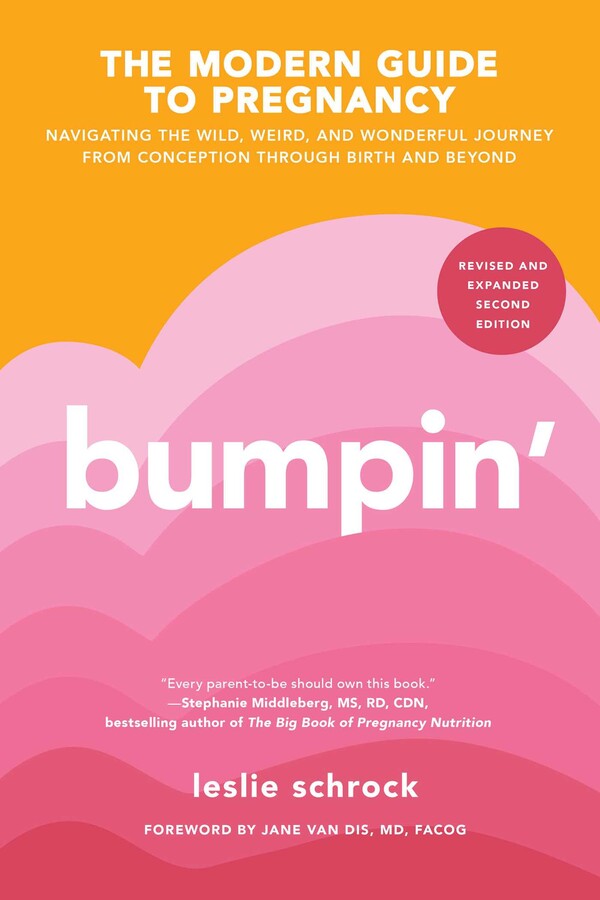
Bumpin'
Navigating the Wild, Weird, and Wonderful Journey from Conception to Birth and Beyond, REVISED AND UPDATED
Foreword by Jane van Dis
Table of Contents
About The Book
Prepare for pregnancy, birth, and the newborn months with this award-winning “thoroughly modern guide to pregnancy” (National Parenting Product Awards)—now newly revised with updated information on nutrition for you, bottle and breastfeeding, recovery, and more, from the author of Fertility Rules.
Now in a new revised and expanded second edition filled with “clear, evidence-based, no-nonsense, and up-to-date answers” (Deena Shakir, investor and author of Leena Mo, CEO), Bumpin’ will radically transform your pregnancy journey from overwhelmed and confused to one of confidence. With over a decade of experience advising women’s health care and technology companies, Leslie Schrock distills cutting-edge research and practical guidance into a comprehensive pregnancy guide—from conception through pregnancy into the first months with an infant. She also shares her own personal journey, including the curveballs she faced on the way.
This second edition updates the evidence and includes even more practical advice from experts ranging from doulas, ob-gyns, midwives, therapists, prenatal trainers, nutritionists, and researchers so you can make the best decisions for your family. With a look at the science, it tackles pregnancy FAQs and topics like the truth about cleaning up your cosmetics, nutrition, exercise, and epidurals; and the practical, like putting together a baby budget and navigating work before and after birth. New sections in the fourth trimester after your baby arrives go deeper on breastfeeding and bottle feeding as well as sleep and recovery for you.
Inside the second edition of Bumpin’ you will find:
- A trimester-by-trimester overview from conception through the postpartum period and return to work.
- How to optimize your fertile window and getting pregnant.
- The truth about age, fertility, and managing any issues that arise.
- Miscarriage and assisted reproduction treatments like IVF.
- Guidance on diet, substance use, and exercise before and during pregnancy.
- The science behind your physical changes, leaks, sweats, and every other unexpected pregnancy symptom.
- Managing your mental health.
- Understanding what happens during birth and creating your birth preferences.
- Advice for partners, family members, and friends supporting your pregnancy.
- Budgeting, finance tips, baby registry, and hospital checklists.
- Updated research on infant feeding and lactation.
Warm, funny, and non-judgmental, Bumpin’ will leave you feeling prepared and ready to tackle anything that comes your way.
Now in a new revised and expanded second edition filled with “clear, evidence-based, no-nonsense, and up-to-date answers” (Deena Shakir, investor and author of Leena Mo, CEO), Bumpin’ will radically transform your pregnancy journey from overwhelmed and confused to one of confidence. With over a decade of experience advising women’s health care and technology companies, Leslie Schrock distills cutting-edge research and practical guidance into a comprehensive pregnancy guide—from conception through pregnancy into the first months with an infant. She also shares her own personal journey, including the curveballs she faced on the way.
This second edition updates the evidence and includes even more practical advice from experts ranging from doulas, ob-gyns, midwives, therapists, prenatal trainers, nutritionists, and researchers so you can make the best decisions for your family. With a look at the science, it tackles pregnancy FAQs and topics like the truth about cleaning up your cosmetics, nutrition, exercise, and epidurals; and the practical, like putting together a baby budget and navigating work before and after birth. New sections in the fourth trimester after your baby arrives go deeper on breastfeeding and bottle feeding as well as sleep and recovery for you.
Inside the second edition of Bumpin’ you will find:
- A trimester-by-trimester overview from conception through the postpartum period and return to work.
- How to optimize your fertile window and getting pregnant.
- The truth about age, fertility, and managing any issues that arise.
- Miscarriage and assisted reproduction treatments like IVF.
- Guidance on diet, substance use, and exercise before and during pregnancy.
- The science behind your physical changes, leaks, sweats, and every other unexpected pregnancy symptom.
- Managing your mental health.
- Understanding what happens during birth and creating your birth preferences.
- Advice for partners, family members, and friends supporting your pregnancy.
- Budgeting, finance tips, baby registry, and hospital checklists.
- Updated research on infant feeding and lactation.
Warm, funny, and non-judgmental, Bumpin’ will leave you feeling prepared and ready to tackle anything that comes your way.
Excerpt
1. Get Ready
Preconception health, buying the perfect prenatal vitamin, creating your first baby budget, and preparing for parenting
If you are already pregnant, congratulations, and keep reading; there is still plenty here for you. Pregnancy preparation is almost always focused on a woman’s physical health and what to eat and do. While less discussed parts of the experience like quitting birth control (and its accompanying gnarly hormone changes) are important to understand, if your partner is providing sperm, they should commit to a cleanup, since their health impacts fertility, pregnancy, and future children too.
It’s not just about the raw materials. Most new parents will tell you their relationship changed after having a baby. Some shift in wonderful ways, like feeling more bonded. Other changes are less great, like having limited time together (at least, sans baby), less frequent sex and intimacy, or experiencing feelings of bitterness tied to lopsided responsibilities. And how could such a major event not change things?
Family therapists suggest talking about your individual and shared parenting and life expectations early and often before the fog of pregnancy hormones descends. Topics can span the financial and personal implications of childcare, parental leave, sharing baby care and household duties, and values related to how you want to raise your child.
Why do this now? Resentment is a huge issue for many couples. More women stay home to take care of their families than men, and almost all women, regardless of their professional status, take on more household responsibilities. Even in families where both partners work, moms do most scheduling and cleaning and are more likely to stay home when children get sick. In the early days with an infant, especially if you’re breastfeeding, an equitable division of baby care is not a realistic goal—unless men can be biologically reprogrammed to lactate. But there are plenty of ways your partner can contribute (sanitation crew, anyone?).
Pregnancy is the wildest transformation of most women’s lives. At times, you won’t feel, look, or even act like yourself. And no matter how marvelous or tuned-in your partner is, they will not completely understand the physical and emotional undertaking that is growing another human. Instead of expecting psychic powers to miraculously appear, tell them directly how to best support you, and be honest about how you’re feeling. Ask them the same questions. They aren’t living with the day-to-day of pregnancy, but this is a seismic transition for them, too.
Speaking of partners, hello, you! Hopefully you’re reading the whole book, but for those skimming, these sections are packed with the advice experienced parents wish they’d known. Before our first chat, let’s say the quiet part out loud: Your role (and you) will often feel secondary. But there are plenty of ways to get involved before, during, and after pregnancy. Think of these callouts as cheat codes to anticipate and sidestep the common issues couples encounter and keep your relationship healthy. Starting now.
Women’s bodies and choices are blamed first if conception is a struggle—not, if you are a heterosexual male, on you. Ironically, around half of all fertility issues are related to sperm and men’s bodies (one-third are exclusively related to women, one-third to men, and one-third are a combination or unknown). Given that you are contributing half of your child’s genetic material, what you do matters, too. Eating a diet packed with whole, unprocessed foods (especially avoiding added sugars and trans fats), staying active, moderating alcohol consumption, and avoiding sperm killers like saunas, cycling, smoking, THC and other recreational drugs, and steroids is a great place to start. No need to load up on supplements unless you have a deficiency—a high-quality multivitamin or a prenatal formulated for men is plenty.
Conception can quickly become a stressful and obsessive process, especially timing sex during fertile windows. Add hormonal changes (if a woman just quit taking birth control) or worry when things don’t happen immediately, and any joy in the creation of new life can vanish.
Your mission, should you choose to accept it: Be patient, find ways to defuse the anxiety, and keep life fun. Schedule a date night. Keep each other distracted, especially if getting pregnant takes longer than you’d like. Communicate openly, and even if you’re not the type to talk about your feelings, be honest about how you are dealing.
If you already have a physician in mind to manage your prenatal care, now is a great time to schedule a chat about improving your fertility and how to have a healthy pregnancy. Not sure? Set an appointment with your ob-gyn or gynecologist. Yes, partners, this advice is for you, too. Some prescription drugs impact sperm quality and quantity, so ideally, book an appointment at least three months before you start trying to conceive (TTC) so you can adjust if needed.
When you go in for an appointment, prepare for a slew of questions that will determine whether your pregnancy will require anything beyond standard-issue prenatal care, or extra steps during conception. Partners, you’ll hear many of the same questions, especially related to lifestyle, family history, and genetic screenings.
Here are the topics you can expect to discuss:
Depending on the answers, your physician may order tests, get you up-to-date with missing vaccines, and make lifestyle-related suggestions. While it’s tempting to downplay questionable behavior with your physician, now is not the time for half-truths. One common example: Studies show that women often conceal how much alcohol they consume. If your practitioner is given incomplete or slightly fudged information, they can’t provide the best care. So both of you: Please tell the truth.
Now back to you, ladies. Let’s get real: Pregnancy is a weird time for your body. New medical problems can start, ongoing issues can get worse, and all these changes can affect the safety and efficacy of medications you’ve taken for years. If you have a chronic condition, or take anything to manage your health, it’s important to chat with your prescribing physician before trying to conceive. It’s not always a straightforward decision to stay on, make a change to, or get off some prescriptions entirely, and balancing the trade-offs is best done in partnership with your provider. You may already know where to start since most drugs are labeled with reproductive health warnings for pregnant and lactating women. Regarding male fertility and reproductive health? Not so much, which is why it’s so important for partners to do a workup too.
If you want more insight into your reproductive health, there are a growing number of direct-to-consumer fertility tests on the market. If you’re fertility curious, this is the best route, as doing the same panel in-office with your doctor without an underlying problem will not be covered by insurance. That said, if an abnormal result comes back, your doctor will rerun the test again in their own lab.
At-home hormone tests are usually done via blood spot, which involves pricking your finger with a lancet and filling tiny circles on a card with blood, then mailing it back. For women, the markers they test are related to ovarian reserves (the number of available eggs in your ovaries) as well as ovulation and testosterone. For men, testosterone, estradiol, dehydroepiandrosterone (DHEA), and cortisol are the key markers tested. To evaluate sperm, the process is similar, though it requires a different sort of contribution and immediate drop-off for overnight delivery at your favorite shipping service. The test results are emailed, or released during another phone consultation with a physician, who will walk you through the findings.
Testing isn’t mandatory, but if you have irregular cycles or reason to believe that you may have an underlying gynecological condition like PCOS (polycystic ovary syndrome) or endometriosis, talk about it in your preconception appointment and see if your provider thinks it’s necessary. In-clinic testing is done via traditional blood draws in your doctor’s lab of choice.
A genetic carrier screening reveals whether you or your partner carry genetic markers for any of several health conditions, and how likely it is that your child will inherit it. Done via blood draw, saliva sample, or cheek swab, it’s noninvasive and tests primarily for cystic fibrosis, sickle cell disease, fragile X syndrome, and Tay-Sachs disease. Direct-to-consumer tests are available, but if you think you might be at higher risk, it’s best to do this screening through your physician. Why do it? Some conditions don’t present in every generation, so you may not know about them. Also, recalling the medical histories of every single family member is challenging enough, even if you have decent records.
Just in case you slept through high school biology, here is a crash course on genetic inheritance. After cultivating and testing thousands of pea plants, a monk named Gregor Mendel discovered that several basic principles applied to the passing of traits from parents to their offspring. These basic principles are known as Mendel’s laws and go like this: Offspring inherit one genetic marker from each parent independent of any others, and recessive markers will always be masked by those that are dominant.
Screenings start with a full medical history, and the partner with a higher carrier risk will be tested first. The types of conditions your doctor may ask about are more varied, and you may not be as susceptible to some based on your background. If the results from the first partner’s round of testing are clean, there is no need to do another, as it takes both of you for a condition to be an issue.
If you are both carriers for a serious condition, there are options. You can choose to get pregnant and rely on diagnostic tests to confirm whether your baby inherited the condition. IVF using your own sperm and eggs or donor gametes is another option. The fertilized embryos can be tested before implantation to ensure you will not pass the condition down. A genetic counselor or physician will guide this process, so you won’t be making these decisions alone.
Hormonal birth control works (for the most part) by stopping ovulation; no ovulation, no pregnancy. So if you’re taking birth control or have an IUD, the first big step in downshifting to conception mode is to stop or take it out. If you’re on the pill, you can quit whenever you want, though your bleeding schedule and ovulation may be irregular.
When does normal fertility return? The answer: much more quickly than you might think. With most hormonal forms, including the pill and IUD, there is only a transient delay of a few weeks or months, and in some cases, ovulation and a normal cycle come back immediately. Same with the copper IUD, which contains zero hormones and does not impact ovulation (sperm really hate copper). The birth control shot is the only form with a longer timeline, of up to nine months.
For long-term users, stopping hormonal birth control can be a BIG transition, so expect some hormonal and mood changes. Gone too will be the days of a light, predictable, symptom-free flow, if you were lucky enough to experience that. But good news: If birth control knocked down your libido, it may return once you stop.
Side effects of stopping birth control
If your period is regular and you were not on hormonal birth control, you may already have a record of your cycle. For those who haven’t had one in a while or are putting birth control on the shelf, exactly when a period will return in full force is different for everyone. Some come right back the first month after stopping. Others take longer. Once it does make an appearance, it’s best to complete at least one full cycle before trying to conceive, to pinpoint your fertile window more accurately. It also helps with more exact dating if you do get pregnant, as due dates are calculated based on the start of your last menstrual period (LMP).
Data points like your cycle length and blood volume and color in combination with a presence or lack of symptoms say a lot about the state of your fertility. We are all conditioned to think they are normal, but PMS symptoms like bloating, cramps, and acne can be signs of hormonal imbalances. If yours are extreme, talk to your favorite medical practitioner to debug.
Since you may be getting to know each other again, here are the basics of a normal, healthy menstrual cycle:
There are apps to track your period over time, or you can just mark it on a calendar. If you do choose to use an app, read their terms of service and privacy policy to ensure your data remains private and anonymous. If your period is irregular or otherwise out of whack, look to diet and lifestyle for simple tweaks. Stress, nutrition, exercise, and sleep all impact your menstrual cycle, so try drinking more water and less caffeine and alcohol to start. It’s normal to spot during ovulation, but if you have breakthrough bleeding outside of that time, take note.
I was on the pill for almost twenty years to control cramping and digestive issues that started when I was a teenager. I barely had a trace of a period after I started taking it. Most months, it didn’t even occur to me that I had a period, since bleeding was so rare. When I quit, I expected my cycle to take a while to return but was pleasantly surprised that it came back exactly twenty-eight days later.
My mood swings were a less pleasant surprise. Small things that normally didn’t bother me, like dirty dishes in the sink, were all of a sudden a REALLY big deal. I was less touchy during pregnancy than in that first month off the pill.
We never expected to get pregnant the first time we tried, and on every subsequent attempt. Our semi-crazy fertility hit rate is not typical, but is one reason I advocate for prepping your body in advance, since pregnancy can happen before you expect it.
Eating a well-rounded, veggie-packed diet during pregnancy can be tough, especially if first-trimester morning sickness ensures that all you can choke down is carbs. Combined with its proven reduction in neural tube and heart defects, preterm birth, low birth weights, and even autism, the magical prenatal vitamin, powered by folic acid, is key from conception through breastfeeding. All supplements beyond prenatals should be disclosed to and coordinated with your medical provider, as some are not pregnancy-safe (like vitamin A) or can interact with other medications.
When you go shopping, here are the ingredients to seek out on the label:
Vitamin
What is it and what is the benefit?
Folic acid (600–800 mcg is optimal)
A synthetic form of folate, or Vitamin B9; helps prevent neural tube defects and possibly other birth defects including cleft lip and palate.
Iron (27 mg)
A mineral that supports the development of the placenta and fetus and helps your body to make blood. It also helps prevent anemia, which can be more common during pregnancy.
Vitamin D (15 mcg; more if you have a deficiency)
Helps support the development of your baby’s teeth and bones. Your vitamin D levels may be tested if you’re at risk for low levels. Look for D3 on the label, as it’s more readily converted into vitamin D’s active form and raises blood concentrations for longer.
Iodine (220 mcg)
A trace element important to fetal neurodevelopment.
Omega-3 fatty acids (200–300 mg)
These support fetal brain and eye development and immune function. DHA and EPA will come in some prenatal supplement bundles but cannot be packaged in tablets, as they are oils.
Choline (450 mg)
A nutrient that is important to fetal brain and spine development. It’s not found in all prenatal formulations, so take it as an extra supplement if necessary, or if yours doesn’t have a high enough dose, as few do.
It is not always possible to get the optimal NRV (nutrient reference value) in a single capsule or pill, and some formulations are strong across most areas but do not contain omega-3 fatty acids (DHA and EPA) or enough of other ingredients like calcium and magnesium. If you think you need to supplement further, talk to your provider about your diet and see what they suggest. Prenatal vitamin side effects are usually minimal, but the iron can cause constipation and nausea, so take them at night before you go to bed, with a snack, or look for food-based versions that are easier to digest.
Partners, there are two options for you: a high-quality multivitamin, or a male prenatal vitamin. The latter will be formulated with CoQ10; vitamins C, D, and E; folate; lycopene; selenium; and zinc, which are all critical to sperm health. For most men, multivitamins are also just fine.
Before you start taking any supplements beyond a prenatal, have a chat with your ob-gyn or midwife. The human body does its most effective absorption of vitamins and minerals through food, so the goal is to eat a well-rounded diet and only supplement as needed beyond a prenatal. Supplements in the US are regulated like food, not drugs, even though they can have pharmaceutical-grade effects in the body. So even though they are now often packaged as gummies, they are not candy.
On that note, many gummy prenatals do not contain iron or, due to the process required to manufacture them, enough of the ingredients above to be effective. Gummy vitamins are a sugar-packed, inferior method of vitamin and mineral delivery versus tablets and softgels, so choose another form unless you have no other option. Softgels can contain DHA and EPA, and often come packaged together with a tablet for brands that provide an all-in-one bundled solution. No matter what supplement you’re selecting, here are the rules to live by:
Getting a handle on your health and conceiving is only part of the having-a-kid equation. The other major but less acknowledged component? Money.
It may seem premature to talk about baby budgets before you are pregnant. But raising a child from birth to age seventeen costs over $300,000 for middle-income families, and the first year alone can run over $20,000. These numbers do not include a college education, nor do they account for indirect costs like your time, lost earnings, or missed career opportunities. In the first years of life, the biggest financial outlays are for childcare, gear like diapers and formula, and medical expenses. Exact expenses vary depending on where you live, but the high costs of these goods and services, especially childcare, come as a surprise to three of every four new parents. Three-quarters of expectant parents assume childcare costs won’t impact their career decisions, but 63 percent report later that they did.
The surprise costs of having children can also have unsavory effects on a couple’s emotional well-being. A study spanning thirty-five countries, eight years, and over a million people showed that having kids lowered happiness until you controlled for the ability to pay your bills. For couples who plan for these costs, building a family is more likely to be a positive. Exactly how you divide and manage financial responsibilities is unique to your careers, your relationship dynamic, long-term goals, and how you visualize the first few years of your child’s life. The earlier you plan and talk about this together, the more prepared you will be to handle surprises, and the less likely you are to fight later.
To start a baby budget, look at your current finances, available savings, income, and existing monthly burn rate, or the amount that goes out the door. You can set a baseline goal using the 50/30/20 rule, meaning you allocate 50 percent of income into needs like food, rent, or a mortgage; 30 percent for wants like that chic Scandinavian changing table; and 20 percent to pay off debt or put into savings. Many families need more than a 50 percent allocation for essentials, so adjust as needed and remember that the whole point is to track and make goals and get rid of financial obstacles that keep you from focusing on other priorities. If either of you is planning to take unpaid leave or stop working, you may want to practice living on less before you have to.
When it comes to the baby, there will be large up-front costs, like medical expenses and stocking a nursery, and smaller recurring costs, like childcare and diapers. A review of your health plan will tell you if your desired birth spot, complementary practitioners, and pre/post services (if you have already chosen these things) are covered. But even if your coverage is excellent, it’s best to set aside an emergency medical fund for the unexpected.
A standard health plan generally covers:
Pro tip: Pregnancy is not a “qualifying life event” that allows you to change your insurance coverage outside of open enrollment periods—but birth is. In the thirty to sixty days after the baby pops out, you can add Junior and make further changes to your plan. Upgrading or downgrading afterward will not affect costs related to birth. However, if you decided to go premium while pregnant and want to move to a less expensive plan when you’re done, it’s possible. Just consider the five to seven pediatrician appointments in your baby’s first year of life before you cut, as costs for vaccinations and those visits add up.
One other thing: Pregnancy is a perfect time to spend those stored FSA (flexible spending account) or HSA (health savings account) dollars. If these accounts are new concepts, think of them as savings accounts built with pretax dollars funneled directly from your paycheck. Spend them on copays, deductibles, prenatal vitamins, baby-related medical items, or postpartum items for yourself. If you run out of ideas, stock up on sunscreen.
We’ll dive into the pros and cons of different childcare options later, but ask yourself early (and honestly) what kind of help you need and on what timeline. The answer will reflect how much parental leave each of you receive, when (and whether) you plan to return to work, your budget, and your desires as a parent. If you will rely on family for childcare, it’s crucial to set expectations early (and often) so you know you have a reliable baseline and can communicate about what’s working and what’s not. If day care is the plan, lists can fill up far in advance, so it’s best to investigate before you’re pregnant or during the first trimester. Nannies and nanny shares are more expensive options that provide more flexibility and support, and finding the right fit usually takes four to six weeks. Apart from day care, you’ll need to identify backup options in the event of illness or unforeseen events, too.
Most parents who stock up on clothes, toys, and gadgets before getting to know their baby’s preferences will tell you they should have waited. Humans successfully raised children for thousands of years before BabyBjörn. So, while outfitting a nursery and accessorizing your baby is fun, you can minimize costs by renting equipment you’ll only use for a short period of time (like bassinets), borrowing from friends and family, and buying secondhand from one of the many online marketplaces or mom groups. The biggest ongoing infant expenses you can’t avoid are diapers and, if you aren’t breastfeeding, formula (though breastfeeding isn’t free either—we’ll cover that later). You’ll wear maternity clothes for only a few months, so look in your closet for pieces with extra room or that will stretch to accommodate your growing belly, borrow, buy used, or rent before investing in a spendy pregnancy wardrobe. If you’re planning for future children, consider buying some gender-neutral pieces so you can reuse everything later.
To understand baseline costs during pregnancy and the first three months postpartum, here is a template with general categories and a list of items you’ll need from pregnancy through the first year with an infant. Use this to do product research; decide what’s going on the baby registry, as friends and family will absolutely want to buy you fun, less essential things; and start a discussion with your partner. These costs change based on geography, what kind of employee benefits or insurance you have, and which specific items you choose to buy.
Category
Items
Healthcare expenses
Copays/screenings, birth, well-baby visits, baby vaccinations/boosters, postpartum support, and out-of-pocket expenses like a doula
Recurring costs
Baby supplies including diapers; wipes; formula; laundry detergent; lotion; shampoo and wash; new, age-appropriate toys and books; clothes
Childcare
Day care, in-home care, nanny share, nanny, etc.
Onetime baby purchases
See baby registry section for a full list but should include items like furniture, bouncer, changing pad, burp cloths, baby bathtub, grooming kit, infant thermometer, crib and/or pack ’n’ play, crib sheets and mattress, infant car seat, stroller, play mat, nasal aspirator, monitor, diaper pail, and bibs.
Mom purchases
Prenatal vitamins (starting at least three months before TTC [trying to conceive] through breastfeeding), pumping and nursing bras, maternity clothes, breastfeeding pillow, birth recovery kit (postpartum underwear and/or pads, sitz bath, etc.)
The mind reels that there could be more to say about money in this book. But there is an important financial concept that matters even in year one of a child’s life: compound interest. You can give your kids a head start by financially utilizing the magic of compound interest, which adds up significantly over time. Start by setting up a high-yield savings account or individual retirement account (IRA) and contributing whatever you can afford each month after your baby is born. By the time your baby hits eighteen, the money you tucked away each year will have grown into a meaningful amount that can be used for college or anything else your child needs.
We assume everyone building a family is ready for it. Here’s a secret: Even the most relaxed, assured-looking parents who plan for years have moments, especially when they’re sleep deprived and faced with an inconsolable newborn at 3:00 a.m. Parenting has many seasons, from the pre-kid life you’ll have trouble remembering during those bleary infant days and eventually a kid who thinks he’s fourteen even though he’s four.
A big mental hurdle for most first-time mothers and fathers is deciding how they want to show up in the world as parents. This identity is tied to so many things—age, professional experience, how you perceive gender roles and responsibilities, your own childhood, and financial resources, to name a few. Everyone also enters parenting as someone else’s child. We learn habits and behaviors from our parents, which affect the way we approach our own roles as parents. Your upbringing does not dictate who you become but can have unintended side effects if you don’t take the time to process it. Whether your childhood was complicated or great or somewhere in between, try to reflect on who your parents are, why they did what they did, and how it affected you. Kudos if you’ve already covered this in therapy. If it’s still difficult, it may be worth recruiting professional help.
If you’d like to explore your parenting identity and practice co-parenting communication, start by asking yourself why you want to have a child, and if you have a specific idea of what your future family will look like. There is no right answer, just what feels right to you. Then consider what kind of parent you’d like to be. Share with your significant other and see how their personal vision overlaps with yours. Even if you’ve talked about it before, you might find there are areas where you diverge now that it’s all becoming real. Take a few minutes several times a week to check in with each other. Talk about your days, about what’s working at home, what’s not, and what needs to change. If you’re not always face-to-face, this can also happen asynchronously via text, voice, or video message. If you wait to form these habits until an infant is around, they probably won’t stick. As time goes on, these conversations will evolve, as will your individual and shared identities.
When your new addition does finally make his or her appearance, keep the lines of communication open and share your parenting philosophy with others, especially caregivers, family, and friends. If you have a specific value system or set of principles, it’s important to be surrounded by others who share (or are at least willing to adhere to) them.
Figuring out what doesn’t work is just as important as discovering what does, and effort goes a long way even when you make mistakes. And you will make mistakes—every parent does. Kids have a baseline that you can’t always control, and your relationship with them shouldn’t always be about discipline. We listen to people we trust, so through conversation, consistency, and flexibility, you can help your children trust you.
GET READY
Preconception health, buying the perfect prenatal vitamin, creating your first baby budget, and preparing for parenting
If you are already pregnant, congratulations, and keep reading; there is still plenty here for you. Pregnancy preparation is almost always focused on a woman’s physical health and what to eat and do. While less discussed parts of the experience like quitting birth control (and its accompanying gnarly hormone changes) are important to understand, if your partner is providing sperm, they should commit to a cleanup, since their health impacts fertility, pregnancy, and future children too.
It’s not just about the raw materials. Most new parents will tell you their relationship changed after having a baby. Some shift in wonderful ways, like feeling more bonded. Other changes are less great, like having limited time together (at least, sans baby), less frequent sex and intimacy, or experiencing feelings of bitterness tied to lopsided responsibilities. And how could such a major event not change things?
Family therapists suggest talking about your individual and shared parenting and life expectations early and often before the fog of pregnancy hormones descends. Topics can span the financial and personal implications of childcare, parental leave, sharing baby care and household duties, and values related to how you want to raise your child.
Why do this now? Resentment is a huge issue for many couples. More women stay home to take care of their families than men, and almost all women, regardless of their professional status, take on more household responsibilities. Even in families where both partners work, moms do most scheduling and cleaning and are more likely to stay home when children get sick. In the early days with an infant, especially if you’re breastfeeding, an equitable division of baby care is not a realistic goal—unless men can be biologically reprogrammed to lactate. But there are plenty of ways your partner can contribute (sanitation crew, anyone?).
Pregnancy is the wildest transformation of most women’s lives. At times, you won’t feel, look, or even act like yourself. And no matter how marvelous or tuned-in your partner is, they will not completely understand the physical and emotional undertaking that is growing another human. Instead of expecting psychic powers to miraculously appear, tell them directly how to best support you, and be honest about how you’re feeling. Ask them the same questions. They aren’t living with the day-to-day of pregnancy, but this is a seismic transition for them, too.
FOR PARTNERS
Speaking of partners, hello, you! Hopefully you’re reading the whole book, but for those skimming, these sections are packed with the advice experienced parents wish they’d known. Before our first chat, let’s say the quiet part out loud: Your role (and you) will often feel secondary. But there are plenty of ways to get involved before, during, and after pregnancy. Think of these callouts as cheat codes to anticipate and sidestep the common issues couples encounter and keep your relationship healthy. Starting now.
Take your lifestyle and health seriously
Women’s bodies and choices are blamed first if conception is a struggle—not, if you are a heterosexual male, on you. Ironically, around half of all fertility issues are related to sperm and men’s bodies (one-third are exclusively related to women, one-third to men, and one-third are a combination or unknown). Given that you are contributing half of your child’s genetic material, what you do matters, too. Eating a diet packed with whole, unprocessed foods (especially avoiding added sugars and trans fats), staying active, moderating alcohol consumption, and avoiding sperm killers like saunas, cycling, smoking, THC and other recreational drugs, and steroids is a great place to start. No need to load up on supplements unless you have a deficiency—a high-quality multivitamin or a prenatal formulated for men is plenty.
Be patient and keep things light
Conception can quickly become a stressful and obsessive process, especially timing sex during fertile windows. Add hormonal changes (if a woman just quit taking birth control) or worry when things don’t happen immediately, and any joy in the creation of new life can vanish.
Your mission, should you choose to accept it: Be patient, find ways to defuse the anxiety, and keep life fun. Schedule a date night. Keep each other distracted, especially if getting pregnant takes longer than you’d like. Communicate openly, and even if you’re not the type to talk about your feelings, be honest about how you are dealing.
BOOK A PRECONCEPTION CHECKUP
If you already have a physician in mind to manage your prenatal care, now is a great time to schedule a chat about improving your fertility and how to have a healthy pregnancy. Not sure? Set an appointment with your ob-gyn or gynecologist. Yes, partners, this advice is for you, too. Some prescription drugs impact sperm quality and quantity, so ideally, book an appointment at least three months before you start trying to conceive (TTC) so you can adjust if needed.
When you go in for an appointment, prepare for a slew of questions that will determine whether your pregnancy will require anything beyond standard-issue prenatal care, or extra steps during conception. Partners, you’ll hear many of the same questions, especially related to lifestyle, family history, and genetic screenings.
Here are the topics you can expect to discuss:
- Age
- Family history
- Gynecological history (state of your menstrual cycle, current or past methods of birth control, STDs or abnormal Pap smears, history of infertility or past pregnancies)
- Medical history (preexisting conditions, past surgeries or hospitalizations, exposure to infectious diseases)
- Medications and allergies (all prescription or OTC medications and supplements, including prenatal vitamins, and known allergies)
- Vaccinations (childhood history, Tdap [tetanus, diphtheria, acellular pertussis], flu shot, and upcoming travel requiring vaccines)
- Lifestyle (profession; hobbies; relationship status; use of drugs, alcohol, tobacco, and caffeine; exercise, weight and dietary history)
- Emotional history (history of anxiety, depression or mood disorders, eating disorders, current or past domestic violence or sexual assault/rape)
- Genetic carrier screening (family history of birth defects, abnormalities, inherited disorders, miscarriage, or stillbirth)
Depending on the answers, your physician may order tests, get you up-to-date with missing vaccines, and make lifestyle-related suggestions. While it’s tempting to downplay questionable behavior with your physician, now is not the time for half-truths. One common example: Studies show that women often conceal how much alcohol they consume. If your practitioner is given incomplete or slightly fudged information, they can’t provide the best care. So both of you: Please tell the truth.
Now back to you, ladies. Let’s get real: Pregnancy is a weird time for your body. New medical problems can start, ongoing issues can get worse, and all these changes can affect the safety and efficacy of medications you’ve taken for years. If you have a chronic condition, or take anything to manage your health, it’s important to chat with your prescribing physician before trying to conceive. It’s not always a straightforward decision to stay on, make a change to, or get off some prescriptions entirely, and balancing the trade-offs is best done in partnership with your provider. You may already know where to start since most drugs are labeled with reproductive health warnings for pregnant and lactating women. Regarding male fertility and reproductive health? Not so much, which is why it’s so important for partners to do a workup too.
FERTILITY TESTING
If you want more insight into your reproductive health, there are a growing number of direct-to-consumer fertility tests on the market. If you’re fertility curious, this is the best route, as doing the same panel in-office with your doctor without an underlying problem will not be covered by insurance. That said, if an abnormal result comes back, your doctor will rerun the test again in their own lab.
At-home hormone tests are usually done via blood spot, which involves pricking your finger with a lancet and filling tiny circles on a card with blood, then mailing it back. For women, the markers they test are related to ovarian reserves (the number of available eggs in your ovaries) as well as ovulation and testosterone. For men, testosterone, estradiol, dehydroepiandrosterone (DHEA), and cortisol are the key markers tested. To evaluate sperm, the process is similar, though it requires a different sort of contribution and immediate drop-off for overnight delivery at your favorite shipping service. The test results are emailed, or released during another phone consultation with a physician, who will walk you through the findings.
Testing isn’t mandatory, but if you have irregular cycles or reason to believe that you may have an underlying gynecological condition like PCOS (polycystic ovary syndrome) or endometriosis, talk about it in your preconception appointment and see if your provider thinks it’s necessary. In-clinic testing is done via traditional blood draws in your doctor’s lab of choice.
GENETIC CARRIER SCREENINGS
A genetic carrier screening reveals whether you or your partner carry genetic markers for any of several health conditions, and how likely it is that your child will inherit it. Done via blood draw, saliva sample, or cheek swab, it’s noninvasive and tests primarily for cystic fibrosis, sickle cell disease, fragile X syndrome, and Tay-Sachs disease. Direct-to-consumer tests are available, but if you think you might be at higher risk, it’s best to do this screening through your physician. Why do it? Some conditions don’t present in every generation, so you may not know about them. Also, recalling the medical histories of every single family member is challenging enough, even if you have decent records.
Just in case you slept through high school biology, here is a crash course on genetic inheritance. After cultivating and testing thousands of pea plants, a monk named Gregor Mendel discovered that several basic principles applied to the passing of traits from parents to their offspring. These basic principles are known as Mendel’s laws and go like this: Offspring inherit one genetic marker from each parent independent of any others, and recessive markers will always be masked by those that are dominant.
Screenings start with a full medical history, and the partner with a higher carrier risk will be tested first. The types of conditions your doctor may ask about are more varied, and you may not be as susceptible to some based on your background. If the results from the first partner’s round of testing are clean, there is no need to do another, as it takes both of you for a condition to be an issue.
If you are both carriers for a serious condition, there are options. You can choose to get pregnant and rely on diagnostic tests to confirm whether your baby inherited the condition. IVF using your own sperm and eggs or donor gametes is another option. The fertilized embryos can be tested before implantation to ensure you will not pass the condition down. A genetic counselor or physician will guide this process, so you won’t be making these decisions alone.
AU REVOIR TO BIRTH CONTROL
Hormonal birth control works (for the most part) by stopping ovulation; no ovulation, no pregnancy. So if you’re taking birth control or have an IUD, the first big step in downshifting to conception mode is to stop or take it out. If you’re on the pill, you can quit whenever you want, though your bleeding schedule and ovulation may be irregular.
When does normal fertility return? The answer: much more quickly than you might think. With most hormonal forms, including the pill and IUD, there is only a transient delay of a few weeks or months, and in some cases, ovulation and a normal cycle come back immediately. Same with the copper IUD, which contains zero hormones and does not impact ovulation (sperm really hate copper). The birth control shot is the only form with a longer timeline, of up to nine months.
For long-term users, stopping hormonal birth control can be a BIG transition, so expect some hormonal and mood changes. Gone too will be the days of a light, predictable, symptom-free flow, if you were lucky enough to experience that. But good news: If birth control knocked down your libido, it may return once you stop.
Side effects of stopping birth control
- Heavier periods
- Cramps
- Irregular cycle length
- Acne
- Weight fluctuations
- Fewer headaches
GETTING TO KNOW YOUR CYCLE
If your period is regular and you were not on hormonal birth control, you may already have a record of your cycle. For those who haven’t had one in a while or are putting birth control on the shelf, exactly when a period will return in full force is different for everyone. Some come right back the first month after stopping. Others take longer. Once it does make an appearance, it’s best to complete at least one full cycle before trying to conceive, to pinpoint your fertile window more accurately. It also helps with more exact dating if you do get pregnant, as due dates are calculated based on the start of your last menstrual period (LMP).
Data points like your cycle length and blood volume and color in combination with a presence or lack of symptoms say a lot about the state of your fertility. We are all conditioned to think they are normal, but PMS symptoms like bloating, cramps, and acne can be signs of hormonal imbalances. If yours are extreme, talk to your favorite medical practitioner to debug.
Since you may be getting to know each other again, here are the basics of a normal, healthy menstrual cycle:
- Cycle length: twenty-five to thirty-five days (a consistent duration month to month is more important than length)
- Bleeding duration: four to seven days
- Color: bright red (think cranberry juice) with no clots
- Volume: Enough to fill up a tampon, pad, or cup in under four hours. If it’s more than that for several cycles in a row, chat with your provider.
There are apps to track your period over time, or you can just mark it on a calendar. If you do choose to use an app, read their terms of service and privacy policy to ensure your data remains private and anonymous. If your period is irregular or otherwise out of whack, look to diet and lifestyle for simple tweaks. Stress, nutrition, exercise, and sleep all impact your menstrual cycle, so try drinking more water and less caffeine and alcohol to start. It’s normal to spot during ovulation, but if you have breakthrough bleeding outside of that time, take note.
I was on the pill for almost twenty years to control cramping and digestive issues that started when I was a teenager. I barely had a trace of a period after I started taking it. Most months, it didn’t even occur to me that I had a period, since bleeding was so rare. When I quit, I expected my cycle to take a while to return but was pleasantly surprised that it came back exactly twenty-eight days later.
My mood swings were a less pleasant surprise. Small things that normally didn’t bother me, like dirty dishes in the sink, were all of a sudden a REALLY big deal. I was less touchy during pregnancy than in that first month off the pill.
We never expected to get pregnant the first time we tried, and on every subsequent attempt. Our semi-crazy fertility hit rate is not typical, but is one reason I advocate for prepping your body in advance, since pregnancy can happen before you expect it.
CHOOSING PRENATAL VITAMINS AND SUPPLEMENTS
Eating a well-rounded, veggie-packed diet during pregnancy can be tough, especially if first-trimester morning sickness ensures that all you can choke down is carbs. Combined with its proven reduction in neural tube and heart defects, preterm birth, low birth weights, and even autism, the magical prenatal vitamin, powered by folic acid, is key from conception through breastfeeding. All supplements beyond prenatals should be disclosed to and coordinated with your medical provider, as some are not pregnancy-safe (like vitamin A) or can interact with other medications.
When you go shopping, here are the ingredients to seek out on the label:
Vitamin
What is it and what is the benefit?
Folic acid (600–800 mcg is optimal)
A synthetic form of folate, or Vitamin B9; helps prevent neural tube defects and possibly other birth defects including cleft lip and palate.
Iron (27 mg)
A mineral that supports the development of the placenta and fetus and helps your body to make blood. It also helps prevent anemia, which can be more common during pregnancy.
Vitamin D (15 mcg; more if you have a deficiency)
Helps support the development of your baby’s teeth and bones. Your vitamin D levels may be tested if you’re at risk for low levels. Look for D3 on the label, as it’s more readily converted into vitamin D’s active form and raises blood concentrations for longer.
Iodine (220 mcg)
A trace element important to fetal neurodevelopment.
Omega-3 fatty acids (200–300 mg)
These support fetal brain and eye development and immune function. DHA and EPA will come in some prenatal supplement bundles but cannot be packaged in tablets, as they are oils.
Choline (450 mg)
A nutrient that is important to fetal brain and spine development. It’s not found in all prenatal formulations, so take it as an extra supplement if necessary, or if yours doesn’t have a high enough dose, as few do.
It is not always possible to get the optimal NRV (nutrient reference value) in a single capsule or pill, and some formulations are strong across most areas but do not contain omega-3 fatty acids (DHA and EPA) or enough of other ingredients like calcium and magnesium. If you think you need to supplement further, talk to your provider about your diet and see what they suggest. Prenatal vitamin side effects are usually minimal, but the iron can cause constipation and nausea, so take them at night before you go to bed, with a snack, or look for food-based versions that are easier to digest.
Partners, there are two options for you: a high-quality multivitamin, or a male prenatal vitamin. The latter will be formulated with CoQ10; vitamins C, D, and E; folate; lycopene; selenium; and zinc, which are all critical to sperm health. For most men, multivitamins are also just fine.
Selecting high-quality supplements
Before you start taking any supplements beyond a prenatal, have a chat with your ob-gyn or midwife. The human body does its most effective absorption of vitamins and minerals through food, so the goal is to eat a well-rounded diet and only supplement as needed beyond a prenatal. Supplements in the US are regulated like food, not drugs, even though they can have pharmaceutical-grade effects in the body. So even though they are now often packaged as gummies, they are not candy.
On that note, many gummy prenatals do not contain iron or, due to the process required to manufacture them, enough of the ingredients above to be effective. Gummy vitamins are a sugar-packed, inferior method of vitamin and mineral delivery versus tablets and softgels, so choose another form unless you have no other option. Softgels can contain DHA and EPA, and often come packaged together with a tablet for brands that provide an all-in-one bundled solution. No matter what supplement you’re selecting, here are the rules to live by:
- Choose a company that lists information about their supply chain and traceability, and that performs third-party testing. This means an outside organization has tested and certified the nutritional values and contents of the product. Ask for a certificate of analysis (COA) if you want proof.
- Expensive doesn’t always mean better—sometimes you’re paying for growth marketing, not high-quality ingredients.
- Beware of bona fides and recommendations by influencers and doctors—these are paid ads.
- “Natural” means nothing on a supplement label; checking sourcing practices is a more effective way to know what’s going into your body.
- Look below the label at the list of ingredients. If there is a paragraph of words you don’t understand, those are synthetic fillers, and that formulation should be avoided.
CREATING A BABY BUDGET
Getting a handle on your health and conceiving is only part of the having-a-kid equation. The other major but less acknowledged component? Money.
It may seem premature to talk about baby budgets before you are pregnant. But raising a child from birth to age seventeen costs over $300,000 for middle-income families, and the first year alone can run over $20,000. These numbers do not include a college education, nor do they account for indirect costs like your time, lost earnings, or missed career opportunities. In the first years of life, the biggest financial outlays are for childcare, gear like diapers and formula, and medical expenses. Exact expenses vary depending on where you live, but the high costs of these goods and services, especially childcare, come as a surprise to three of every four new parents. Three-quarters of expectant parents assume childcare costs won’t impact their career decisions, but 63 percent report later that they did.
The surprise costs of having children can also have unsavory effects on a couple’s emotional well-being. A study spanning thirty-five countries, eight years, and over a million people showed that having kids lowered happiness until you controlled for the ability to pay your bills. For couples who plan for these costs, building a family is more likely to be a positive. Exactly how you divide and manage financial responsibilities is unique to your careers, your relationship dynamic, long-term goals, and how you visualize the first few years of your child’s life. The earlier you plan and talk about this together, the more prepared you will be to handle surprises, and the less likely you are to fight later.
To start a baby budget, look at your current finances, available savings, income, and existing monthly burn rate, or the amount that goes out the door. You can set a baseline goal using the 50/30/20 rule, meaning you allocate 50 percent of income into needs like food, rent, or a mortgage; 30 percent for wants like that chic Scandinavian changing table; and 20 percent to pay off debt or put into savings. Many families need more than a 50 percent allocation for essentials, so adjust as needed and remember that the whole point is to track and make goals and get rid of financial obstacles that keep you from focusing on other priorities. If either of you is planning to take unpaid leave or stop working, you may want to practice living on less before you have to.
When it comes to the baby, there will be large up-front costs, like medical expenses and stocking a nursery, and smaller recurring costs, like childcare and diapers. A review of your health plan will tell you if your desired birth spot, complementary practitioners, and pre/post services (if you have already chosen these things) are covered. But even if your coverage is excellent, it’s best to set aside an emergency medical fund for the unexpected.
A standard health plan generally covers:
- Pre- and postnatal doctor’s appointments, labs, medications, and treatments or screenings for conditions like gestational diabetes
- Inpatient experiences including birth, hospitalizations, and assorted hospital fees
- Breast pump and lactation counseling
- Newborn care (shots and tests done in the hospital, vaccines, well-baby visits)
Pro tip: Pregnancy is not a “qualifying life event” that allows you to change your insurance coverage outside of open enrollment periods—but birth is. In the thirty to sixty days after the baby pops out, you can add Junior and make further changes to your plan. Upgrading or downgrading afterward will not affect costs related to birth. However, if you decided to go premium while pregnant and want to move to a less expensive plan when you’re done, it’s possible. Just consider the five to seven pediatrician appointments in your baby’s first year of life before you cut, as costs for vaccinations and those visits add up.
One other thing: Pregnancy is a perfect time to spend those stored FSA (flexible spending account) or HSA (health savings account) dollars. If these accounts are new concepts, think of them as savings accounts built with pretax dollars funneled directly from your paycheck. Spend them on copays, deductibles, prenatal vitamins, baby-related medical items, or postpartum items for yourself. If you run out of ideas, stock up on sunscreen.
We’ll dive into the pros and cons of different childcare options later, but ask yourself early (and honestly) what kind of help you need and on what timeline. The answer will reflect how much parental leave each of you receive, when (and whether) you plan to return to work, your budget, and your desires as a parent. If you will rely on family for childcare, it’s crucial to set expectations early (and often) so you know you have a reliable baseline and can communicate about what’s working and what’s not. If day care is the plan, lists can fill up far in advance, so it’s best to investigate before you’re pregnant or during the first trimester. Nannies and nanny shares are more expensive options that provide more flexibility and support, and finding the right fit usually takes four to six weeks. Apart from day care, you’ll need to identify backup options in the event of illness or unforeseen events, too.
Most parents who stock up on clothes, toys, and gadgets before getting to know their baby’s preferences will tell you they should have waited. Humans successfully raised children for thousands of years before BabyBjörn. So, while outfitting a nursery and accessorizing your baby is fun, you can minimize costs by renting equipment you’ll only use for a short period of time (like bassinets), borrowing from friends and family, and buying secondhand from one of the many online marketplaces or mom groups. The biggest ongoing infant expenses you can’t avoid are diapers and, if you aren’t breastfeeding, formula (though breastfeeding isn’t free either—we’ll cover that later). You’ll wear maternity clothes for only a few months, so look in your closet for pieces with extra room or that will stretch to accommodate your growing belly, borrow, buy used, or rent before investing in a spendy pregnancy wardrobe. If you’re planning for future children, consider buying some gender-neutral pieces so you can reuse everything later.
To understand baseline costs during pregnancy and the first three months postpartum, here is a template with general categories and a list of items you’ll need from pregnancy through the first year with an infant. Use this to do product research; decide what’s going on the baby registry, as friends and family will absolutely want to buy you fun, less essential things; and start a discussion with your partner. These costs change based on geography, what kind of employee benefits or insurance you have, and which specific items you choose to buy.
Category
Items
Healthcare expenses
Copays/screenings, birth, well-baby visits, baby vaccinations/boosters, postpartum support, and out-of-pocket expenses like a doula
Recurring costs
Baby supplies including diapers; wipes; formula; laundry detergent; lotion; shampoo and wash; new, age-appropriate toys and books; clothes
Childcare
Day care, in-home care, nanny share, nanny, etc.
Onetime baby purchases
See baby registry section for a full list but should include items like furniture, bouncer, changing pad, burp cloths, baby bathtub, grooming kit, infant thermometer, crib and/or pack ’n’ play, crib sheets and mattress, infant car seat, stroller, play mat, nasal aspirator, monitor, diaper pail, and bibs.
Mom purchases
Prenatal vitamins (starting at least three months before TTC [trying to conceive] through breastfeeding), pumping and nursing bras, maternity clothes, breastfeeding pillow, birth recovery kit (postpartum underwear and/or pads, sitz bath, etc.)
The mind reels that there could be more to say about money in this book. But there is an important financial concept that matters even in year one of a child’s life: compound interest. You can give your kids a head start by financially utilizing the magic of compound interest, which adds up significantly over time. Start by setting up a high-yield savings account or individual retirement account (IRA) and contributing whatever you can afford each month after your baby is born. By the time your baby hits eighteen, the money you tucked away each year will have grown into a meaningful amount that can be used for college or anything else your child needs.
PARENTING GOALS
We assume everyone building a family is ready for it. Here’s a secret: Even the most relaxed, assured-looking parents who plan for years have moments, especially when they’re sleep deprived and faced with an inconsolable newborn at 3:00 a.m. Parenting has many seasons, from the pre-kid life you’ll have trouble remembering during those bleary infant days and eventually a kid who thinks he’s fourteen even though he’s four.
A big mental hurdle for most first-time mothers and fathers is deciding how they want to show up in the world as parents. This identity is tied to so many things—age, professional experience, how you perceive gender roles and responsibilities, your own childhood, and financial resources, to name a few. Everyone also enters parenting as someone else’s child. We learn habits and behaviors from our parents, which affect the way we approach our own roles as parents. Your upbringing does not dictate who you become but can have unintended side effects if you don’t take the time to process it. Whether your childhood was complicated or great or somewhere in between, try to reflect on who your parents are, why they did what they did, and how it affected you. Kudos if you’ve already covered this in therapy. If it’s still difficult, it may be worth recruiting professional help.
If you’d like to explore your parenting identity and practice co-parenting communication, start by asking yourself why you want to have a child, and if you have a specific idea of what your future family will look like. There is no right answer, just what feels right to you. Then consider what kind of parent you’d like to be. Share with your significant other and see how their personal vision overlaps with yours. Even if you’ve talked about it before, you might find there are areas where you diverge now that it’s all becoming real. Take a few minutes several times a week to check in with each other. Talk about your days, about what’s working at home, what’s not, and what needs to change. If you’re not always face-to-face, this can also happen asynchronously via text, voice, or video message. If you wait to form these habits until an infant is around, they probably won’t stick. As time goes on, these conversations will evolve, as will your individual and shared identities.
When your new addition does finally make his or her appearance, keep the lines of communication open and share your parenting philosophy with others, especially caregivers, family, and friends. If you have a specific value system or set of principles, it’s important to be surrounded by others who share (or are at least willing to adhere to) them.
Figuring out what doesn’t work is just as important as discovering what does, and effort goes a long way even when you make mistakes. And you will make mistakes—every parent does. Kids have a baseline that you can’t always control, and your relationship with them shouldn’t always be about discipline. We listen to people we trust, so through conversation, consistency, and flexibility, you can help your children trust you.
About The Author
Photograph by Caitlin Mitchell
Leslie Schrock is an author, entrepreneur, and investor working at the intersection of health and technology. Her books include Bumpin’ and Fertility Rules, modern guides to fertility and pregnancy. She was named one of Fast Company’s Most Creative People in Business, and her writing and work have appeared in The Economist, Time, GQ, Fortune, Entrepreneur, WIRED, and The New York Times, and on CNBC and NPR. She lives in San Francisco with her husband and two sons. Connect with Leslie at LeslieSchrock.com.
Product Details
- Publisher: S&S/Simon Element (March 4, 2025)
- Length: 416 pages
- ISBN13: 9781668050118
Browse Related Books
Raves and Reviews
"Bumpin’ belongs on every parent’s nightstand; the best friend every new mother (and father) needs. As a mother of three and investor in women’s and family health, I turn to Leslie and Bumpin’ for clear, evidence-based, no-nonsense, and up-to-date answers to pressing questions. The latest edition makes this classic even more timely."
—Deena Shakir, investor and author of Leena Mo, CEO
"Bumpin' is like having your pregnancy best friend on call. It's not a quick fix book that makes you feel stupid—Leslie Schrock has written the guide for the modern parent that is sick of being scared by the internet and wants a trusted resource."
—Lora Shahine, MD, FACOG, OBGYN and REI at Pacific NW Fertility, host of Baby or Bust Fertility Podcast, and author of Not Broken: An Approachable Guide to Miscarriage and Recurrent Pregnancy Loss
Resources and Downloads
High Resolution Images
-
Book Cover Image (jpg): Bumpin'
Trade Paperback 9781668050118
-
Author Photo (jpg): Leslie Schrock Photograph by Caitlin Mitchell(0.1 MB)
Any use of an author photo must include its respective photo credit