Plus, receive recommendations and exclusive offers on all of your favorite books and authors from Simon & Schuster.
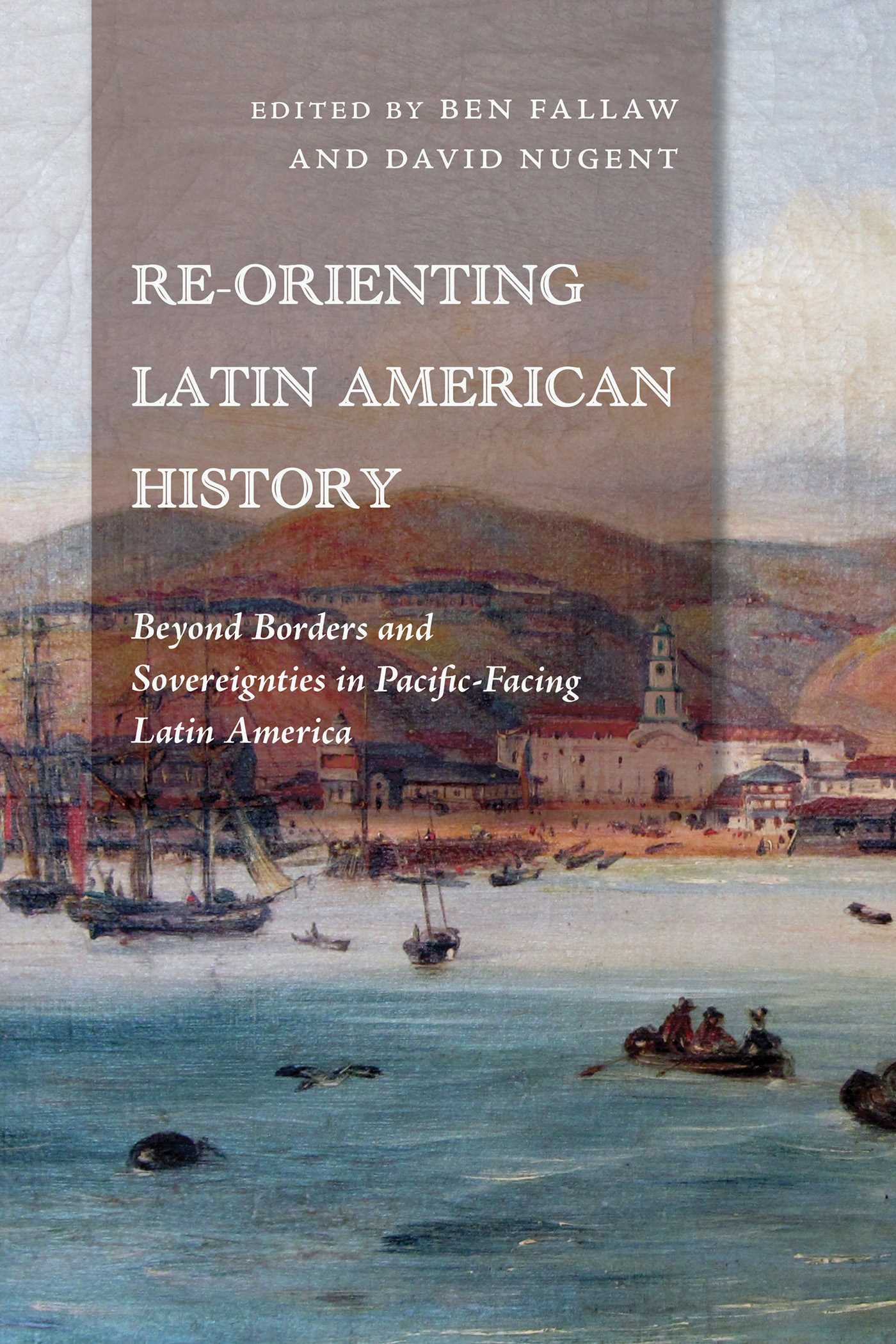
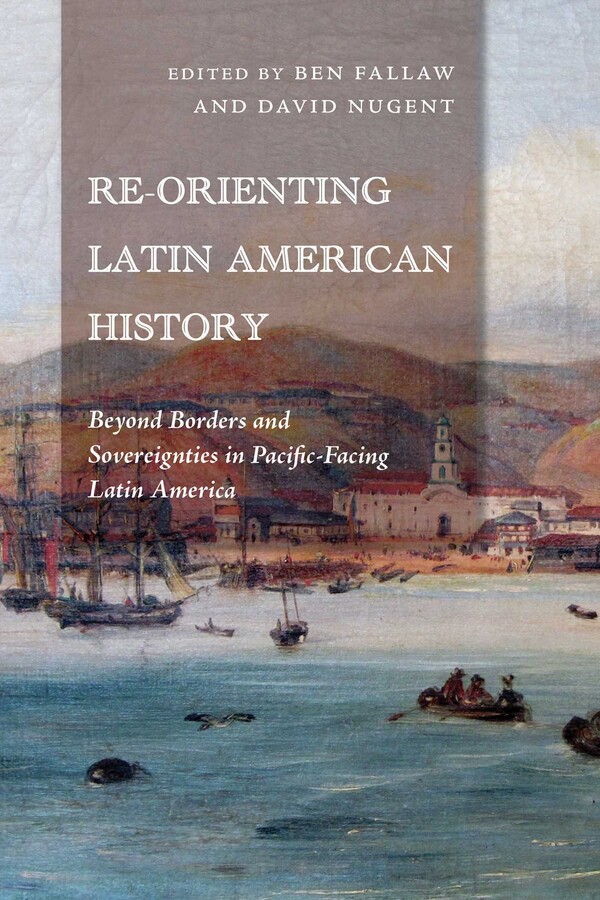
Re-Orienting Latin American History
Beyond Borders and Sovereignties in Pacific-Facing Latin America
Part of The Americas in the World Series
Edited by Ben Fallaw and David Nugent
Published by UNM Press
Distributed by Simon & Schuster
Table of Contents
About The Book
This unique volume analyzes the Pacific’s influence on Latin America between 1850 and 1950, demonstrating how the Pacific Ocean world is an intrinsic part of the modern history of Latin America.
Since the end of the Cold War, Latin America has witnessed a veritable explosion of “vernacular” or non-national sovereignties, ranging from plurinational citizenship to secessionist movements. While each has been the subject of scholarly discussion and debate, no one has asked why the nation-state came to be regarded as so deeply problematic by such a wide range of social actors across the region.
Re-Orienting Latin American History seeks to provide an interdisciplinary, transnational explanation, analyzing vernacular sovereignties that proliferated in Pacific-facing Latin America between the gold rush (1849) and the outbreak of the Cold War (circa 1950). Using diverse methodologies, sources, and scales, these essays trace circuits of capital, ideas, and people across maritime and terrestrial space from San Francisco to the Andes, exploring Black and Indigenous refugee regions, ephemeral republics, corridors of capital, and transnational revolutionary imaginaries. Rather than comparing nation-states and considering them as deviations from normative national political projects, Fallaw and Nugent set out to understand alternative forms of sovereignty on their own terms. This collection transcends both history’s transnational turn and anthropology’s broad-ranging critique of the nation-state as an analytic category.
Since the end of the Cold War, Latin America has witnessed a veritable explosion of “vernacular” or non-national sovereignties, ranging from plurinational citizenship to secessionist movements. While each has been the subject of scholarly discussion and debate, no one has asked why the nation-state came to be regarded as so deeply problematic by such a wide range of social actors across the region.
Re-Orienting Latin American History seeks to provide an interdisciplinary, transnational explanation, analyzing vernacular sovereignties that proliferated in Pacific-facing Latin America between the gold rush (1849) and the outbreak of the Cold War (circa 1950). Using diverse methodologies, sources, and scales, these essays trace circuits of capital, ideas, and people across maritime and terrestrial space from San Francisco to the Andes, exploring Black and Indigenous refugee regions, ephemeral republics, corridors of capital, and transnational revolutionary imaginaries. Rather than comparing nation-states and considering them as deviations from normative national political projects, Fallaw and Nugent set out to understand alternative forms of sovereignty on their own terms. This collection transcends both history’s transnational turn and anthropology’s broad-ranging critique of the nation-state as an analytic category.
Product Details
- Publisher: UNM Press (January 26, 2027)
- Length: 328 pages
- ISBN13: 9780826370686
Browse Related Books
Raves and Reviews
“By reorienting Latin America’s history toward the Pacific Ocean and beyond the nation-state, this volume forces us to reconsider the region’s history as a whole. It is an immensely important contribution for understanding postcolonial Latin America.”
– Steve Striffler, author of Solidarity: Latin America and the US Left in the Era of Human Rights
Resources and Downloads
High Resolution Images
-
Book Cover Image (jpg): Re-Orienting Latin American History
Trade Paperback 9780826370686