Plus, receive recommendations and exclusive offers on all of your favorite books and authors from Simon & Schuster.
Sarah's Solo
A Jewish Wedding Story About Family, Tradition, and Finding Your Own Spotlight
By Tracy Brown
Illustrated by Paula Wegman
Published by Kalaniot Books
Distributed by Simon & Schuster
Table of Contents
About The Book
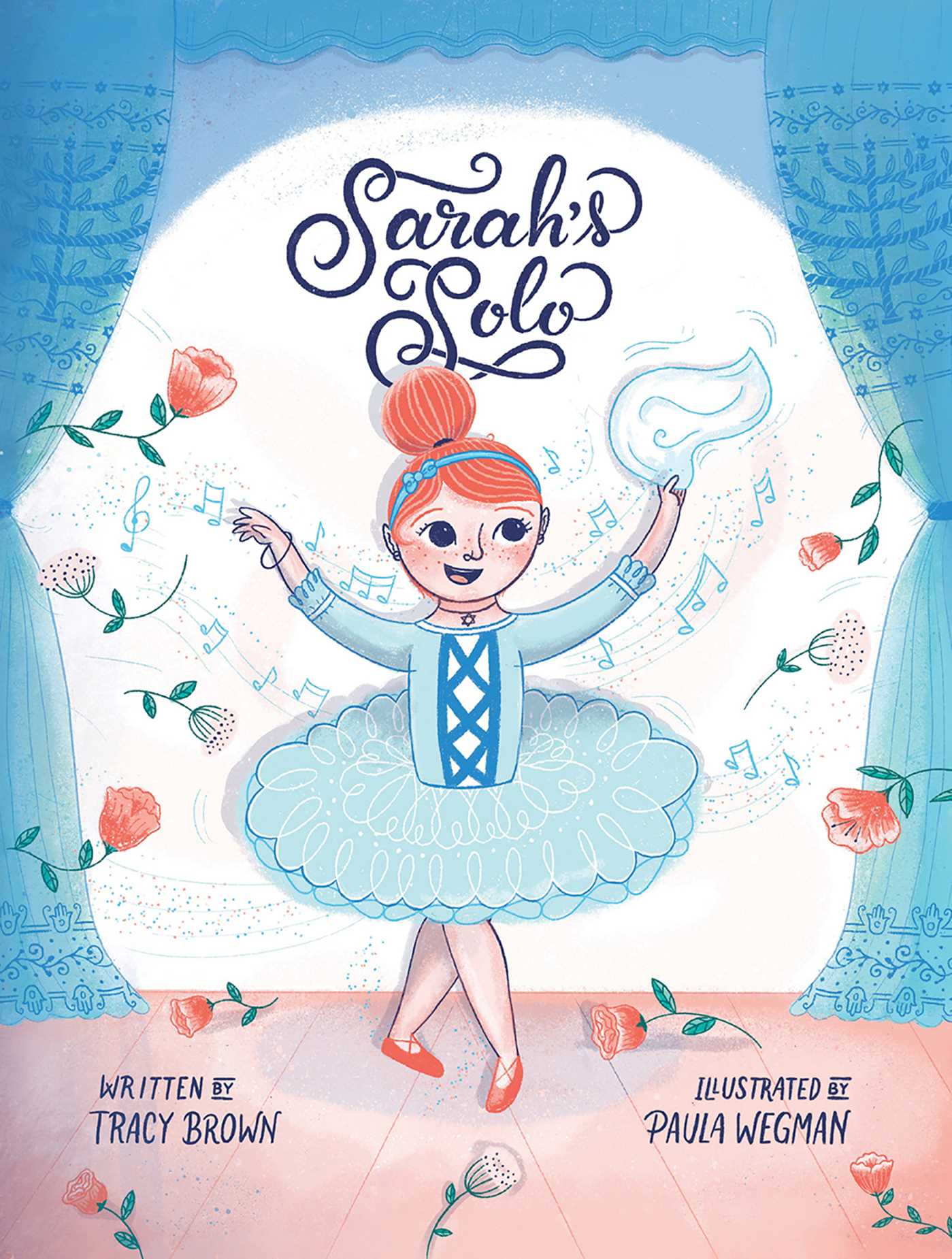
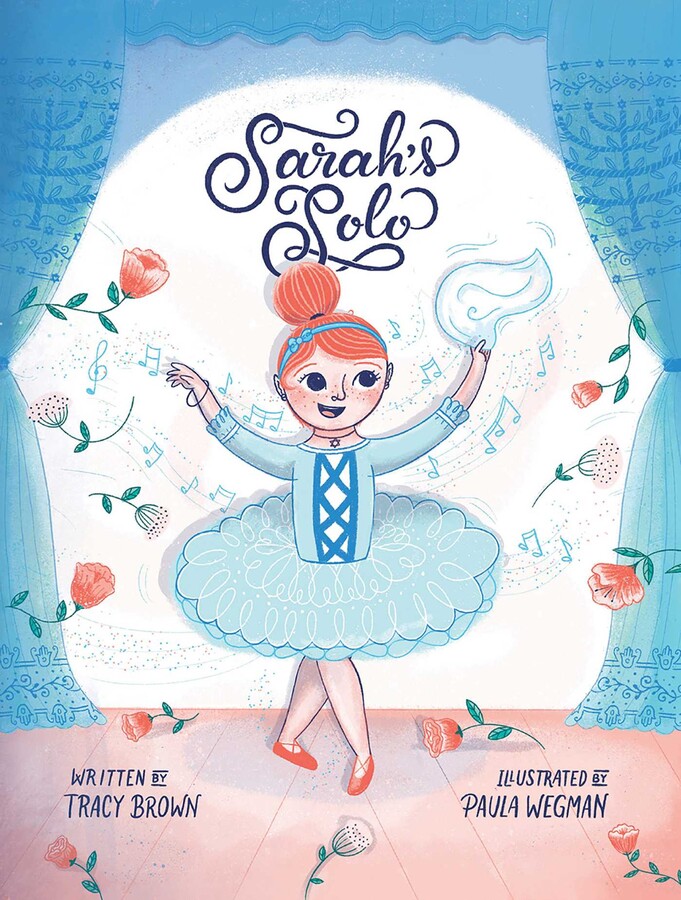
Sarah has been practicing her ballet solo for months, but just when she’s ready to shine on stage, she discovers she must miss her recital for her cousin’s wedding. Disappointed, Sarah can’t imagine how she’ll ever perform her dance—until the joyous rhythms of a Jewish wedding celebration sweep her onto the dance floor. Surrounded by family, tradition, and music, Sarah discovers that sometimes life’s most beautiful solos happen when we least expect them.
Sarah’s Solo is a heartfelt story about family, resilience, and finding joy in unexpected places. With lively illustrations and rich details of Jewish wedding traditions, this book will inspire children to embrace both their passions and their heritage.
Kirkus Reviews describes Sarah’s Solo as a picture book that “teaches about and celebrates Jewish religious and cultural wedding traditions.” The review notes the energetic contrast between ballet and hora dancing and praises the vibrant, inclusive illustrations
Sydney Taylor Shmooze praises the story’s depiction of a Jewish wedding through a child’s eyes, the inclusive visuals, and the emotional arc.
Perfect for readers who love dance, family celebrations, or stories of Jewish life, Sarah’s Solo reminds us all that there is more than one way to shine.
Sarah’s Solo is a heartfelt story about family, resilience, and finding joy in unexpected places. With lively illustrations and rich details of Jewish wedding traditions, this book will inspire children to embrace both their passions and their heritage.
Kirkus Reviews describes Sarah’s Solo as a picture book that “teaches about and celebrates Jewish religious and cultural wedding traditions.” The review notes the energetic contrast between ballet and hora dancing and praises the vibrant, inclusive illustrations
Sydney Taylor Shmooze praises the story’s depiction of a Jewish wedding through a child’s eyes, the inclusive visuals, and the emotional arc.
Perfect for readers who love dance, family celebrations, or stories of Jewish life, Sarah’s Solo reminds us all that there is more than one way to shine.
About The Illustrator
Product Details
- Publisher: Kalaniot Books (March 1, 2021)
- Length: 32 pages
- ISBN13: 9781735087504
- Ages: 4 - 8
Browse Related Books
Raves and Reviews
A young dancer discovers terpsichorean beauty at a Jewish wedding. Instead of dancing her solo at the ballet recital, Sarah has to attend her cousin’s wedding. Defiantly dressed in her ballet costume, Sarah finds herself drawn in by the beautiful movements of the Jewish wedding ceremony. At the reception, the klezmer band plays as friends and family dance around the bride and groom. Sarah doesn’t want to join in—it’s not as graceful as ballet—but when her cousin pulls her into the circle, Sarah loses herself in the music as she dances her solo at long last. The descriptive third-person narration provides natural pauses for questions and discussion during a read-aloud. While Sarah’s love of dance is a major plot driver, this book is more about Jewish culture than ballet. Backmatter provides insight into Jewish wedding traditions. Unfortunately, there are two illustrations that incorrectly depict ballet positions and movements. Ballet inconsistencies aside, the celebratory illustrations are cheerful and inviting. They employ exuberant, sometimes squiggly, linework and a color palette contrasting rosy red with cool turquoise and blue. Main characters are drawn with pale pink skin; Sarah has red hair. Wedding guests and musicians include people of all ages with a variety of skin tones, hair colors/textures, and body shapes. One guest uses a wheelchair. Teaches about and celebrates Jewish religious and cultural wedding traditions.
– Kirkus Reviews
When a child has been looking forward to a special event and has to miss it because of a family commitment, it is difficult to reassure her that life will go on?—?especially one for which she has prepared and practiced, such as a music or dance recital. In this lovely story, young Sarah is disap-pointed to learn that her cousin’s wedding conflicts with the long awaited recital at which she was to dance a solo. Nevertheless, off she goes to the wedding because family is family. During the wedding, Sarah observes many customs and traditions unique to a Jewish wedding. The bride circles the groom under a chuppah. There is lively hora-style dancing at which the bride and groom are lifted high up on chairs, gazing down at the crowd below. Music and dance are everywhere; the circling under the chuppah looks almost like a dance, and the circle dancing is inclusive and fun. The bride draws Sarah into the center of the circle to dance with her; Sarah, caught up in the joy of the moment, dances on and on. The guests applaud her with fervor and Sarah basks in the sound of the applause. Her concluding curtsy is elegantly executed. Sarah real-izes that she has performed her dance solo to an admiring audience! It seems that dreams can come true at unexpected times and in unanticipated ways. The story is as gracefully presented as a well-rehearsed dance number, and the illustrations whirl the story to even greater heights. The fancy bun atop Sarah’s red hair and her puffy party dress are every aspiring young ballerina’s dream. Homey Jewish touches include a menorah on the family bookshelf and an unmistakable aura of simcha at the wedding. The musicians ooze a klezmer vibe; one can practically hear the music coming off the page. The multicultural crowd, the wheelchair which looks right at home on the dance floor, the mix of young and old celebrating together, all transmit their gentle lessons subtly but clearly. A clever afterword is both a glossary of terms and a summary of the traditions found at a Jewish wedding, all of which the reader has encountered within the pages of the story. The descriptions incorporate the story itself, making this endnote feel woven into the text as an integral part of the book. The importance of celebrating milestones with family is highlighted and children (and adults, too) will be reminded that there are many ways to fulfill long-treasured dreams.
– Michal Hoschander Malen, Jewish Book Council
Sarah’s Solo by Tracy Brown definitely fills a niche in children’s publishing. It portrays the Jewish wedding ceremony and after-party through a child’s eyes. Sarah is upset that she cannot attend her ballet recital, which is scheduled for the exact same day as her cousin Lizzy’s wedding. In spite of her reluctance to attend, Sarah learns that Jewish wedding music can move her in much the same way that ballet music does. It has its own dance moves, which she learns quickly. Sarah begins to enjoy herself and even performs a “solo” on the dance floor. I think that Tracy Brown could have incorporated more of the Jewish wedding ceremony (she only mentions the circling of the groom and the breaking of the glass), although she does include a glossary of wedding terms at the end. Wegman’s illustrations are whimsical, full of movement and highly appealing. Younger children will enjoy spotting the expressive animals which appear on most pages. While the ceremony is traditional, the pictures of mixed dancing at the after-party indicate that this is not an Orthodox crowd. Wegman does make the effort to include people of diverse racial, ethnic, and physical ability backgrounds. Sarah’s Solo is appropriate for children ages 5 to 8 and will probably appeal more to girls than to boys, but there are always exceptions. This book is written well enough for the intended audience and does portray the Jewish wedding ceremony and music in a positive light. I think, however, that it is lacking in educational Jewish content. If Brown had expanded a little upon the wedding ceremony, and had the plot's arc been more dramatic, I think this would have been a contender.
– Mirele Kessous, Association of Jewish Libraries / Sydney Taylor Shmooze
Resources and Downloads
High Resolution Images
-
Book Cover Image (jpg): Sarah's Solo
Hardcover 9781735087504