Plus, receive recommendations and exclusive offers on all of your favorite books and authors from Simon & Schuster.
Published by Destiny Books
Distributed by Simon & Schuster
Table of Contents
About The Book
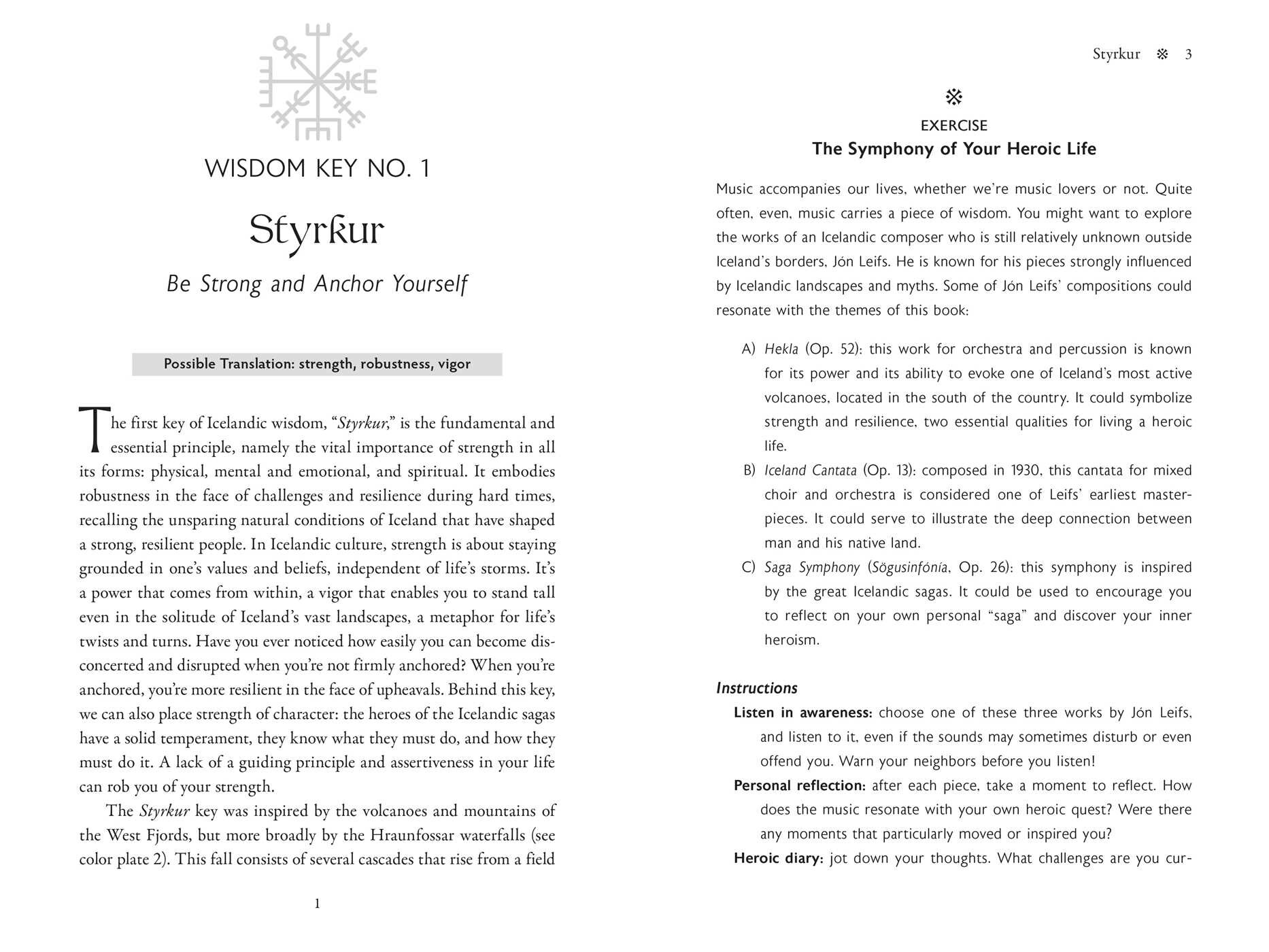
• Presents 9 essential principles drawn from ancient Icelandic texts for cultivating a balanced, resilient, and meaningful life
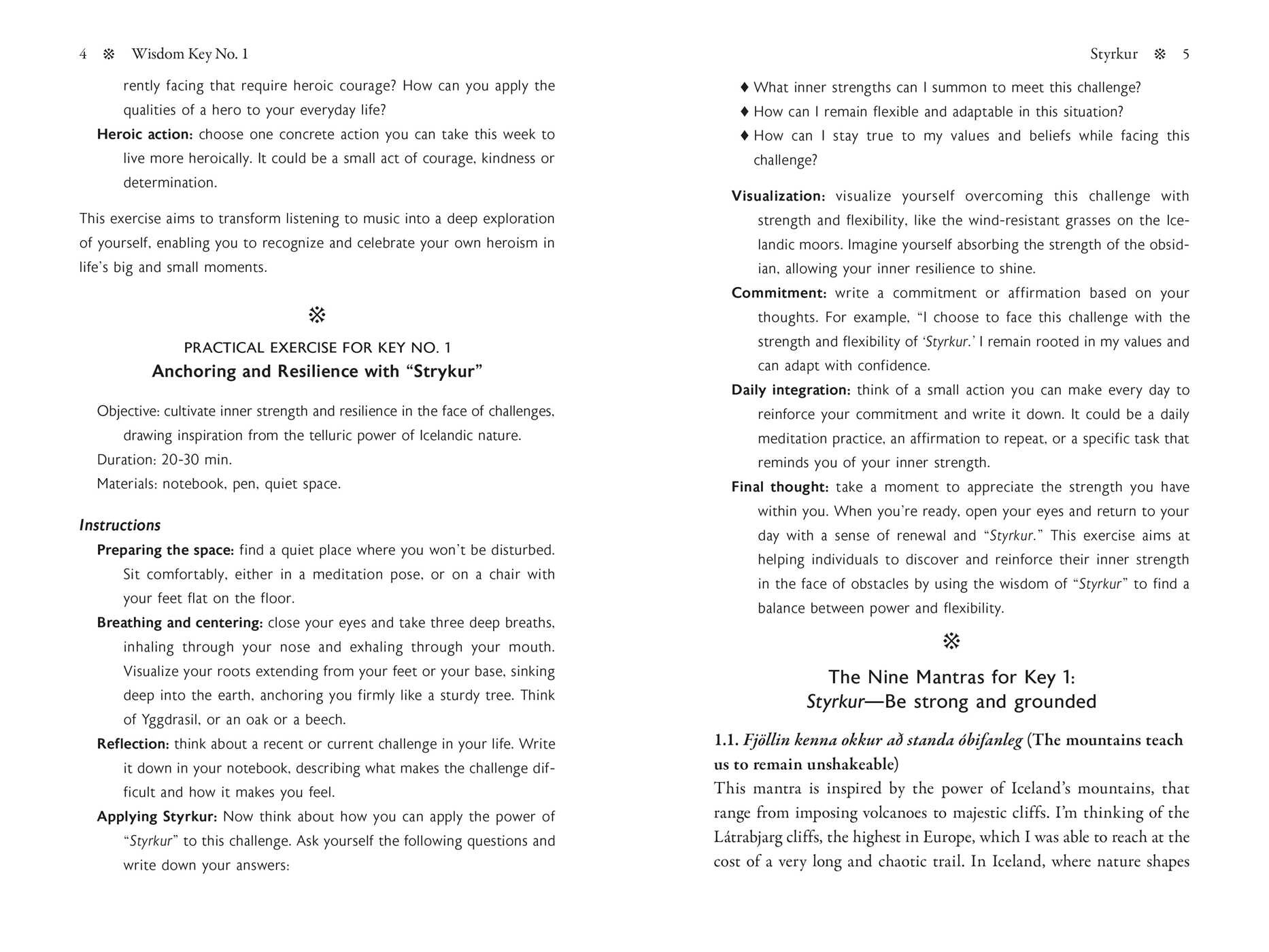
• Offers practical meditations, creative exercises, and 81 poetic mantras to help you integrate each principle into your daily life to inspire creativity, honor your ancestors, and face your shadow with courage
• Explores how these keys can serve as intuitive tools for guidance and reflection through the divinatory art of bibliomancy
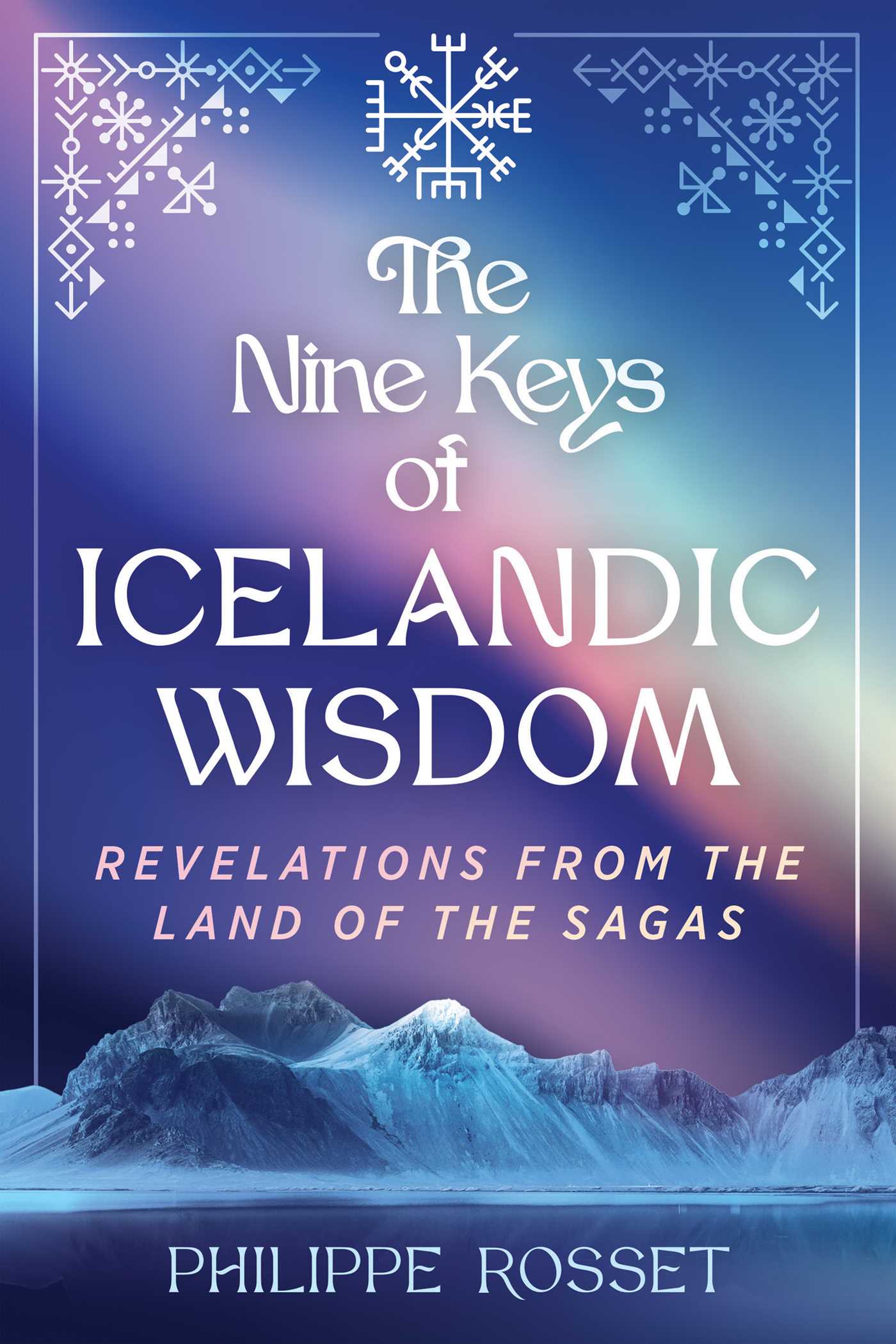
Rooted in the elemental landscapes and mythic heritage of Iceland, this book invites you onto a path of deep clarity, practical wisdom, and soulful self-reliance. Drawing from the Hávamál, the Eddas, and Norse sagas, Philippe Rosset distills nine living principles shaped by centuries of survival in one of the world’s most extreme environments.
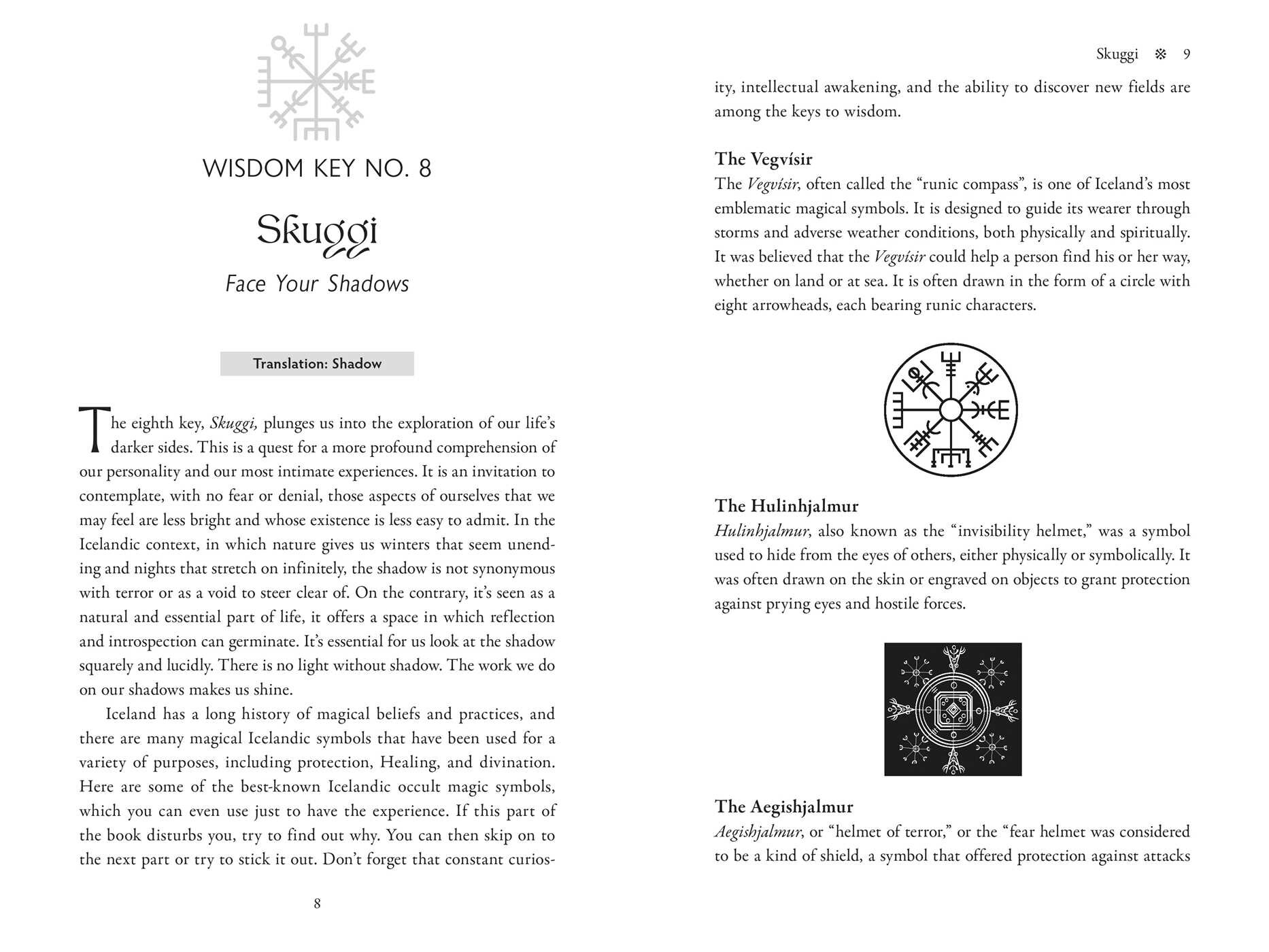
Some of the principles he covers include “Love Your Roots,” “Face Your Shadows,” and “Never Stop Learning and Expanding Your Horizons.” Each key is accompanied by nine mantras and exercises, rituals, and embodied reflections to help you integrate Icelandic wisdom into your life. Rosset blends ancient insights with a modern search for meaning, bridging myth and psychology, nature and spirit. These teachings go far beyond folklore: they offer a grounded yet elevated framework for becoming fully human.
This guide encourages you to engage your intuition, confront your challenges, and find your own form of pragmatic wisdom. Rooted in a northern poetic and archetypal tradition, The Nine Keys of Icelandic Wisdom offers a unique spiritual resource for those seeking depth, beauty, and direction in turbulent times.
• Offers practical meditations, creative exercises, and 81 poetic mantras to help you integrate each principle into your daily life to inspire creativity, honor your ancestors, and face your shadow with courage
• Explores how these keys can serve as intuitive tools for guidance and reflection through the divinatory art of bibliomancy
Rooted in the elemental landscapes and mythic heritage of Iceland, this book invites you onto a path of deep clarity, practical wisdom, and soulful self-reliance. Drawing from the Hávamál, the Eddas, and Norse sagas, Philippe Rosset distills nine living principles shaped by centuries of survival in one of the world’s most extreme environments.
Some of the principles he covers include “Love Your Roots,” “Face Your Shadows,” and “Never Stop Learning and Expanding Your Horizons.” Each key is accompanied by nine mantras and exercises, rituals, and embodied reflections to help you integrate Icelandic wisdom into your life. Rosset blends ancient insights with a modern search for meaning, bridging myth and psychology, nature and spirit. These teachings go far beyond folklore: they offer a grounded yet elevated framework for becoming fully human.
This guide encourages you to engage your intuition, confront your challenges, and find your own form of pragmatic wisdom. Rooted in a northern poetic and archetypal tradition, The Nine Keys of Icelandic Wisdom offers a unique spiritual resource for those seeking depth, beauty, and direction in turbulent times.
Excerpt
The Nine Keys of Icelandic Wisdom
Discovering the Eighty-One Mantras
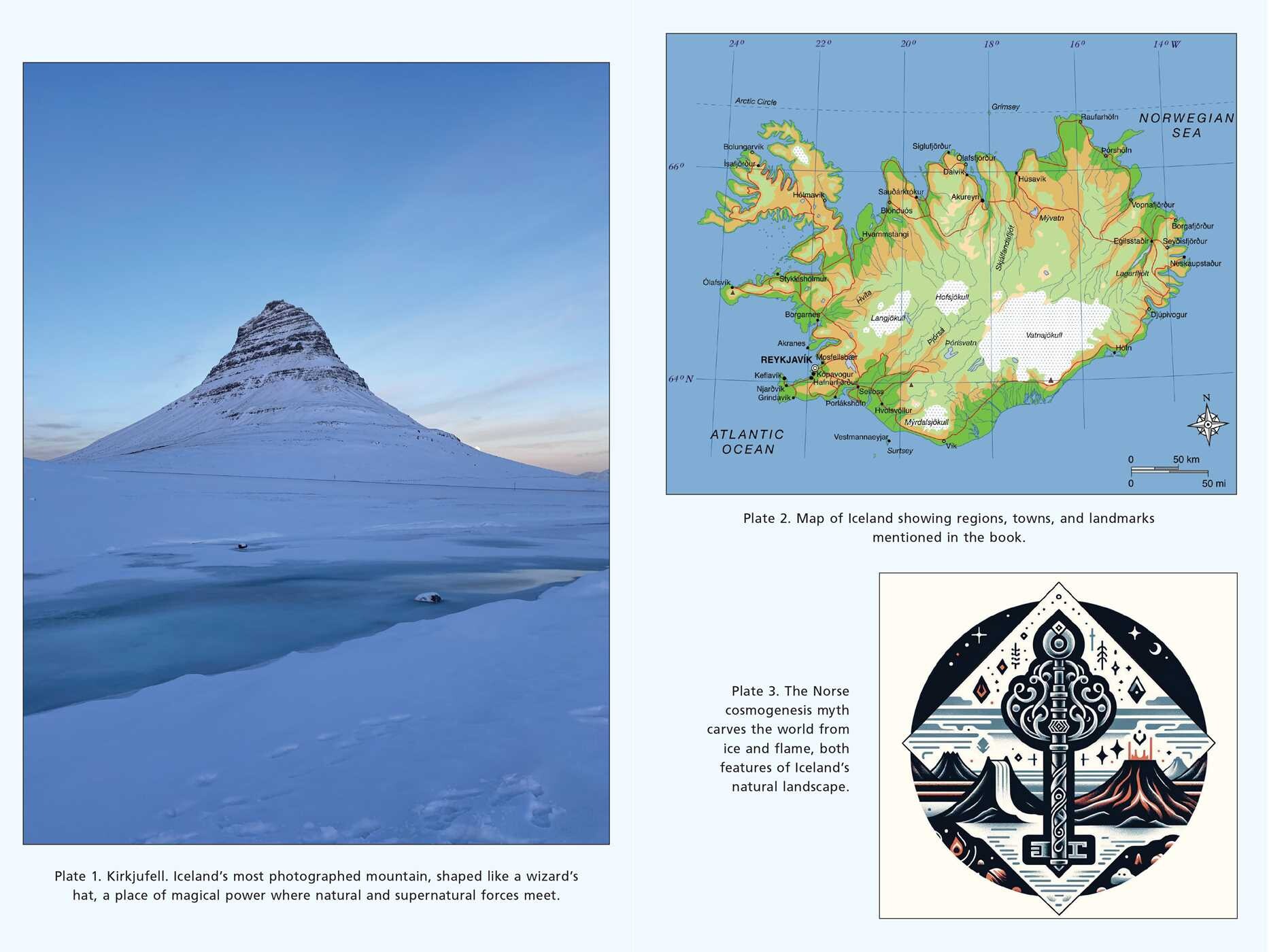
Imagine yourself walking through a lava field beneath a summer sun that almost never sets, a sun that fills you with energy and invigorates you. It is impossible to sleep when the excitement caused by full summer is at its peak. You want to explore everything, visit everything, and climb every mountain. This sun reveals an infinite landscape that is lit by powerful, glowing golden lights. Everything is bright and colorful: the lava fields with their gray-green mosses, the black sand beaches, the islands in the lakes, the glaciers . . . all lit by a light, a full and blinding light that is also cast over your own life. It is impossible to escape the sun when it is at the height of its power in the Far North. Then, six months later, this same sun, that has turned rare and cold, will caress the faintly red horizon only between the hours of noon and three o’clock. It then illuminates these same landscapes, now snow-covered, with a mystical halo of unreal light in which waterfalls become gray ice, and the purplish, pink, and orange clouds give the land a supernatural appearance. In Iceland, this fey play of light cannot help but invite us to think that our world is crisscrossed by forces that are beyond our control and comprehension. In this country, the impression of living in another dimension is really, truly present. And then night falls, a night that is never, ever fully dark, with the snow glowing on the black lava, and the rivers of ice that invite you to take a good look at your own shadows. It is no good trying to hide them; they will return in the form of anxieties and fears. When you find yourself at the heart of this nature, you find yourself in one of Tolkien’s landscapes, walking between Middle Earth and Mordor. You are gripped by a sense of depth between the relaxed attitude of summer, the melancholy majesty of autumn, and the poignant grandeur of winter with its promise of renewal in the heart of darkness. You find yourself living in places that conform to your imagination. But at the same time, you are awestruck by the sublime and endless nature of their changes and the glimmer of the imperceptible that sparkles there (see color plate 2).
Since the days of antiquity, when this Nordic land was known by the Greeks as Hyperborea, it was regarded as a place where all manner of wonders resided. It was toward these remote and mysterious regions that the legendary hero of Greek mythology, Jason, set off in search of the Golden Fleece—the ultimate symbol of conquest and knowledge. The ancients used to say: “Ex septentrione lux,” “from the north springs the light.” It is in the icy expanses and the nights illuminated by the midnight sun, in those inaccessible spots where the known world melts into the beyond, that the essence of Icelandic wisdom takes shape. The ancestors of the Icelanders sailed on tumultuous seas through storms of ice. They were guided by wise precepts, simple but demanding values, feats of strength and courage, and a fully lucid presence in the world. It is here in this intersection between myth and reality, between earth and sky, that a wisdom emerges that makes a saga possible.
In the wake of these myths, many cultures have forged an imaginary vision of Iceland, so that when we mention this land of fire and ice, the first images that come to mind are those of a harsh, wild landscape, marked by majestic volcanoes, towering glaciers, boiling geysers, and lonely fjords. However, behind this exceptional natural backdrop there lies hidden an ancestral wisdom that has been handed down from one generation to the next. This wisdom consists of keys that open a life philosophy, one that is simultaneously pragmatic, fatalistic, and yet optimistic—precisely the kind of wisdom we now need.
So here you are. Nine keys of wisdom, nine key words that open the lock to a conscious, resilient, and lucid life. Of course, the choice of the number nine for these keys and mantras was not left to chance, for this number is considered sacred in Iceland, with deep roots in Nordic mythology. The number nine appears frequently in the poems and myths, and in the very essence of the island. Here are some of the most significant and important references to the number nine in Norse mythology: the nine worlds and nine days of Odin’s initiation when he acquired his knowledge and wisdom. Not to even mention the exceptional symbolic values associated with this number (humanitarianism, compassion, altruism, philanthropy, enclosure, achievement, wisdom, integrity, idealism). Nine is regarded as the number of completion because it is the last of the single digits and symbolizes the acme of spiritual and material realization. It is often associated with a comprehensive overview, expanded awareness, and the desire to contribute to the general well-being. It is the number of journeys and new horizons. It is the number that best symbolizes the new keys to wisdom that I am about to reveal to you.
The Origin of the Nine Keys
Where do these nine keys come from? They are inspired by the ancient Icelandic texts, sagas, and poetry that go back to oral traditions In the depths of time. But they also contain principles from modern Icelandic society, which has had to deal with a variety of challenges, crises, and catastrophes. The old texts, which are still widely read by Icelanders, offer valuable sources. The nine keys were born from the ineffable inspiration and perception from my travels through this land of fire and ice.
In ancient Iceland, poetry was perceived as a gift of the gods, particularly Odin, the god of wisdom. This deep-rooted belief reflected the worldview of this land’s inhabitants, for whom poetry was a means of grasping the very essence of reality. This idea is perfectly embodied in the collection of ancient Icelandic poems known as the Poetic Edda. These texts, which have a wealth of complex metaphors and symbols, can be regarded as sacred narratives containing profound cosmological, mythological, and philosophical knowledge. Through these poems, ancient Icelanders explored themes like the creation of the world, the feats of gods and heroes, the mysteries of the universe, and the laws that govern nature and society. The poems of the Poetic Edda are far more than simple tales; they were also the means for teaching and transmitting wisdom. Every verse, every story was permeated by multiple meanings and offered insights into the human condition and its moral dilemmas, survival strategies, and spiritual quests. These poems served as a guide to better grasp the outside world and the inner world of emotions, thoughts, and aspirations. In Icelandic tradition, poetry was a path to knowledge and wisdom, a form of expression that transcended time and space. It was a bond between the world of men and the world of the gods; it provided a bridge between the earthly and the divine. The ability to write, interpret, and appreciate poetry was seen as a form of wisdom and spiritual connection. The Poetic Edda continues to inspire and influence Icelandic literature, art, and thought today. It testifies to the power and persistence of poetry as a form of artistic and spiritual expression. These ancient poems are a reminder that poetry can be a means of exploring our own inner depths and forming a connection to a much wider universe of knowledge and meaning. They are treasures that hold the keys to wisdom.
Icelandic poetry was an essential means of sharing wisdom and knowledge. The poets—or skalds—were storytellers, historians, and sages whose works educated and inspired, as well as preserved the knowledge and traditions of their people. The epic poems and sagas frequently depicted the feats of legendary heroes and gods. These tales were steeped in moral lessons and principles for living. The exploits of figures like Odin, Thor, and Freya offered examples of courage, cunning, sacrifice, and wisdom, shaping thereby the ideals and values of Icelandic society. In a culture where oral tradition was elemental, poetry was used to memorize and pass along history and knowledge. Poems were designed to be memorized easily, often thanks to complex rhythmic structures and rhyme schemes. This technique guaranteed that the teachings and the tales could be passed down from generation to generation with no loss of accuracy. Many Norse poems explore the complexities of human nature: its conflicts, its moral dilemmas, its passions. Listening to or reciting these poems taught individuals how to navigate the complicated aspects of social and individual life, hereby forging a deeper understanding of themselves and others.
Discovering the Eighty-One Mantras
Imagine yourself walking through a lava field beneath a summer sun that almost never sets, a sun that fills you with energy and invigorates you. It is impossible to sleep when the excitement caused by full summer is at its peak. You want to explore everything, visit everything, and climb every mountain. This sun reveals an infinite landscape that is lit by powerful, glowing golden lights. Everything is bright and colorful: the lava fields with their gray-green mosses, the black sand beaches, the islands in the lakes, the glaciers . . . all lit by a light, a full and blinding light that is also cast over your own life. It is impossible to escape the sun when it is at the height of its power in the Far North. Then, six months later, this same sun, that has turned rare and cold, will caress the faintly red horizon only between the hours of noon and three o’clock. It then illuminates these same landscapes, now snow-covered, with a mystical halo of unreal light in which waterfalls become gray ice, and the purplish, pink, and orange clouds give the land a supernatural appearance. In Iceland, this fey play of light cannot help but invite us to think that our world is crisscrossed by forces that are beyond our control and comprehension. In this country, the impression of living in another dimension is really, truly present. And then night falls, a night that is never, ever fully dark, with the snow glowing on the black lava, and the rivers of ice that invite you to take a good look at your own shadows. It is no good trying to hide them; they will return in the form of anxieties and fears. When you find yourself at the heart of this nature, you find yourself in one of Tolkien’s landscapes, walking between Middle Earth and Mordor. You are gripped by a sense of depth between the relaxed attitude of summer, the melancholy majesty of autumn, and the poignant grandeur of winter with its promise of renewal in the heart of darkness. You find yourself living in places that conform to your imagination. But at the same time, you are awestruck by the sublime and endless nature of their changes and the glimmer of the imperceptible that sparkles there (see color plate 2).
Since the days of antiquity, when this Nordic land was known by the Greeks as Hyperborea, it was regarded as a place where all manner of wonders resided. It was toward these remote and mysterious regions that the legendary hero of Greek mythology, Jason, set off in search of the Golden Fleece—the ultimate symbol of conquest and knowledge. The ancients used to say: “Ex septentrione lux,” “from the north springs the light.” It is in the icy expanses and the nights illuminated by the midnight sun, in those inaccessible spots where the known world melts into the beyond, that the essence of Icelandic wisdom takes shape. The ancestors of the Icelanders sailed on tumultuous seas through storms of ice. They were guided by wise precepts, simple but demanding values, feats of strength and courage, and a fully lucid presence in the world. It is here in this intersection between myth and reality, between earth and sky, that a wisdom emerges that makes a saga possible.
In the wake of these myths, many cultures have forged an imaginary vision of Iceland, so that when we mention this land of fire and ice, the first images that come to mind are those of a harsh, wild landscape, marked by majestic volcanoes, towering glaciers, boiling geysers, and lonely fjords. However, behind this exceptional natural backdrop there lies hidden an ancestral wisdom that has been handed down from one generation to the next. This wisdom consists of keys that open a life philosophy, one that is simultaneously pragmatic, fatalistic, and yet optimistic—precisely the kind of wisdom we now need.
So here you are. Nine keys of wisdom, nine key words that open the lock to a conscious, resilient, and lucid life. Of course, the choice of the number nine for these keys and mantras was not left to chance, for this number is considered sacred in Iceland, with deep roots in Nordic mythology. The number nine appears frequently in the poems and myths, and in the very essence of the island. Here are some of the most significant and important references to the number nine in Norse mythology: the nine worlds and nine days of Odin’s initiation when he acquired his knowledge and wisdom. Not to even mention the exceptional symbolic values associated with this number (humanitarianism, compassion, altruism, philanthropy, enclosure, achievement, wisdom, integrity, idealism). Nine is regarded as the number of completion because it is the last of the single digits and symbolizes the acme of spiritual and material realization. It is often associated with a comprehensive overview, expanded awareness, and the desire to contribute to the general well-being. It is the number of journeys and new horizons. It is the number that best symbolizes the new keys to wisdom that I am about to reveal to you.
The Origin of the Nine Keys
Where do these nine keys come from? They are inspired by the ancient Icelandic texts, sagas, and poetry that go back to oral traditions In the depths of time. But they also contain principles from modern Icelandic society, which has had to deal with a variety of challenges, crises, and catastrophes. The old texts, which are still widely read by Icelanders, offer valuable sources. The nine keys were born from the ineffable inspiration and perception from my travels through this land of fire and ice.
In ancient Iceland, poetry was perceived as a gift of the gods, particularly Odin, the god of wisdom. This deep-rooted belief reflected the worldview of this land’s inhabitants, for whom poetry was a means of grasping the very essence of reality. This idea is perfectly embodied in the collection of ancient Icelandic poems known as the Poetic Edda. These texts, which have a wealth of complex metaphors and symbols, can be regarded as sacred narratives containing profound cosmological, mythological, and philosophical knowledge. Through these poems, ancient Icelanders explored themes like the creation of the world, the feats of gods and heroes, the mysteries of the universe, and the laws that govern nature and society. The poems of the Poetic Edda are far more than simple tales; they were also the means for teaching and transmitting wisdom. Every verse, every story was permeated by multiple meanings and offered insights into the human condition and its moral dilemmas, survival strategies, and spiritual quests. These poems served as a guide to better grasp the outside world and the inner world of emotions, thoughts, and aspirations. In Icelandic tradition, poetry was a path to knowledge and wisdom, a form of expression that transcended time and space. It was a bond between the world of men and the world of the gods; it provided a bridge between the earthly and the divine. The ability to write, interpret, and appreciate poetry was seen as a form of wisdom and spiritual connection. The Poetic Edda continues to inspire and influence Icelandic literature, art, and thought today. It testifies to the power and persistence of poetry as a form of artistic and spiritual expression. These ancient poems are a reminder that poetry can be a means of exploring our own inner depths and forming a connection to a much wider universe of knowledge and meaning. They are treasures that hold the keys to wisdom.
Icelandic poetry was an essential means of sharing wisdom and knowledge. The poets—or skalds—were storytellers, historians, and sages whose works educated and inspired, as well as preserved the knowledge and traditions of their people. The epic poems and sagas frequently depicted the feats of legendary heroes and gods. These tales were steeped in moral lessons and principles for living. The exploits of figures like Odin, Thor, and Freya offered examples of courage, cunning, sacrifice, and wisdom, shaping thereby the ideals and values of Icelandic society. In a culture where oral tradition was elemental, poetry was used to memorize and pass along history and knowledge. Poems were designed to be memorized easily, often thanks to complex rhythmic structures and rhyme schemes. This technique guaranteed that the teachings and the tales could be passed down from generation to generation with no loss of accuracy. Many Norse poems explore the complexities of human nature: its conflicts, its moral dilemmas, its passions. Listening to or reciting these poems taught individuals how to navigate the complicated aspects of social and individual life, hereby forging a deeper understanding of themselves and others.
Product Details
- Publisher: Destiny Books (August 18, 2026)
- Length: 200 pages
- ISBN13: 9798888503737
Browse Related Books
Raves and Reviews
“The nine keys and mantras in this book—grounded in the extraordinary mix of Iceland’s wild landscape, Old Norse lyrical poetry, and the resilient Icelanders themselves—offer you fresh guidance to support the embodiment of your soul’s fullness.”
– Evelyn C. Rysdyk, author of The Norse Shaman
“Wonder is the word I most associate with Iceland: its stark nature and rich culture have long inspired me. The Nine Keys of Icelandic Wisdom deftly captures that feeling of wonder and makes it both practical and portable. From Iceland’s landscape, its sagas and ancient poems, and its modern outlook, Rosset has distilled an inspiring guide to living a life of discovery.”
– Nancy Marie Brown, author of Looking for the Hidden Folk: How Iceland’s Elves Can Save the Ear
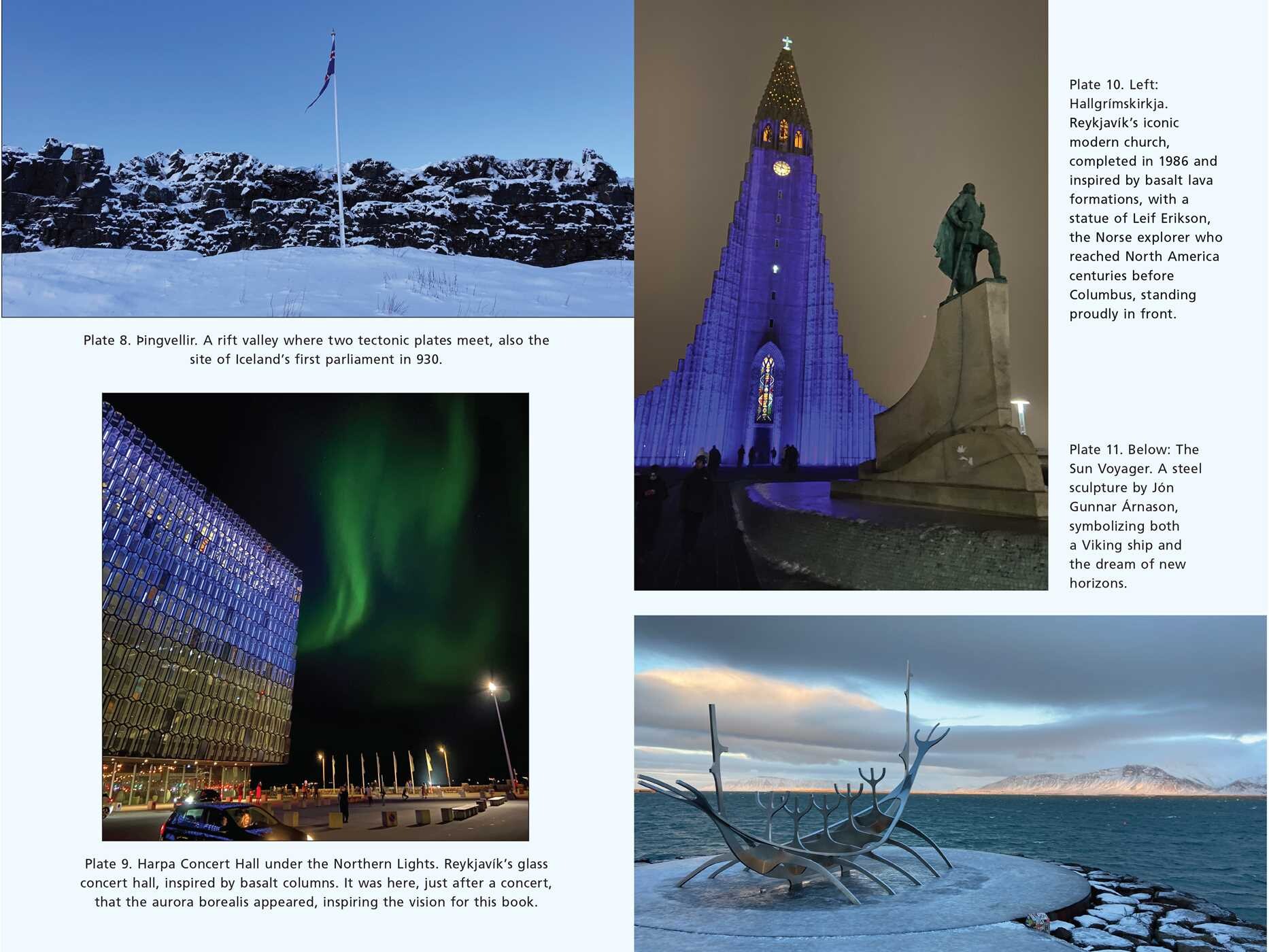
“The Nine Keys of Icelandic Wisdom presents skills for living in harmony with a magical landscape hidden within the natural world. While the author’s stories and meditations center around Icelandic traditions, they are universal and valuable for any reader. He presents a ‘path with no destination’ for seekers of inner knowledge. And even more, the photographs alone are worth the price of the book. These stunning images, showing the boundary between the natural and supernatural, permeate every key the author presents.”
– Judith Dillon, author of Futhark Rune Mysteries and Alphabets and the Mystery Traditions
“The themes and values from the Icelandic sagas offer life lessons that are relevant to our contemporary lives. They encourage honor and integrity in our social and spiritual lives, with characters of the sagas serving as mirrors through which we can explore and understand ourselves. Though this exploration does not need to take place in Iceland, I would love to return for a second visit to bring these nine keys to life within me.”
– Nicholas E. Brink, PhD, author of Baldr’s Magic, Ecstatic Soul Retrieval, and The Power of Ecs
Resources and Downloads
High Resolution Images
-
Book Cover Image (jpg): The Nine Keys of Icelandic Wisdom
eBook 9798888503737