Plus, receive recommendations and exclusive offers on all of your favorite books and authors from Simon & Schuster.
0:00 /
Table of Contents
About The Book
Longlisted for the Andrew Carnegie Medal of Excellence in Fiction
A New York Times Book Review Editors’ Choice
A USA TODAY Bestseller
A Best Book of 2025 for Vogue
Named one of Time’s 100 Must-Read Books of 2025
An NPR favorite fiction read of 2025
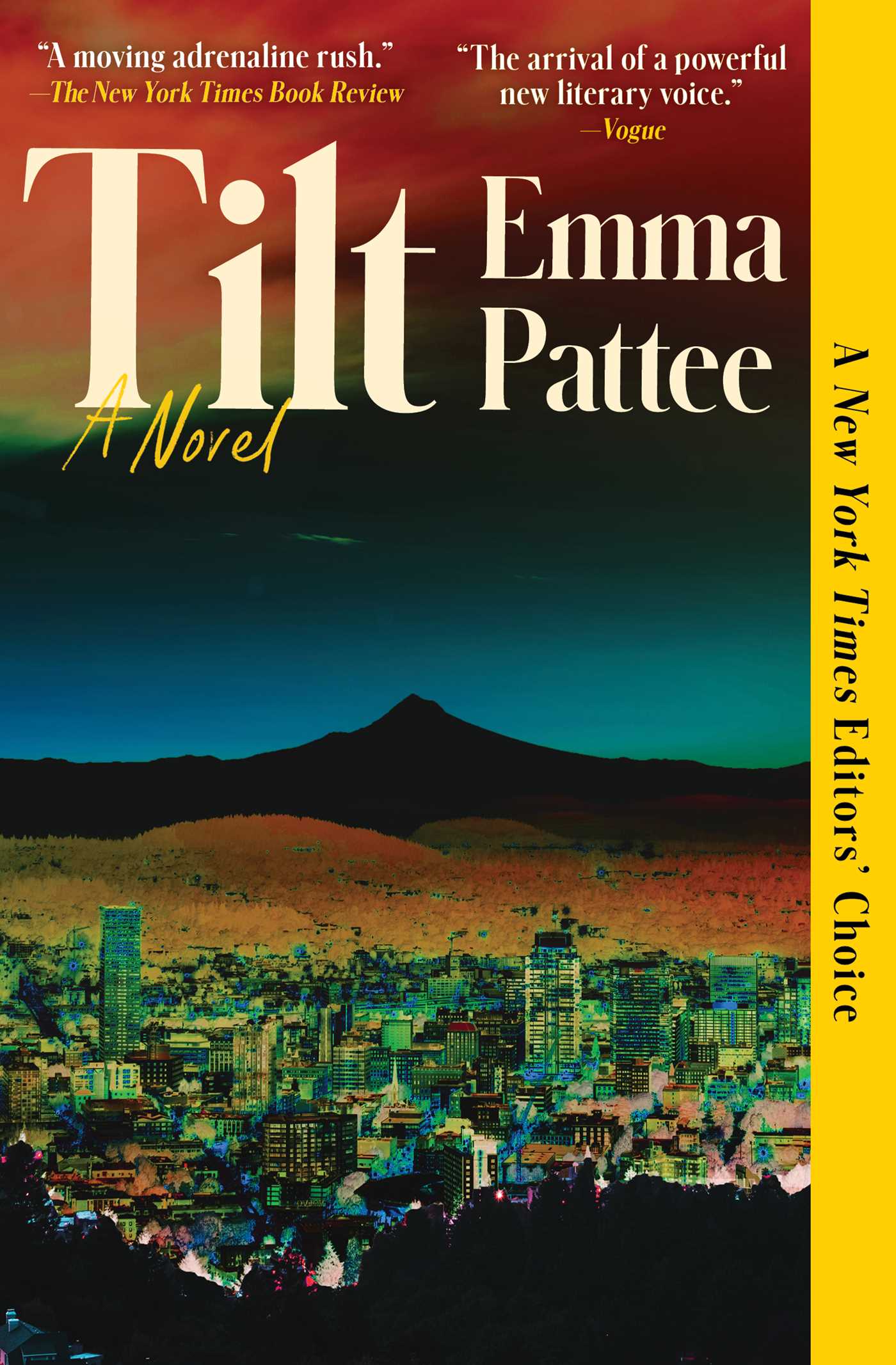
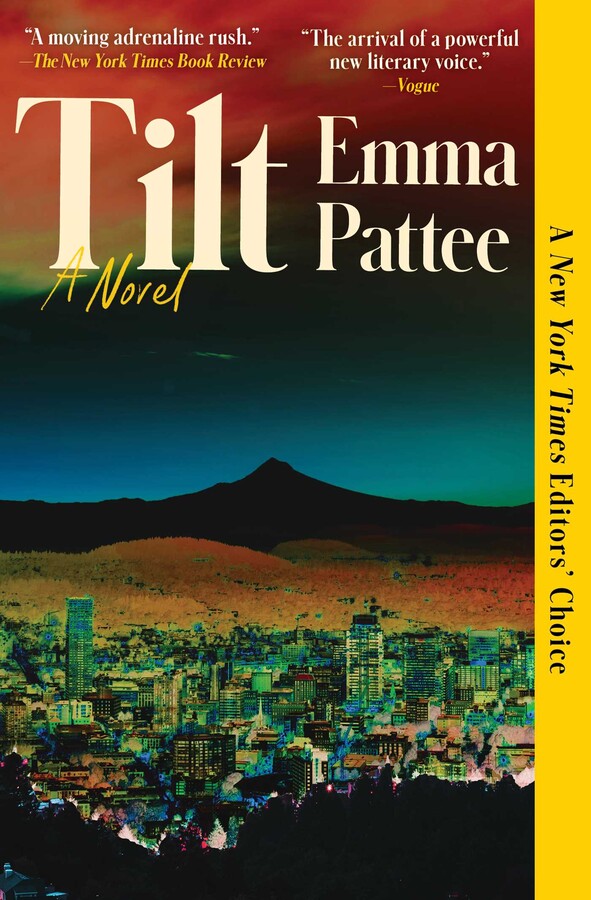
Set over the course of a single day, an electrifying debut novel from “a powerful new literary voice” (Vogue) following one woman’s journey across a transformed city, carrying the weight of her past and a fervent hope for the future.
“Utterly gripping.” —NPR, All Things Considered
Last night, you and I were safe. Last night, in another universe, your father and I stood fighting in the kitchen.
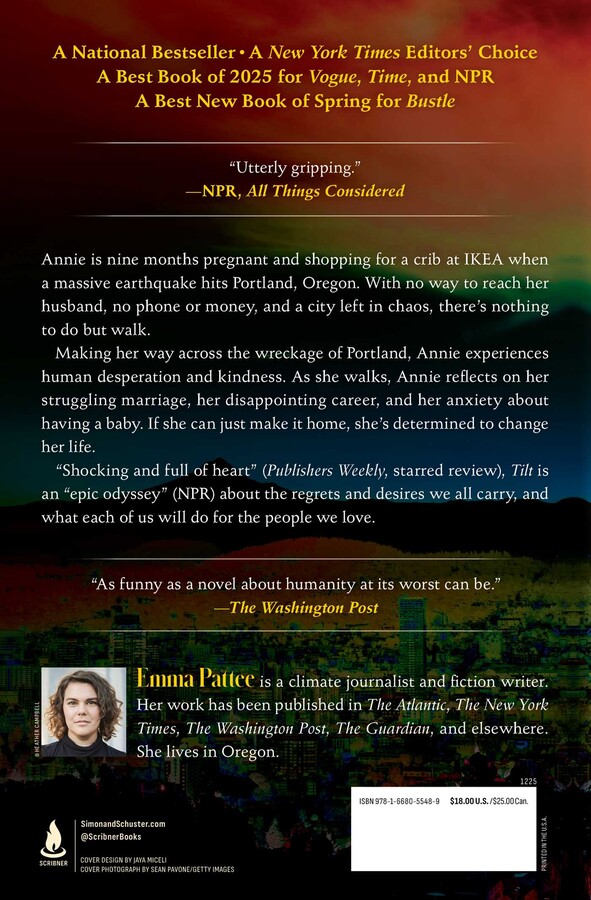
Annie is nine months pregnant and shopping for a crib at IKEA when a massive earthquake hits Portland, Oregon. With no way to reach her husband, no phone or money, and a city left in chaos, there’s nothing to do but walk.
Making her way across the wreckage of Portland, Annie experiences human desperation and kindness: strangers offering help, a riot at a grocery store, and an unlikely friendship with a young mother. As she walks, Annie reflects on her struggling marriage, her disappointing career, and her anxiety about having a baby. If she can just make it home, she’s determined to change her life.
“Shocking and full of heart” (Publishers Weekly, starred review), Tilt is a “moving adrenaline rush” (The New York Times Book Review) and “epic odyssey” (NPR) about the disappointments and desires we all carry, and what each of us will do for the people we love.
A New York Times Book Review Editors’ Choice
A USA TODAY Bestseller
A Best Book of 2025 for Vogue
Named one of Time’s 100 Must-Read Books of 2025
An NPR favorite fiction read of 2025
Set over the course of a single day, an electrifying debut novel from “a powerful new literary voice” (Vogue) following one woman’s journey across a transformed city, carrying the weight of her past and a fervent hope for the future.
“Utterly gripping.” —NPR, All Things Considered
Last night, you and I were safe. Last night, in another universe, your father and I stood fighting in the kitchen.
Annie is nine months pregnant and shopping for a crib at IKEA when a massive earthquake hits Portland, Oregon. With no way to reach her husband, no phone or money, and a city left in chaos, there’s nothing to do but walk.
Making her way across the wreckage of Portland, Annie experiences human desperation and kindness: strangers offering help, a riot at a grocery store, and an unlikely friendship with a young mother. As she walks, Annie reflects on her struggling marriage, her disappointing career, and her anxiety about having a baby. If she can just make it home, she’s determined to change her life.
“Shocking and full of heart” (Publishers Weekly, starred review), Tilt is a “moving adrenaline rush” (The New York Times Book Review) and “epic odyssey” (NPR) about the disappointments and desires we all carry, and what each of us will do for the people we love.
Reading Group Guide
Get a FREE ebook by joining our mailing list today! Plus, receive recommendations for your next Book Club read.
By clicking 'Sign me up', I consent to Simon & Schuster sending me email offers and updates, including offers for a free eBook. I understand I can unsubscribe at any time. Any offer for an eBook may be subject to exclusions, terms, conditions, and registration with our fulfillment partners. We collect and use your information in accordance with our Privacy Policy. Free ebook offer available to NEW CA subscribers only. Offer redeemable at Simon & Schuster's ebook fulfillment partner. Must redeem within 90 days. See the full terms and conditions.
This reading group guide for Tilt includes an introduction, discussion questions, and ideas for enhancing your book club. The suggested questions are intended to help your reading group find new and interesting angles and topics for your discussion. We hope that these ideas will enrich your conversation and increase your enjoyment of the book.
Introduction
Annie is nine months pregnant and shopping for a crib at IKEA when a massive earthquake hits Portland, Oregon. With no way to reach her husband, no phone or money, and a city left in chaos, there’s nothing to do but walk.
Making her way across the wreckage of Portland, Annie experiences human desperation and kindness: strangers offering help, a riot at a grocery store, and an unlikely friendship with a young mother. As she walks, Annie reflects on her struggling marriage, her disappointing career, and her anxiety about having a baby. If she can just make it home, she’s determined to change her life.
A propulsive debut, Tilt is a primal scream of a novel about the disappointments and desires we all carry, and what each of us will do for the people we love.
Discussion Questions:
The novel’s portrayal of a catastrophic earthquake is both gripping and eye-opening. How did it shape your perspective on disaster preparedness and survival? Have you ever experienced a natural disaster or other life-altering event, and if so, how did it compare to what Annie faced?
Annie’s pregnancy is central to her story. How do you think her emotions, decisions, and challenges during the earthquake would have been different if she weren’t pregnant? How might this change affect the story’s impact on you as a reader?
Resilience is a recurring theme throughout the novel. How do Annie’s emotional and physical struggles reflect her inner strength? Can you recall a moment in your life when resilience played a key role in overcoming a challenge?
The imagery of Portland is vivid and deeply woven into the novel’s atmosphere. How did the setting amplify the tension in the story? Did the descriptions of this familiar yet fractured city evoke any personal connections or memories of places you love?
Relationships are examined in different ways throughout Annie’s story—with her partner, her unborn child, and the people she encounters during the disaster. How did these relationships enhance the narrative? Did it prompt you to reflect on your own connections and how they might endure under pressure?
The novel blends vivid storytelling with scientific accuracy about the threat of a Cascadia Subduction Zone earthquake. How did this combination affect your reading experience? Were you previously aware of this geologic risk, and has it changed how you think about the natural world?
Throughout the book, Annie’s decisions under extraordinary pressure are crucial to her survival. Were there moments when you found yourself agreeing or disagreeing with her choices? What does this say about your own instincts in high-stress situations?
Dreams and ambitions linger in the novel as unspoken forces, even within the survival narrative. How did Annie’s unfulfilled dreams resonate with you, and do they remind you of any aspirations in your own life that were redirected by unexpected events?
While the novel unfolds over the course of a single day, it also reflects on Annie’s past, particularly her relationship with her mother and her husband. How did this structure of alternating timelines affect your connection to her story? Can you think of a time when reflecting on the past provided clarity during a crisis?
Annie encounters several strangers during the disaster, each revealing different shades of humanity—for better and for worse. Which of these characters stood out to you the most? Did you see traits of yourself or people you know in any of their actions or decisions?
The novel subtly highlights the socioeconomic disparities that exist in both ordinary and catastrophic situations—how did these themes shape your understanding of survival? Have you witnessed or experienced ways in which resources and privilege play a role in navigating crises?
The moment when Annie gives birth alone in the park is raw and powerful. What emotions did this scene stir in you? What do you think it symbolizes about motherhood, bravery, and human endurance in the face of adversity?
The title Tilt is evocative and layered with meaning. How do you interpret its connection to the events and themes of the novel? Were there moments in the story that stood out as pivotal “tilts” or shifts in perspective or fate?
After reading Tilt, what personal insights or takeaways resonate with you most, especially concerning resilience, relationships, or navigating crises? Did this story inspire you to view your own life—or the challenges you have faced—in a different light?
How would you describe the overarching emotional impact of Tilt? Did it leave you feeling hopeful, contemplative, or something else entirely? What conversations would you want to explore further with others after reading this novel?
ACTIVITIES TO ENHANCE YOUR BOOK CLUB
1. Emergency Preparedness Challenge
Take inspiration from the novel’s survival theme and prepare a mini-survival kit. Share what items you’d include and discuss how you'd adapt to a disaster scenario in your city or town. Visit https://www.ready.gov/kit to research further and build on your discussion.
2. Cast your crisis team
Imagine you’re in Annie’s shoes at the start of the novel. Who would you want by your side? List three people you’d want as allies during a crisis and describe the emotional and practical strengths they bring, like resilience, humor, or resourcefulness. Reflect on a time when one of these individuals helped you face an unexpected challenge and how it impacted your relationship. Share your list and story with the group, discussing the traits that make someone a valuable comrade in tough times.
3. Journal Prompt: What is a “tilt” moment in your own life?
Invite members to write about a “tilt” moment in their lives—an event that shifted their perspective or path. Invite everyone to share how they navigated it and what they learned.
Q&A with author Emma Pattee
What inspired you to write about a catastrophic earthquake in Portland as the backdrop for Annie’s story?
When I was seven months pregnant, I was shopping for a crib at the IKEA in Portland and the building started to shake. The first thought in my mind was that it was the Cascadia earthquake, which is overdue to hit the Pacific Northwest.
It wasn’t an earthquake; it was actually a large truck driving by. As soon as I realized I was safe, the idea for the book appeared in my mind.
Annie’s pregnancy adds a unique layer of vulnerability to her character. Why did you choose to make her pregnant, and how did that enrich the story for you?
There are so many fascinating ways that a pregnancy and a long-awaited earthquake mirror each other. Pregnancy forces us out of our comfortable, controlled lives and into a more vulnerable position. Like an earthquake. We need others when we’re pregnant. Like an earthquake. Pregnancy is also something we can never really prepare for, no matter how much we try and how many things we buy. Like an earthquake!
How much research went into the seismic realities and science behind the disaster? Did you learn anything that surprised you?
Because this is a real earthquake I’m writing about, in a real city, it was important to me to be as factually accurate as possible. Every street I mention in the book is real; most of the places I describe are real. The length and severity of the shaking, the devastation of the city, the conditions of streets and bridges, the failure of the power grid and cell towers, the outmatched official response, the danger of brick buildings, the risk of gas fires—the earthquake, as Annie experiences it, is as accurate as something that hasn’t happened yet can be.
I also had several geologists and structural engineers review the book for accuracy, and I did first-person interviews with first responders who were on-site in China and in Kashmir trying to rescue children from collapsed schools. I also had the opportunity to attend a training day with the Portland NET team (we have the largest network of emergency volunteers in the country!) and see firsthand what a rescue scene might look like.
Was there a particular moment in the book that was especially difficult to write? Why?
The most difficult scene in the book was the scene that takes place at the elementary school. Not only was it technically challenging to accurately show how a large brick school would collapse from an earthquake, it also was emotionally challenging as Annie and Taylor are each having such intense but very different experiences. As a mother, the terror that those parents must have been feeling was unimaginable to me, and yet as the writer, I had to imagine it. I would edit the draft by hand, and sometimes the pages would just be soaked in tears.
Did you draw inspiration from your own life for any of the themes or characters in Tilt?
I see Annie’s journey as one of isolation and disappointment to connection and awe. In the beginning of the book, she is alone, unhappy in her marriage, and feels like nothing is going right. By the end of the book, she feels profoundly connected, not only with her unborn child but with Taylor, with her mother, and with her husband. She also has let go of some of the disappointment and regret that is keeping her so stuck. In the beginning of the book, she can’t stop looking backward. By the end, she is looking forward. She is ready to face the rest of her life.
Annie and I are very different people. But I relate to her journey. I spent my twenties feeling isolated and like my life had not turned out the way I wanted. Part of growing up was having my own “tilt” moment, when I realized that being alive is a miracle, and being alive with others—getting to laugh and talk and be connected—is the greatest miracle.
How did growing up in Portland influence your choice of location for the novel?
In Portland, we live under the anxiety of the earthquake. A disaster coming sometime in the future. But Portland is also a city—like many cities—profoundly shaped by class and money and unmet artistic dreams. I wanted to write about the experience of growing up in a place where you’re suddenly priced out. You’re holding on by your fingernails just to keep living in your hometown. In the years I spent writing the book, I kept having to go back and edit the buildings that Annie sees on her long walk because the buildings in the book kept getting torn down in real life!
Living as an adult in your hometown, even if it’s a big city, can feel a lot like stuck-ness. Every day when I take my kids to the park, we walk by the park bench where I made out with my crush when I was seventeen. It can feel like you’re standing still even as you’re getting older. Annie has a lot of alternate lives, and she and Dom talk frequently about moving. When you’ve never left the place where you grew up, it can feel like your life hasn’t even begun.
This book is an homage to the city I live in now, that I love so deeply. It’s also a love letter to the city I grew up in, which no longer exists.
Motherhood plays a significant role in the story. How do you hope readers connect with Annie’s experience?
The book taught me that there is a viciousness to parenthood, specifically motherhood, that we don’t talk enough about. We talk about women as caregivers, as being intuitive, as being communal. Yes, we are all these things. But women are fierce and ruthless protectors of their children. When I was writing the book, I came across research that rat moms are four times faster at catching crickets than rats who aren’t mothers. I wanted to show Annie’s journey from pregnant woman to warrior mom.
The novel emphasizes connection and survival, both physically and emotionally. Why were these themes important for you to explore?
So many dystopian narratives are the same: man with gun fights alone at end of world. This is a very individualistic, patriarchal concept of what an apocalypse might look like.
The historical record does not support the “man with gun fights alone at the end of the world” narrative. Yes, disaster, war, and famine cause humans to do terrible things to each other. But there are also moments of connection, community, and caring. At the end of the world, humans will still be social animals. In some ways, we need closeness as much as we need food and water. So it was important to me to write a different narrative.
Every step of Annie’s journey is impacted by others. Yes, she must navigate physical danger and the reality of being a woman walking alone. But she also finds more human connection than perhaps she’s ever experienced before.
What do you hope readers take away from Tilt, especially as it relates to their own relationships and challenges?
I have always been fascinated by shock points: moments when you get jolted out of your everyday life and you suddenly see things clearly. I want a divorce. I hate my job. I forgive my father. I want to move to Paris. You also can see what doesn’t matter: the car you drive, your hair, social media, the fight you’re having with your neighbor.
These moments don’t always feel like it, but they are a gift. The earthquake gives Annie a huge shock point, gives her enormous perspective, allows her the chance to change her life. So my hope is that by reading this book, somebody could—even for a moment—glimpse what matters most and what doesn’t matter at all.
Introduction
Annie is nine months pregnant and shopping for a crib at IKEA when a massive earthquake hits Portland, Oregon. With no way to reach her husband, no phone or money, and a city left in chaos, there’s nothing to do but walk.
Making her way across the wreckage of Portland, Annie experiences human desperation and kindness: strangers offering help, a riot at a grocery store, and an unlikely friendship with a young mother. As she walks, Annie reflects on her struggling marriage, her disappointing career, and her anxiety about having a baby. If she can just make it home, she’s determined to change her life.
A propulsive debut, Tilt is a primal scream of a novel about the disappointments and desires we all carry, and what each of us will do for the people we love.
Discussion Questions:
The novel’s portrayal of a catastrophic earthquake is both gripping and eye-opening. How did it shape your perspective on disaster preparedness and survival? Have you ever experienced a natural disaster or other life-altering event, and if so, how did it compare to what Annie faced?
Annie’s pregnancy is central to her story. How do you think her emotions, decisions, and challenges during the earthquake would have been different if she weren’t pregnant? How might this change affect the story’s impact on you as a reader?
Resilience is a recurring theme throughout the novel. How do Annie’s emotional and physical struggles reflect her inner strength? Can you recall a moment in your life when resilience played a key role in overcoming a challenge?
The imagery of Portland is vivid and deeply woven into the novel’s atmosphere. How did the setting amplify the tension in the story? Did the descriptions of this familiar yet fractured city evoke any personal connections or memories of places you love?
Relationships are examined in different ways throughout Annie’s story—with her partner, her unborn child, and the people she encounters during the disaster. How did these relationships enhance the narrative? Did it prompt you to reflect on your own connections and how they might endure under pressure?
The novel blends vivid storytelling with scientific accuracy about the threat of a Cascadia Subduction Zone earthquake. How did this combination affect your reading experience? Were you previously aware of this geologic risk, and has it changed how you think about the natural world?
Throughout the book, Annie’s decisions under extraordinary pressure are crucial to her survival. Were there moments when you found yourself agreeing or disagreeing with her choices? What does this say about your own instincts in high-stress situations?
Dreams and ambitions linger in the novel as unspoken forces, even within the survival narrative. How did Annie’s unfulfilled dreams resonate with you, and do they remind you of any aspirations in your own life that were redirected by unexpected events?
While the novel unfolds over the course of a single day, it also reflects on Annie’s past, particularly her relationship with her mother and her husband. How did this structure of alternating timelines affect your connection to her story? Can you think of a time when reflecting on the past provided clarity during a crisis?
Annie encounters several strangers during the disaster, each revealing different shades of humanity—for better and for worse. Which of these characters stood out to you the most? Did you see traits of yourself or people you know in any of their actions or decisions?
The novel subtly highlights the socioeconomic disparities that exist in both ordinary and catastrophic situations—how did these themes shape your understanding of survival? Have you witnessed or experienced ways in which resources and privilege play a role in navigating crises?
The moment when Annie gives birth alone in the park is raw and powerful. What emotions did this scene stir in you? What do you think it symbolizes about motherhood, bravery, and human endurance in the face of adversity?
The title Tilt is evocative and layered with meaning. How do you interpret its connection to the events and themes of the novel? Were there moments in the story that stood out as pivotal “tilts” or shifts in perspective or fate?
After reading Tilt, what personal insights or takeaways resonate with you most, especially concerning resilience, relationships, or navigating crises? Did this story inspire you to view your own life—or the challenges you have faced—in a different light?
How would you describe the overarching emotional impact of Tilt? Did it leave you feeling hopeful, contemplative, or something else entirely? What conversations would you want to explore further with others after reading this novel?
ACTIVITIES TO ENHANCE YOUR BOOK CLUB
1. Emergency Preparedness Challenge
Take inspiration from the novel’s survival theme and prepare a mini-survival kit. Share what items you’d include and discuss how you'd adapt to a disaster scenario in your city or town. Visit https://www.ready.gov/kit to research further and build on your discussion.
2. Cast your crisis team
Imagine you’re in Annie’s shoes at the start of the novel. Who would you want by your side? List three people you’d want as allies during a crisis and describe the emotional and practical strengths they bring, like resilience, humor, or resourcefulness. Reflect on a time when one of these individuals helped you face an unexpected challenge and how it impacted your relationship. Share your list and story with the group, discussing the traits that make someone a valuable comrade in tough times.
3. Journal Prompt: What is a “tilt” moment in your own life?
Invite members to write about a “tilt” moment in their lives—an event that shifted their perspective or path. Invite everyone to share how they navigated it and what they learned.
Q&A with author Emma Pattee
What inspired you to write about a catastrophic earthquake in Portland as the backdrop for Annie’s story?
When I was seven months pregnant, I was shopping for a crib at the IKEA in Portland and the building started to shake. The first thought in my mind was that it was the Cascadia earthquake, which is overdue to hit the Pacific Northwest.
It wasn’t an earthquake; it was actually a large truck driving by. As soon as I realized I was safe, the idea for the book appeared in my mind.
Annie’s pregnancy adds a unique layer of vulnerability to her character. Why did you choose to make her pregnant, and how did that enrich the story for you?
There are so many fascinating ways that a pregnancy and a long-awaited earthquake mirror each other. Pregnancy forces us out of our comfortable, controlled lives and into a more vulnerable position. Like an earthquake. We need others when we’re pregnant. Like an earthquake. Pregnancy is also something we can never really prepare for, no matter how much we try and how many things we buy. Like an earthquake!
How much research went into the seismic realities and science behind the disaster? Did you learn anything that surprised you?
Because this is a real earthquake I’m writing about, in a real city, it was important to me to be as factually accurate as possible. Every street I mention in the book is real; most of the places I describe are real. The length and severity of the shaking, the devastation of the city, the conditions of streets and bridges, the failure of the power grid and cell towers, the outmatched official response, the danger of brick buildings, the risk of gas fires—the earthquake, as Annie experiences it, is as accurate as something that hasn’t happened yet can be.
I also had several geologists and structural engineers review the book for accuracy, and I did first-person interviews with first responders who were on-site in China and in Kashmir trying to rescue children from collapsed schools. I also had the opportunity to attend a training day with the Portland NET team (we have the largest network of emergency volunteers in the country!) and see firsthand what a rescue scene might look like.
Was there a particular moment in the book that was especially difficult to write? Why?
The most difficult scene in the book was the scene that takes place at the elementary school. Not only was it technically challenging to accurately show how a large brick school would collapse from an earthquake, it also was emotionally challenging as Annie and Taylor are each having such intense but very different experiences. As a mother, the terror that those parents must have been feeling was unimaginable to me, and yet as the writer, I had to imagine it. I would edit the draft by hand, and sometimes the pages would just be soaked in tears.
Did you draw inspiration from your own life for any of the themes or characters in Tilt?
I see Annie’s journey as one of isolation and disappointment to connection and awe. In the beginning of the book, she is alone, unhappy in her marriage, and feels like nothing is going right. By the end of the book, she feels profoundly connected, not only with her unborn child but with Taylor, with her mother, and with her husband. She also has let go of some of the disappointment and regret that is keeping her so stuck. In the beginning of the book, she can’t stop looking backward. By the end, she is looking forward. She is ready to face the rest of her life.
Annie and I are very different people. But I relate to her journey. I spent my twenties feeling isolated and like my life had not turned out the way I wanted. Part of growing up was having my own “tilt” moment, when I realized that being alive is a miracle, and being alive with others—getting to laugh and talk and be connected—is the greatest miracle.
How did growing up in Portland influence your choice of location for the novel?
In Portland, we live under the anxiety of the earthquake. A disaster coming sometime in the future. But Portland is also a city—like many cities—profoundly shaped by class and money and unmet artistic dreams. I wanted to write about the experience of growing up in a place where you’re suddenly priced out. You’re holding on by your fingernails just to keep living in your hometown. In the years I spent writing the book, I kept having to go back and edit the buildings that Annie sees on her long walk because the buildings in the book kept getting torn down in real life!
Living as an adult in your hometown, even if it’s a big city, can feel a lot like stuck-ness. Every day when I take my kids to the park, we walk by the park bench where I made out with my crush when I was seventeen. It can feel like you’re standing still even as you’re getting older. Annie has a lot of alternate lives, and she and Dom talk frequently about moving. When you’ve never left the place where you grew up, it can feel like your life hasn’t even begun.
This book is an homage to the city I live in now, that I love so deeply. It’s also a love letter to the city I grew up in, which no longer exists.
Motherhood plays a significant role in the story. How do you hope readers connect with Annie’s experience?
The book taught me that there is a viciousness to parenthood, specifically motherhood, that we don’t talk enough about. We talk about women as caregivers, as being intuitive, as being communal. Yes, we are all these things. But women are fierce and ruthless protectors of their children. When I was writing the book, I came across research that rat moms are four times faster at catching crickets than rats who aren’t mothers. I wanted to show Annie’s journey from pregnant woman to warrior mom.
The novel emphasizes connection and survival, both physically and emotionally. Why were these themes important for you to explore?
So many dystopian narratives are the same: man with gun fights alone at end of world. This is a very individualistic, patriarchal concept of what an apocalypse might look like.
The historical record does not support the “man with gun fights alone at the end of the world” narrative. Yes, disaster, war, and famine cause humans to do terrible things to each other. But there are also moments of connection, community, and caring. At the end of the world, humans will still be social animals. In some ways, we need closeness as much as we need food and water. So it was important to me to write a different narrative.
Every step of Annie’s journey is impacted by others. Yes, she must navigate physical danger and the reality of being a woman walking alone. But she also finds more human connection than perhaps she’s ever experienced before.
What do you hope readers take away from Tilt, especially as it relates to their own relationships and challenges?
I have always been fascinated by shock points: moments when you get jolted out of your everyday life and you suddenly see things clearly. I want a divorce. I hate my job. I forgive my father. I want to move to Paris. You also can see what doesn’t matter: the car you drive, your hair, social media, the fight you’re having with your neighbor.
These moments don’t always feel like it, but they are a gift. The earthquake gives Annie a huge shock point, gives her enormous perspective, allows her the chance to change her life. So my hope is that by reading this book, somebody could—even for a moment—glimpse what matters most and what doesn’t matter at all.
About The Author
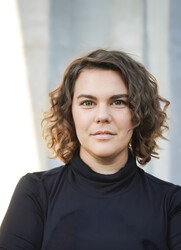
Photograph by Heather Campbell
Emma Pattee is a climate journalist and fiction writer. Her work has been published in The Atlantic, The New York Times, The Washington Post, The Guardian, and elsewhere. She lives in Oregon.
Product Details
- Publisher: Scribner (December 30, 2025)
- Length: 240 pages
- ISBN13: 9781668055489
Browse Related Books
Raves and Reviews
"Tilt heralds the arrival of a powerful new literary voice." —Vogue, Best Books of 2025
“Recounting Annie’s precarious journey across the city and into her past, Pattee reveals that the quake has upended more than the earth. A captivating novel.” —Kirkus (starred review)
“[A] fascinating and emotional debut… compelling… Instantly readable and filled with dry humor, this book follows in the footsteps of other disaster novels while bringing a fresh take to the genre.” —Booklist (starred)
“[A] nail-biting debut… Pattee’s depiction of a post-earthquake Portland feels bracingly realistic, and her depictions of marriage and impending motherhood are achingly raw. Shocking and full of heart, this leaves a mark.” —Publisher's Weekly (starred)
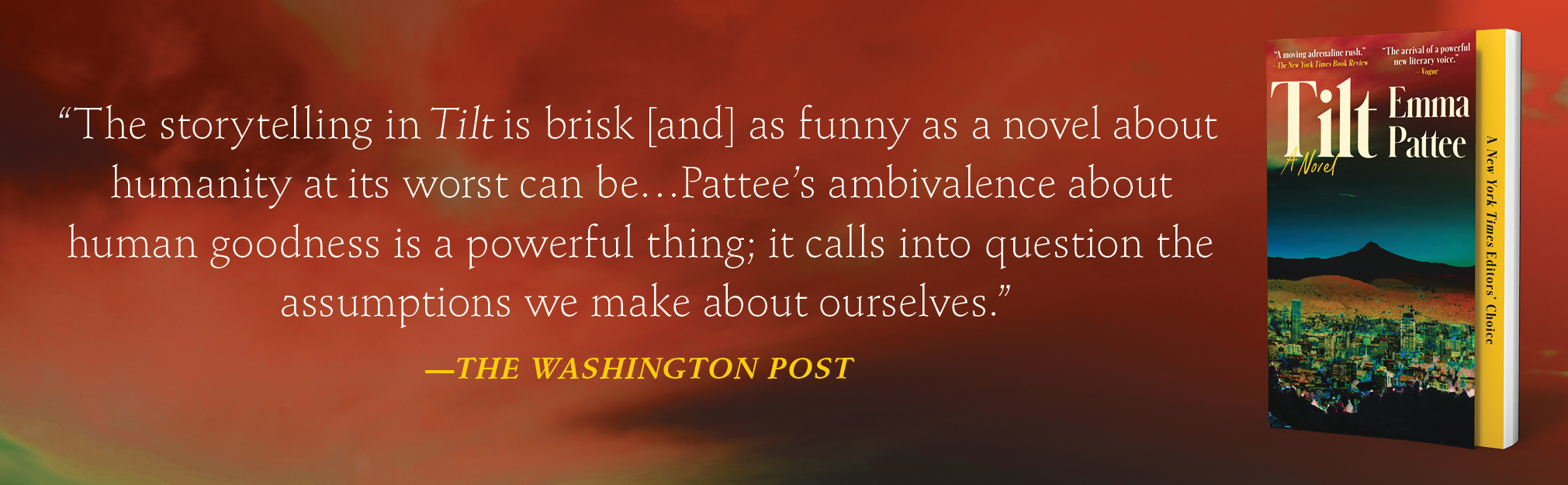
“The storytelling in Tilt is brisk [and] as funny as a novel about humanity at its worst can be… Pattee’s ambivalence about human goodness is a powerful thing; it calls into question the assumptions we make about ourselves.” —Washington Post
“Tilt promises wit and style, and reminders of humanity in the face of disaster. A force to be reckoned with.” —Literary Hub, LitHub's Most Anticipated Books of 2025
“Annie, an office manager at a tech company in Portland, Ore., is 37 weeks pregnant and shopping for a crib at an Ikea when a massive earthquake hits. Though she emerges from the rubble intact, what follows is a perilous journey across the apocalyptic city in search of her husband, narrated with incisive social observations and acerbic thoughts on motherhood and marriage.” —New York Times Book Review "Paperback Row"
" Author Emma Pattee delivers a groundbreaking (heh) hybrid of survival adventure and character portrait." —Goodreads, Meet the Hottest Debut Novels of 2025
"The premise of Tilt is out of a nightmare; the characters, out of your everyday life. Tilt imagines what might happen should the next Cascadia Fault earthquake occur and wreak havoc on the Pacific Northwest. It’s a big concept, but only follows a day in one pregnant woman’s life who is caught away from home, leading to a riveting and relatable survival tale. You will be biting your nails and Googling at the same time." —Today.com, 50 Books We Can't Wait to Read in 2025
“Every gorgeous page pulses with humor, heartbreak, and the horror of human behavior when the unthinkable happens. Emma Pattee has written a smashing debut that had me turning the pages well into the night.” —Jessica Knoll, New York Times Bestselling author of Bright Young Women
"Tilt is a remarkable debut—a gorgeous, haunting blend of a suspenseful survival thriller and a fierce portrait of maternal love. I was so mesmerized that I blew off all my responsibilities, threw all other reading aside, and blistered through the whole thing in one sitting, loving every moment." —Angie Kim, New York Times bestselling author of Happiness Falls and Miracle Creek
"Tilt is a swift, exhilarating punch to the gut, the most embodied twenty-four hours of narrative I can remember reading. Through the eyes of the prickly, funny, and very pregnant narrator, we viscerally experience the surreal, unbearable, comic, and beautiful ways that humans behave in a crisis. The Road meets Nightbitch meets What to Expect When You're Expecting. I loved this novel." —Lydia Kiesling, author of The Golden State and Mobility
"An epic natural disaster adventure story starring a pregnant woman on a mission. A nuanced, stark, tender portrait of a marriage. A tale of destruction and loss punctuated by surprising moments of empathy. Emma Pattee’s debut novel Tilt manages to be all of the above, and more. Equal parts heart-wrenching and life-affirming, this riveting book made me laugh, cry, and think. I couldn’t put it down." —Helen Phillips, author of Hum and The Need
Resources and Downloads
High Resolution Images
-
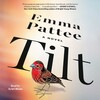
Book Cover Image (jpg): Tilt
Trade Paperback 9781668055489
-
Author Photo (jpg): Emma Pattee Photograph by Heather Campbell(0.1 MB)
Any use of an author photo must include its respective photo credit