
Plus, receive recommendations and exclusive offers on all of your favorite books and authors from Simon & Schuster.
0:00 /
Table of Contents
About The Book
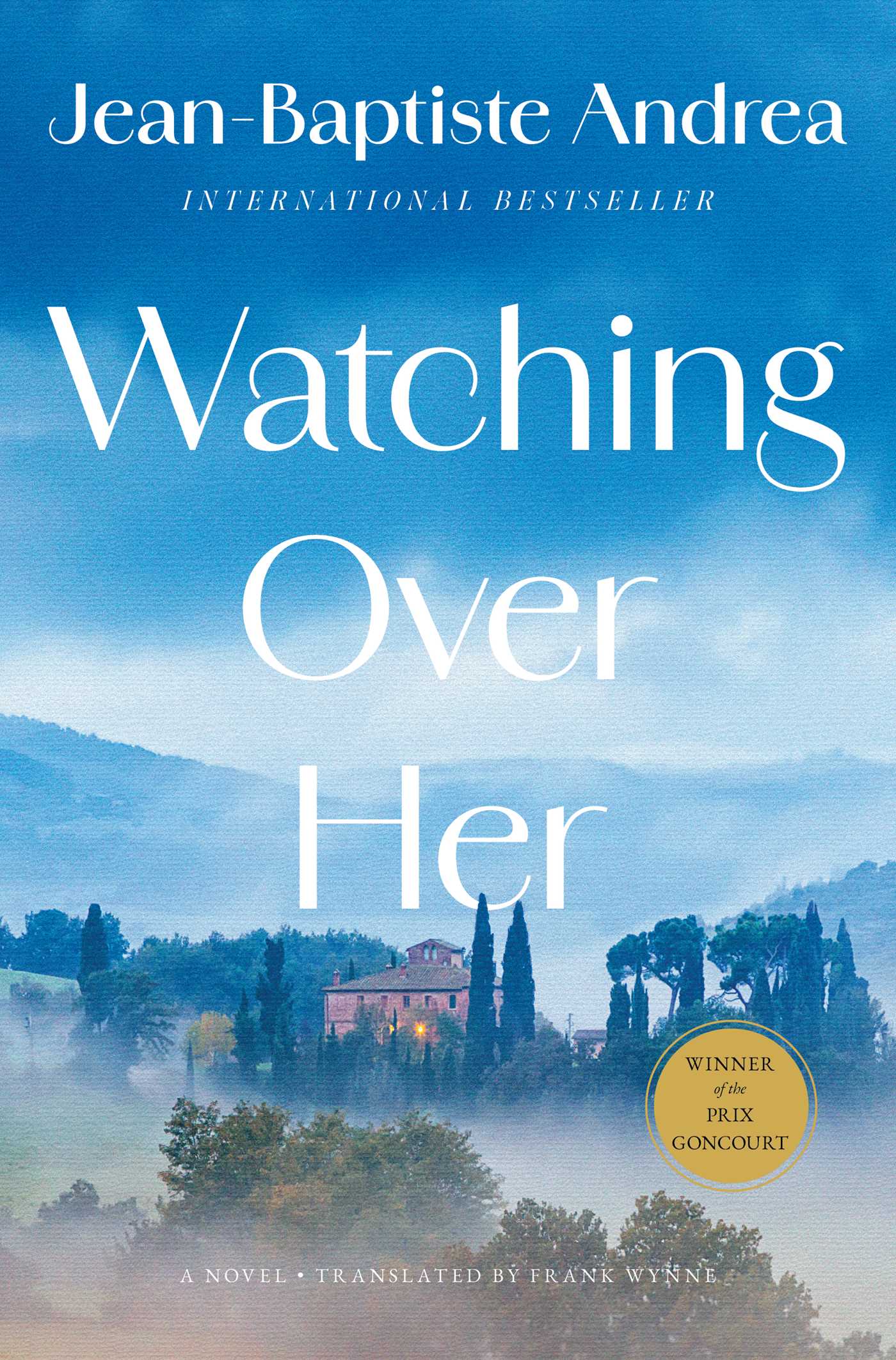
From French literary talent and Prix Goncourt winner Jean-Baptiste Andrea, a “sprawling fresco and star-crossed love story” (The New York Times) following a dwarf and skilled sculptor as he recounts the moments in his life that inspired his mysteriously powerful masterpiece—perfect for readers of Martyr! and The Covenant of Water.
In an Italian monastery, a sculptor named Mimo lays on his deathbed. For decades, he has lived among the monks who watch over his masterpiece, an arresting statue that haunts all who see it.
During his final hours, he reveals his life story: his impoverished childhood, brutal apprenticeship, and, most important, his meeting with Viola Orsini, the only daughter of a powerful and dangerous aristocratic family. Mimo and Viola are instantly drawn to one another, viewing themselves as outsiders—Mimo, for his dwarfism, Viola for her ability to remember everything she has ever read or experienced. Together, they traverse the unrest of the 20th century, from the rise of fascism to the violence of the world wars. While Mimo becomes a celebrated artist, Viola chases her own dreams of becoming an emancipated woman. Over the decades, they will lose and find each other time and again, but never will they give up on the love they share.
Immersive and full of heart, Mimo’s adventures are ribald and hilarious, challenging conventions of his day. Jean-Baptiste Andrea’s Prix Goncourt–winning novel has captivated audiences around the globe and is available to readers in English for the first time thanks to Frank Wynne’s wonderfully vivid translation.
In an Italian monastery, a sculptor named Mimo lays on his deathbed. For decades, he has lived among the monks who watch over his masterpiece, an arresting statue that haunts all who see it.
During his final hours, he reveals his life story: his impoverished childhood, brutal apprenticeship, and, most important, his meeting with Viola Orsini, the only daughter of a powerful and dangerous aristocratic family. Mimo and Viola are instantly drawn to one another, viewing themselves as outsiders—Mimo, for his dwarfism, Viola for her ability to remember everything she has ever read or experienced. Together, they traverse the unrest of the 20th century, from the rise of fascism to the violence of the world wars. While Mimo becomes a celebrated artist, Viola chases her own dreams of becoming an emancipated woman. Over the decades, they will lose and find each other time and again, but never will they give up on the love they share.
Immersive and full of heart, Mimo’s adventures are ribald and hilarious, challenging conventions of his day. Jean-Baptiste Andrea’s Prix Goncourt–winning novel has captivated audiences around the globe and is available to readers in English for the first time thanks to Frank Wynne’s wonderfully vivid translation.
Excerpt
Chapter One
There are thirty-two of them. On this autumn day in 1986, thirty-two are still living in this monastery at the end of a rutted track that would make any traveler blench. Nothing has changed in the past thousand years. Not the steepness of the path nor the vertiginous drop. Thirty-two stout hearts—it takes courage to live on the edge of an abyss—thirty-two bodies that were strong in their youth. Some hours from now, they will be thirty-one.
The monks are gathered in a circle around the dying man. There have been many such circles, many farewells, since the walls of the Sacra were first built. There have been moments of grace, moments of doubt, moments when bodies steeled themselves against the looming darkness. There have been and will be other departures, so they wait patiently.
This dying man is unlike the others. He alone has never taken the vows. Yet he has been allowed to stay here for forty years. Each time the subject has been mentioned, each time the question has been raised, a man in purple robes has come—never the same man twice—and it is he who decides. He stays. The dying man is as much a part of the monastery as the cloisters, the columns, the Romanesque capitals, whose conservation owes much to his talent. So let us not complain; he has paid for his sojourn here in kind.
From beneath the wool blanket, only his hands emerge. They are balled into fists either side of his head: an eighty-two-year-old child in the throes of a nightmare. His skin is sallow, like parchment stretched so sharply over jutting bones that it might break. His forehead gleams, made waxen by his fever. It was inevitable that one day his strength would fail. A shame that he never answered their questions. But a man is entitled to his secrets.
Besides, they feel as if they know. Not everything, but the most important facts. Sometimes their opinions differ. To stave off boredom, the monks find they are as gossipy as fishwives. He is alternately a criminal, a defrocked priest, a political refugee. Some say he is being held against his will—a theory that holds little water, since they have seen him leave and come back of his own volition; others claim he is there for his own safety. Then there is the most popular theory, and the most clandestine, since in a monastery, romance must be smuggled in: he is there to watch over her. She who waits, in her marble shroud, a few hundred yards from his spartan cell. She who has been waiting now for forty years. All the monks in the Sacra have seen her once. All would like to see her again. They need only ask permission from the abbot, Padre Vincenzo, but few dare to do so—out of fear, perhaps, of the impure thoughts that are said to come to those who come too close to her. And monks have more than enough impure thoughts without finding themselves pursued, in the inky darkness, by dreams with the face of an angel.
The dying man struggles, opens his eyes then closes them again. One of the monks swears he sees a flicker of joy—he is mistaken. Someone gently dabs a cool flannel over his brow, his lips.
The dying man is still struggling, and for once, all the brothers agree.
He is trying to say something.
There are thirty-two of them. On this autumn day in 1986, thirty-two are still living in this monastery at the end of a rutted track that would make any traveler blench. Nothing has changed in the past thousand years. Not the steepness of the path nor the vertiginous drop. Thirty-two stout hearts—it takes courage to live on the edge of an abyss—thirty-two bodies that were strong in their youth. Some hours from now, they will be thirty-one.
The monks are gathered in a circle around the dying man. There have been many such circles, many farewells, since the walls of the Sacra were first built. There have been moments of grace, moments of doubt, moments when bodies steeled themselves against the looming darkness. There have been and will be other departures, so they wait patiently.
This dying man is unlike the others. He alone has never taken the vows. Yet he has been allowed to stay here for forty years. Each time the subject has been mentioned, each time the question has been raised, a man in purple robes has come—never the same man twice—and it is he who decides. He stays. The dying man is as much a part of the monastery as the cloisters, the columns, the Romanesque capitals, whose conservation owes much to his talent. So let us not complain; he has paid for his sojourn here in kind.
From beneath the wool blanket, only his hands emerge. They are balled into fists either side of his head: an eighty-two-year-old child in the throes of a nightmare. His skin is sallow, like parchment stretched so sharply over jutting bones that it might break. His forehead gleams, made waxen by his fever. It was inevitable that one day his strength would fail. A shame that he never answered their questions. But a man is entitled to his secrets.
Besides, they feel as if they know. Not everything, but the most important facts. Sometimes their opinions differ. To stave off boredom, the monks find they are as gossipy as fishwives. He is alternately a criminal, a defrocked priest, a political refugee. Some say he is being held against his will—a theory that holds little water, since they have seen him leave and come back of his own volition; others claim he is there for his own safety. Then there is the most popular theory, and the most clandestine, since in a monastery, romance must be smuggled in: he is there to watch over her. She who waits, in her marble shroud, a few hundred yards from his spartan cell. She who has been waiting now for forty years. All the monks in the Sacra have seen her once. All would like to see her again. They need only ask permission from the abbot, Padre Vincenzo, but few dare to do so—out of fear, perhaps, of the impure thoughts that are said to come to those who come too close to her. And monks have more than enough impure thoughts without finding themselves pursued, in the inky darkness, by dreams with the face of an angel.
The dying man struggles, opens his eyes then closes them again. One of the monks swears he sees a flicker of joy—he is mistaken. Someone gently dabs a cool flannel over his brow, his lips.
The dying man is still struggling, and for once, all the brothers agree.
He is trying to say something.
About The Author
© Céline Nieszawer/Leextra/Editions L’Iconoclaste
Jean-Baptiste Andrea is a writer, screenwriter, and director. His novel Watching Over Her was awarded the Prix Goncourt, the most prestigious French literary award. He is also the author of Ma Reine, A Hundred Million Years and a Day, and Devils and Saints.
Product Details
- Publisher: Simon & Schuster (January 6, 2026)
- Length: 368 pages
- ISBN13: 9781668221969
Browse Related Books
Raves and Reviews
"Andrea blends the tumultuous history of 20th-century Italy with finely wrought character work. It’s a marvel."
—PUBLISHERS WEEKLY, Starred Review
“A sprawling fresco and star-crossed love story that follows Michelangelo ‘Mimo’ Vitaliani, a dwarf and skilled sculptor who at the end of his life is said to be ‘watching over’ his masterpiece, a mysteriously powerful sculpture.”
—THE NEW YORK TIMES
"This is most significantly a song of love to a country of contradictions, battered, war-torn, divided, misguided and miraculous: an Italy where life is costume and the performance of art, and where circuses spring up on wasteland. The Italy that produced both Mussolini and Fellini, fascists and futurists and communists; where 'beauty is always imperilled' and 'genius grows like a weed.'”
—THE GUARDIAN
Resources and Downloads
High Resolution Images
-
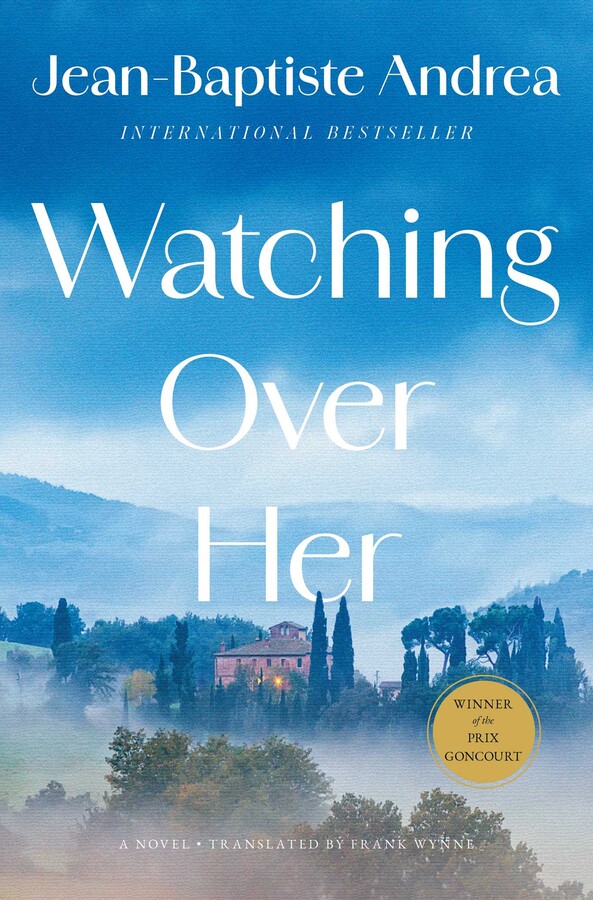
Book Cover Image (jpg): Watching Over Her
Hardcover 9781668221969
-
Author Photo (jpg): Jean-Baptiste Andrea © Céline Nieszawer/Leextra/Editions L’Iconoclaste(0.1 MB)
Any use of an author photo must include its respective photo credit