Plus, receive recommendations and exclusive offers on all of your favorite books and authors from Simon & Schuster.
Published by Essentia Books
Distributed by Simon & Schuster
Table of Contents
About The Book
Reframing Being through the dynamic interplay of matter, time, and information.
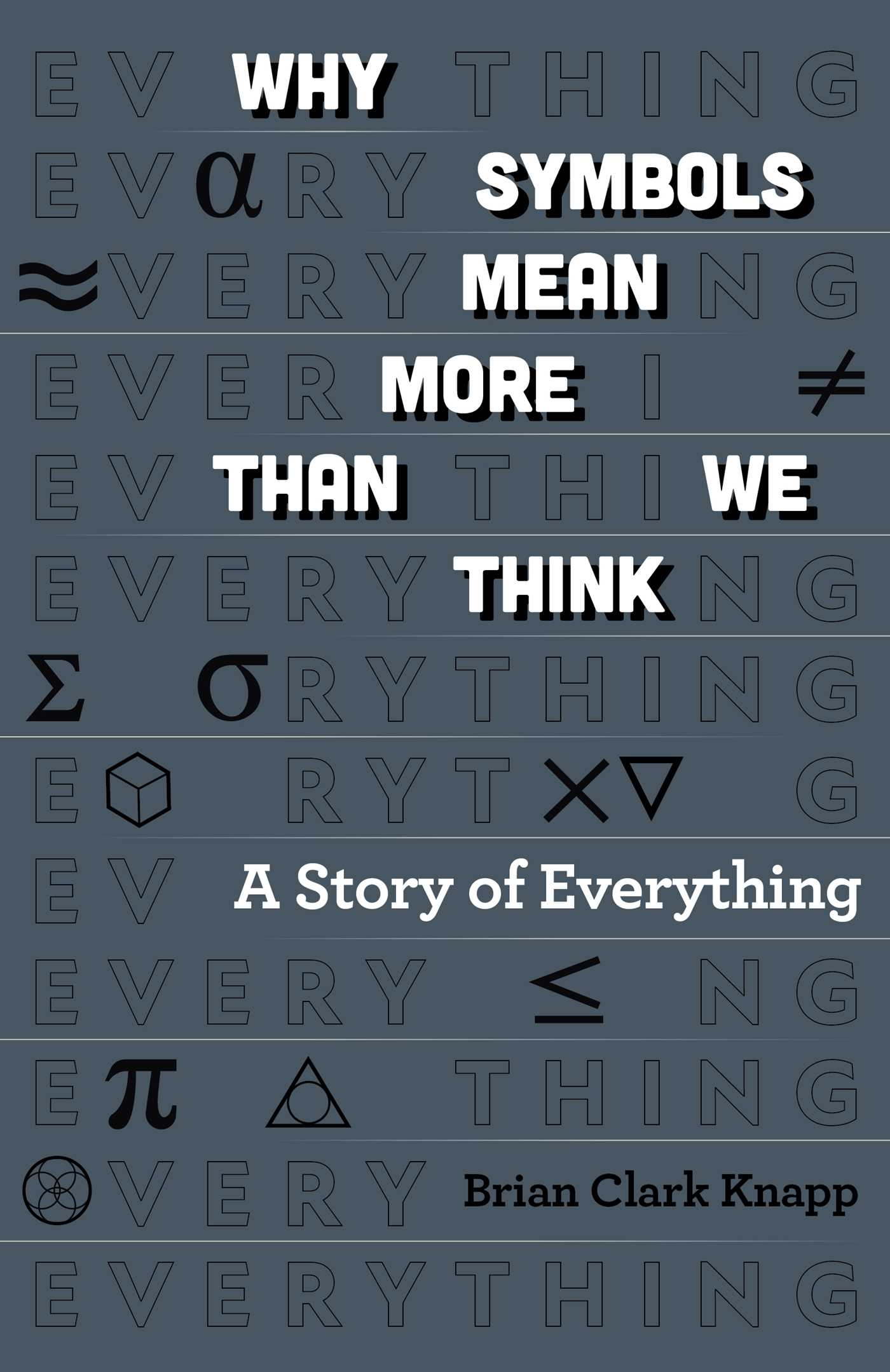
Why Symbols Mean More Than We Think develops a dynamic ontology, in which reality evolves through irreducible oppositional structures mediated by Time. Drawing on the works of Prigogine, Smolin, Jung, Kant, and Heidegger, this book proposes a two-phase cosmology: Plasmata, a primordial state of undifferentiated potential, and Structum, the structured universe that emerges through the ongoing tension between energy/matter and structuring information. Rejecting physicalist reductionism, the author argues that information — particularly symbolic information — is not merely descriptive or computational but an active force shaping reality from the quantum level to human consciousness. Jung’s concept of the psychoid is expanded to show how archetypal information bridges material and psychic systems, while ethical reasoning is understood as an emergent form of symbolic self-reflection within evolving oppositional fields. Opposition, rather than equilibrium or synthesis, is presented as the engine of cosmic, psychological, and moral development. Time is irreversible and creative, enabling transformation without final resolution. Through concrete examples and thought experiments, this book offers an accessible yet rigorous synthesis of physics, psychology, and philosophy, grounding human meaning, ethics, and symbolism within the evolving structure of the cosmos.
Why Symbols Mean More Than We Think develops a dynamic ontology, in which reality evolves through irreducible oppositional structures mediated by Time. Drawing on the works of Prigogine, Smolin, Jung, Kant, and Heidegger, this book proposes a two-phase cosmology: Plasmata, a primordial state of undifferentiated potential, and Structum, the structured universe that emerges through the ongoing tension between energy/matter and structuring information. Rejecting physicalist reductionism, the author argues that information — particularly symbolic information — is not merely descriptive or computational but an active force shaping reality from the quantum level to human consciousness. Jung’s concept of the psychoid is expanded to show how archetypal information bridges material and psychic systems, while ethical reasoning is understood as an emergent form of symbolic self-reflection within evolving oppositional fields. Opposition, rather than equilibrium or synthesis, is presented as the engine of cosmic, psychological, and moral development. Time is irreversible and creative, enabling transformation without final resolution. Through concrete examples and thought experiments, this book offers an accessible yet rigorous synthesis of physics, psychology, and philosophy, grounding human meaning, ethics, and symbolism within the evolving structure of the cosmos.
Product Details
- Publisher: Essentia Books (March 2, 2027)
- Length: 472 pages
- ISBN13: 9781806950744
Browse Related Books
Raves and Reviews
Brian Knapp offers a bold and integrative vision of reality as an evolving field of dynamic oppositions. In this rich and carefully argued work, Being is not a static substance but a living process structured by the interplay of energy, information, and time. Knapp reframes consciousness not as an accidental byproduct of matter, but as an emergent expression of the universe’s intrinsic relationality.
Drawing from Carl Jung, contemporary philosophy of mind, and metaphysical reflection, he proposes that opposition is not a problem to be eliminated but the generative principle through which structure, meaning, and awareness arise. The result is a participatory ontology in which human consciousness stands within, rather than apart from, the unfolding cosmos.
This is an ambitious and original contribution to post-materialist philosophy.
– Christian de Quincy, Author of Radical Nature
Resources and Downloads
High Resolution Images
-
Book Cover Image (jpg): Why Symbols Mean More Than We Think
Trade Paperback 9781806950744