
Plus, receive recommendations and exclusive offers on all of your favorite books and authors from Simon & Schuster.
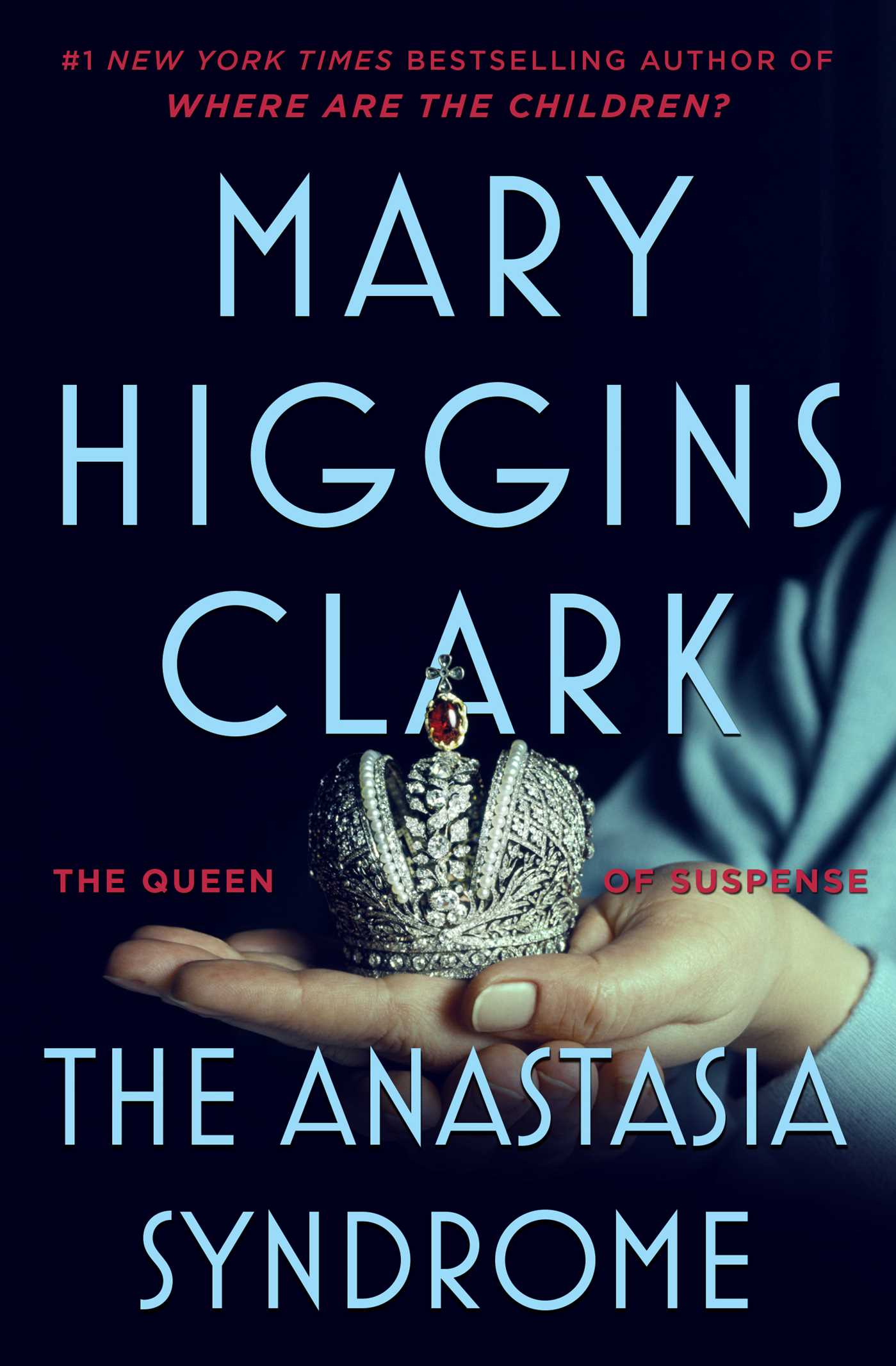
Anastasia Syndrome
Table of Contents
About The Book
A collection of short stories from bestselling author and Queen of Suspense, Mary Higgins Clark.
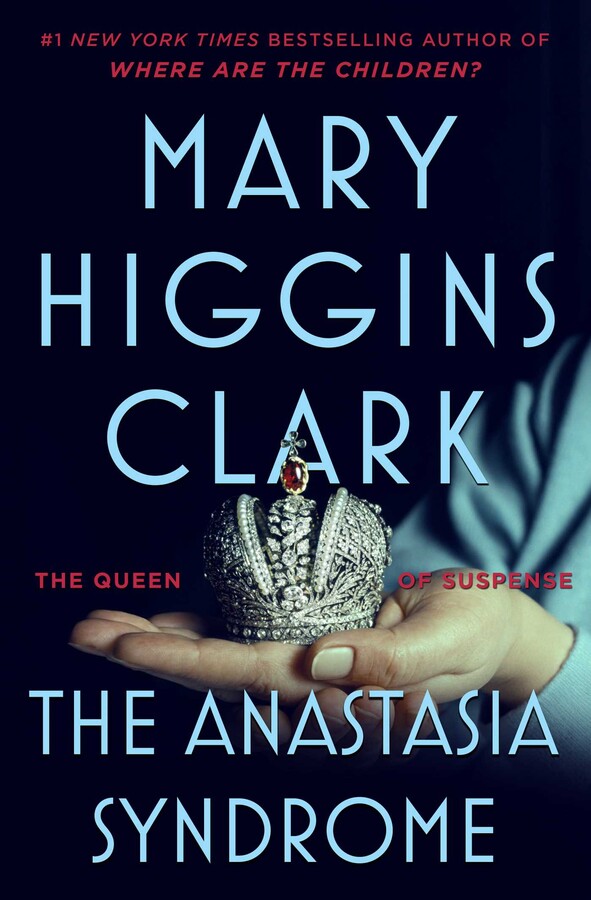
In the short novel The Anastasia Syndrome, prominent historical writer Judith Chase is living in London and preparing for her marriage to Sir Stephen Hallett, expected to become England’s next Prime Minister. Orphaned during World War II, Judith wants to trace her origins. In this quest, she goes to a renowned psychiatrist and becomes the victim of his experiments in regression. When a woman in a dark green cape sets off bombs in London, Sir Stephen and Judith are faced with an intangible, mysterious force threatening their very existence.
In the short novel The Anastasia Syndrome, prominent historical writer Judith Chase is living in London and preparing for her marriage to Sir Stephen Hallett, expected to become England’s next Prime Minister. Orphaned during World War II, Judith wants to trace her origins. In this quest, she goes to a renowned psychiatrist and becomes the victim of his experiments in regression. When a woman in a dark green cape sets off bombs in London, Sir Stephen and Judith are faced with an intangible, mysterious force threatening their very existence.
Excerpt
The Anastasia Syndrome
They were so good to me, Judith thought with renewed hope as she began another long and tedious search through the birth records. I was so happy with them.
Edward Chase, a graduate of Annapolis, had elected to make the Navy his career. After the war, he’d become Naval Military Attaché to the White House. Judith had vague memories of Easter Egg hunts on the White House lawn, of President Truman asking her what she was going to be when she grew up. Later, Edward Chase became military attaché in Japan, then ambassador to Greece and to Sweden.
Who could have asked for more loving parents? Judith wondered as she turned the book to the section with names that began with M. They had been in their thirties when they adopted her, died within a year of each other eight years ago, left their considerable assets to their “beloved daughter, Judith.”
And now she was realizing their passing had freed her from a feeling of guilt or disloyalty as she tried to find the people who had begotten her. Hours passed. Marsh. March. Mars. Merrit. There was absolutely no derivation of Marrish, of any name beginning with M, in the records of May 1942 that had “Sarah” as a first or middle name. It was time to look under P in hope that maybe, just maybe she had tried to say “Parrish.”
Her fingers ran down the pages of the names beginning with P until she found the name Parrish. Parrish, Ann, District Knightsbridge; Parrish, Arnold, District Piccadilly. And then she saw it.
Mother’s Name
District
Vol.
Page
Parrish
Mary Elizabeth
Travers
Kensington
6B
32
Parrish! Kensington! Oh God, she thought. Holding her index finger on that line, she raced through the rest of the page. Parrish, Norman, District Liverpool; Parrish, Peter, District Brighton; Parrish, Richard, District Chelsea; Parrish, Sarah Courtney, Mother’s Name Travers, District, Kensington, Vol. 6B, Page 32.
Not daring to believe that she understood what she was reading, Judith rushed up to the clerk at the desk. “What does this mean?” she asked.
The clerk had a small transistor radio on her desk, the volume turned so low it was almost inaudible. Reluctantly she tore herself away from the BBC news. “Terrible, the bombing,” she announced. She paused. “I’m sorry. What is your question?”
Judith pointed to the names Mary Elizabeth and Sarah Courtney Parrish. “They were born the same day. Their mother’s maiden name was the same. Does that suggest they might have been twins?”
“It would certainly look so. And great care is taken about who was the older twin. Often it means who inherits the title, you see. Do you want to purchase the full birth certificates?”
“Yes, of course. And another question. Isn’t Polly a nickname for Mary in England?”
“Very often. My own cousin, for example. Now to obtain the birth certificates, you’ll have to fill out the proper forms and pay five pounds each. They can be mailed to you.”
“How much information do they give?”
“Oh, quite a bit,” the clerk replied. “Date and place of birth. Mother’s maiden name. Father’s name and occupation. Home address.”
Judith walked back to the apartment in a daze. As she passed a newsstand she saw the glaring headlines that told of the bombing in Trafalgar Square. Pictures of bleeding children covered the front page. Sickened at the sight, Judith bought the paper and read it as soon as she was home. At least, she thought, none of the injuries were lifethreatening. The paper was filled with news of the stormy session in Parliament. The Home Secretary, Sir Stephen Hallett, had made a dramatic speech: “I have long argued the need for the death penalty for terrorists. These despicable people have today planted a bomb at a place they knew would be visited by schoolchildren. If one of those children had been killed, shouldn’t the terrorists be worrying now about their own necks? Does the Labour party agree or shall we continue to coddle these would-be murderers?”
Another news item said that the explosive had been gel-ignite, and a massive search had been started to trace purchases and check reports of theft of the deadly component.
Judith put down the newspaper and glanced at her watch. It was nearly six. She knew that Stephen would be calling, and that she’d better be able to say she had been in touch with Fiona.
Fiona was far too interested in the events of the day to be cross about Judith’s neglect of her. “My dear, most frightful, wasn’t it? Parliament in an absolute uproar. When the election is called, the death penalty will certainly be an issue. Can’t help but benefit dear Stephen. People are simply outraged. Poor old King Charles. I gather they wanted to blow his statue to smithereens. Such a shame it would have been. Absolutely the most ravishing equestrian statue in the kingdom. Now there are a few statues I wouldn’t mind seeing off to the scrapyard. Some of them look as though the horses should be pulling wagons, not seating kings. Oh well.”
Stephen phoned fifteen minutes later. “Darling, I’ll be very late tonight. I’m meeting with the Commissioner from Scotland Yard and some of his people.”
“Fiona told me about the uproar in Parliament over the bombing. Have any terrorists claimed responsibility?”
“Not so far. That’s why I’m meeting with Scotland Yard. As Home Secretary, acts of terrorism come under my jurisdiction. I’d hoped as a civilized nation that when we outlawed execution, it would be for all time but today certainly proves the need for the death penalty. I believe it would be a deterrent.”
“I gather that many people agree with you, but I’m afraid I can’t. The thought of execution makes my blood run cold.”
“Ten years ago I felt exactly the same way,” Stephen said quietly. “Not anymore. Not when so many innocent lives are in constant danger. Darling, I must run. I’ll try not to be too late.”
“Whatever time you get here, I’ll be waiting.”
• • •
Reza Patel and Rebecca Wadley were about to leave for dinner when the phone rang in his office. Rebecca picked it up. “Miss Chase, how good to hear your voice. How are you? The doctor’s right here.”
In the movement that had become automatic, Patel pressed the conference and record buttons. He and Rebecca listened as Judith told them about her discovery. “I’ve been longing to talk about it,” she said happily, “and realized you and Rebecca are the only two people alive who know about me and can understand what’s happening. Doctor, you’re miraculous. Sarah Courtney Parrish. Quite a nice name, don’t you think? When I receive the birth certificates, I’ll have a street address. Isn’t it incredible that Polly was my twin?”
“You’re turning into a very good detective,” Patel observed, trying to sound buoyant.
“Research,” Judith laughed. “After a while you learn how to follow threads. But I have to put it off for a few days. Tomorrow I must stay at the typewriter, and there’s an exhibition at the National Portrait Gallery I want to see. It has a lot of court scenes from Charles I. Should be interesting.”
“What time will you be there?” Patel asked quickly. “I’m planning to visit it myself. Maybe we can have a cup of tea.”
“Lovely. Would three o’clock do?”
When he replaced the receiver on the cradle, Rebecca asked Patel, “What point is there in meeting her at the gallery?”
“I have no reason to ask her to come in here again, and I’d like to see if I detect any indication of personality modification in her.”
• • •
Judith changed to peach silk lounging pajamas and matching slippers, undid her hair from the chignon, brushed it loose around her shoulders, put on fresh makeup, and sprayed Joy eau de cologne on her wrists. She prepared a salad and scrambled eggs for dinner. With a pot of tea, she put the dishes on the inevitable tray and absentmindedly ate as she outlined her next chapter. At nine, she laid out a plate of cheese and crackers and the brandy snifters, then went back to her desk.
It was eleven-fifteen when Stephen arrived. His face was gray with fatigue. Silently he put his arms around her. “My God, it’s good to be here.”
Judith massaged his shoulders as she kissed him. Then, arms around each other, they went to sit on the overstuffed maroon damask couch that was obviously a treasured possession of Lady Beatrice Ardsley. An old comforter which covered the back and arms was tucked behind the frame and cushions, then fell protectively over the cushions to the floor. Judith poured the brandy and handed a glass to Stephen. “I really do think that in honor of the future Prime Minister I should take this exhausted comforter off and trust that you won’t put your feet on Lady Ardsley’s precious settee.”
She was rewarded by a hint of a smile. “Be careful. If I close my eyes, I’m sure I’ll end up curled on it for the night. What a hell of a day, Judith.”
“How did the Scotland Yard meeting go?”
“Well enough. Fortunately, a Japanese tourist was grinding away with his videocamera and we’ll have the film. There were also many people in the area snapping pictures. The media is requesting that all those pictures be turned in. There’ll be a substantial reward if any of them lead to the arrest and conviction of the perpetrator. You see, one bit of luck is that the bomb must have started smoking within a minute or two after it was placed. Just possibly we’ll get a picture of someone laying it at the base of the statue.”
“I hope so. The pictures of those bleeding children were heartbreaking.” Judith was about to say they reminded her of the hallucinations she had been having about the child caught in air raids, then closed her lips. It was hard, she thought, not to tell the man she loved so dearly that she believed she had learned her true identity.
There was a safe way to keep from revealing her secret. Slipping over on the couch, she put her arms around Stephen’s neck.
• • •
Deputy Assistant Commissioner Philip Barnes was head of the Anti-Terrorist Branch at Scotland Yard. A slight, soft-spoken man in his late forties with thinning brown hair and hazel eyes, he looked more like a country preacher than a senior police official. His men had quickly learned that the soft voice could become a scathing weapon when they were on the carpet for anything from a minor offense to an incredible blunder. Still they respected Barnes to the point of awe, and some even had the courage to genuinely like him.
This morning Commissioner Barnes was both angry and pleased. Angry that the terrorists would select so meaningless a target as the equestrian statue and that they chose a day when the statue would be surrounded by children and tourists; pleased that no one had been killed or maimed. He was also frustrated. “It doesn’t make sense for the Libyans or Iranians to go for the statue,” he said. “If the IRA wanted to bomb a monument, they’d have gone after Cromwell. He was the one who decimated their country, not poor old Charles.”
His men waited, knowing he did not expect an answer.
“How many pictures have come in?” he asked.
“Dozens,” his senior aide, Commander Jack Sloane, answered. Sloane was long and lean with neutral coloring, sandy hair, light blue eyes, the rugged complexion of the year-round athlete. The brother of a baronet, he was a close friend of Stephen’s. His family’s country home, Bindon Manor, was six miles from Edge Barton. “Some of them still needing development, sir. It’s being done now. We also have that videotape when you’re ready to see it.”
“How about the investigation of the explosive?”
“We may have a lead already. The foreman of a quarry in Wales has been searching the site for a quantity of missing gelignite.”
“When did he realize it was missing?”
“Four days ago.”
The phone rang. Commissioner Barnes’s secretary had been told to hold calls except for one person’s. “Sir Stephen,” Barnes said even before he picked up the phone.
Swiftly he told Stephen about the missing gelignite, the tourists’ pictures, the videotape. “We’re just about to see it, sir. I’ll report if it’s promising.”
Five minutes later in the darkened room, they watched as the tape was played. They had expected the usual uneven results of an amateur photographer and were pleasantly surprised to see a crisp, well-focused segment. The panorama of the area at Trafalgar Square. The close-up of the statue and its base. The floral wreaths already placed there.
“Stop,” Sloane ordered.
The operator of the videocamera, familiar with this kind of order, instantly froze the film.
“Back up a frame or two.”
“What do you see?” Commissioner Barnes demanded.
“That wisp of smoke. When this picture was taken, the bomb was already there.”
“Damn shame the camera didn’t catch the person placing it!” Barnes exploded. “All right. Keep running.”
The schoolchildren. The tourists. The students holding the wreath. The self-conscious beginning of the poem. The constable rushing toward the statue, forcing the children away from it.
“That man should be put up for the George Cross,” Barnes muttered.
The people scattering. The explosion. The camera panning about.
“Hold it.”
Again the operator stopped the camera and retraced the previous frames.
“That woman in the cape and dark glasses. She realized she was being filmed. Look at the way she’s pulling the hood around her face. Every other adult in the crowd is rushing to help the children. She’s turning away.” Sloane turned to one of the assistants. “I want her picture plucked out of every frame in this film. Blow it up. Let’s see if we can identify her. We might be onto something.”
Someone snapped on the lights. “And by the way,” Sloane added. “Pay special attention to see if any of the tourists caught the woman in the cape in their snapshots.”
• • •
That afternoon as Judith was dressing to go to the National Portrait Gallery, she reluctantly decided to wear a pale gray suit, heels, and her sable coat. In the few days since Stephen had been elected party leader, there had been a number of profiles of him in various newspapers, and they had all referred to him as the most eligible and attractive older single man in England. Not since Heath had there been an unmarried Prime Minister, one paper noted, and there were unconfirmed rumors that Sir Stephen had a romantic interest that would please the English people.
That quote had come from the gossip columnist, Harley Hutchinson. So I’d better not go out looking like a Greenwich Village hippie, Judith thought, sighing as she carefully brushed her hair and applied eye shadow and mascara. She then fastened a rose-shaped silver pin on the lapel of her suit and studied her reflection.
Twenty years ago, she had married Kenneth in the traditional white gown and veil. What would she wear when she married Stephen? A simple late afternoon dress, she decided. With a very small group of friends present. There had been nearly three hundred at the reception at the Chevy Chase Country Club all those years ago. To have it happen twice in a lifetime, she mused. No one deserves that much happiness.
She transferred her wallet and makeup kit to the gray suede purse that matched her pumps, and dug out a smaller version of her oversized shoulder bag. All gussied up or not, I need my notebooks, she thought ruefully.
The National Portrait Gallery was on St. Martin’s Place and Orange Street. The special exhibition was of court scenes from the Tudors through the Stuarts. The paintings had been borrowed from private collections all over Britain and the Commonwealth, and the lesser figures in the paintings who could be identified were listed in framed plaques. When Judith arrived, the gallery was still quite crowded, and with some amusement she watched as people peered down the printed lists within the plaques, obviously hoping to locate some long-forgotten ancestor.
She was particularly interested in seeing the court scenes in which Charles I, Oliver Cromwell, and Charles II were depicted. Working her way backward, she compared the festive dress of the returned “Merry Monarch,” Charles II, to the sternly plain Puritan-type garb of Cromwell’s intimates. The court scenes of Charles I and his consort, Henrietta Maria, were especially intriguing. She knew that, ignoring the stony disapproval of the Puritans, Queen Henrietta had delighted in pageants. One painting in particular caught her eye: The setting was Whitehall Palace. The King and Queen were the central figures. The members of the court were obviously dressed for a pageant. Shepherds’ crooks, angel wings, halos, and gladiators’ swords abounded.
“Miss Chase, how are you?”
Judith had been drinking in the painting.
Startled, she turned around and saw Dr. Patel. His evenfeatured face was smiling but she noticed that the expression in his eyes was serious. Lightly she touched his arm. “Doctor, you seem very somber.”
He bowed slightly. “And I was thinking that you look very beautiful.” He lowered his voice. “I will say it again. Sir Stephen is indeed a fortunate man.”
Judith shook her head. “Not here, please. From what I can see, this place is alive with press.” She turned to the painting. “Isn’t this fascinating?” she asked. “When you think this was painted in 1640, just before His Majesty dissolved the Short Parliament.”
Reza Patel stared at the picture. Beneath it the plaque read: “Unknown Artist. Believed to have been painted between 1635 and 1640.”
Judith pointed to a handsome couple standing near the seated King. “Sir John and Lady Margaret Carew,” she told Patel. “They were both upset that day. They knew what would happen if the King dissolved Parliament. Lady Margaret’s ancestors had been M.P.s since the inception of Parliament. Her family was terribly split over allegiance at that time.”
Patel read the information on the plaque. Other than the King and Queen, their eldest son, Charles, Duke of York, and a half dozen royal relatives, the other figures in the painting were unidentified. “Your research must be superb,” he said. “You should have offered it to the historians here.”
Lady Margaret realized she should not have told Reza Patel about John and herself. Turning abruptly from him, she hurried from the gallery.
At the door he caught up with her and stopped her. “Miss Chase, Judith. What is wrong?”
She stared him down. Her tone haughty, she said, “Judith is not here now.”
“Who are you?” he asked urgently. Startled, he observed the angry red scar on her right hand.
She pointed to the painting. “I’ve already told you. I am Lady Margaret Carew.”
Breaking away from him, she hurried outside.
Stunned, Patel went back to the painting and studied the figure whom Judith had indicated was Lady Margaret Carew. He realized there was a striking resemblance between her and Judith.
Sick with apprehension, he left the gallery, unaware of the pleasant buzz of conversation of the people who tried to greet him. At least, he told himself, I know who is present in Judith’s body. Now he would have to learn what had happened to Margaret Carew and try to anticipate her next move.
The wind had become sharp. He turned to walk down St. Martin’s Place and felt his arm taken. “Dr. Patel,” Judith laughed. “I’m so terribly sorry. I was so engrossed in looking at the paintings that I started home before I remembered that we planned to have tea. Forgive me.”
Her right hand. As Reza Patel watched, the scar faded into a barely discernible outline.
• • •
The next day, February 1st, brought teeming, chilling rain. Judith decided to stay in the apartment and work at her desk. Stephen phoned to say he was going to Scotland Yard and then to the country. “Vote Conservative, Vote Hallett,” he joked. “A pity, you Yankee, I can’t count on your vote.”
“You’d have it,” Judith told him. “And maybe you can use this. My father used to tell me that in Chicago half the poor souls in the cemeteries were still on the voters’ list.”
“You must teach me how it’s done.” Stephen laughed. His tone changed. “Judith, I’ll be going to Edge Barton for a few days. The trouble is, I’ll hardly be home, but would you like to come down? Knowing you were there at the end of the day would mean so much to me.”
Judith hesitated. On the one hand, she wanted desperately to go back to Edge Barton. On the other, Stephen’s total preoccupation with the upcoming campaign freed her to quietly try to discover her past. Finally she said, “I want to be there. I want to be with you. But I don’t work as well away from my desk. We’ll scarcely see each other, so I think it’s better if I stay put here. By the time the election comes, I intend to be mailing a completed manuscript to my editor. If I can achieve that, I assure you, I’ll feel like a new woman.”
“Once the election is over, I won’t be patient, darling.”
“I hope not. God bless, Stephen. I love you.”
• • •
In Scotland Yard a room had been set aside to display the enlarged snapshots that had been turned in. Several of them included glimpses of the woman in the dark glasses and cape. None of the pictures offered much more than a profile. The hood of the cape almost covered the woman’s face, even before she pulled it closer when she noticed the videocamera. All the pictures that included her had been blown up and her image taken from them. “About five eight or so,” Commander Sloane observed. “Quite slender, don’t you think? Not more than eight or nine stone. Dark hair and an angry mouth. Doesn’t help much, does it?”
Inspector David Lynch came into the room, his footsteps brisk. “Think we have something, sir. Another set of pictures just arrived. Look at this, won’t you?”
The new pictures showed the woman in the cape placing a wreath at the base of the statue of Charles I. The camera had caught the corner of the brown paper parcel beneath the wreath.
“Well done,” Sloane said.
“That isn’t the half of it,” Lynch told him. “We’ve been asking questions at all the local construction sites. A foreman tipped us off that a very attractive woman in a dark cape was flirting with one of his crew, Rob Watkins, and that Watkins bragged she was coming to his lodgings.” Lynch waited, obviously enjoying what he was about to say. “We just talked to Watkins’s landlady. Not ten days ago, he had a visitor. She came two evenings about six o’clock, stayed a couple of hours in his room. The lady had dark hair, dark glasses, looked to be in her late thirties or early forties, and she wore a dark green cape with a hood, a very expensive one, the landlady reports. Also wore very expensive leather boots, carried an oversized shoulder bag, and as the landlady reported, ‘thought she was the Queen herself, the manner of her. Very haughty.’ ”
“I think we’d better have a chat with Mr. Rob Watkins immediately,” Sloane said. He turned to an assistant. “Take down all the enlarged pictures of the lady in the cape. Let’s see if we can get this fellow to pick her out of the crowd without giving him any help.”
“Another interesting thing,” Lynch went on. “The landlady says the woman was undoubtedly English, but that she had a strange accent, or manner of speaking.”
“What’s that supposed to mean?” Sloane snapped.
“From what I gather it was the cadence of her speech that seemed odd. The landlady says it was like listening to one of those old films in which people use words like ‘forsooth.’ ”
He shook his head at the expression on Commander Sloane’s face. “Sorry, sir. I don’t understand it either.”
• • •
On February 10 the Prime Minister made her longexpected announcement. She would go to the Queen and ask Her Majesty to dissolve Parliament. She would not be seeking reelection.
On February 12 Stephen was elected Conservative Party Leader. On February 16 the Queen dissolved Parliament and the campaign began.
Judith joked to Stephen that if she wanted to see him she turned on her television set. When they did manage to meet it was usually at his home. His car would pick her up and Rory would drive around the house to the back entrance. That way it was possible to avoid the attention of the ever-present media.
Nevertheless, Judith realized that it was a blessed coincidence that Stephen was away campaigning at the same time that she was completing her book. Eagerly she awaited the moment the birth certificates would arrive. Her moods ranged from anticipation to fear. Suppose Sarah Parrish was only someone she had known as a small child? What then?
She knew that when she was married to the Prime Minister of England, she would always be recognizable. There would be no private mission like this possible for her then.
Stephen called her early every morning and again late in the evening. His voice was often hoarse from the speechmaking. She could sense his fatigue as they talked. “It’s going to be much closer than we anticipated, darling,” he told her. “Labour is fighting hard, and after over a decade of a Conservative government, there are many who will vote for change for the sake of change.” The worry in his voice was enough for Judith to completely absolve him of selfishness in not helping her search for her identity. She could only compare his disappointment if he failed to become Prime Minister to what her own anguish would be if she suddenly sat in front of her typewriter and realized that she could no longer write, that the gift was gone . . .
To accommodate her need to finish the book and to continue her search, Judith set her alarm earlier and earlier. Now she arose at four in the morning, worked until noon, prepared a sandwich and a pot of tea, and worked until eleven.
Every few days she walked in the Kensington area, thinking that given enough concentration, one of the old apartment buildings that lined the lovely streets might suddenly look familiar. Now she wished she could see the phantom toddler running ahead of her, running into the entrance of the dwelling that might have been their home. In the hallucinations she had experienced, had she seen herself or Polly? she wondered, and was rewarded by the immediate thought, I always followed Polly. She could run faster . . . The window to the past was opening a little more . . . Why was it taking so long for the birth certificates to come?
It was not the social season in London. Fiona was in a hard fight for her own seat in Parliament. The parties and dinners to which Judith received invitations were easy to refuse. She kept track of time carefully and was certain she had no more memory lapses. Dr. Patel phoned her regularly, and it amused her that his tone at the beginning of the conversation was always apprehensive, as if he expected her to report some sinister aberration.
On February 28, she completed the first draft of her book, read it through, and realized there would be very little rewriting needed before sending it to her publisher. That night Stephen arrived from Scotland, where he’d been campaigning for the Conservative candidates.
They had not seen each other for nearly ten days. When she opened the door for him, they stood for a long moment looking at each other. Stephen sighed as he held her close before he kissed her. Judith felt the warmth and strength of his arms, the beating of his heart, as he drew her to him. Their lips met and her arms tightened around his neck. Again she was aware that as dearly as she had loved Kenneth, in Stephen’s arms she felt the completion of all that was possible between a man and woman.
Over drinks they compared notes, each agreeing that the other looked exhausted. “Darling, you’re much too thin,” Stephen told her. “How much weight have you lost?”
“I’m not keeping track. Don’t worry. I’ll put it all back when the book goes in. And incidentally, Sir Stephen, you’ve shed a few pounds yourself.”
“The Americans think they have a market on rubber chicken. They’re quite wrong. By the way, I’d better phone the house and tell them to expect us for dinner.”
“No need. I sent out for all the makings. Very simple. Chops and salad and a wonderfully large baked potato for carbohydrate energy. Will that do?”
“And not a single constituent to wish me luck or badger me about taxes.”
They worked together in the tiny kitchen, Judith preparing the salad, Stephen proclaiming himself a master at grilling chops to the point of perfection. Stephen, his sleeves rolled up, a chef’s apron enveloping him, seemed to Judith to visibly shed the lines of fatigue from around his eyes. “When I was a boy,” he said, “my mother gave all the servants Sundays off unless we were having weekend guests. She loved to go down into the kitchen and cook for my father and me. I’ve always missed those wonderful days when we were completely alone. I suggested we carry on the tradition when Jane and I were married.”
“What did Jane say?” Judith asked, suspecting the answer.
Stephen chuckled. “She was appalled.” He gave another glance at the chops. “About three minutes more, I think.”
“Salad ready to go on the table. Potatoes and rolls already there.” Judith rinsed her hands, dried them, and cupped Stephen’s face in her palms. “Would you like to reinstate the old tradition? When I’m not a slave to the typewriter, I’m a darn good cook.”
Four minutes later, as they were still wrapped in each other’s arms, Stephen sniffed, then said in an alarmed voice, “Good God, the chops!”
• • •
The search for the woman who had set the bomb at the base of King Charles’s statue had come to a dead end. The young construction worker, Rob Watkins, had been interrogated relentlessly but to no avail. He quickly identified the woman in the dark cape in the photos taken at King Charles’s statue as the woman to whom he had given the gelignite, but adamantly stuck to his story that Margaret Carew had told him she planned to use it to demolish an old house on her property in Devonshire. Watkins’s background was exhaustively researched. Scotland Yard concluded that he was exactly what he seemed to be: a laborer who fancied himself a womanizer, totally uninterested in politics, and the sort whose brother would help himself to anything he wanted from a quarry. The mantel of the fireplace in his parents’ cottage in Wales was newly constructed of valuable slabs of marble that exactly matched the marble used in the brother’s last job.
Reluctantly Deputy Assistant Commissioner Philip Barnes agreed with his senior aide, Commander Jack Sloane, that Watkins had been used for a fool by the dark-haired woman in the cape. Watkins’s insistence that the woman who called herself Margaret Carew had a vivid scar at the base of her right thumb was the one clue on which they could pin some hope.
Watkins’s information was kept from the media. He was charged with receiving stolen property and remanded on bail, which he was unable to raise. The charge of aiding a terrorist was held over his head pending his future cooperation. Every constable in England was given an enlarged picture of the woman in the cape and dark glasses, with instructions to be on the lookout for her. They were particularly warned to watch for a darkhaired woman around forty years old with a scar on her hand.
As the election loomed closer, the story about the bombing of the statue receded from public interest. No one had been seriously injured, after all. No group had claimed responsibility. Black humor began to emerge on the television programs. “Poor old Charles. Not satisfied with chopping off his head, three hundred years later they’re trying to blow him up. Give him a break.”
Then on March 5, there was an explosion in the Tower of London in the room where the Crown jewels were on display. Forty-three people were injured, six seriously, and a guard and an elderly American tourist were killed.
• • •
On the morning of March 5, Judith realized that she was not satisfied with her description of the Tower of London. She felt that she had not managed to convey the awesome fear that must have been experienced by the regicides and their accomplices who had been lodged there. She knew that a visit to the site she was describing could often help her to find the mood she was seeking to portray.
The day was crisp and windy. She buttoned her Burberry, tied on a silk kerchief, dug gloves out of her pockets, and decided against carrying her shoulder bag. The long hours were getting to her, she admitted to herself, and the weight of the bag was causing her shoulder to ache. Instead, she put money and a handkerchief in her pocket. She did not intend to take notes. She simply wanted to wander around the Tower.
As usual the inevitable tourists filled the courtyards and rooms. Guides speaking in a dozen languages explained the history of the massive palace. “In 1066 when the Duke of Normandy was crowned King of England, he immediately began to fortify London against possible attack. Originally the Tower was conceived and built as a fort, but some ten years later a massive stone tower was built and became known as the Tower of London.”
It was a history she knew well, but Judith found herself following at the edge of the group as it was led through the towers and apartments selected for the tour. The apartment in the Bloody Tower where Sir Walter Raleigh was imprisoned for thirteen years fascinated tourists. “It’s bigger than my own studio,” a young woman commented.
It’s much better lodging than most of the poor wretches had, Judith thought, and realized she was chilled and shivering. A sense of panic and fear raced through her and she leaned against the wall. Get out of here, she told herself, then thought, Don’t be ridiculous, this is the sensation I want to get across in the book.
Her hands clenched in her pockets, she continued with the tour to the Jewel House in the old Waterloo Barracks where the Crown Jewels were housed. “From the time of the Tudors this tower accommodated prisoners of rank,” the guide explained. “During the Cromwell years Parliament had the coronation ornaments melted down and the gems sold. Desperate pity. But when Charles the Second was reinstated, as much of the old regalia as could be found was brought together, and new ornaments were made for his coronation in 1661.”
Judith walked through the lower chamber of the Jewel House slowly, stopping to stare at the Anointing Spoon; the Sword of State; St. Edward’s Crown; the Eagle Ampulla, which held the holy oils for anointing the monarch; the Scepter, which contained the Star of Africa diamond . . .
The Scepter and the Ampulla were made for his coronation, Margaret thought. John and I heard about the grandeur of it all. Oils to anoint a liar’s breast, a scepter to be held by a vengeful hand, a crown to be placed on the head of another despot.
Abruptly Margaret hurried past the Yeoman Warder. The room where they kept me is in the Wakefield Towers she thought. They told me I was fortunate not to be lodged in the dungeon while I awaited my execution. They said that the King was merciful to that extent only because I was the daughter of a duke who had been his father’s friend. But they found ways to torture me. Oh God, it was so cold and they delighted in describing John’s death. He died calling for me and Vincent, and they put his head on a stake where I would see it on the way to my execution. Hallett planned all that. Hallett visited me and mocked me with his tales of life at Edge Barton.
“Miss Chase, are you all right?”
The solicitous voice of the guardfollowed Margaret as she rushed blindly up the winding stairs, brushing aside the clusters of slowly moving tourists. In the courtyard she rubbed her hand over her forehead, noticing that the scar was as vivid as it had been when she was imprisoned here. Hallett took my hand and examined the scar, she remembered. He told me it was a shame that so beautiful a hand should be so marred. Turning, she stared at the old Waterloo Barracks. The crown and jeweled trappings created for Charles II will never be placed on the head and in the hands of Charles III, she vowed.
“The lady in the dark green cloak again.” Deputy Commissioner Barnes spat out the words. “Every constable in London was told to be on the lookout for her, and she managed to set a bomb in the Tower of London, of all places! What is the matter with our people?”
“There were a lot of tourists, sir,” Sloane said quietly. “A woman clustered in a group doesn’t stand out, and this year capes are very popular. I imagine the constables were alert for the first few weeks, then since there were no other incidents, rather put the woman to the back of their minds . . .”
There was a tap on the door and Inspector Lynch hurried in. It was clear to his two superiors that he was shaken. “I’ve just come from the hospital,” he announced. “The second guard in the Jewel House won’t survive, but he’s conscious enough to talk. He keeps repeating a name—Judith Chase.”
“Judith Chase!” Philip Barnes and Jack Sloane spoke simultaneously and with equal astonishment.
“Good God, man,” Barnes said. “Don’t you know who she is? The author. Absolutely marvelous.” He frowned. “Wait a minute. Didn’t I read she’s doing a book on the Civil War, on the period between Charles the First and Charles the Second: Maybe we’re onto something. Her picture is on the back of her last book—we have it at home. Get someone to go out and buy it. We can compare the lady’s picture with the ones we have and show it to Watkins. Judith Chase! What kind of world do we live in?”
Jack Sloane hesitated, then said, “Sir, it’s very important that no one know that we are investigating Judith Chase. I’ll get the book. I don’t want even your secretary to know of our interest in the lady.”
Barnes frowned. “What is your point?”
“As you know, sir, my family home is in Devonshire, about five miles from Edge Barton, Sir Stephen Hallett’s country place.”
“What of it?”
“Miss Chase was a guest of Sir Stephen’s at Edge Barton last month. The rumor is that as soon as the election is over, they will marry.”
Philip Barnes walked to the window and stared out. It was a gesture his men recognized. He was weighing and analyzing the potential disaster. Sir Stephen as Home Secretary was the cabinet minister concerned with the administration of justice. Sir Stephen if elected Prime Minister would be one of the most powerful men in the world. A hint of scandal about him now could easily change the course of the election.
“What exactly did the guard say?” he asked Lynch.
Lynch pulled out his notepad. “I copied it, sir. ‘Judith Chase. Back again. Scar’ ”
Judith’s picture, cut from the book jacket, was shown to Rob Watkins. “That’s her!” he exclaimed, then as his shocked listeners waited, his expression became uncertain. “No. Look at ’er ’ands. No scar. And the mouth, and the eyes. Sort of different. Oh, they look alike. Enough to be sisters.” He tossed aside the picture and shrugged. “Wouldn’t mind taking this one out. See if you can set it up.”
• • •
Aghast, Judith heard about the bombing at the Tower of London when she turned on the television for the eleven o’clock news. “I was there this very morning,” she told Stephen when he phoned a few minutes later. “I just wanted to sense the atmosphere. Stephen, those poor people. How can anyone be that cruel?”
“I don’t know, darling. I just thank God you weren’t in that room when the bomb went off. I do know one certain fact. If my party wins and I become Prime Minister, I’m going to force through the death penalty for terrorists, at least for the ones who cause fatalities.”
“After today, more people will agree with you, even though I still can’t. When will you get back to London, darling? I miss you.”
“Not for another week or so, but Judith, at least we’re on countdown. Ten more days until the election and then, win or lose, we’ll begin our time.”
“You’ll win and I’m down to the fine editing. I’m awfully pleased with what I wrote this afternoon about the Tower. I really think I managed to convey how it must have been to be a prisoner there. I love it when the work is really going well. I absolutely lose any sense of time, and it’s glorious immersion.”
After Judith said good-bye to Stephen, she went into the bedroom and was surprised to notice that the doors of the second section of the wardrobe, the area Lady Ardsley had reserved for her own clothing, were slightly ajar. Probably they weren’t completely closed from the beginning, Judith thought, as she pushed them firmly together until she heard the click of the lock. She did not notice the cheap knapsack that was half hidden behind the row of prim dresses and tailored suits which constituted Lady Ardsley’s London wardrobe.
• • •
At ten the next morning, Judith was startled to hear the intercom buzzer sound in the foyer. One of the joys of London is that nobody ever drops in without phoning first, she thought. Reluctantly she left her desk and went to the intercom. It was Jack Sloane, Stephen’s friend from Devonshire, asking for a few minutes of her time.
He was an attractive man, she thought as she watched him sip the coffee he had quickly accepted. Forty-five or so. Very British with his fair hair and blue eyes. Diffident, with that touch of shyness that characterized so many well-bred Englishmen. She had met him at several of Fiona’s parties and knew he was with Scotland Yard. Was it possible that rumors about her and Stephen had caused him to begin checking on her in an official capacity? She waited, letting him lead the conversation.
“Terrible thing about the bombing at the Tower yesterday,” he said.
“Appalling,” Judith agreed. “Actually I was there in the morning, just a few hours before it happened.”
Jack Sloane leaned forward. “Miss Chase, Judith, if I may, that’s why I’m here. Apparently one of the guards in the Crown Jewel area recognized you. Did he speak to you at all?”
Judith sighed. “I’m going to sound like an idiot. I’d gone to the Tower for atmosphere for one of the chapters in my new book which didn’t seem quite right. I’m afraid when I’m concentrating, I turn pretty inward. If he spoke to me. I didn’t hear him.”
“What time was that?”
“About ten-thirty, I think.”
“Miss Chase, try to help. I’m sure you’re a keen observer, even though, as you say, you were intent on your own research. Someone managed to smuggle in a bomb in the afternoon. It was one of those plastic devices, but rather crudely made from what we can see. It couldn’t have been there more than a few minutes before it exploded. The moment the guard noticed the bag and picked it up, it was detonated. When you went through security to get into the Jewel House, did you feel that the guards were attentive when they passed your handbag through the detection equipment?”
“I didn’t carry a bag yesterday. I just put money in the pocket of my raincoat.” Judith smiled. “For the last three months I’ve been doing research all over England, and my shoulder is worn down from lugging books and cameras. Yesterday I realized I didn’t need anything but my cabfare and cash for an admittance ticket so I’m afraid I can’t help you.”
Sloane stood up. “Would you mind taking my card?” he asked. “Sometimes we see something and tuck it away subconsciously. If we send our minds on a search-andretrieve pattern, not unlike the way we use computers, it’s amazing how often helpful information may emerge. I’m very glad that you were so fortunate as not to be in the Tower at the time of the bombing.”
“I was back at my desk all afternoon,” Judith told him, gesturing toward the study.
Sloane could see the pile of manuscript pages by the side of the typewriter. “Looks quite impressive. I envy you your talent.”
His eyes darted about absorbing the layout of the flat as they walked to the door. “After the election and when things are quieted down, I know my family is anxious to meet you.”
He knows about Stephen and me, Judith thought. Smiling, she held out her hand. “That would be lovely.”
Jack Sloane glanced down swiftly. There was the faintest outline of an old scar or even a birthmark on her right hand, but nothing like the angry reddish-purple crescent Watkins had described. A very nice woman, he thought as he went down the stairs. On the main floor he opened the outside door just as an elderly woman came up the steps carrying a large bundle of groceries. She was breathing rapidly. Sloane knew the lift was out of order.
“May I carry these for you?” he asked.
“Oh thank you,” the woman panted. “I was wondering if I’d make it up the three flights, and I know perfectly well the handyman will be among the missing as usual.” Then she looked at him sharply, as though wondering if he was simply trying to gain admittance to her apartment.
Jack Sloane knew what she was thinking. “I’m a friend of Miss Chase on the third floor,” he said. “I just left her.”
The woman’s face brightened. “I’m right across the hall from her. What a lovely person she is. And so pretty. Wonderful writer. Did you know that Sir Stephen Hallett calls on her? Oh, I shouldn’t talk about that. Quite rude of me.”
They were going up the stairs slowly, Jack carrying the bags. They exchanged names. Martha Hayward, she told him. Mrs. Alfred Hayward. From the tinge of sadness as her voice lingered over the name, Jack was sure that her husband was no longer living.
He deposited the groceries on Mrs. Hayward’s kitchen table and, his good deed accomplished, turned to go. As he said good-bye, he asked a question he had not expected to hear emerge from his lips: “Does Miss Chase ever wear a cape?”
“Oh yes,” Mrs. Hayward said warmly. “I’ve not seen her in it much, but quite lovely it is. Dark green. When I admired it last month she said she had just bought it in Harrods.”
• • •
Reza Patel read the morning newspapers in his office. His hand trembling as he held the coffee cup, he studied the pictures of the dead and wounded victims of the bombing in the Tower of London. Fortunately, or unfortunately, the bomb had fallen short of its mark. It had been left where it would do maximum damage to the royal crowns and coronation fittings, but when the guard picked it up, he had caused the force of the explosion to occur away from the heavy metal glass enclosures over the priceless treasures. The glass cases had been shattered but their precious contents were unharmed. Touching the package had cost the guard his own life and the life of the tourist nearest him.
A separate article gave a history of the royal trappings, how they had been broken and dismantled after the execution of Charles I and restored for the coronation of Charles II. “Charles the First and Charles the Second again,” Patel said, his voice anguished. “It’s Judith. I know it.”
“Not Judith—Lady Margaret Carew,” Rebecca corrected him. “Reza, don’t you have an obligation to go to Scotland Yard?”
He slammed his fist down. “No, Rebecca, no. I have an obligation to Judith to try to rid her of this malignant presence. But I don’t know if I can do it. She is the most innocent victim of all, don’t you see that? Our only hope is that she is a strong personality. Anna Anderson willingly enslaved herself to the essence of the Grand Duchess Anastasia. Judith subconsciously will fight for her own identity. We have to give her time.”
Repeatedly throughout the day, Patel tried to phone Judith but reached only her answering machine. Just before he left the office he tried once more. Judith answered, a Judith whose voice was brimming with joy. “Dr. Patel, I received the birth certificates. Can you believe they were misaddressed? That’s why they’ve taken so long to get here. We lived in Kent House at Kensington Court. Remember? I tried to tell you I lived on Kent Court. That’s pretty close, isn’t it? If I’m right about all this, my mother’s name was Elaine. My father was an RAF officer, Flight Lieutenant Jonathan Parrish.”
“Judith, what good news! What is your next step?”
“Tomorrow I’m going to Kent House. Maybe somebody will remember something about the family, someone who was young then and is still living in the building. If that doesn’t work, I’ll find out how to trace RAF records. My only worry about that is that Stephen might hear about it somehow, if I start poking into government records, and you know his feelings.”
“I know. And how is the book coming?”
“About a week more and I’ll be totally finished editing it. Are you aware that the polls show the Conservatives are pulling ahead? Wouldn’t it be wonderful if just as I finish the book, he wins the election, and as a bonus I trace the family I came from?”
“Wonderful indeed. But don’t work too hard. Have you had any problems with time lapses?”
“Not a one. I just sit at this typewriter and day fades into night.”
When Patel hung up, he looked over at Rebecca who had been on the extension. “What are you thinking?” she asked him.
“There is hope. When Judith finishes this book, she will no longer be concentrating on the Civil War. Finding her roots will satisfy a deep hunger in her. Marriage to Sir Stephen will be a full-time commitment. Lady Margaret’s grasp on her will fade. Watch and see.”
• • •
Commander Sloane reported back to Deputy Assistant Commissioner Barnes at Scotland Yard. Only Inspector Lynch was allowed in the room with them.” You’ve spoken to Miss Chase?” Barnes asked.
Sloane noticed that in the weeks since the first bombing, Barnes’s thin face had settled into rows of lines that ran down his cheeks and across his forehead. As head of the Anti-Terrorist Branch, Barnes usually reported to the Assistant Commissioner for Crime, who was the highestranking officer in Scotland Yard after the Commissioner. He knew that Barnes had assumed the awesome responsibility of not telling his superiors of the possible connection of Judith Chase to the bombings. Either of them would have gone to Stephen Hallett unhesitatingly. The Commissioner did not like Stephen, and would welcome an opportunity to embarrass him. Sloane admired Barnes’s decision to withhold Judith’s name; at the same time he did not envy Barnes the consequences if it proved to be a mistake.
The office was warm enough, but the bleak overcast day made Sloane long for a cup of coffee. He hated the report he knew he had to give.
Barnes switched on the intercom and told his secretary to hold all calls, hesitated, then barked, “Except for the obvious ones.” Leaning back in his chair, he held his hands together, the fingers pointing up, always a sign to his staff that there had better be answers to his questions.
“You spoke to her, Jack,” Barnes snapped. “What about it?”
“She has absolutely no scar. She does have the faintest of marks on her right hand, but you’d have to be within an inch of her hand to see it. She was in the Tower yesterday morning, not in the afternoon. She didn’t speak to the guard and if he spoke to her, she didn’t hear him.”
“Then her story dovetails with the guard’s account. But what did he mean when he said ‘back again’?”
“Sir,” Lynch volunteered. “Doesn’t it seem to be the same situation as Watkins claims—not the same woman, but one with a strong resemblance?”
“It would seem so. I suppose we should thank God that we don’t have to worry about arresting the intended wife of the next Prime Minister, if that’s what she is,” Barnes said. “Gentlemen, obviously the fact that the guard saw Miss Chase and that she verified she had been in the Tower in the morning must be part of the official report. But no emphasis—and I repeat no emphasis whatsoever—on ‘back again.’ It’s clear that someone who resembles Miss Chase, the one who told Watkins her name was Margaret Carew, is the woman we’re looking for, but in fairness to both Miss Chase and Sir Stephen, her name must not be dragged into this.”
Commander Sloane thought of his long friendship with Stephen, of how concerned Judith Chase had been when she discussed the bombing with him. Frowning, his voice subdued, he said: “There’s one other fact you must know. Judith Chase has an expensive dark green cape, which she bought in Harrods about a month ago.”
• • •
Judith stood in front of Kent House, 34 Kensington Court, and looked up at the crenellated parapets and ornate tower of an apartment building that had been designed in the Tudor style. Mary Elizabeth Parrish and Sarah Courtney Parrish had been brought to this house after their birth at Queen Mary Hospital. She rang the bell for the porter and wondered, as she stared at the faded marble on the foyer floor, if her mind was playing tricks. Did she remember running across that marble to that staircase so long ago?
The porter’s wife was a woman in her late fifties. Wearing a long sweater over a shapeless woolen skirt, her feet encased in blue and white imitation-leather shoes, her pleasant face devoid of makeup but framed by wavy white hair, she held the door partially open. “I’m afraid we don’t have a single flat to let,” she said.
“That’s not why I’m here.” Judith gave the woman her card. She had already decided on what she would say. “My aunt had a dear friend who lived in this building during the war. Her name was Elaine Parrish. She had two little girls. It’s so long ago, but my aunt was hoping to trace them.”
“Oh love, I don’t think there’d even be records. The place has been sold time and again, and what would be the point of keeping files on people who moved out, how many years would that be? Forty-five or fifty! Oh, that’s hopeless.” The porter’s wife began to close the door.
“Wait, please,” Judith begged. “I know how busy you are, but if I could pay you for your time?”
The woman smiled. “I’m Myrna Brown. Come in, won’t you, love? There are some old records in the storeroom.”
Two hours later, her nails chipped, feeling dusty and soiled from the grimy files, Judith left the office and sought out Myrna Brown. “I’m afraid you’re right. It’s pretty hopeless. There’s been quite a turnover in the twenty years of records that you have here. There’s just one thing. Apartment four B. From what I can tell, there was no record of it changing tenants until four years ago.”
Myrna Brown threw up her hands. “I must be daft. Of course. We’ve just been here three years, but the porter who retired told us all about Mrs. Bloxham. Ninety years old when she finally gave up her flat to go to a retirement home. Bright as a button, they say, and left under protest, but her son wouldn’t have her alone any longer.”
“How long was she here?” Judith felt her mouth go dry.
“Oh, forever, dear. She came as a twenty-year-old bride, I gather.”
“Is she still alive?”
“I haven’t the faintest. Not likely, I’d say. But then you never can tell, can you?”
Judith swallowed. So near. So near. To gain her composure she glanced around the small living room with its brilliantly flowered wallpaper, stiff horse-hair couch and matching chair, electric heating units set under long narrow windows.
The heating unit. She and Polly had been having a race. She’d tripped and fallen against the heater. She could remember the frightful smell of burning scalp, the feeling of her hair sticking to the metal surface. And then arms holding her, soothing her, carrying her down the stairs, calling for help. The young, frightened voice of her mother.
“Surely Mrs. Bloxham’s mail had to be forwarded to her.”
“The post office isn’t allowed to release addresses, but why don’t we call the building management office? They just might have it.”
Late that afternoon, in a rented car, Judith drove through the gates of the Preakness Retirement Home in Bath. She had phoned ahead. Muriel Bloxham was still a resident, she was told, but quite forgetful.
Matron led her to the “social” room. It was a largewindowed, sunny area with bright curtains and carpeting. Four or five old people in wheelchairs were clustered around a television set. Three women who appeared to be in their late seventies were talking and knitting. One gaunt-faced, white-haired man was staring straight ahead, his hand making conducting motions. As she passed him, Judith realized he was humming to himself in remarkably accurate pitch. Dear God, she thought, these poor people . . .
Matron must have seen the expression on her face.
“There’s no question that some of us live beyond our time but I can promise you that all our guests are quite comfortable.”
Judith felt reproved. “I can see they are,” she said quietly. I am so weary, she thought. The end of the book, the end of the campaign, perhaps the end of the trail. She knew Matron probably thought she was a relative of old Mrs. Bloxham’s—perhaps a relative with a guilt complex who was paying a hurried duty visit.
They were at the window, which looked over the parklike grounds. “Well now, Mrs. Bloxham,” Matron said in a hearty voice. “We’ve got company today. Isn’t that nice?”
The woman, slight but still erect in her wheelchair, said, “My son is in the United States. I don’t expect anyone else.” Her voice was firm and sensible.
“Now is that any way to treat a guest?” Matron boomed.
Judith touched Matron’s arm. “Please. We’ll be fine.” There was a chair at a small table. She pulled it over and sat by the old woman. What a wonderful face, she thought, and the eyes still so intelligent. Muriel Bloxham’s right arm was lying on the blanket that covered her up. It looked thin and shriveled.
“Well now, who are you?” Bloxham asked. “I know I’m getting old, but I don’t recognize you.” Her voice was weak but quite clear. She smiled. “Whether I know you or not, I welcome company.” Then a troubled look came over her face. “Should I know you? They tell me I’m getting forgetful.”
Judith realized immediately that talking was an effort for the old woman. She would have to get to her questions immediately. “I’m Judith Chase. I think you might have known my relatives a long time ago, and I want to ask you about them.”
Bloxham’s left hand reached up and patted Judith’s face. “You’re so pretty. You’re American, aren’t you? My brother married an American, but that was a long time ago.”
Judith closed her fingers around the chilly blue-veined hand of the older woman. “I’m talking about a long time ago,” she said. “It was during the war.”
“My son was in the war,” Mrs. Bloxham said. “He was a prisoner, but at least he came back. Not like some of the others.” Her head went down on her chest and her eyes closed.
It’s no use, Judith thought. She’s not going to remember. She watched as Muriel Bloxham’s breathing became even. Judith realized she had fallen asleep. As Mrs. Bloxham napped, Judith studied every feature of the old woman. Blammy minded Polly and me. She made little cakes and read us stories.
It was nearly half an hour before Muriel Bloxham opened her eyes. “I’m sorry. That’s what comes of being so old,” she said. Again her eyes were alert.
Judith knew she could not waste time. “Mrs. Bloxham, try to think. Do you remember a family named Parrish who lived in Kent House during the war?”
Bloxham shook her head. “No, I never heard that name.”
“Blammy, try,” Judith begged. “Try.”
“Blammy.” Muriel Bloxham’s face brightened. “No one’s called me that since the twins.”
Judith tried not to raise her voice. “The twins.”
“Yes. Polly and Sarah. Such beautiful little girls. Elaine and Jonathan moved in when they were married. Her, so fair. Him, dark hair, tall and good-looking. So much in love they were. He was shot down the week after the twins were born. I used to go in and help Elaine. She was heartbroken. Then after those doodlebugs fell nearby, she decided to take the girls to the country. Neither one of the two had family, you see. I arranged for her to stay with friends of mine in Windsor. The day they left, a bomb hit near the station.”
Mrs. Bloxham’s voice quavered. “Terrible. Terrible. Elaine dead. Little Sarah blown to bits like some of the others. They couldn’t even find her body. Polly injured so badly.”
“Polly didn’t die!”
Mrs. Bloxham’s face receded into blankness. “Polly?”
“Polly Parrish, Blammy. What happened to her?” Judith felt tears welling in her eyes. “You can remember.”
Blammy began to smile. “Don’t cry, love. Polly’s doing fine. She writes to me sometimes. She’s got a bookshop in Beverley, in Yorkshire. Parrish Pages, it’s called.”
“I’m sorry, miss, but you’ll have to leave. I’ve let you stay beyond visiting hours.” Matron looked disapproving.
Judith got up, leaned over and kissed the top of the old woman’s head. “Good-bye, Blammy, God bless. I’ll be back to see you.”
As she walked away, she heard Muriel Bloxham telling Matron about the twins who used to call her Blammy.
• • •
The vast intelligence-gathering mechanism of Scotland Yard quietly began the search into the life of Judith Chase. Within a few days the results were piled on the desk of Commander Sloane. Records that dated back to childhood, psychological reports, articles she had written for the Washington Post, social mentions, school marks, activities, clubs, discreet interviews with co-workers in Washington, her publisher, her accountant.
“It all amounts to a paean of praise,” Sloane commented to Philip Barnes. “There isn’t a single hint of antigovernment protest or radical affiliations from the time she was born. Three times the president of her class in boarding school, president of the student council at Wellesley, literacy volunteer, generous with charities. It’s a damn good thing we didn’t make fools of ourselves, sir, by tipping our hand that we’re looking into her.”
“There’s only one item that jumps at me.” Barnes had the boarding-school yearbook open. Under her class picture, with the usual brief biography, there was one sentence that he underlined. “Miss Fixit. Says she’ll be a writer but watch and see if she isn’t building bridges.”
“Those bombs were crude but quite effective. If Watkins only supplied the gelignite, it took a fairly decent mechanical ability to set them up so that they escaped detection.”
“I can’t find that significant, sir,” Sloane protested. “My two sisters have natural mechanical ability, but I doubt that they would use it for terrorist purposes.”
“Nevertheless, I want day and night surveillance on Miss Chase continued. Have Lynch or Collins anything to report?”
“Not really, sir. She’s spending most of her time in her apartment, but yesterday she did go to Kent House on Kensington Court. She was inquiring about a family who lived there many years ago—people her aunt knew.”
“Her aunt?” Barnes looked up sharply. “She doesn’t have any relatives.”
Sloane frowned. That was what had been bothering him. “I should have caught that, but she went from Kent House to a retirement home in Bath and spoke to a very old woman, so it seemed innocent enough.”
“Who was she inquiring about?”
“We can’t be sure, sir. When Lynch tried to talk to the old woman, she was pretty well out of it. Seems her mind drifts back and forth.”
“Then I suggest you go visit that old woman and see if you can talk to her. Don’t forget, Judith Chase was a British war orphan. For all we know, she’s located people from the past who might be influencing her.”
Barnes got up. “Only six days to the election. It’s still close but I think the Conservatives have it. That’s why we need to clear Judith Chase absolutely before we’re in the embarrassing predicament of bringing the new government down before it’s even in office!”
• • •
When Judith returned home from Bath, she felt as if she had pushed herself emotionally and physically to a point beyond exhaustion. She drew a hot bath, lingered in it for twenty minutes, then put on a nightgown and robe. Staring into the mirror, she realized that she was deadly pale, her hair really needed trimming now, and her face was so thin it was no longer becoming. I’ll have to give myself a day off, she thought—tomorrow I’ll go for a facial, and manicure, and have my hair done . . . She’d leave the book alone for a day or two, then go over the pages she’d flagged for editing. And tomorrow she’d call Parrish Pages in Beverley and find out if Blammy had been right about Polly Parrish . . .
Polly, alive! My sister, Judith thought. My twin sister! The realization that she might actually have a close relative was both thrilling and frightening. I’ll go up and visit the bookshop, she thought. I’ll just browse through it for now. She knew she could not identify herself to Polly until she knew more about her. But later, after the campaign, Stephen could have her checked out. He wouldn’t object to that as long as no one knew the reason for the investigation. But she’ll be fine, Judith promised herself, as she got into bed, too weary even to heat a cup of soup. Funny, she’s in the book world too . . . I wonder if she’s ever tried to write . . .
She slept so soundly that the phone rang a dozen times before she heard it. Stephen’s concerned voice pulled her awake. “Judith, I was just getting worried. Are you that tired?”
“That happy,” she said. “I’m taking a couple of days off to clear my head, then wrapping up the book and turning it in.”
“Darling, I won’t get to London until the election after all. Do you mind?”
Judith smiled. “I’m almost glad. I look like something the cat dragged in. Another few days will give me a chance to make myself presentable.”
She fell back asleep thinking, Stephen, I love you Polly, it’s me . . . It’s Sarah . . .
Margaret felt her hold on Judith weakening. With the book completed, she knew that Judith would turn her attention away from the Civil War. Margaret had used her energy preparing for the time she could conquer Judith. Now she knew she could copy Judith’s speech without the cadence that Rob Watkins had found so amusing. She felt familiar in Judith’s world. She had realized today what Judith missed. They were being followed.
There was so much to be done. She had chosen where the next bomb would be placed. Did she have the strength to overcome Judith again?
Inspector Lynch spent a good part of the next day outside the beauty salon in Harrods. When Judith emerged at five o clock, her hair was shining, her face was glowing, her nails were elegant ovals. She looked rested and happy.
Damned waste of time, Lynch thought as he followed her to a restaurant where she ate a bowl of steaming pasta and sipped Chianti, then went directly home. As much a terrorist as my grandmother, he mumbled to himself as he took up his post in a car across the street from the door of her apartment building. His relief, Sam Collins, would be here soon. Collins, a thoroughly trustworthy officer, had been told that they’d received an anonymous note implicating Miss Chase in the bombings, and though they thought it was ridiculous, they had to follow up on it. He had been warned it was “top secret.”
Tonight Lynch noticed that the light went on in Judith’s front window. That would be the study, as Commander Sloane had described the apartment, so she was working again. A few minutes later, Collins arrived. “You’ll have a quiet night, I can promise you,” Lynch told him. “She’s no gadabout.”
Collins nodded. He was a heavy-featured man who looked as if he should have a lunch pail in his hand. Lynch knew he was also amazingly agile.
• • •
Judith had not planned to work, but after the massage and facial and pedicure and manicure and hairdo, she felt so pleasantly revived that she thought she might be able to revise the pages she had flagged for editing. The exhilaration of the morning phone call she’d made to Beverley had kept her glowing all day. Information readily gave her the number of Parrish Pages. She’d phoned and inquired about the hours the bookstore was open. Then casually she asked, “Is Polly Parrish still the proprietor?”
The reply was “Oh yes. She’ll be in shortly. May I have her call you?”
“That’s quite all right. Thank you.”
All day Judith had thought, Tomorrow. I’ll see her to morrow. And in a few more days the election will be over In the past weeks, she’d pushed aside the thought of the years ahead with Stephen. Now she wanted to go to Edge Barton and spend uninterrupted days and weeks with him Uninterrupted days and weeks when Stephen was Prime Minister? Judith smiled ruefully—they’d be lucky to have uninterrupted hours!
Leaning her hand on her chin, she looked affectionately around Lady Ardsley’s tiny library, the room she was using as a study. Old volumes intermingled with Renaissance romances, Victorian gewgaws brushing fine old porcelain, a starched doily atop a truly beautiful Jacobean table.
Edge Barton, with its great high ceilings and wonderfully large rooms, its graceful windows and ancient doors The interior needed some tender, loving care, a woman’s touch. Some of the furniture should be reupholstered. The draperies wanted replacing. Judith thought how good it would be to put her own touch on Edge Barton.
Get back to work. The Royal Hospital.
It was almost as though a command rang through her mind. Startled, she brushed her hair back from her forehead and noticed that the scar on her hand was faintly pink. I’m going to see a plastic surgeon about that damn scar, she vowed. It’s crazy the way it comes and goes.
She flipped her manuscript to the last chapter where she had flagged the section on the Chelsea Royal Hospital. A lovely and wonderfully preserved building, it had been built by Charles II as a residence for veterans and invalid soldiers.
Charles It’s veterans. The Simon Halletts of the world clinging to the coattails of the Merry Monarch! That’s what they called him, the Merry Monarch. Vincent fallen in battle, John executed, myself tricked and murdered—and the Merry Monarch built a residence for his soldiers where they could live “as in a college or monastery.”
Margaret pushed the manuscript aside, deliberately shoving whole sections of it onto the floor around the desk. She got up swiftly, went into the bedroom, and took from the wardrobe the bag Rob Watkins had given her. The light was brighter in the kitchen. She brought the bag there and laid out its contents on the table.
Outside, Sam Collins observed with growing interest the succession of lights that went on in the Ardsley apartment. Judith Chase must have left the study without extinguishing the light, so she probably planned to go back there. It was only a quarter to eight. Did the bedroom light signify she was planning to retire, or perhaps change into more comfortable clothing? He watched as the kitchen light went on, then consulted the diagram of the flat that Sloane had given him. The windows of the study, kitchen, living room, and bedroom all faced the street; the entry door and the foyer connecting the rooms were to the rear.
Sam realized that the weather was changing rapidly. The evening had started bright with stars and a crescent moon. Now thick clouds had settled in and the damp air was filled with the threat of rain. The few passersby were scurrying along, obviously anxious to get to their destinations quickly.
From the privacy of his nondescript car Sam continued to survey the Ardsley flat. As he watched, the kitchen light and then the bedroom light went out. Probably just changed her clothes and made a pot of tea, he thought, and started to lean his head on the backrest. Then he froze. The shade on the study window had moved. For an instant he had a clear glimpse of Judith Chase. She was looking down directly at his car. She was wearing some kind of outer garment.
Sam pulled back into the shadowed interior of the car She knows I’m here, he decided. She’s planning to go out. He had inspected the premises his first night on the job, and knew there was a service door in the rear of the building and a narrow courtyard which could be used to exit between buildings to the next street.
He waited a moment, then decided that Judith was going to leave the study light on. He slipped from the car and darted along the concrete walk that separated the houses. The back door opened and Judith came out. Sam stepped back and peered around the side of the building. There was just enough light for him to see that she was wearing a dark cape. That tip might be on target, he thought. She may have some connection to the bombings! What’s she up to now? A secret meeting with terrorists? Pleasurably he anticipated being the one who broke the case of the London bomber. Won’t hurt the old career, he thought . . .
Margaret moved swiftly through the lightly traveled streets. The Scotland Yard man was undoubtedly dozing off in his car by now. Beneath her cape she was carrying the package she had prepared. It was inno cently encased in a small shopping bag from the nearby market, grapes and apples plainly visible at the opening between the handles—the obvious kind of bag with which to enter a veterans home. The visiting hours would be over soon. She had barely enough time.
Silently Sam Collins followed the slender figure as she walked swiftly across town and headed toward the Thames Nearly half an hour later when she turned onto Royal Hospital Road, his eyes widened in surprise. What was she up to? Was she simply planning to visit a pensioner? Had she noticed that she was being followed and chosen to use the back door only to escape the annoyance of a pursuer? She was wearing a dark green cape, but Sam’s own wife had commented on how fashionable capes were this season and bought one for their daughter’s birthday.
The domed vestibule of the magnificent building had a stream of briskly moving people. The clock on the reception desk showed the time to be eight-twenty. Sam watched as Judith went directly to that desk and laid a small bag of fruit on it.
After she got her visitor’s pass, he’d ask the receptionist the name of the pensioner she was seeing, he decided. Then that unfailing instinct made him walk to the desk and stand behind her as if he too were requesting a pass.
“I should like to visit Sir John Carew,” Margaret said in a low, hurried voice.
Carew! Collins moved forward. “May I have a word with you, ma’am?”
Margaret spun around, fury blazing in her eyes. She watched as the heavyset man, the man who must have been following her, stared at her hand. The scar was blazing now, a vivid reddish purple.
She grabbed the bag from the reception desk and flung it across the vestibule at a trio of porters who had just come down the hall.
Instinctively Sam knew the package contained a bomb. In seconds he was across the room and diving for it . . .
Margaret was in the courtyard when the detonated bomb exploded, reducing the vestibule to flying debris, collapsing walls, and screaming victims. Window glass shattered. A jagged piece grazed her cheek as she slipped into the dark protection of the lightly falling rain.
Reza Patel and Rebecca were watching television in their apartment when the news flash came about the tragedy at the Royal Hospital. Five dead, twelve severely injured. Patel, his face ashen, phoned Judith. She answered immediately. “I’m right at my desk, doctor. Working as usual.” To Patel, her voice sounded cheerful and normal. Then Judith laughed. “I only hope my readers don’t have the same reaction to my book as I had tonight. I literally fell asleep reading it.”
I must have been practically unconscious, Judith thought, as she spotted a page she had missed when she picked up the manuscript from the floor. She turned off the study light, went into the bedroom, and undressed quickly. Stephen had told her he had a very late meeting and wouldn’t try to call her tonight.
She realized that her legs were aching. You’d think I’d been running in a marathon, she thought. She decided that an aspirin might help her relax. For an instant she studied herself in the cabinet mirror as she reached for the packet of aspirins. Her new hairdo was disheveled. The tendrils around her face were now ringlets and as she pushed them back, she realized they were slightly damp. The heat in the study must have been too high, she decided. But I never perspire . . .
She creamed her face and was startled to see a drop of blood on her cheek. There was a small scratch there. She didn’t remember any twinge of pain during the facial, but the facialist did have long nails . . .
As she made her way back to the bed, she noticed with irritation that the doors to Lady Ardsley’s wardrobe were slightly ajar again. I’ll tie them together, she thought. Wouldn’t it be terrible if she ever happened to stop by and thought I was going through her things?
In bed, the lights out, she tried to relax but her legs were aching, her head was throbbing, and an overwhelming sense of depression settled over her. It’s just all the work, she thought, and not talking to Stephen tonight. She whispered, “Stephen and Polly,” but the names brought no comfort. Heartsick, she felt as if both of them were slipping away from her.
• • •
Deep lines of sorrow and anger were etched on the face of Deputy Assistant Commissioner Barnes. Commander Sloane and Inspector Lynch, their eyes red-rimmed with fatigue, managed to sit erectly in the chairs at Barnes’s desk. They knew that no matter how grave the problem, Barnes did not appreciate evidence of weariness. They had both been at the scene of the bombing all night, but with no results. A doctor coming down the hallway had noticed a package fly across the vestibule, and a burly man rushing toward it. Some instinct made him jump back into the hallway—a reaction that had undoubtedly saved the doctor’s life. The other injured victims had noticed no one carrying a package. The three porters at whose feet the bomb had fallen, the receptionist, and Inspector Collins were dead.
“The question,” Barnes said sharply, “is whether Collins was following Judith Chase. Every evidence points to that fact. The only other possibility is that someone emerged from her flat or another flat in her building who caused Collins to become suspicious. You called Miss Chase, Jack?”
“Yes sir, about an hour ago. I used the fairly lame excuse that we’re desperate to uncover any lead, however small, and asked her if she had recalled anything at all unusual when she was in the area of the Crown Jewels.”
“And her answer?”
“Straightforward. Absolutely nothing. Repeated how concentrated her mind is when she’s doing research. That she pretty much blots out all the extraneous.”
“Did you detect any nervousness in her tone?”
Lynch frowned. “Not nervousness, sir. Subdued, I’d think. She did say she was finished with her book and it had taken a lot out of her. Was planning to stay in bed all day and read it, then send it off to her agent.”
Barnes slammed his fist on the desk, a gesture that warned his subordinates they would be on the carpet. “Why in hell didn’t Collins notify us he was leaving the car? It wouldn’t have taken thirty seconds to use the car phone.”
“Maybe he didn’t have those thirty seconds, sir.”
“Or maybe he didn’t bother. God damn it, Sam was one of our best men. He saved a dozen lives when he threw himself on that bomb. Jack, that old woman Judith Chase visited. What exactly did she tell you?”
“Absolutely nothing, sir. Not a single connected thought. Matron tells me that she can be absolutely lucid. Then she drifts off for days at a time. The only information I got was that right after Miss Chase left, Mrs. Bloxham told Matron about two-year-old twin sisters, Sarah and Polly, who used to call her Blammy.”
“Twins!” Inspector Lynch jumped up, his fatigue forgotten. “Sir, as you know, Judith Chase was found wandering in Salisbury when she was two years old. No one ever claimed her, even though she was a very well dressed child. Is it possible she’s been trying to find, or may have found, her birth family? And located a twin sister?”
Barnes bit his underlip and impatiently pushed back the strands of hair that had fallen over his forehead. “A twin sister who may closely resemble her and who may have some nasty political affiliations? It would make sense. God, the election is day after tomorrow. We’ve got to crack this. Judith Chase was asking questions of that old woman only two days ago. That doesn’t sound as though she had found everything she’s looking for. So we can’t assume she’s in touch yet with people from her past. If she isn’t—and if we can find out who they are, and if necessary warn her away from contacting them—we may be able to keep her and Sir Stephen out of this. Or if she’s found them and has somehow fallen in with a bad crowd, I want to know before Sir Stephen becomes Prime Minister. Jack!”
Sloane stood up. “Sir.”
“Get back to that nursing home! Get a psychiatrist. Tell him what you’re trying to learn. Maybe he’ll have a way of questioning Mrs. Bloxham, if that’s her name. Chase was asking questions of the porter’s wife at Kent House the other day, wasn’t she?”
“Yes.”
“Go over and see the porter’s wife again. Also, I want a check of all the pensioners in the Royal Hospital last night. Find out which ones had visitors who might have left around eight-thirty. Speak to those visitors. Someone may have seen Collins and whoever he was following coming in. And for God’s sake, make sure Judith Chase doesn’t take a step without someone right behind her.”
The phone on Barnes’s desk rang insistently. His secretary’s voice was breathless. “I’m sorry to interrupt. The Commissioner wishes you to know that Sir Stephen has called an emergency meeting to learn the progress of the investigation.”
• • •
Stephen phoned Judith at nine o’clock the next morning, waking her from the deep, exhausted sleep into which she had fallen. Her hand gripped the phone when she heard his voice. She felt as if she had been swimming in warm, dark water, trying to make her way to land. Forcing herself awake, she murmured his name, then pulled herself up on one elbow as he said, “I’m in the car, darling, just ten minutes away. I’m heading for an emergency meeting with Scotland Yard. I must go directly back to the country, but how about a cup of coffee for a man who’s frantic to see you?”
“Stephen, how wonderful! Of course.”
Judith dropped the phone and rushed from bed. In the bathroom mirror, she saw that her eyes were swollen with sleep. A drop of dried blood outlined the slight cut on her face. I look a mess, she thought. Yanking on the spigots for the shower, she pulled off her nightgown, grabbed a shower cap, and deliberately let the water run first hot, then cold to shake her from the lethargy.
A light makeup base covered the scratch. A touch of blush helped hide the paleness of her face, a quick brushing smoothed down the lost hairdo. A soft wool caftan with a vivid design of orange, blue, lilac, and fuchsia swirls over a black background enveloped her in color. She hurried into the kitchen, got the coffee brewing, and began to set the small table at the window. She noticed something on the floor and bent to pick it up. It was a twisted piece of wire. Where did that come from? she wondered as she tossed it into the wastebasket. The intercom buzzed. She picked up the speaker and said, “Coffee’s ready, sir. Come right up.”
When she opened the door for Stephen, they flew into each other’s arms.
Over sips of coffee and bites of toast and marmalade, Stephen told her the shocking news about the bombing at the Royal Hospital.
“I worked late and never turned on the television,” Judith said. “Stephen, what kind of depraved mind sets a bomb in a veterans home?”
“We don’t know. Usually some group claims responsibility. When that doesn’t happen, it’s often sheer luck to find the perpetrator. The public outcry this morning is enormous. Even Buckingham Palace has officially expressed deep concern, as well as sending condolences to the families of the victims.”
“What will this do to the election?”
Stephen shook his head. “Darling, I’d hate to spend the rest of my life thinking that I got into office because someone was blowing up London, but my adamant stand on the death penalty for terrorists is certainly making a difference in the polls. Labour still won’t change its mind now about the death penalty, and their cry for life without parole sounds pretty weak to a nation that has to wonder if the next time its children go on a school outing to a monument, or to the hospital for a tonsillectomy, they may be blown up.”
The five minutes Stephen had said he could stay became thirty. When he left, he said, “Judith, I honestly think I’m going to win the election. If and when that happens, I’ll be summoned to Buckingham Palace and asked by Her Majesty to form a new government. It would not be appropriate for you to come to that meeting, but would you ride in the car with me?”
“There’s nothing I want more.”
“There’s a lot I want more, but that will be a good start for the rest of our lives.” Stephen kissed her again and reached for the doorknob. In an involuntary motion, Judith touched his arm and turned him again to her. “Did you ever hear that old song ‘Let me stay, let me stay in your arms’?” she asked almost sadly.
For a long minute he held her close to him, and Judith heard herself praying, Please, don’t let anything spoil this. Please.
When Stephen left, she poured another cup of coffee and went back to bed. I probably have some kind of virus, she insisted to herself. That’s why I feel so punk. She knew she could not make the trip to Yorkshire today. I’ll give myself the day off and do the final editing on the manuscript. I don’t want to feel like this when I see Polly.
At noon the phone rang. Dr. Patel was anxious to know when she was planning to go to Beverley.
“Not till tomorrow,” Judith said. “I decided to put off going today. I think I’ve got a bit of a bug. I feel pretty achy. But you can be sure I’ll call you the minute I’ve seen her.”
Reza Patel tried to make his voice sound casual. “Judith, you’re an expert on the seventeenth century. During your research, did you ever come across the name Lady Margaret Carew?”
“Of course I did. Fascinating gal. Apparently talked her husband into signing the death warrant of Charles the First, lost her only son in one of the great battles of the Civil War, then tried to assassinate Charles the Second when he got back on the throne. He was so darn mad he went out of his way to attend her execution.”
“Do you know the date of the execution?”
“I have it somewhere in my notes. Why do you ask?”
Patel had been anticipating the question. “Remember when I met you at the Portrait Gallery? Another friend was there and thought he recognized Lady Margaret in a group portrait. At least, she very much resembles the woman whom his branch of the family disowned. He’s just curious.”
“I’ll go through my notes. But maybe he should forget about her. Lady Margaret was big trouble.”
When they broke the connection, Patel turned to Rebecca. “I know it was risky, but the only hope for Judith is to send her back to the moment of Lady Margaret’s death. If I’m going to do that, I must know exactly when she died. Judith didn’t suspect anything.”
Rebecca Wadley felt as if she was constantly being cast in the role of Cassandra. “By this time tomorrow, whether or not she reveals herself, Judith may be positive she has found not only a living relative but a twin sister. Why would she put herself under hypnosis again? Are you planning to tell her the truth?”
“No!” Patel shouted. “Of course not. Don’t you see what that would do to Judith Chase? She would feel morally responsible no matter what I told her. I’ve got to find a way to send her back without her knowing the reason.”
Rebecca had the morning papers open on her desk. They were filled with pictures of the carnage at the Royal Hospital. “You’d better do it fast,” she told Patel. “Like it or not, you’re now in the position of protecting a murderer.”
• • •
The day in bed did not help Judith. An exhaustive reading of her manuscript enabled her to pick up minor typos and repetitive phrases—and made her realize that on the one hand it was her best book to date, and on the other it was far more biased against Charles I and Charles II than she had ever intended when she set out to write it. I made a strong case for Parliamentary law, she thought, and I’d have to rewrite the whole book to change it now. Somehow she could not feel the surge of relief and well-being that usually accompanied the completion of a book.
Her sleep that night was again troubled and at five in the morning, she gave up and lay awake in Lady Ardsley’s overfurnished bedroom. What is the matter with me? she asked herself. Six months ago when I came to England I didn’t have a single human being to call family. Now I’m going to marry the man I love and today I’ll see my twin sister. Why am I crying? Impatiently she brushed the tears from her eyes.
At 6:30 she got up to prepare for the trip to Beverley. She was taking an eight o’clock train. It’s nothing but nerves, she told herself as she showered and dressed. I want to see Polly and I’m afraid to see her.
She had a fleeting thought that it might be wise to wear her new cape, because the hood concealed much of her face, but for some reason the thought was distasteful. Instead, she reached for her old Burberry and fished in the drawer for a soft, wide kerchief which she tied around her head. The outsized dark glasses and the scarf would be enough to conceal her appearance, she decided, in case she and Polly resembled each other closely.
On the way to the station she stopped to have a copy made of her manuscript and mailed the original to her agent in New York with a brief note. Then she went to Kings Cross to catch her train.
Did she only imagine, she wondered, that now she was remembering clearly the moment when the bombs fell? Her hand groping for her mother’s, Polly screaming, the darkness, the sound of running feet, and herself after them sobbing, thinking her mother was leaving her. As she stepped up onto the train, she could feel how high the steps had been to a two-year-old. As she settled in a window seat, she remembered—or thought she remembered—the lurch as the train pulled out of the Waterloo station. She could feel the sack she had laid on, stiff and unyielding. Mailbags, she thought, crammed to the top, tied with a drawstring. So absorbed was she in the memory that she did not notice the thin-faced, fortyish man who was sitting one seat behind her across the aisle, nor did she suspect that despite the pretense of burying his face in the morning newspaper, Inspector David Lynch never took his eyes off her.
• • •
In Scotland Yard there had also been a breakthrough. Commander Sloane had visited the nursing home and found Mrs. Bloxham absolutely clear in her memory. Her voice quivering with emotion, she told him about the beautiful twin girls who had lived with their widowed mother in the flat next to her, how the mother, Elaine Parrish, had been killed in a doodlebug raid just as she was taking the girls to the country, how little Sarah’s body had never been found, how Polly owned her own bookstore in Beverley in Yorkshire. On his return to the office his delight at being able to report the information was tempered by the news that Judith was on her way to Yorkshire and was being followed by Inspector Lynch. “I wish we’d had a chance to investigate Polly Parrish before Miss Chase reveals herself to her, if that’s her purpose,” he told Commissioner Barnes.
There was another break, if you could call it that, Sloane was told. The questioning of visitors to the hospital the night of the bombing had had results. A man who’d left at 8:20 had held the door open for a woman in a dark green cape who swept past him without even a nod. He remembered noticing a vivid scar on her hand. A few steps behind her a burly man caught the door before it closed. “So we have the lady with the scar and the cape again,” Barnes said. “Tomorrow we bring Judith Chase in for questioning.”
“On what grounds?” Sloane asked.
“On the grounds that we tell her we believe the person we’re looking for strongly resembles her and we want to ask if she’s located any of her birth family. We’ll also ask her if she knows a woman named Margaret Carew.”
“And if she does?” Sloane asked.
“Tomorrow is the election. We warn Sir Stephen away from her. Of course, if any of the newspapers are onto their involvement, he may still have to resign his post as party leader, and that means someone else will become Prime Minister.”
“A damn shame for him and for the country!” Sloane exploded.
“A worse shame if the lady in the cape, whoever she is, keeps on with her dirty work and is linked to him.”
• • •
The trip took three hours. Judith changed trains in Hull. From there it was a short ride to Beverley. As she walked through the marketplace she was only vaguely aware of the exquisite ecclesiastical architecture that characterized the beautiful town. A constable directed her to Queen Mary Lane, the narrow sidestreet where the Parrish bookshop was located. The wind was light but sharp. She drew the kerchief forward, and turned up her coat collar. She was already wearing the oversized dark glasses. She passed a chemist, a greengrocer, a florist. Then she saw the sign. Parrish Pages. She was at the bookstore.
Judith opened the door of the shop and heard the faint ringing of a bell announce her arrival. A pleasant-faced young woman with large round glasses was at the cashier’s desk. She looked up and smiled, then continued to wait on a customer.
Judith was grateful to see that there were at least half a dozen people browsing along the shelves. It gave her time to observe the interior of the shop. It was a long and rather narrow area in which every inch of space had been used to advantage without sacrificing the comfortable atmosphere of a home library. The back area was arranged like a living room with an old leather couch, an oversized velour chair, and end tables with reading lamps. A woman was sitting, working at a heavy oak desk—a woman whose profile made Judith think she was looking in the mirror. Her heart began to race and she felt her hands go clammy. Polly! It had to be Polly.
“Are you looking for any book in particular?” It was the young woman from the cashier’s desk.
Judith swallowed over the lump that had formed in her throat. “I’m just browsing but I’m sure I’ll find something I’ll want. This is a lovely shop.”
“Your first time then?” The clerk smiled. “Oh, Parrish Pages is famous. People come from miles around. And have you heard about Miss Parrish?”
Judith shook her head.
“She’s a very well known storyteller. Invited all over to perform, but prefers to have her own program on the radio station up here on Sundays and during the week has two classes of storytelling for children. Much easier doing it that way than traveling. She’s right at her desk. Would you care to meet her?”
“Oh, I don’t think so. I don’t want to bother her.”
“No bother. Miss Parrish enjoys meeting new visitors.”
Judith felt herself being propelled to the back of the store. She was standing in front of the desk. Polly looked up and Judith felt her heart pound in her throat.
Polly was a few pounds heavier than she. Her dark brown hair was generously shot with silver. Her face was devoid of makeup but naturally very pretty, with an expression of both strength and warmth.
“Miss Parrish, we have someone here for the first time,” the clerk said.
Polly Parrish smiled and extended her hand. “How nice of you to stop in,”
Judith held out her own hand and realized that she was making physical contact with her twin. “I’m . . . I’m Judith Kurner,” she said, instinctively using her married name. Polly, she thought, Polly. For a moment it was on the tip of her tongue to say, “It’s me, it’s Sarah,” but she knew she would have to wait. Polly was a well-known storyteller. She had her own program and this charming bookshop. Oh, Stephen, she thought, we won’t have to hide this relative!
Inspector Lynch was watching from a corner aisle. His mouth narrowed into a whistle. Except for the hair the woman looked exactly like Judith Chase. Cover the gray or put a dark wig on Polly Parrish and you’d have a mirror image of Judith Chase. Wouldn’t it be a blessing if when they ran a check on Parrish, they could link her to a terrorist group? He realized instantly that Judith was not going to identify herself to Parrish. She’s here looking her over, he thought. That’s the reason for that kerchief and the dark glasses. Good thing she has that much sense!
Lynch knew he wanted to clear Judith Chase of any suspicion of being the woman in the cape. Reading her books and the dossier Scotland Yard had compiled on her had made him like and admire her. He had to remind himself to stay totally objective. Then he frowned.
At exactly the same moment as Judith saw it, he realized that Polly Parrish was sitting in a wheelchair.
• • •
It was nearly six o’clock when Judith returned to the apartment. After she left Polly, she had had tea in a small restaurant around the corner from the bookshop. The Irish waitress had responded loquaciously to her skilled but seemingly casual questions. Polly Parrish had been raised right here in Beverley. Lovely family took her in when she was finally discharged from hospital. Shattered her spine in a doodlebug raid that killed her mother and sister. Lived alone, in the dearest little cottage, just a few miles away. She’d been written up in several magazines and newspapers. And oh, when she told a story, people of every age, from little ones to oldsters, just sat in awe and drank in her every word. “Miss, I tell you, it’s as though she’s spinning magic.”
“Does she tell the old legends or make up her own stories?” Judith had managed to ask over the tightness in her throat.
“Both.” Then the waitress had paused in her narration and said, “You know, I can’t help but think she’s lonely, don’t you see? Plenty of friends, but no one really her own.”
But she has someone of her own now, Judith thought again as she hung up her coat. She has me!
On the trip back to London, other memories had tumbled into her consciousness. Polly and she playing in the Kent House flat. We had matching white wicker doll carriages, Judith remembered. The hood of mine was yellow, the hood on Polly’s pink.
Tomorrow was election day. At the station she had bought the leading newspapers. All of them predicted a Conservative sweep. Far from embracing the cry of Labour for change, all surveys showed that the average voter was most deeply concerned about terrorism and that Sir Stephen Hallett’s demand for the return of the death penalty would cause many died-in-the-wool Labourites to cross traditional party lines to ensure that he became Prime Minister.
The book was completed. She had found Polly. Tomorrow the Conservatives would win the election, and the next day Stephen would become Prime Minister. How was it possible, Judith wondered, that she was not brimming over with joy? Why did she feel so overwhelmingly sad, so without hope?
Battle fatigue, she decided, as she prepared a salad and omelet. She sat at the kitchen table, reading the newspapers as she ate, and remembering that yesterday morning Stephen and she had sat side by side on the narrow banquette. She could feel the warmth of his shoulder brushing against hers, his hand over hers, as they sipped their coffee. In a few days she would be openly at his side. With the election behind him, the need for privacy would be over. She smiled as she poured tea from the plump china teapot—that annoying columnist Harley Hutchinson would probably try to claim that he’d known about them right along!
It was only after she’d washed and dried the few dishes and put them away that she went into her study and noticed that there was a message on the answering machine. Commander Jack Sloane of Scotland Yard would very much appreciate it if she would plan to come to the Yard in the morning. Would she phone him to set up a convenient time?
• • •
At eleven o’clock on election day, Sloane was in the office of Deputy Assistant Commissioner Barnes. The demeanor of both men was sober.
“It’s a tricky business,” Barnes acknowledged. “I’m not prepared to tell Miss Chase she’s under investigation yet. Lynch said that Polly Parrish, the sister, without the streaks of gray in her hair could be a clone of Chase. You’ve had the birth records traced and read the father’s RAF file?”
Sloane nodded. “There were no other siblings.”
“That doesn’t mean there might not be a cousin, or a perfect stranger who closely resembles Miss Chase. The only direct link we have is that Collins was surveilling Judith Chase, and he was at the hospital when the bomb went off. Do you know what counsel could do with that kind of testimony? He’d round up half a dozen Chase lookalikes, and the case would fall apart.”
“And in the meantime we’d have destroyed the reputation of Judith Chase.”
“Exactly.”
“That scar that Watkins and the witness from the hospital spoke of—is there any chance that it’s a fake, that she paints it on her hand as some kind of weird symbol?”
“Watkins has been grilled about that. He claims he examined it closely, felt the texture. He said that obviously no one had bothered to sew it up, and the skin is all raised and puckered. To prove his point he mentioned that when he was in bed with her, he asked her to rub it across his back, that it gave him quite a sensation.”
Jack Sloane’s expression showed his disgust. “Judith Chase is not the kind of woman to go to bed with that bloody lout.”
“We don’t know who Judith Chase is,” Barnes said sharply. “And it’s time we found out. You told her eleven o’clock, here, didn’t you?”
“Yes sir. It’s just on eleven now.” Sloane hoped that Judith would not keep the deputy assistant commissioner waiting: Barnes had a passion for promptness. He did not have to worry. At that moment the secretary announced Judith’s arrival.
The vague unease she had been feeling for the last two days had caused Judith to dress carefully. The day held a hint of spring, and she’d worn a fuchsia walking suit, exquisitely cut, with a slender skirt and semifitted fingertip jacket. A black and fuchsia scarf was tied at her neck. A gold pin shaped like a unicorn was fastened to her jacket. Her narrow black calf Gucci shoulder bag matched her slender low-heeled shoes. Her hair was loose around her face and carefully applied makeup brought out the violet tones of her blue eyes.
On seeing her, both men had the immediate thought that in appearance and manner she would be the perfect choice to become wife of the Prime Minister.
Judith reached out her hand to shake Commissioner Barnes’s. As he took it, he studied it quickly. Absolutely no scar. Maybe just the faintest trace of a long-ago injury, but nothing more. Certainly no raised skin or discoloration. He felt sharp relief—he didn’t want this woman to be the culprit.
Commander Sloane observed Barnes’s scrutiny of Judith’s hand. At least we’ll get that out of the way, he thought.
Barnes came directly to the point. Their one solid lead was that a construction worker had given an explosive to a woman who called herself Margaret Carew and who apparently bore a strong resemblance to Judith. “By any chance do you know anyone by that name?”
“Margaret Carew!” Judith exclaimed. “There was one who lived in the seventeenth century. I’ve come across her name in my research.”
Both men smiled. “Not much of a help, that,” said Barnes. “There are also ten in the London phone book, three in Worcester, two in Bath, six in Wales. Quite a popular name. Miss Chase, did you have any visitors on Tuesday night?”
“Last Tuesday night? No. I went to the hairdresser, had dinner in a pub, and went directly home. I was doing the final editing of my book. I just mailed it. Why do you ask?” Judith felt her palms go clammy. She had not been invited to stop here simply because she had been in the Tower the same day as the explosion.
“You did not leave your home?”
“Absolutely not. Commissioner, what are you implying?”
“Miss Chase, I’m implying nothing. The construction worker who we believe gave the explosive to the woman who has been setting the bombs noticed your picture on the back of your book and said that the person who called herself Margaret Carew resembles you. He emphatically said it was not you. In fact, this woman has a scar on her hand. The guard at the Tower, before he died, seemed to be saying that you had come back, so here again we have a woman who apparently resembles you. We have snapshots taken at the time of the bombing of the equestrian statue, and a woman in a cape and dark glasses, who again resembles you, is in one of them, placing the package containing the bomb at the base of the statue. That picture has been enlarged many times, and the scar is plainly visible. The point is—there is someone who strongly resembles you performing these crazed acts. Have you any idea who she might be?”
They know about Polly, Judith thought. She was absolutely sure of it. I’ve been under surveillance. “You mean someone who resembles me enough to be my twin, except that my twin is crippled? How long have you been following me?”
Barnes answered her question with another. “Miss Chase, have you been in touch with any other members of your birth family, especially one who strongly resembles you?”
Judith stood up. The scar, she was thinking, the scar. Lady Margaret Carew. The blank times she had told Patel about. “Sir Stephen was here a few days ago for a highlevel meeting on the progress of the investigation. Did my name come up?”
“No, it did not.”
“Why not? It would seem he should be informed of your concerns.”
Sloane answered for Barnes. “Miss Chase, even at the highest level meetings there are leaks to the press. For your sake, for Sir Stephen’s sake, we don’t want a whisper of your name to be heard in this matter. But you can help us. You have a dark green cape?”
“Yes. I don’t wear it much. Frankly, the one I bought in Harrods has been copied so widely that it seems half the women in London are wearing it this season.”
“We know that. You’ve never lent yours?”
“No, I have not. Is there anything more you want of me?”
“No,” Barnes told her. “Please, Miss Chase, may I stress—?”
“Don’t bother to stress anything.” By an act of sheer will Judith managed to keep her voice steady.
Silently Jack opened the door for her. When he closed it behind her, he looked at his boss. “Under that makeup she went pale as a ghost when I mentioned the scar,” Barnes told him. “Get an immediate tap on her phone.”
• • •
When she got back to the apartment, Judith phoned Patel’s office. There was no one there. The answering service told her that Doctors Patel and Wadley were at a two-day seminar in Moscow and would not be calling in until late in the evening at the earliest. “Have him phone me no matter what time he contacts you,” Judith said.
She turned on the television and sat motionless in front of it. There was a segment showing Stephen voting in his district. The fatigue was evident on his face, but there was a confident expression in his eyes. For an instant he looked directly into the camera and it seemed to Judith he was looking straight at her. Oh God, she thought, I love him so.
She went to her desk and opened the calendar, meticulously checking the days of the bombings against her own schedule. With deepening despair, she realized that the bombings coincided with times she had either fallen asleep at her desk or not noticed the passage of many hours as she worked.
The week before the bombings began, she had experienced spells of loss of memory. She had told Dr. Patel about them. Why had Patel asked her about the exact date of the death of Margaret Carew? And why had that scar on her hand flared up?
She went back to the television and hungrily watched for glimpses of Stephen. She ached to be with him, to feel his arms around her. “I need you, Stephen,” she said aloud. “I need you.”
At three o’clock, he phoned. His voice was jubilant. “It’s never over till it’s over, darling, but all indications are that we’ve done it.”
“You’ve done it.” Somehow she managed to sound excited and happy. “When will you be sure?”
“The polls don’t close until nine and the first results aren’t in until nearly midnight. It will be the early hours of the morning before the general trend is known. The media is predicting a landslide victory for us, but we all know that upsets can happen. Judith, I wish you were with me now. The waiting would be easier.”
“I know what you mean.” Judith gripped the phone as she felt the break in her voice. “I love you, Stephen. Good-bye, darling.”
She went into the bedroom, changed to a warm nightgown and flannel robe, and got into bed. Even with the blankets wrapped around her, she could not stop shivering. Profound despair made her body heavy and immobile. It was too much effort even to make a cup of tea. Hour after hour she lay staring up at the ceiling not noticing the light fade into darkness.
At six o’clock the next morning, Dr. Patel called her from Moscow. “Is anything wrong?”
The question snapped the last of her self-control. “You know there is,” she said. “What did you do to me?” Her voice became a shriek. “What did you do to me when I was under hypnosis? Why did you ask me about Margaret Carew?”
Patel interrupted her. “Judith, I am about to board a flight home. Come to my office at two o’clock. You must have with you the exact date when Margaret Carew died. Do you have that information?”
“Yes, but why? I want to know why!”
“It has to do with the Anastasia Syndrome.”
Judith replaced the receiver and closed her eyes. The Anastasia Syndrome. No, she thought. It isn’t possible.
Forcing herself to get out of bed, she showered, pulled on a heavy sweater and slacks, made tea and toast, and turned on the television.
Shortly before noon, Labour conceded defeat. Her eyes burning with anguish, Judith watched Stephen acknowledging his victory at the County Hall. His speech thanking his local supporters and his opponents for a fair fight was wildly cheered. From there he was driven to Edge Barton where a crowd of well-wishers awaited his arrival. He stood on the steps shaking hands, his face wreathed in smiles.
Judith stared at him, at the lovely stone mansion that she had expected to make her home again.
Again, she wondered?
Stephen gave a last wave to the crowd and went inside Edge Barton. A moment later Judith heard the peal of the phone. She knew it was Stephen. With a mighty effort, she managed again to sound excited and rejoicing. “I knew it, I knew it. I knew it!” she cried. “Congratulations, darling.”
“I’m leaving for London now. At four-thirty I present myself to Her Majesty. Rory will pick you up at your flat at quarter to four and drive you to the house. We’ll have a few private minutes before we leave for the Palace. I only wish I could bring you in with me, but it wouldn’t be appropriate. We’ll come to Edge Barton for the weekend and make our own announcement then. Oh, Judith, at last, at last.”
Tears running down her cheeks, her voice breaking, Judith managed to convince Stephen that she was crying for joy. When she replaced the receiver, she began to search the apartment.
• • •
In Scotland Yard, Commissioner Barnes and Commander Sloane were in Barnes’s office, hearing for the tenth time a recording of the conversation between Judith and Dr. Patel.
Barnes listened in astonishment as Sloane explained Patel’s theory of the Anastasia Syndrome. “Bringing people back from other ages? What kind of rot is that? But is it possible he hypnotized Judith Chase and sent her on these bombing expeditions? Let’s have a little talk with him before Miss Chase gets there.”
• • •
When Judith arrived at Dr. Patel’s office, her lips were ashen. Her eyes blazed from her deadly pale face. On her arm she was carrying the dark green cape. A bulging tote bag was in her hand. She was not aware that Commissioner Barnes and Commander Sloane were in the laboratory behind the one-way glass observing her and listening to her.
“I couldn’t sleep last night,” she told Patel. “I went over and over everything that has seemed unusual. Do you know something? I’ve been annoyed because the doors of the wardrobe Lady Ardsley reserved for her own use kept swinging open. The point is, they didn’t swing open by themselves. Somebody opened them. I opened them. This is my cape. To my knowledge I haven’t worn it more than once or twice, and only in good weather, but there’s mud on the hem. The boots I wear with it are muddy.” She tossed the boots and cape on a chair. “And look at this: powder, wires. You could put together a homemade bomb with all this.” Carefully she laid the package on the antique table with the matching mirror near the door. “I’m afraid to get near this stuff. But why do I have it? What did you do to me?”
“Judith, sit down,” Patel ordered. “When I showed you the videotape of your hypnosis, I did not show you all of it. You’ll understand better if you see it now.”
In the lab Rebecca Wadley watched the incredulous expressions on the faces of the Scotland Yard officers as they viewed the videotape of Judith’s hypnosis.
“This is as far as I showed you before,” Patel said at one point. “Here is the rest of it.”
Disbelieving, Judith watched as the film showed the change in her manner, her desperate scream, her writhing on the couch.
“I gave you too much of the drug. It pulled you back to the period in history in which your mind was entrenched. Judith, you’ve proven my theory. It is possible to bring a presence back from the past, but it is not a power that can ever be used. When did Lady Margaret Carew die?”
This can’t be happening to me, Judith thought. This can’t be happening to me. “She was beheaded on the tenth of December, 1660.”
“I’m going to regress you back to that moment again. You observed that execution. This time, turn from it. Do not witness it. Do not look into Lady Margaret’s face. Eye contact would be extremely dangerous. Let her die, Judith. Be free of her.”
Patel pushed the button on his desk, and Rebecca came out of the lab carrying a tray with an intravenous needle and a vial containing the litencum. Sloane and Barnes watched silently from behind the one-way glass, each busy with his own thoughts about the ramifications of what they were witnessing.
This time, Patel gave Judith the maximum strength of litencum immediately, and the monitors showed her to be in a sedation that reduced her body functions almost to the coma level.
Patel sat close to the couch on which she lay, his hand on her arm. “Judith, when you were here before, a very bad thing happened. You witnessed the execution of Lady Margaret Carew on December 10, 1660. You are going back, drifting back through the centuries to that date and to the place of the execution. When you were there before, you pitied Lady Margaret. You tried to save her. This time, remember you must turn your back to her. Let her go to her grave. Judith, tell me. It is December 10, 1660. Does a picture form in your mind?”
Lady Margaret ascended the steps to the platform where the executioner waited. She had almost managed to conquer Judith, to become her, and now they had brought her back to this terrible moment. To die now would be to betray Vincent and John. She looked about wildly. Where was Judith? She could not find her in the crowd of coarse peasant faces, all red with the excitement of the moment—a day’s outing for them to see her head severed from her body. “Judith,” she called. “Judith.”
“There’s such a crowd,” Judith was saying softly. “All shouting. They’re lusting for the execution. The King is in an enclosure. Oh, look at that man with him. He resembles Stephen. They’re bringing Lady Margaret up. She just spat at the King. She’s shouting at Simon Hallett.”
She couldn’t identify anyone unless Margaret Carew still has a link to her, Patel thought. “Judith, don’t stay. Turn your back. Run.”
Margaret saw the back of Judith’s head. Judith was trying to push her way through the crowd but as the crowd strained forward, it was forcing her back to the platform. Margaret was at the block. Strong hands on her shoulders forced her to her knees. The white cap was jammed over her hair. “Judith!” she screamed.
“She’s calling for me. I won’t turn! I won’t!” Judith cried out. Her hands flailed wildly in front of her. “Let me pass. Let me pass.”
“Run,” Patel ordered. “Don’t turn around.”
“Judith!” Margaret screamed. “Look. Stephen is here. They’re going to execute Stephen.” Judith whirled around and looked into the demanding, compelling gaze of Lady Margaret Carew. She began to scream, a frantic, terrified wail.
“Judith, what is it? What is happening?” Patel demanded.
“The blood. Blood gushing from her neck. Her head. They’ve killed her. I want to go home. I want Stephen.”
“You are coming home, Judith. You will awaken now. You will feel peaceful and warm and refreshed. For the next few minutes you will remember everything that happened, and we will talk about it. And then you will forget it. Lady Margaret will be meaningless to you, other than as a character mentioned in your book. You will leave your cape and boots and the wires and powder you brought here. They and all records about this will be destroyed. You will marry Sir Stephen Hallett and know much happiness with him. Now wake up, Judith.”
• • •
She opened her eyes and tried to sit up. Patel put an arm around her. “Very slowly,” he cautioned. “You’ve taken a long and difficult trip.”
“It was so awful,” she whispered. “I thought I knew what they did to those people, but to see how crazed the crowd was . . . It was an excursion for them. But Doctor, she’s gone now. She’s gone. But have I any right to Stephen? I must tell him what happened.”
“You won’t remember what happened. Go to Stephen. Let him learn what he must about your sister. Then join her. I’m very sure she couldn’t be your twin and not be like you.”
Tears ran down her cheeks. Impatiently she brushed them away and hurried over to the mirror. “Why am I crying?” she asked. She was puzzled. “I guess it’s just that I’m so happy.” She walked slowly to the mirror.
“Judith is already forgetting,” Rebecca Wadley told Commissioner Barnes and Commander Sloane.
“Do you expect us to believe what we just saw?” Barnes snapped. “These files will all be subpoenaed. We’re sending a constable in to make sure nothing is touched. It isn’t our job to decide the merits of this case.”
Sloane was watching Judith. She was touching mascara to her eyes. He could see her reflection in the mirror over the antique table. Her smile was brilliant with happiness. “J shouldn’t have taken so long” she told Patel. “I can’t keep Stephen waiting. I’m riding with him to the palace when he presents himself to the Queen. Oh, Doctor, thank you for helping me find my sister.”
With a wave of her hand she was gone. Sloane felt a chill in his stomach. There was a scar glistening on her right hand. At the same moment, he realized that the bag she had brought in and placed on the antique table where she’d touched up her makeup was at a different angle. “Oh Christ!” he shouted. “Get out of here!” He threw open the lab door but it was too late. The bomb exploded with a thunderous blast. Bits of the bodies of Sloane, Barnes, Patel, and Wadley became entwined with pieces of the files, records, and tapes of the shattered office. Then flames leaped up and the entire building became a holocaust.
• • •
Lynch followed the quickly-moving figure through the streets. He heard the blast as he rounded the corner, started to run back, then realized that unlike other pedestrians, Judith Chase did not break stride, nor did she even turn her head in the direction of the sound. Instead, she hailed a taxi. Lynch grabbed another one and ordered it to follow hers. He reached in his pocket for his portable phone and called headquarters.
Judith was getting out of her taxi in front of her apartment house and stepping into a waiting Rolls-Royce when Lynch learned that the latest bombing had taken place at 79 Welbeck Street. Patel’s address! He asked to be connected to Commander Sloane’s office. The secretary told him that Commander Sloane and Commissioner Barnes had left together to see a Dr. Patel. Their driver? No, they didn’t have one. They took one of the unmarked cars.
Oh God, no! Lynch thought. They were in Patel’s office when the bomb went off!
• • •
There was a crowd of newspapermen and cameras outside Sir Stephen Hallett’s home. It was always a historic moment when a new Prime Minister went to present himself to the Queen. Lynch waited across the street hidden by a parked BBC van. He realized that no one here seemed to know yet about the bombing of the Patel office.
A few minutes later the limousine drove slowly around the house. The driver parked at the curb. The dark windows protected the interior of the car from the intrusion of passersby looking in.
Lynch was sure that Judith Chase was in the car. There was a surge forward as the front door of the Hallett town house opened and Sir Stephen emerged surrounded by security officers. The chauffeur got out of the car and turned his back to it as he waited for the new Prime Minister to come down the walk.
Lynch saw his chance. Everyone was facing the house. Their backs were to the car. Turning up the collar of his coat and pulling his hat brim down, he rushed across the street and opened the door. “Miss Chase.” And then he saw it. The vivid scar on her right hand, which she was now dabbing with makeup. “You are Margaret Carew,” he said and reached into his pocket . . .
Lady Margaret looked up and saw the gun pointing at her. I’ve come so far, she thought. I tricked Judith by using Stephen’s name. I killed her and I came back, and now it’s over.
She did not bother to close her eyes as Lynch pulled the trigger.
The sound of the gun was lost in the cheers of the crowd as Stephen, shaking hands along the way, walked to the car. His bodyguard got into the front seat and Rory held the door open for him. “All set, darling?” Stephen asked, then cried, “Judith, Judith, Judith.”
Margaret felt arms go around her and lips graze her cheeks, heard a frantic shout for help. It is over, she thought. Then as the final darkness came, and she made her way to eternity to seek John and Vincent, she knew that she had achieved the ultimate revenge. She heard Stephen’s sobs, felt his tears mingle with the blood pouring from her forehead. “Simon Hallett,” she thought victoriously, “I have broken his heart just as you broke mine.”
They were so good to me, Judith thought with renewed hope as she began another long and tedious search through the birth records. I was so happy with them.
Edward Chase, a graduate of Annapolis, had elected to make the Navy his career. After the war, he’d become Naval Military Attaché to the White House. Judith had vague memories of Easter Egg hunts on the White House lawn, of President Truman asking her what she was going to be when she grew up. Later, Edward Chase became military attaché in Japan, then ambassador to Greece and to Sweden.
Who could have asked for more loving parents? Judith wondered as she turned the book to the section with names that began with M. They had been in their thirties when they adopted her, died within a year of each other eight years ago, left their considerable assets to their “beloved daughter, Judith.”
And now she was realizing their passing had freed her from a feeling of guilt or disloyalty as she tried to find the people who had begotten her. Hours passed. Marsh. March. Mars. Merrit. There was absolutely no derivation of Marrish, of any name beginning with M, in the records of May 1942 that had “Sarah” as a first or middle name. It was time to look under P in hope that maybe, just maybe she had tried to say “Parrish.”
Her fingers ran down the pages of the names beginning with P until she found the name Parrish. Parrish, Ann, District Knightsbridge; Parrish, Arnold, District Piccadilly. And then she saw it.
Mother’s Name
District
Vol.
Page
Parrish
Mary Elizabeth
Travers
Kensington
6B
32
Parrish! Kensington! Oh God, she thought. Holding her index finger on that line, she raced through the rest of the page. Parrish, Norman, District Liverpool; Parrish, Peter, District Brighton; Parrish, Richard, District Chelsea; Parrish, Sarah Courtney, Mother’s Name Travers, District, Kensington, Vol. 6B, Page 32.
Not daring to believe that she understood what she was reading, Judith rushed up to the clerk at the desk. “What does this mean?” she asked.
The clerk had a small transistor radio on her desk, the volume turned so low it was almost inaudible. Reluctantly she tore herself away from the BBC news. “Terrible, the bombing,” she announced. She paused. “I’m sorry. What is your question?”
Judith pointed to the names Mary Elizabeth and Sarah Courtney Parrish. “They were born the same day. Their mother’s maiden name was the same. Does that suggest they might have been twins?”
“It would certainly look so. And great care is taken about who was the older twin. Often it means who inherits the title, you see. Do you want to purchase the full birth certificates?”
“Yes, of course. And another question. Isn’t Polly a nickname for Mary in England?”
“Very often. My own cousin, for example. Now to obtain the birth certificates, you’ll have to fill out the proper forms and pay five pounds each. They can be mailed to you.”
“How much information do they give?”
“Oh, quite a bit,” the clerk replied. “Date and place of birth. Mother’s maiden name. Father’s name and occupation. Home address.”
Judith walked back to the apartment in a daze. As she passed a newsstand she saw the glaring headlines that told of the bombing in Trafalgar Square. Pictures of bleeding children covered the front page. Sickened at the sight, Judith bought the paper and read it as soon as she was home. At least, she thought, none of the injuries were lifethreatening. The paper was filled with news of the stormy session in Parliament. The Home Secretary, Sir Stephen Hallett, had made a dramatic speech: “I have long argued the need for the death penalty for terrorists. These despicable people have today planted a bomb at a place they knew would be visited by schoolchildren. If one of those children had been killed, shouldn’t the terrorists be worrying now about their own necks? Does the Labour party agree or shall we continue to coddle these would-be murderers?”
Another news item said that the explosive had been gel-ignite, and a massive search had been started to trace purchases and check reports of theft of the deadly component.
Judith put down the newspaper and glanced at her watch. It was nearly six. She knew that Stephen would be calling, and that she’d better be able to say she had been in touch with Fiona.
Fiona was far too interested in the events of the day to be cross about Judith’s neglect of her. “My dear, most frightful, wasn’t it? Parliament in an absolute uproar. When the election is called, the death penalty will certainly be an issue. Can’t help but benefit dear Stephen. People are simply outraged. Poor old King Charles. I gather they wanted to blow his statue to smithereens. Such a shame it would have been. Absolutely the most ravishing equestrian statue in the kingdom. Now there are a few statues I wouldn’t mind seeing off to the scrapyard. Some of them look as though the horses should be pulling wagons, not seating kings. Oh well.”
Stephen phoned fifteen minutes later. “Darling, I’ll be very late tonight. I’m meeting with the Commissioner from Scotland Yard and some of his people.”
“Fiona told me about the uproar in Parliament over the bombing. Have any terrorists claimed responsibility?”
“Not so far. That’s why I’m meeting with Scotland Yard. As Home Secretary, acts of terrorism come under my jurisdiction. I’d hoped as a civilized nation that when we outlawed execution, it would be for all time but today certainly proves the need for the death penalty. I believe it would be a deterrent.”
“I gather that many people agree with you, but I’m afraid I can’t. The thought of execution makes my blood run cold.”
“Ten years ago I felt exactly the same way,” Stephen said quietly. “Not anymore. Not when so many innocent lives are in constant danger. Darling, I must run. I’ll try not to be too late.”
“Whatever time you get here, I’ll be waiting.”
• • •
Reza Patel and Rebecca Wadley were about to leave for dinner when the phone rang in his office. Rebecca picked it up. “Miss Chase, how good to hear your voice. How are you? The doctor’s right here.”
In the movement that had become automatic, Patel pressed the conference and record buttons. He and Rebecca listened as Judith told them about her discovery. “I’ve been longing to talk about it,” she said happily, “and realized you and Rebecca are the only two people alive who know about me and can understand what’s happening. Doctor, you’re miraculous. Sarah Courtney Parrish. Quite a nice name, don’t you think? When I receive the birth certificates, I’ll have a street address. Isn’t it incredible that Polly was my twin?”
“You’re turning into a very good detective,” Patel observed, trying to sound buoyant.
“Research,” Judith laughed. “After a while you learn how to follow threads. But I have to put it off for a few days. Tomorrow I must stay at the typewriter, and there’s an exhibition at the National Portrait Gallery I want to see. It has a lot of court scenes from Charles I. Should be interesting.”
“What time will you be there?” Patel asked quickly. “I’m planning to visit it myself. Maybe we can have a cup of tea.”
“Lovely. Would three o’clock do?”
When he replaced the receiver on the cradle, Rebecca asked Patel, “What point is there in meeting her at the gallery?”
“I have no reason to ask her to come in here again, and I’d like to see if I detect any indication of personality modification in her.”
• • •
Judith changed to peach silk lounging pajamas and matching slippers, undid her hair from the chignon, brushed it loose around her shoulders, put on fresh makeup, and sprayed Joy eau de cologne on her wrists. She prepared a salad and scrambled eggs for dinner. With a pot of tea, she put the dishes on the inevitable tray and absentmindedly ate as she outlined her next chapter. At nine, she laid out a plate of cheese and crackers and the brandy snifters, then went back to her desk.
It was eleven-fifteen when Stephen arrived. His face was gray with fatigue. Silently he put his arms around her. “My God, it’s good to be here.”
Judith massaged his shoulders as she kissed him. Then, arms around each other, they went to sit on the overstuffed maroon damask couch that was obviously a treasured possession of Lady Beatrice Ardsley. An old comforter which covered the back and arms was tucked behind the frame and cushions, then fell protectively over the cushions to the floor. Judith poured the brandy and handed a glass to Stephen. “I really do think that in honor of the future Prime Minister I should take this exhausted comforter off and trust that you won’t put your feet on Lady Ardsley’s precious settee.”
She was rewarded by a hint of a smile. “Be careful. If I close my eyes, I’m sure I’ll end up curled on it for the night. What a hell of a day, Judith.”
“How did the Scotland Yard meeting go?”
“Well enough. Fortunately, a Japanese tourist was grinding away with his videocamera and we’ll have the film. There were also many people in the area snapping pictures. The media is requesting that all those pictures be turned in. There’ll be a substantial reward if any of them lead to the arrest and conviction of the perpetrator. You see, one bit of luck is that the bomb must have started smoking within a minute or two after it was placed. Just possibly we’ll get a picture of someone laying it at the base of the statue.”
“I hope so. The pictures of those bleeding children were heartbreaking.” Judith was about to say they reminded her of the hallucinations she had been having about the child caught in air raids, then closed her lips. It was hard, she thought, not to tell the man she loved so dearly that she believed she had learned her true identity.
There was a safe way to keep from revealing her secret. Slipping over on the couch, she put her arms around Stephen’s neck.
• • •
Deputy Assistant Commissioner Philip Barnes was head of the Anti-Terrorist Branch at Scotland Yard. A slight, soft-spoken man in his late forties with thinning brown hair and hazel eyes, he looked more like a country preacher than a senior police official. His men had quickly learned that the soft voice could become a scathing weapon when they were on the carpet for anything from a minor offense to an incredible blunder. Still they respected Barnes to the point of awe, and some even had the courage to genuinely like him.
This morning Commissioner Barnes was both angry and pleased. Angry that the terrorists would select so meaningless a target as the equestrian statue and that they chose a day when the statue would be surrounded by children and tourists; pleased that no one had been killed or maimed. He was also frustrated. “It doesn’t make sense for the Libyans or Iranians to go for the statue,” he said. “If the IRA wanted to bomb a monument, they’d have gone after Cromwell. He was the one who decimated their country, not poor old Charles.”
His men waited, knowing he did not expect an answer.
“How many pictures have come in?” he asked.
“Dozens,” his senior aide, Commander Jack Sloane, answered. Sloane was long and lean with neutral coloring, sandy hair, light blue eyes, the rugged complexion of the year-round athlete. The brother of a baronet, he was a close friend of Stephen’s. His family’s country home, Bindon Manor, was six miles from Edge Barton. “Some of them still needing development, sir. It’s being done now. We also have that videotape when you’re ready to see it.”
“How about the investigation of the explosive?”
“We may have a lead already. The foreman of a quarry in Wales has been searching the site for a quantity of missing gelignite.”
“When did he realize it was missing?”
“Four days ago.”
The phone rang. Commissioner Barnes’s secretary had been told to hold calls except for one person’s. “Sir Stephen,” Barnes said even before he picked up the phone.
Swiftly he told Stephen about the missing gelignite, the tourists’ pictures, the videotape. “We’re just about to see it, sir. I’ll report if it’s promising.”
Five minutes later in the darkened room, they watched as the tape was played. They had expected the usual uneven results of an amateur photographer and were pleasantly surprised to see a crisp, well-focused segment. The panorama of the area at Trafalgar Square. The close-up of the statue and its base. The floral wreaths already placed there.
“Stop,” Sloane ordered.
The operator of the videocamera, familiar with this kind of order, instantly froze the film.
“Back up a frame or two.”
“What do you see?” Commissioner Barnes demanded.
“That wisp of smoke. When this picture was taken, the bomb was already there.”
“Damn shame the camera didn’t catch the person placing it!” Barnes exploded. “All right. Keep running.”
The schoolchildren. The tourists. The students holding the wreath. The self-conscious beginning of the poem. The constable rushing toward the statue, forcing the children away from it.
“That man should be put up for the George Cross,” Barnes muttered.
The people scattering. The explosion. The camera panning about.
“Hold it.”
Again the operator stopped the camera and retraced the previous frames.
“That woman in the cape and dark glasses. She realized she was being filmed. Look at the way she’s pulling the hood around her face. Every other adult in the crowd is rushing to help the children. She’s turning away.” Sloane turned to one of the assistants. “I want her picture plucked out of every frame in this film. Blow it up. Let’s see if we can identify her. We might be onto something.”
Someone snapped on the lights. “And by the way,” Sloane added. “Pay special attention to see if any of the tourists caught the woman in the cape in their snapshots.”
• • •
That afternoon as Judith was dressing to go to the National Portrait Gallery, she reluctantly decided to wear a pale gray suit, heels, and her sable coat. In the few days since Stephen had been elected party leader, there had been a number of profiles of him in various newspapers, and they had all referred to him as the most eligible and attractive older single man in England. Not since Heath had there been an unmarried Prime Minister, one paper noted, and there were unconfirmed rumors that Sir Stephen had a romantic interest that would please the English people.
That quote had come from the gossip columnist, Harley Hutchinson. So I’d better not go out looking like a Greenwich Village hippie, Judith thought, sighing as she carefully brushed her hair and applied eye shadow and mascara. She then fastened a rose-shaped silver pin on the lapel of her suit and studied her reflection.
Twenty years ago, she had married Kenneth in the traditional white gown and veil. What would she wear when she married Stephen? A simple late afternoon dress, she decided. With a very small group of friends present. There had been nearly three hundred at the reception at the Chevy Chase Country Club all those years ago. To have it happen twice in a lifetime, she mused. No one deserves that much happiness.
She transferred her wallet and makeup kit to the gray suede purse that matched her pumps, and dug out a smaller version of her oversized shoulder bag. All gussied up or not, I need my notebooks, she thought ruefully.
The National Portrait Gallery was on St. Martin’s Place and Orange Street. The special exhibition was of court scenes from the Tudors through the Stuarts. The paintings had been borrowed from private collections all over Britain and the Commonwealth, and the lesser figures in the paintings who could be identified were listed in framed plaques. When Judith arrived, the gallery was still quite crowded, and with some amusement she watched as people peered down the printed lists within the plaques, obviously hoping to locate some long-forgotten ancestor.
She was particularly interested in seeing the court scenes in which Charles I, Oliver Cromwell, and Charles II were depicted. Working her way backward, she compared the festive dress of the returned “Merry Monarch,” Charles II, to the sternly plain Puritan-type garb of Cromwell’s intimates. The court scenes of Charles I and his consort, Henrietta Maria, were especially intriguing. She knew that, ignoring the stony disapproval of the Puritans, Queen Henrietta had delighted in pageants. One painting in particular caught her eye: The setting was Whitehall Palace. The King and Queen were the central figures. The members of the court were obviously dressed for a pageant. Shepherds’ crooks, angel wings, halos, and gladiators’ swords abounded.
“Miss Chase, how are you?”
Judith had been drinking in the painting.
Startled, she turned around and saw Dr. Patel. His evenfeatured face was smiling but she noticed that the expression in his eyes was serious. Lightly she touched his arm. “Doctor, you seem very somber.”
He bowed slightly. “And I was thinking that you look very beautiful.” He lowered his voice. “I will say it again. Sir Stephen is indeed a fortunate man.”
Judith shook her head. “Not here, please. From what I can see, this place is alive with press.” She turned to the painting. “Isn’t this fascinating?” she asked. “When you think this was painted in 1640, just before His Majesty dissolved the Short Parliament.”
Reza Patel stared at the picture. Beneath it the plaque read: “Unknown Artist. Believed to have been painted between 1635 and 1640.”
Judith pointed to a handsome couple standing near the seated King. “Sir John and Lady Margaret Carew,” she told Patel. “They were both upset that day. They knew what would happen if the King dissolved Parliament. Lady Margaret’s ancestors had been M.P.s since the inception of Parliament. Her family was terribly split over allegiance at that time.”
Patel read the information on the plaque. Other than the King and Queen, their eldest son, Charles, Duke of York, and a half dozen royal relatives, the other figures in the painting were unidentified. “Your research must be superb,” he said. “You should have offered it to the historians here.”
Lady Margaret realized she should not have told Reza Patel about John and herself. Turning abruptly from him, she hurried from the gallery.
At the door he caught up with her and stopped her. “Miss Chase, Judith. What is wrong?”
She stared him down. Her tone haughty, she said, “Judith is not here now.”
“Who are you?” he asked urgently. Startled, he observed the angry red scar on her right hand.
She pointed to the painting. “I’ve already told you. I am Lady Margaret Carew.”
Breaking away from him, she hurried outside.
Stunned, Patel went back to the painting and studied the figure whom Judith had indicated was Lady Margaret Carew. He realized there was a striking resemblance between her and Judith.
Sick with apprehension, he left the gallery, unaware of the pleasant buzz of conversation of the people who tried to greet him. At least, he told himself, I know who is present in Judith’s body. Now he would have to learn what had happened to Margaret Carew and try to anticipate her next move.
The wind had become sharp. He turned to walk down St. Martin’s Place and felt his arm taken. “Dr. Patel,” Judith laughed. “I’m so terribly sorry. I was so engrossed in looking at the paintings that I started home before I remembered that we planned to have tea. Forgive me.”
Her right hand. As Reza Patel watched, the scar faded into a barely discernible outline.
• • •
The next day, February 1st, brought teeming, chilling rain. Judith decided to stay in the apartment and work at her desk. Stephen phoned to say he was going to Scotland Yard and then to the country. “Vote Conservative, Vote Hallett,” he joked. “A pity, you Yankee, I can’t count on your vote.”
“You’d have it,” Judith told him. “And maybe you can use this. My father used to tell me that in Chicago half the poor souls in the cemeteries were still on the voters’ list.”
“You must teach me how it’s done.” Stephen laughed. His tone changed. “Judith, I’ll be going to Edge Barton for a few days. The trouble is, I’ll hardly be home, but would you like to come down? Knowing you were there at the end of the day would mean so much to me.”
Judith hesitated. On the one hand, she wanted desperately to go back to Edge Barton. On the other, Stephen’s total preoccupation with the upcoming campaign freed her to quietly try to discover her past. Finally she said, “I want to be there. I want to be with you. But I don’t work as well away from my desk. We’ll scarcely see each other, so I think it’s better if I stay put here. By the time the election comes, I intend to be mailing a completed manuscript to my editor. If I can achieve that, I assure you, I’ll feel like a new woman.”
“Once the election is over, I won’t be patient, darling.”
“I hope not. God bless, Stephen. I love you.”
• • •
In Scotland Yard a room had been set aside to display the enlarged snapshots that had been turned in. Several of them included glimpses of the woman in the dark glasses and cape. None of the pictures offered much more than a profile. The hood of the cape almost covered the woman’s face, even before she pulled it closer when she noticed the videocamera. All the pictures that included her had been blown up and her image taken from them. “About five eight or so,” Commander Sloane observed. “Quite slender, don’t you think? Not more than eight or nine stone. Dark hair and an angry mouth. Doesn’t help much, does it?”
Inspector David Lynch came into the room, his footsteps brisk. “Think we have something, sir. Another set of pictures just arrived. Look at this, won’t you?”
The new pictures showed the woman in the cape placing a wreath at the base of the statue of Charles I. The camera had caught the corner of the brown paper parcel beneath the wreath.
“Well done,” Sloane said.
“That isn’t the half of it,” Lynch told him. “We’ve been asking questions at all the local construction sites. A foreman tipped us off that a very attractive woman in a dark cape was flirting with one of his crew, Rob Watkins, and that Watkins bragged she was coming to his lodgings.” Lynch waited, obviously enjoying what he was about to say. “We just talked to Watkins’s landlady. Not ten days ago, he had a visitor. She came two evenings about six o’clock, stayed a couple of hours in his room. The lady had dark hair, dark glasses, looked to be in her late thirties or early forties, and she wore a dark green cape with a hood, a very expensive one, the landlady reports. Also wore very expensive leather boots, carried an oversized shoulder bag, and as the landlady reported, ‘thought she was the Queen herself, the manner of her. Very haughty.’ ”
“I think we’d better have a chat with Mr. Rob Watkins immediately,” Sloane said. He turned to an assistant. “Take down all the enlarged pictures of the lady in the cape. Let’s see if we can get this fellow to pick her out of the crowd without giving him any help.”
“Another interesting thing,” Lynch went on. “The landlady says the woman was undoubtedly English, but that she had a strange accent, or manner of speaking.”
“What’s that supposed to mean?” Sloane snapped.
“From what I gather it was the cadence of her speech that seemed odd. The landlady says it was like listening to one of those old films in which people use words like ‘forsooth.’ ”
He shook his head at the expression on Commander Sloane’s face. “Sorry, sir. I don’t understand it either.”
• • •
On February 10 the Prime Minister made her longexpected announcement. She would go to the Queen and ask Her Majesty to dissolve Parliament. She would not be seeking reelection.
On February 12 Stephen was elected Conservative Party Leader. On February 16 the Queen dissolved Parliament and the campaign began.
Judith joked to Stephen that if she wanted to see him she turned on her television set. When they did manage to meet it was usually at his home. His car would pick her up and Rory would drive around the house to the back entrance. That way it was possible to avoid the attention of the ever-present media.
Nevertheless, Judith realized that it was a blessed coincidence that Stephen was away campaigning at the same time that she was completing her book. Eagerly she awaited the moment the birth certificates would arrive. Her moods ranged from anticipation to fear. Suppose Sarah Parrish was only someone she had known as a small child? What then?
She knew that when she was married to the Prime Minister of England, she would always be recognizable. There would be no private mission like this possible for her then.
Stephen called her early every morning and again late in the evening. His voice was often hoarse from the speechmaking. She could sense his fatigue as they talked. “It’s going to be much closer than we anticipated, darling,” he told her. “Labour is fighting hard, and after over a decade of a Conservative government, there are many who will vote for change for the sake of change.” The worry in his voice was enough for Judith to completely absolve him of selfishness in not helping her search for her identity. She could only compare his disappointment if he failed to become Prime Minister to what her own anguish would be if she suddenly sat in front of her typewriter and realized that she could no longer write, that the gift was gone . . .
To accommodate her need to finish the book and to continue her search, Judith set her alarm earlier and earlier. Now she arose at four in the morning, worked until noon, prepared a sandwich and a pot of tea, and worked until eleven.
Every few days she walked in the Kensington area, thinking that given enough concentration, one of the old apartment buildings that lined the lovely streets might suddenly look familiar. Now she wished she could see the phantom toddler running ahead of her, running into the entrance of the dwelling that might have been their home. In the hallucinations she had experienced, had she seen herself or Polly? she wondered, and was rewarded by the immediate thought, I always followed Polly. She could run faster . . . The window to the past was opening a little more . . . Why was it taking so long for the birth certificates to come?
It was not the social season in London. Fiona was in a hard fight for her own seat in Parliament. The parties and dinners to which Judith received invitations were easy to refuse. She kept track of time carefully and was certain she had no more memory lapses. Dr. Patel phoned her regularly, and it amused her that his tone at the beginning of the conversation was always apprehensive, as if he expected her to report some sinister aberration.
On February 28, she completed the first draft of her book, read it through, and realized there would be very little rewriting needed before sending it to her publisher. That night Stephen arrived from Scotland, where he’d been campaigning for the Conservative candidates.
They had not seen each other for nearly ten days. When she opened the door for him, they stood for a long moment looking at each other. Stephen sighed as he held her close before he kissed her. Judith felt the warmth and strength of his arms, the beating of his heart, as he drew her to him. Their lips met and her arms tightened around his neck. Again she was aware that as dearly as she had loved Kenneth, in Stephen’s arms she felt the completion of all that was possible between a man and woman.
Over drinks they compared notes, each agreeing that the other looked exhausted. “Darling, you’re much too thin,” Stephen told her. “How much weight have you lost?”
“I’m not keeping track. Don’t worry. I’ll put it all back when the book goes in. And incidentally, Sir Stephen, you’ve shed a few pounds yourself.”
“The Americans think they have a market on rubber chicken. They’re quite wrong. By the way, I’d better phone the house and tell them to expect us for dinner.”
“No need. I sent out for all the makings. Very simple. Chops and salad and a wonderfully large baked potato for carbohydrate energy. Will that do?”
“And not a single constituent to wish me luck or badger me about taxes.”
They worked together in the tiny kitchen, Judith preparing the salad, Stephen proclaiming himself a master at grilling chops to the point of perfection. Stephen, his sleeves rolled up, a chef’s apron enveloping him, seemed to Judith to visibly shed the lines of fatigue from around his eyes. “When I was a boy,” he said, “my mother gave all the servants Sundays off unless we were having weekend guests. She loved to go down into the kitchen and cook for my father and me. I’ve always missed those wonderful days when we were completely alone. I suggested we carry on the tradition when Jane and I were married.”
“What did Jane say?” Judith asked, suspecting the answer.
Stephen chuckled. “She was appalled.” He gave another glance at the chops. “About three minutes more, I think.”
“Salad ready to go on the table. Potatoes and rolls already there.” Judith rinsed her hands, dried them, and cupped Stephen’s face in her palms. “Would you like to reinstate the old tradition? When I’m not a slave to the typewriter, I’m a darn good cook.”
Four minutes later, as they were still wrapped in each other’s arms, Stephen sniffed, then said in an alarmed voice, “Good God, the chops!”
• • •
The search for the woman who had set the bomb at the base of King Charles’s statue had come to a dead end. The young construction worker, Rob Watkins, had been interrogated relentlessly but to no avail. He quickly identified the woman in the dark cape in the photos taken at King Charles’s statue as the woman to whom he had given the gelignite, but adamantly stuck to his story that Margaret Carew had told him she planned to use it to demolish an old house on her property in Devonshire. Watkins’s background was exhaustively researched. Scotland Yard concluded that he was exactly what he seemed to be: a laborer who fancied himself a womanizer, totally uninterested in politics, and the sort whose brother would help himself to anything he wanted from a quarry. The mantel of the fireplace in his parents’ cottage in Wales was newly constructed of valuable slabs of marble that exactly matched the marble used in the brother’s last job.
Reluctantly Deputy Assistant Commissioner Philip Barnes agreed with his senior aide, Commander Jack Sloane, that Watkins had been used for a fool by the dark-haired woman in the cape. Watkins’s insistence that the woman who called herself Margaret Carew had a vivid scar at the base of her right thumb was the one clue on which they could pin some hope.
Watkins’s information was kept from the media. He was charged with receiving stolen property and remanded on bail, which he was unable to raise. The charge of aiding a terrorist was held over his head pending his future cooperation. Every constable in England was given an enlarged picture of the woman in the cape and dark glasses, with instructions to be on the lookout for her. They were particularly warned to watch for a darkhaired woman around forty years old with a scar on her hand.
As the election loomed closer, the story about the bombing of the statue receded from public interest. No one had been seriously injured, after all. No group had claimed responsibility. Black humor began to emerge on the television programs. “Poor old Charles. Not satisfied with chopping off his head, three hundred years later they’re trying to blow him up. Give him a break.”
Then on March 5, there was an explosion in the Tower of London in the room where the Crown jewels were on display. Forty-three people were injured, six seriously, and a guard and an elderly American tourist were killed.
• • •
On the morning of March 5, Judith realized that she was not satisfied with her description of the Tower of London. She felt that she had not managed to convey the awesome fear that must have been experienced by the regicides and their accomplices who had been lodged there. She knew that a visit to the site she was describing could often help her to find the mood she was seeking to portray.
The day was crisp and windy. She buttoned her Burberry, tied on a silk kerchief, dug gloves out of her pockets, and decided against carrying her shoulder bag. The long hours were getting to her, she admitted to herself, and the weight of the bag was causing her shoulder to ache. Instead, she put money and a handkerchief in her pocket. She did not intend to take notes. She simply wanted to wander around the Tower.
As usual the inevitable tourists filled the courtyards and rooms. Guides speaking in a dozen languages explained the history of the massive palace. “In 1066 when the Duke of Normandy was crowned King of England, he immediately began to fortify London against possible attack. Originally the Tower was conceived and built as a fort, but some ten years later a massive stone tower was built and became known as the Tower of London.”
It was a history she knew well, but Judith found herself following at the edge of the group as it was led through the towers and apartments selected for the tour. The apartment in the Bloody Tower where Sir Walter Raleigh was imprisoned for thirteen years fascinated tourists. “It’s bigger than my own studio,” a young woman commented.
It’s much better lodging than most of the poor wretches had, Judith thought, and realized she was chilled and shivering. A sense of panic and fear raced through her and she leaned against the wall. Get out of here, she told herself, then thought, Don’t be ridiculous, this is the sensation I want to get across in the book.
Her hands clenched in her pockets, she continued with the tour to the Jewel House in the old Waterloo Barracks where the Crown Jewels were housed. “From the time of the Tudors this tower accommodated prisoners of rank,” the guide explained. “During the Cromwell years Parliament had the coronation ornaments melted down and the gems sold. Desperate pity. But when Charles the Second was reinstated, as much of the old regalia as could be found was brought together, and new ornaments were made for his coronation in 1661.”
Judith walked through the lower chamber of the Jewel House slowly, stopping to stare at the Anointing Spoon; the Sword of State; St. Edward’s Crown; the Eagle Ampulla, which held the holy oils for anointing the monarch; the Scepter, which contained the Star of Africa diamond . . .
The Scepter and the Ampulla were made for his coronation, Margaret thought. John and I heard about the grandeur of it all. Oils to anoint a liar’s breast, a scepter to be held by a vengeful hand, a crown to be placed on the head of another despot.
Abruptly Margaret hurried past the Yeoman Warder. The room where they kept me is in the Wakefield Towers she thought. They told me I was fortunate not to be lodged in the dungeon while I awaited my execution. They said that the King was merciful to that extent only because I was the daughter of a duke who had been his father’s friend. But they found ways to torture me. Oh God, it was so cold and they delighted in describing John’s death. He died calling for me and Vincent, and they put his head on a stake where I would see it on the way to my execution. Hallett planned all that. Hallett visited me and mocked me with his tales of life at Edge Barton.
“Miss Chase, are you all right?”
The solicitous voice of the guardfollowed Margaret as she rushed blindly up the winding stairs, brushing aside the clusters of slowly moving tourists. In the courtyard she rubbed her hand over her forehead, noticing that the scar was as vivid as it had been when she was imprisoned here. Hallett took my hand and examined the scar, she remembered. He told me it was a shame that so beautiful a hand should be so marred. Turning, she stared at the old Waterloo Barracks. The crown and jeweled trappings created for Charles II will never be placed on the head and in the hands of Charles III, she vowed.
“The lady in the dark green cloak again.” Deputy Commissioner Barnes spat out the words. “Every constable in London was told to be on the lookout for her, and she managed to set a bomb in the Tower of London, of all places! What is the matter with our people?”
“There were a lot of tourists, sir,” Sloane said quietly. “A woman clustered in a group doesn’t stand out, and this year capes are very popular. I imagine the constables were alert for the first few weeks, then since there were no other incidents, rather put the woman to the back of their minds . . .”
There was a tap on the door and Inspector Lynch hurried in. It was clear to his two superiors that he was shaken. “I’ve just come from the hospital,” he announced. “The second guard in the Jewel House won’t survive, but he’s conscious enough to talk. He keeps repeating a name—Judith Chase.”
“Judith Chase!” Philip Barnes and Jack Sloane spoke simultaneously and with equal astonishment.
“Good God, man,” Barnes said. “Don’t you know who she is? The author. Absolutely marvelous.” He frowned. “Wait a minute. Didn’t I read she’s doing a book on the Civil War, on the period between Charles the First and Charles the Second: Maybe we’re onto something. Her picture is on the back of her last book—we have it at home. Get someone to go out and buy it. We can compare the lady’s picture with the ones we have and show it to Watkins. Judith Chase! What kind of world do we live in?”
Jack Sloane hesitated, then said, “Sir, it’s very important that no one know that we are investigating Judith Chase. I’ll get the book. I don’t want even your secretary to know of our interest in the lady.”
Barnes frowned. “What is your point?”
“As you know, sir, my family home is in Devonshire, about five miles from Edge Barton, Sir Stephen Hallett’s country place.”
“What of it?”
“Miss Chase was a guest of Sir Stephen’s at Edge Barton last month. The rumor is that as soon as the election is over, they will marry.”
Philip Barnes walked to the window and stared out. It was a gesture his men recognized. He was weighing and analyzing the potential disaster. Sir Stephen as Home Secretary was the cabinet minister concerned with the administration of justice. Sir Stephen if elected Prime Minister would be one of the most powerful men in the world. A hint of scandal about him now could easily change the course of the election.
“What exactly did the guard say?” he asked Lynch.
Lynch pulled out his notepad. “I copied it, sir. ‘Judith Chase. Back again. Scar’ ”
Judith’s picture, cut from the book jacket, was shown to Rob Watkins. “That’s her!” he exclaimed, then as his shocked listeners waited, his expression became uncertain. “No. Look at ’er ’ands. No scar. And the mouth, and the eyes. Sort of different. Oh, they look alike. Enough to be sisters.” He tossed aside the picture and shrugged. “Wouldn’t mind taking this one out. See if you can set it up.”
• • •
Aghast, Judith heard about the bombing at the Tower of London when she turned on the television for the eleven o’clock news. “I was there this very morning,” she told Stephen when he phoned a few minutes later. “I just wanted to sense the atmosphere. Stephen, those poor people. How can anyone be that cruel?”
“I don’t know, darling. I just thank God you weren’t in that room when the bomb went off. I do know one certain fact. If my party wins and I become Prime Minister, I’m going to force through the death penalty for terrorists, at least for the ones who cause fatalities.”
“After today, more people will agree with you, even though I still can’t. When will you get back to London, darling? I miss you.”
“Not for another week or so, but Judith, at least we’re on countdown. Ten more days until the election and then, win or lose, we’ll begin our time.”
“You’ll win and I’m down to the fine editing. I’m awfully pleased with what I wrote this afternoon about the Tower. I really think I managed to convey how it must have been to be a prisoner there. I love it when the work is really going well. I absolutely lose any sense of time, and it’s glorious immersion.”
After Judith said good-bye to Stephen, she went into the bedroom and was surprised to notice that the doors of the second section of the wardrobe, the area Lady Ardsley had reserved for her own clothing, were slightly ajar. Probably they weren’t completely closed from the beginning, Judith thought, as she pushed them firmly together until she heard the click of the lock. She did not notice the cheap knapsack that was half hidden behind the row of prim dresses and tailored suits which constituted Lady Ardsley’s London wardrobe.
• • •
At ten the next morning, Judith was startled to hear the intercom buzzer sound in the foyer. One of the joys of London is that nobody ever drops in without phoning first, she thought. Reluctantly she left her desk and went to the intercom. It was Jack Sloane, Stephen’s friend from Devonshire, asking for a few minutes of her time.
He was an attractive man, she thought as she watched him sip the coffee he had quickly accepted. Forty-five or so. Very British with his fair hair and blue eyes. Diffident, with that touch of shyness that characterized so many well-bred Englishmen. She had met him at several of Fiona’s parties and knew he was with Scotland Yard. Was it possible that rumors about her and Stephen had caused him to begin checking on her in an official capacity? She waited, letting him lead the conversation.
“Terrible thing about the bombing at the Tower yesterday,” he said.
“Appalling,” Judith agreed. “Actually I was there in the morning, just a few hours before it happened.”
Jack Sloane leaned forward. “Miss Chase, Judith, if I may, that’s why I’m here. Apparently one of the guards in the Crown Jewel area recognized you. Did he speak to you at all?”
Judith sighed. “I’m going to sound like an idiot. I’d gone to the Tower for atmosphere for one of the chapters in my new book which didn’t seem quite right. I’m afraid when I’m concentrating, I turn pretty inward. If he spoke to me. I didn’t hear him.”
“What time was that?”
“About ten-thirty, I think.”
“Miss Chase, try to help. I’m sure you’re a keen observer, even though, as you say, you were intent on your own research. Someone managed to smuggle in a bomb in the afternoon. It was one of those plastic devices, but rather crudely made from what we can see. It couldn’t have been there more than a few minutes before it exploded. The moment the guard noticed the bag and picked it up, it was detonated. When you went through security to get into the Jewel House, did you feel that the guards were attentive when they passed your handbag through the detection equipment?”
“I didn’t carry a bag yesterday. I just put money in the pocket of my raincoat.” Judith smiled. “For the last three months I’ve been doing research all over England, and my shoulder is worn down from lugging books and cameras. Yesterday I realized I didn’t need anything but my cabfare and cash for an admittance ticket so I’m afraid I can’t help you.”
Sloane stood up. “Would you mind taking my card?” he asked. “Sometimes we see something and tuck it away subconsciously. If we send our minds on a search-andretrieve pattern, not unlike the way we use computers, it’s amazing how often helpful information may emerge. I’m very glad that you were so fortunate as not to be in the Tower at the time of the bombing.”
“I was back at my desk all afternoon,” Judith told him, gesturing toward the study.
Sloane could see the pile of manuscript pages by the side of the typewriter. “Looks quite impressive. I envy you your talent.”
His eyes darted about absorbing the layout of the flat as they walked to the door. “After the election and when things are quieted down, I know my family is anxious to meet you.”
He knows about Stephen and me, Judith thought. Smiling, she held out her hand. “That would be lovely.”
Jack Sloane glanced down swiftly. There was the faintest outline of an old scar or even a birthmark on her right hand, but nothing like the angry reddish-purple crescent Watkins had described. A very nice woman, he thought as he went down the stairs. On the main floor he opened the outside door just as an elderly woman came up the steps carrying a large bundle of groceries. She was breathing rapidly. Sloane knew the lift was out of order.
“May I carry these for you?” he asked.
“Oh thank you,” the woman panted. “I was wondering if I’d make it up the three flights, and I know perfectly well the handyman will be among the missing as usual.” Then she looked at him sharply, as though wondering if he was simply trying to gain admittance to her apartment.
Jack Sloane knew what she was thinking. “I’m a friend of Miss Chase on the third floor,” he said. “I just left her.”
The woman’s face brightened. “I’m right across the hall from her. What a lovely person she is. And so pretty. Wonderful writer. Did you know that Sir Stephen Hallett calls on her? Oh, I shouldn’t talk about that. Quite rude of me.”
They were going up the stairs slowly, Jack carrying the bags. They exchanged names. Martha Hayward, she told him. Mrs. Alfred Hayward. From the tinge of sadness as her voice lingered over the name, Jack was sure that her husband was no longer living.
He deposited the groceries on Mrs. Hayward’s kitchen table and, his good deed accomplished, turned to go. As he said good-bye, he asked a question he had not expected to hear emerge from his lips: “Does Miss Chase ever wear a cape?”
“Oh yes,” Mrs. Hayward said warmly. “I’ve not seen her in it much, but quite lovely it is. Dark green. When I admired it last month she said she had just bought it in Harrods.”
• • •
Reza Patel read the morning newspapers in his office. His hand trembling as he held the coffee cup, he studied the pictures of the dead and wounded victims of the bombing in the Tower of London. Fortunately, or unfortunately, the bomb had fallen short of its mark. It had been left where it would do maximum damage to the royal crowns and coronation fittings, but when the guard picked it up, he had caused the force of the explosion to occur away from the heavy metal glass enclosures over the priceless treasures. The glass cases had been shattered but their precious contents were unharmed. Touching the package had cost the guard his own life and the life of the tourist nearest him.
A separate article gave a history of the royal trappings, how they had been broken and dismantled after the execution of Charles I and restored for the coronation of Charles II. “Charles the First and Charles the Second again,” Patel said, his voice anguished. “It’s Judith. I know it.”
“Not Judith—Lady Margaret Carew,” Rebecca corrected him. “Reza, don’t you have an obligation to go to Scotland Yard?”
He slammed his fist down. “No, Rebecca, no. I have an obligation to Judith to try to rid her of this malignant presence. But I don’t know if I can do it. She is the most innocent victim of all, don’t you see that? Our only hope is that she is a strong personality. Anna Anderson willingly enslaved herself to the essence of the Grand Duchess Anastasia. Judith subconsciously will fight for her own identity. We have to give her time.”
Repeatedly throughout the day, Patel tried to phone Judith but reached only her answering machine. Just before he left the office he tried once more. Judith answered, a Judith whose voice was brimming with joy. “Dr. Patel, I received the birth certificates. Can you believe they were misaddressed? That’s why they’ve taken so long to get here. We lived in Kent House at Kensington Court. Remember? I tried to tell you I lived on Kent Court. That’s pretty close, isn’t it? If I’m right about all this, my mother’s name was Elaine. My father was an RAF officer, Flight Lieutenant Jonathan Parrish.”
“Judith, what good news! What is your next step?”
“Tomorrow I’m going to Kent House. Maybe somebody will remember something about the family, someone who was young then and is still living in the building. If that doesn’t work, I’ll find out how to trace RAF records. My only worry about that is that Stephen might hear about it somehow, if I start poking into government records, and you know his feelings.”
“I know. And how is the book coming?”
“About a week more and I’ll be totally finished editing it. Are you aware that the polls show the Conservatives are pulling ahead? Wouldn’t it be wonderful if just as I finish the book, he wins the election, and as a bonus I trace the family I came from?”
“Wonderful indeed. But don’t work too hard. Have you had any problems with time lapses?”
“Not a one. I just sit at this typewriter and day fades into night.”
When Patel hung up, he looked over at Rebecca who had been on the extension. “What are you thinking?” she asked him.
“There is hope. When Judith finishes this book, she will no longer be concentrating on the Civil War. Finding her roots will satisfy a deep hunger in her. Marriage to Sir Stephen will be a full-time commitment. Lady Margaret’s grasp on her will fade. Watch and see.”
• • •
Commander Sloane reported back to Deputy Assistant Commissioner Barnes at Scotland Yard. Only Inspector Lynch was allowed in the room with them.” You’ve spoken to Miss Chase?” Barnes asked.
Sloane noticed that in the weeks since the first bombing, Barnes’s thin face had settled into rows of lines that ran down his cheeks and across his forehead. As head of the Anti-Terrorist Branch, Barnes usually reported to the Assistant Commissioner for Crime, who was the highestranking officer in Scotland Yard after the Commissioner. He knew that Barnes had assumed the awesome responsibility of not telling his superiors of the possible connection of Judith Chase to the bombings. Either of them would have gone to Stephen Hallett unhesitatingly. The Commissioner did not like Stephen, and would welcome an opportunity to embarrass him. Sloane admired Barnes’s decision to withhold Judith’s name; at the same time he did not envy Barnes the consequences if it proved to be a mistake.
The office was warm enough, but the bleak overcast day made Sloane long for a cup of coffee. He hated the report he knew he had to give.
Barnes switched on the intercom and told his secretary to hold all calls, hesitated, then barked, “Except for the obvious ones.” Leaning back in his chair, he held his hands together, the fingers pointing up, always a sign to his staff that there had better be answers to his questions.
“You spoke to her, Jack,” Barnes snapped. “What about it?”
“She has absolutely no scar. She does have the faintest of marks on her right hand, but you’d have to be within an inch of her hand to see it. She was in the Tower yesterday morning, not in the afternoon. She didn’t speak to the guard and if he spoke to her, she didn’t hear him.”
“Then her story dovetails with the guard’s account. But what did he mean when he said ‘back again’?”
“Sir,” Lynch volunteered. “Doesn’t it seem to be the same situation as Watkins claims—not the same woman, but one with a strong resemblance?”
“It would seem so. I suppose we should thank God that we don’t have to worry about arresting the intended wife of the next Prime Minister, if that’s what she is,” Barnes said. “Gentlemen, obviously the fact that the guard saw Miss Chase and that she verified she had been in the Tower in the morning must be part of the official report. But no emphasis—and I repeat no emphasis whatsoever—on ‘back again.’ It’s clear that someone who resembles Miss Chase, the one who told Watkins her name was Margaret Carew, is the woman we’re looking for, but in fairness to both Miss Chase and Sir Stephen, her name must not be dragged into this.”
Commander Sloane thought of his long friendship with Stephen, of how concerned Judith Chase had been when she discussed the bombing with him. Frowning, his voice subdued, he said: “There’s one other fact you must know. Judith Chase has an expensive dark green cape, which she bought in Harrods about a month ago.”
• • •
Judith stood in front of Kent House, 34 Kensington Court, and looked up at the crenellated parapets and ornate tower of an apartment building that had been designed in the Tudor style. Mary Elizabeth Parrish and Sarah Courtney Parrish had been brought to this house after their birth at Queen Mary Hospital. She rang the bell for the porter and wondered, as she stared at the faded marble on the foyer floor, if her mind was playing tricks. Did she remember running across that marble to that staircase so long ago?
The porter’s wife was a woman in her late fifties. Wearing a long sweater over a shapeless woolen skirt, her feet encased in blue and white imitation-leather shoes, her pleasant face devoid of makeup but framed by wavy white hair, she held the door partially open. “I’m afraid we don’t have a single flat to let,” she said.
“That’s not why I’m here.” Judith gave the woman her card. She had already decided on what she would say. “My aunt had a dear friend who lived in this building during the war. Her name was Elaine Parrish. She had two little girls. It’s so long ago, but my aunt was hoping to trace them.”
“Oh love, I don’t think there’d even be records. The place has been sold time and again, and what would be the point of keeping files on people who moved out, how many years would that be? Forty-five or fifty! Oh, that’s hopeless.” The porter’s wife began to close the door.
“Wait, please,” Judith begged. “I know how busy you are, but if I could pay you for your time?”
The woman smiled. “I’m Myrna Brown. Come in, won’t you, love? There are some old records in the storeroom.”
Two hours later, her nails chipped, feeling dusty and soiled from the grimy files, Judith left the office and sought out Myrna Brown. “I’m afraid you’re right. It’s pretty hopeless. There’s been quite a turnover in the twenty years of records that you have here. There’s just one thing. Apartment four B. From what I can tell, there was no record of it changing tenants until four years ago.”
Myrna Brown threw up her hands. “I must be daft. Of course. We’ve just been here three years, but the porter who retired told us all about Mrs. Bloxham. Ninety years old when she finally gave up her flat to go to a retirement home. Bright as a button, they say, and left under protest, but her son wouldn’t have her alone any longer.”
“How long was she here?” Judith felt her mouth go dry.
“Oh, forever, dear. She came as a twenty-year-old bride, I gather.”
“Is she still alive?”
“I haven’t the faintest. Not likely, I’d say. But then you never can tell, can you?”
Judith swallowed. So near. So near. To gain her composure she glanced around the small living room with its brilliantly flowered wallpaper, stiff horse-hair couch and matching chair, electric heating units set under long narrow windows.
The heating unit. She and Polly had been having a race. She’d tripped and fallen against the heater. She could remember the frightful smell of burning scalp, the feeling of her hair sticking to the metal surface. And then arms holding her, soothing her, carrying her down the stairs, calling for help. The young, frightened voice of her mother.
“Surely Mrs. Bloxham’s mail had to be forwarded to her.”
“The post office isn’t allowed to release addresses, but why don’t we call the building management office? They just might have it.”
Late that afternoon, in a rented car, Judith drove through the gates of the Preakness Retirement Home in Bath. She had phoned ahead. Muriel Bloxham was still a resident, she was told, but quite forgetful.
Matron led her to the “social” room. It was a largewindowed, sunny area with bright curtains and carpeting. Four or five old people in wheelchairs were clustered around a television set. Three women who appeared to be in their late seventies were talking and knitting. One gaunt-faced, white-haired man was staring straight ahead, his hand making conducting motions. As she passed him, Judith realized he was humming to himself in remarkably accurate pitch. Dear God, she thought, these poor people . . .
Matron must have seen the expression on her face.
“There’s no question that some of us live beyond our time but I can promise you that all our guests are quite comfortable.”
Judith felt reproved. “I can see they are,” she said quietly. I am so weary, she thought. The end of the book, the end of the campaign, perhaps the end of the trail. She knew Matron probably thought she was a relative of old Mrs. Bloxham’s—perhaps a relative with a guilt complex who was paying a hurried duty visit.
They were at the window, which looked over the parklike grounds. “Well now, Mrs. Bloxham,” Matron said in a hearty voice. “We’ve got company today. Isn’t that nice?”
The woman, slight but still erect in her wheelchair, said, “My son is in the United States. I don’t expect anyone else.” Her voice was firm and sensible.
“Now is that any way to treat a guest?” Matron boomed.
Judith touched Matron’s arm. “Please. We’ll be fine.” There was a chair at a small table. She pulled it over and sat by the old woman. What a wonderful face, she thought, and the eyes still so intelligent. Muriel Bloxham’s right arm was lying on the blanket that covered her up. It looked thin and shriveled.
“Well now, who are you?” Bloxham asked. “I know I’m getting old, but I don’t recognize you.” Her voice was weak but quite clear. She smiled. “Whether I know you or not, I welcome company.” Then a troubled look came over her face. “Should I know you? They tell me I’m getting forgetful.”
Judith realized immediately that talking was an effort for the old woman. She would have to get to her questions immediately. “I’m Judith Chase. I think you might have known my relatives a long time ago, and I want to ask you about them.”
Bloxham’s left hand reached up and patted Judith’s face. “You’re so pretty. You’re American, aren’t you? My brother married an American, but that was a long time ago.”
Judith closed her fingers around the chilly blue-veined hand of the older woman. “I’m talking about a long time ago,” she said. “It was during the war.”
“My son was in the war,” Mrs. Bloxham said. “He was a prisoner, but at least he came back. Not like some of the others.” Her head went down on her chest and her eyes closed.
It’s no use, Judith thought. She’s not going to remember. She watched as Muriel Bloxham’s breathing became even. Judith realized she had fallen asleep. As Mrs. Bloxham napped, Judith studied every feature of the old woman. Blammy minded Polly and me. She made little cakes and read us stories.
It was nearly half an hour before Muriel Bloxham opened her eyes. “I’m sorry. That’s what comes of being so old,” she said. Again her eyes were alert.
Judith knew she could not waste time. “Mrs. Bloxham, try to think. Do you remember a family named Parrish who lived in Kent House during the war?”
Bloxham shook her head. “No, I never heard that name.”
“Blammy, try,” Judith begged. “Try.”
“Blammy.” Muriel Bloxham’s face brightened. “No one’s called me that since the twins.”
Judith tried not to raise her voice. “The twins.”
“Yes. Polly and Sarah. Such beautiful little girls. Elaine and Jonathan moved in when they were married. Her, so fair. Him, dark hair, tall and good-looking. So much in love they were. He was shot down the week after the twins were born. I used to go in and help Elaine. She was heartbroken. Then after those doodlebugs fell nearby, she decided to take the girls to the country. Neither one of the two had family, you see. I arranged for her to stay with friends of mine in Windsor. The day they left, a bomb hit near the station.”
Mrs. Bloxham’s voice quavered. “Terrible. Terrible. Elaine dead. Little Sarah blown to bits like some of the others. They couldn’t even find her body. Polly injured so badly.”
“Polly didn’t die!”
Mrs. Bloxham’s face receded into blankness. “Polly?”
“Polly Parrish, Blammy. What happened to her?” Judith felt tears welling in her eyes. “You can remember.”
Blammy began to smile. “Don’t cry, love. Polly’s doing fine. She writes to me sometimes. She’s got a bookshop in Beverley, in Yorkshire. Parrish Pages, it’s called.”
“I’m sorry, miss, but you’ll have to leave. I’ve let you stay beyond visiting hours.” Matron looked disapproving.
Judith got up, leaned over and kissed the top of the old woman’s head. “Good-bye, Blammy, God bless. I’ll be back to see you.”
As she walked away, she heard Muriel Bloxham telling Matron about the twins who used to call her Blammy.
• • •
The vast intelligence-gathering mechanism of Scotland Yard quietly began the search into the life of Judith Chase. Within a few days the results were piled on the desk of Commander Sloane. Records that dated back to childhood, psychological reports, articles she had written for the Washington Post, social mentions, school marks, activities, clubs, discreet interviews with co-workers in Washington, her publisher, her accountant.
“It all amounts to a paean of praise,” Sloane commented to Philip Barnes. “There isn’t a single hint of antigovernment protest or radical affiliations from the time she was born. Three times the president of her class in boarding school, president of the student council at Wellesley, literacy volunteer, generous with charities. It’s a damn good thing we didn’t make fools of ourselves, sir, by tipping our hand that we’re looking into her.”
“There’s only one item that jumps at me.” Barnes had the boarding-school yearbook open. Under her class picture, with the usual brief biography, there was one sentence that he underlined. “Miss Fixit. Says she’ll be a writer but watch and see if she isn’t building bridges.”
“Those bombs were crude but quite effective. If Watkins only supplied the gelignite, it took a fairly decent mechanical ability to set them up so that they escaped detection.”
“I can’t find that significant, sir,” Sloane protested. “My two sisters have natural mechanical ability, but I doubt that they would use it for terrorist purposes.”
“Nevertheless, I want day and night surveillance on Miss Chase continued. Have Lynch or Collins anything to report?”
“Not really, sir. She’s spending most of her time in her apartment, but yesterday she did go to Kent House on Kensington Court. She was inquiring about a family who lived there many years ago—people her aunt knew.”
“Her aunt?” Barnes looked up sharply. “She doesn’t have any relatives.”
Sloane frowned. That was what had been bothering him. “I should have caught that, but she went from Kent House to a retirement home in Bath and spoke to a very old woman, so it seemed innocent enough.”
“Who was she inquiring about?”
“We can’t be sure, sir. When Lynch tried to talk to the old woman, she was pretty well out of it. Seems her mind drifts back and forth.”
“Then I suggest you go visit that old woman and see if you can talk to her. Don’t forget, Judith Chase was a British war orphan. For all we know, she’s located people from the past who might be influencing her.”
Barnes got up. “Only six days to the election. It’s still close but I think the Conservatives have it. That’s why we need to clear Judith Chase absolutely before we’re in the embarrassing predicament of bringing the new government down before it’s even in office!”
• • •
When Judith returned home from Bath, she felt as if she had pushed herself emotionally and physically to a point beyond exhaustion. She drew a hot bath, lingered in it for twenty minutes, then put on a nightgown and robe. Staring into the mirror, she realized that she was deadly pale, her hair really needed trimming now, and her face was so thin it was no longer becoming. I’ll have to give myself a day off, she thought—tomorrow I’ll go for a facial, and manicure, and have my hair done . . . She’d leave the book alone for a day or two, then go over the pages she’d flagged for editing. And tomorrow she’d call Parrish Pages in Beverley and find out if Blammy had been right about Polly Parrish . . .
Polly, alive! My sister, Judith thought. My twin sister! The realization that she might actually have a close relative was both thrilling and frightening. I’ll go up and visit the bookshop, she thought. I’ll just browse through it for now. She knew she could not identify herself to Polly until she knew more about her. But later, after the campaign, Stephen could have her checked out. He wouldn’t object to that as long as no one knew the reason for the investigation. But she’ll be fine, Judith promised herself, as she got into bed, too weary even to heat a cup of soup. Funny, she’s in the book world too . . . I wonder if she’s ever tried to write . . .
She slept so soundly that the phone rang a dozen times before she heard it. Stephen’s concerned voice pulled her awake. “Judith, I was just getting worried. Are you that tired?”
“That happy,” she said. “I’m taking a couple of days off to clear my head, then wrapping up the book and turning it in.”
“Darling, I won’t get to London until the election after all. Do you mind?”
Judith smiled. “I’m almost glad. I look like something the cat dragged in. Another few days will give me a chance to make myself presentable.”
She fell back asleep thinking, Stephen, I love you Polly, it’s me . . . It’s Sarah . . .
Margaret felt her hold on Judith weakening. With the book completed, she knew that Judith would turn her attention away from the Civil War. Margaret had used her energy preparing for the time she could conquer Judith. Now she knew she could copy Judith’s speech without the cadence that Rob Watkins had found so amusing. She felt familiar in Judith’s world. She had realized today what Judith missed. They were being followed.
There was so much to be done. She had chosen where the next bomb would be placed. Did she have the strength to overcome Judith again?
Inspector Lynch spent a good part of the next day outside the beauty salon in Harrods. When Judith emerged at five o clock, her hair was shining, her face was glowing, her nails were elegant ovals. She looked rested and happy.
Damned waste of time, Lynch thought as he followed her to a restaurant where she ate a bowl of steaming pasta and sipped Chianti, then went directly home. As much a terrorist as my grandmother, he mumbled to himself as he took up his post in a car across the street from the door of her apartment building. His relief, Sam Collins, would be here soon. Collins, a thoroughly trustworthy officer, had been told that they’d received an anonymous note implicating Miss Chase in the bombings, and though they thought it was ridiculous, they had to follow up on it. He had been warned it was “top secret.”
Tonight Lynch noticed that the light went on in Judith’s front window. That would be the study, as Commander Sloane had described the apartment, so she was working again. A few minutes later, Collins arrived. “You’ll have a quiet night, I can promise you,” Lynch told him. “She’s no gadabout.”
Collins nodded. He was a heavy-featured man who looked as if he should have a lunch pail in his hand. Lynch knew he was also amazingly agile.
• • •
Judith had not planned to work, but after the massage and facial and pedicure and manicure and hairdo, she felt so pleasantly revived that she thought she might be able to revise the pages she had flagged for editing. The exhilaration of the morning phone call she’d made to Beverley had kept her glowing all day. Information readily gave her the number of Parrish Pages. She’d phoned and inquired about the hours the bookstore was open. Then casually she asked, “Is Polly Parrish still the proprietor?”
The reply was “Oh yes. She’ll be in shortly. May I have her call you?”
“That’s quite all right. Thank you.”
All day Judith had thought, Tomorrow. I’ll see her to morrow. And in a few more days the election will be over In the past weeks, she’d pushed aside the thought of the years ahead with Stephen. Now she wanted to go to Edge Barton and spend uninterrupted days and weeks with him Uninterrupted days and weeks when Stephen was Prime Minister? Judith smiled ruefully—they’d be lucky to have uninterrupted hours!
Leaning her hand on her chin, she looked affectionately around Lady Ardsley’s tiny library, the room she was using as a study. Old volumes intermingled with Renaissance romances, Victorian gewgaws brushing fine old porcelain, a starched doily atop a truly beautiful Jacobean table.
Edge Barton, with its great high ceilings and wonderfully large rooms, its graceful windows and ancient doors The interior needed some tender, loving care, a woman’s touch. Some of the furniture should be reupholstered. The draperies wanted replacing. Judith thought how good it would be to put her own touch on Edge Barton.
Get back to work. The Royal Hospital.
It was almost as though a command rang through her mind. Startled, she brushed her hair back from her forehead and noticed that the scar on her hand was faintly pink. I’m going to see a plastic surgeon about that damn scar, she vowed. It’s crazy the way it comes and goes.
She flipped her manuscript to the last chapter where she had flagged the section on the Chelsea Royal Hospital. A lovely and wonderfully preserved building, it had been built by Charles II as a residence for veterans and invalid soldiers.
Charles It’s veterans. The Simon Halletts of the world clinging to the coattails of the Merry Monarch! That’s what they called him, the Merry Monarch. Vincent fallen in battle, John executed, myself tricked and murdered—and the Merry Monarch built a residence for his soldiers where they could live “as in a college or monastery.”
Margaret pushed the manuscript aside, deliberately shoving whole sections of it onto the floor around the desk. She got up swiftly, went into the bedroom, and took from the wardrobe the bag Rob Watkins had given her. The light was brighter in the kitchen. She brought the bag there and laid out its contents on the table.
Outside, Sam Collins observed with growing interest the succession of lights that went on in the Ardsley apartment. Judith Chase must have left the study without extinguishing the light, so she probably planned to go back there. It was only a quarter to eight. Did the bedroom light signify she was planning to retire, or perhaps change into more comfortable clothing? He watched as the kitchen light went on, then consulted the diagram of the flat that Sloane had given him. The windows of the study, kitchen, living room, and bedroom all faced the street; the entry door and the foyer connecting the rooms were to the rear.
Sam realized that the weather was changing rapidly. The evening had started bright with stars and a crescent moon. Now thick clouds had settled in and the damp air was filled with the threat of rain. The few passersby were scurrying along, obviously anxious to get to their destinations quickly.
From the privacy of his nondescript car Sam continued to survey the Ardsley flat. As he watched, the kitchen light and then the bedroom light went out. Probably just changed her clothes and made a pot of tea, he thought, and started to lean his head on the backrest. Then he froze. The shade on the study window had moved. For an instant he had a clear glimpse of Judith Chase. She was looking down directly at his car. She was wearing some kind of outer garment.
Sam pulled back into the shadowed interior of the car She knows I’m here, he decided. She’s planning to go out. He had inspected the premises his first night on the job, and knew there was a service door in the rear of the building and a narrow courtyard which could be used to exit between buildings to the next street.
He waited a moment, then decided that Judith was going to leave the study light on. He slipped from the car and darted along the concrete walk that separated the houses. The back door opened and Judith came out. Sam stepped back and peered around the side of the building. There was just enough light for him to see that she was wearing a dark cape. That tip might be on target, he thought. She may have some connection to the bombings! What’s she up to now? A secret meeting with terrorists? Pleasurably he anticipated being the one who broke the case of the London bomber. Won’t hurt the old career, he thought . . .
Margaret moved swiftly through the lightly traveled streets. The Scotland Yard man was undoubtedly dozing off in his car by now. Beneath her cape she was carrying the package she had prepared. It was inno cently encased in a small shopping bag from the nearby market, grapes and apples plainly visible at the opening between the handles—the obvious kind of bag with which to enter a veterans home. The visiting hours would be over soon. She had barely enough time.
Silently Sam Collins followed the slender figure as she walked swiftly across town and headed toward the Thames Nearly half an hour later when she turned onto Royal Hospital Road, his eyes widened in surprise. What was she up to? Was she simply planning to visit a pensioner? Had she noticed that she was being followed and chosen to use the back door only to escape the annoyance of a pursuer? She was wearing a dark green cape, but Sam’s own wife had commented on how fashionable capes were this season and bought one for their daughter’s birthday.
The domed vestibule of the magnificent building had a stream of briskly moving people. The clock on the reception desk showed the time to be eight-twenty. Sam watched as Judith went directly to that desk and laid a small bag of fruit on it.
After she got her visitor’s pass, he’d ask the receptionist the name of the pensioner she was seeing, he decided. Then that unfailing instinct made him walk to the desk and stand behind her as if he too were requesting a pass.
“I should like to visit Sir John Carew,” Margaret said in a low, hurried voice.
Carew! Collins moved forward. “May I have a word with you, ma’am?”
Margaret spun around, fury blazing in her eyes. She watched as the heavyset man, the man who must have been following her, stared at her hand. The scar was blazing now, a vivid reddish purple.
She grabbed the bag from the reception desk and flung it across the vestibule at a trio of porters who had just come down the hall.
Instinctively Sam knew the package contained a bomb. In seconds he was across the room and diving for it . . .
Margaret was in the courtyard when the detonated bomb exploded, reducing the vestibule to flying debris, collapsing walls, and screaming victims. Window glass shattered. A jagged piece grazed her cheek as she slipped into the dark protection of the lightly falling rain.
Reza Patel and Rebecca were watching television in their apartment when the news flash came about the tragedy at the Royal Hospital. Five dead, twelve severely injured. Patel, his face ashen, phoned Judith. She answered immediately. “I’m right at my desk, doctor. Working as usual.” To Patel, her voice sounded cheerful and normal. Then Judith laughed. “I only hope my readers don’t have the same reaction to my book as I had tonight. I literally fell asleep reading it.”
I must have been practically unconscious, Judith thought, as she spotted a page she had missed when she picked up the manuscript from the floor. She turned off the study light, went into the bedroom, and undressed quickly. Stephen had told her he had a very late meeting and wouldn’t try to call her tonight.
She realized that her legs were aching. You’d think I’d been running in a marathon, she thought. She decided that an aspirin might help her relax. For an instant she studied herself in the cabinet mirror as she reached for the packet of aspirins. Her new hairdo was disheveled. The tendrils around her face were now ringlets and as she pushed them back, she realized they were slightly damp. The heat in the study must have been too high, she decided. But I never perspire . . .
She creamed her face and was startled to see a drop of blood on her cheek. There was a small scratch there. She didn’t remember any twinge of pain during the facial, but the facialist did have long nails . . .
As she made her way back to the bed, she noticed with irritation that the doors to Lady Ardsley’s wardrobe were slightly ajar again. I’ll tie them together, she thought. Wouldn’t it be terrible if she ever happened to stop by and thought I was going through her things?
In bed, the lights out, she tried to relax but her legs were aching, her head was throbbing, and an overwhelming sense of depression settled over her. It’s just all the work, she thought, and not talking to Stephen tonight. She whispered, “Stephen and Polly,” but the names brought no comfort. Heartsick, she felt as if both of them were slipping away from her.
• • •
Deep lines of sorrow and anger were etched on the face of Deputy Assistant Commissioner Barnes. Commander Sloane and Inspector Lynch, their eyes red-rimmed with fatigue, managed to sit erectly in the chairs at Barnes’s desk. They knew that no matter how grave the problem, Barnes did not appreciate evidence of weariness. They had both been at the scene of the bombing all night, but with no results. A doctor coming down the hallway had noticed a package fly across the vestibule, and a burly man rushing toward it. Some instinct made him jump back into the hallway—a reaction that had undoubtedly saved the doctor’s life. The other injured victims had noticed no one carrying a package. The three porters at whose feet the bomb had fallen, the receptionist, and Inspector Collins were dead.
“The question,” Barnes said sharply, “is whether Collins was following Judith Chase. Every evidence points to that fact. The only other possibility is that someone emerged from her flat or another flat in her building who caused Collins to become suspicious. You called Miss Chase, Jack?”
“Yes sir, about an hour ago. I used the fairly lame excuse that we’re desperate to uncover any lead, however small, and asked her if she had recalled anything at all unusual when she was in the area of the Crown Jewels.”
“And her answer?”
“Straightforward. Absolutely nothing. Repeated how concentrated her mind is when she’s doing research. That she pretty much blots out all the extraneous.”
“Did you detect any nervousness in her tone?”
Lynch frowned. “Not nervousness, sir. Subdued, I’d think. She did say she was finished with her book and it had taken a lot out of her. Was planning to stay in bed all day and read it, then send it off to her agent.”
Barnes slammed his fist on the desk, a gesture that warned his subordinates they would be on the carpet. “Why in hell didn’t Collins notify us he was leaving the car? It wouldn’t have taken thirty seconds to use the car phone.”
“Maybe he didn’t have those thirty seconds, sir.”
“Or maybe he didn’t bother. God damn it, Sam was one of our best men. He saved a dozen lives when he threw himself on that bomb. Jack, that old woman Judith Chase visited. What exactly did she tell you?”
“Absolutely nothing, sir. Not a single connected thought. Matron tells me that she can be absolutely lucid. Then she drifts off for days at a time. The only information I got was that right after Miss Chase left, Mrs. Bloxham told Matron about two-year-old twin sisters, Sarah and Polly, who used to call her Blammy.”
“Twins!” Inspector Lynch jumped up, his fatigue forgotten. “Sir, as you know, Judith Chase was found wandering in Salisbury when she was two years old. No one ever claimed her, even though she was a very well dressed child. Is it possible she’s been trying to find, or may have found, her birth family? And located a twin sister?”
Barnes bit his underlip and impatiently pushed back the strands of hair that had fallen over his forehead. “A twin sister who may closely resemble her and who may have some nasty political affiliations? It would make sense. God, the election is day after tomorrow. We’ve got to crack this. Judith Chase was asking questions of that old woman only two days ago. That doesn’t sound as though she had found everything she’s looking for. So we can’t assume she’s in touch yet with people from her past. If she isn’t—and if we can find out who they are, and if necessary warn her away from contacting them—we may be able to keep her and Sir Stephen out of this. Or if she’s found them and has somehow fallen in with a bad crowd, I want to know before Sir Stephen becomes Prime Minister. Jack!”
Sloane stood up. “Sir.”
“Get back to that nursing home! Get a psychiatrist. Tell him what you’re trying to learn. Maybe he’ll have a way of questioning Mrs. Bloxham, if that’s her name. Chase was asking questions of the porter’s wife at Kent House the other day, wasn’t she?”
“Yes.”
“Go over and see the porter’s wife again. Also, I want a check of all the pensioners in the Royal Hospital last night. Find out which ones had visitors who might have left around eight-thirty. Speak to those visitors. Someone may have seen Collins and whoever he was following coming in. And for God’s sake, make sure Judith Chase doesn’t take a step without someone right behind her.”
The phone on Barnes’s desk rang insistently. His secretary’s voice was breathless. “I’m sorry to interrupt. The Commissioner wishes you to know that Sir Stephen has called an emergency meeting to learn the progress of the investigation.”
• • •
Stephen phoned Judith at nine o’clock the next morning, waking her from the deep, exhausted sleep into which she had fallen. Her hand gripped the phone when she heard his voice. She felt as if she had been swimming in warm, dark water, trying to make her way to land. Forcing herself awake, she murmured his name, then pulled herself up on one elbow as he said, “I’m in the car, darling, just ten minutes away. I’m heading for an emergency meeting with Scotland Yard. I must go directly back to the country, but how about a cup of coffee for a man who’s frantic to see you?”
“Stephen, how wonderful! Of course.”
Judith dropped the phone and rushed from bed. In the bathroom mirror, she saw that her eyes were swollen with sleep. A drop of dried blood outlined the slight cut on her face. I look a mess, she thought. Yanking on the spigots for the shower, she pulled off her nightgown, grabbed a shower cap, and deliberately let the water run first hot, then cold to shake her from the lethargy.
A light makeup base covered the scratch. A touch of blush helped hide the paleness of her face, a quick brushing smoothed down the lost hairdo. A soft wool caftan with a vivid design of orange, blue, lilac, and fuchsia swirls over a black background enveloped her in color. She hurried into the kitchen, got the coffee brewing, and began to set the small table at the window. She noticed something on the floor and bent to pick it up. It was a twisted piece of wire. Where did that come from? she wondered as she tossed it into the wastebasket. The intercom buzzed. She picked up the speaker and said, “Coffee’s ready, sir. Come right up.”
When she opened the door for Stephen, they flew into each other’s arms.
Over sips of coffee and bites of toast and marmalade, Stephen told her the shocking news about the bombing at the Royal Hospital.
“I worked late and never turned on the television,” Judith said. “Stephen, what kind of depraved mind sets a bomb in a veterans home?”
“We don’t know. Usually some group claims responsibility. When that doesn’t happen, it’s often sheer luck to find the perpetrator. The public outcry this morning is enormous. Even Buckingham Palace has officially expressed deep concern, as well as sending condolences to the families of the victims.”
“What will this do to the election?”
Stephen shook his head. “Darling, I’d hate to spend the rest of my life thinking that I got into office because someone was blowing up London, but my adamant stand on the death penalty for terrorists is certainly making a difference in the polls. Labour still won’t change its mind now about the death penalty, and their cry for life without parole sounds pretty weak to a nation that has to wonder if the next time its children go on a school outing to a monument, or to the hospital for a tonsillectomy, they may be blown up.”
The five minutes Stephen had said he could stay became thirty. When he left, he said, “Judith, I honestly think I’m going to win the election. If and when that happens, I’ll be summoned to Buckingham Palace and asked by Her Majesty to form a new government. It would not be appropriate for you to come to that meeting, but would you ride in the car with me?”
“There’s nothing I want more.”
“There’s a lot I want more, but that will be a good start for the rest of our lives.” Stephen kissed her again and reached for the doorknob. In an involuntary motion, Judith touched his arm and turned him again to her. “Did you ever hear that old song ‘Let me stay, let me stay in your arms’?” she asked almost sadly.
For a long minute he held her close to him, and Judith heard herself praying, Please, don’t let anything spoil this. Please.
When Stephen left, she poured another cup of coffee and went back to bed. I probably have some kind of virus, she insisted to herself. That’s why I feel so punk. She knew she could not make the trip to Yorkshire today. I’ll give myself the day off and do the final editing on the manuscript. I don’t want to feel like this when I see Polly.
At noon the phone rang. Dr. Patel was anxious to know when she was planning to go to Beverley.
“Not till tomorrow,” Judith said. “I decided to put off going today. I think I’ve got a bit of a bug. I feel pretty achy. But you can be sure I’ll call you the minute I’ve seen her.”
Reza Patel tried to make his voice sound casual. “Judith, you’re an expert on the seventeenth century. During your research, did you ever come across the name Lady Margaret Carew?”
“Of course I did. Fascinating gal. Apparently talked her husband into signing the death warrant of Charles the First, lost her only son in one of the great battles of the Civil War, then tried to assassinate Charles the Second when he got back on the throne. He was so darn mad he went out of his way to attend her execution.”
“Do you know the date of the execution?”
“I have it somewhere in my notes. Why do you ask?”
Patel had been anticipating the question. “Remember when I met you at the Portrait Gallery? Another friend was there and thought he recognized Lady Margaret in a group portrait. At least, she very much resembles the woman whom his branch of the family disowned. He’s just curious.”
“I’ll go through my notes. But maybe he should forget about her. Lady Margaret was big trouble.”
When they broke the connection, Patel turned to Rebecca. “I know it was risky, but the only hope for Judith is to send her back to the moment of Lady Margaret’s death. If I’m going to do that, I must know exactly when she died. Judith didn’t suspect anything.”
Rebecca Wadley felt as if she was constantly being cast in the role of Cassandra. “By this time tomorrow, whether or not she reveals herself, Judith may be positive she has found not only a living relative but a twin sister. Why would she put herself under hypnosis again? Are you planning to tell her the truth?”
“No!” Patel shouted. “Of course not. Don’t you see what that would do to Judith Chase? She would feel morally responsible no matter what I told her. I’ve got to find a way to send her back without her knowing the reason.”
Rebecca had the morning papers open on her desk. They were filled with pictures of the carnage at the Royal Hospital. “You’d better do it fast,” she told Patel. “Like it or not, you’re now in the position of protecting a murderer.”
• • •
The day in bed did not help Judith. An exhaustive reading of her manuscript enabled her to pick up minor typos and repetitive phrases—and made her realize that on the one hand it was her best book to date, and on the other it was far more biased against Charles I and Charles II than she had ever intended when she set out to write it. I made a strong case for Parliamentary law, she thought, and I’d have to rewrite the whole book to change it now. Somehow she could not feel the surge of relief and well-being that usually accompanied the completion of a book.
Her sleep that night was again troubled and at five in the morning, she gave up and lay awake in Lady Ardsley’s overfurnished bedroom. What is the matter with me? she asked herself. Six months ago when I came to England I didn’t have a single human being to call family. Now I’m going to marry the man I love and today I’ll see my twin sister. Why am I crying? Impatiently she brushed the tears from her eyes.
At 6:30 she got up to prepare for the trip to Beverley. She was taking an eight o’clock train. It’s nothing but nerves, she told herself as she showered and dressed. I want to see Polly and I’m afraid to see her.
She had a fleeting thought that it might be wise to wear her new cape, because the hood concealed much of her face, but for some reason the thought was distasteful. Instead, she reached for her old Burberry and fished in the drawer for a soft, wide kerchief which she tied around her head. The outsized dark glasses and the scarf would be enough to conceal her appearance, she decided, in case she and Polly resembled each other closely.
On the way to the station she stopped to have a copy made of her manuscript and mailed the original to her agent in New York with a brief note. Then she went to Kings Cross to catch her train.
Did she only imagine, she wondered, that now she was remembering clearly the moment when the bombs fell? Her hand groping for her mother’s, Polly screaming, the darkness, the sound of running feet, and herself after them sobbing, thinking her mother was leaving her. As she stepped up onto the train, she could feel how high the steps had been to a two-year-old. As she settled in a window seat, she remembered—or thought she remembered—the lurch as the train pulled out of the Waterloo station. She could feel the sack she had laid on, stiff and unyielding. Mailbags, she thought, crammed to the top, tied with a drawstring. So absorbed was she in the memory that she did not notice the thin-faced, fortyish man who was sitting one seat behind her across the aisle, nor did she suspect that despite the pretense of burying his face in the morning newspaper, Inspector David Lynch never took his eyes off her.
• • •
In Scotland Yard there had also been a breakthrough. Commander Sloane had visited the nursing home and found Mrs. Bloxham absolutely clear in her memory. Her voice quivering with emotion, she told him about the beautiful twin girls who had lived with their widowed mother in the flat next to her, how the mother, Elaine Parrish, had been killed in a doodlebug raid just as she was taking the girls to the country, how little Sarah’s body had never been found, how Polly owned her own bookstore in Beverley in Yorkshire. On his return to the office his delight at being able to report the information was tempered by the news that Judith was on her way to Yorkshire and was being followed by Inspector Lynch. “I wish we’d had a chance to investigate Polly Parrish before Miss Chase reveals herself to her, if that’s her purpose,” he told Commissioner Barnes.
There was another break, if you could call it that, Sloane was told. The questioning of visitors to the hospital the night of the bombing had had results. A man who’d left at 8:20 had held the door open for a woman in a dark green cape who swept past him without even a nod. He remembered noticing a vivid scar on her hand. A few steps behind her a burly man caught the door before it closed. “So we have the lady with the scar and the cape again,” Barnes said. “Tomorrow we bring Judith Chase in for questioning.”
“On what grounds?” Sloane asked.
“On the grounds that we tell her we believe the person we’re looking for strongly resembles her and we want to ask if she’s located any of her birth family. We’ll also ask her if she knows a woman named Margaret Carew.”
“And if she does?” Sloane asked.
“Tomorrow is the election. We warn Sir Stephen away from her. Of course, if any of the newspapers are onto their involvement, he may still have to resign his post as party leader, and that means someone else will become Prime Minister.”
“A damn shame for him and for the country!” Sloane exploded.
“A worse shame if the lady in the cape, whoever she is, keeps on with her dirty work and is linked to him.”
• • •
The trip took three hours. Judith changed trains in Hull. From there it was a short ride to Beverley. As she walked through the marketplace she was only vaguely aware of the exquisite ecclesiastical architecture that characterized the beautiful town. A constable directed her to Queen Mary Lane, the narrow sidestreet where the Parrish bookshop was located. The wind was light but sharp. She drew the kerchief forward, and turned up her coat collar. She was already wearing the oversized dark glasses. She passed a chemist, a greengrocer, a florist. Then she saw the sign. Parrish Pages. She was at the bookstore.
Judith opened the door of the shop and heard the faint ringing of a bell announce her arrival. A pleasant-faced young woman with large round glasses was at the cashier’s desk. She looked up and smiled, then continued to wait on a customer.
Judith was grateful to see that there were at least half a dozen people browsing along the shelves. It gave her time to observe the interior of the shop. It was a long and rather narrow area in which every inch of space had been used to advantage without sacrificing the comfortable atmosphere of a home library. The back area was arranged like a living room with an old leather couch, an oversized velour chair, and end tables with reading lamps. A woman was sitting, working at a heavy oak desk—a woman whose profile made Judith think she was looking in the mirror. Her heart began to race and she felt her hands go clammy. Polly! It had to be Polly.
“Are you looking for any book in particular?” It was the young woman from the cashier’s desk.
Judith swallowed over the lump that had formed in her throat. “I’m just browsing but I’m sure I’ll find something I’ll want. This is a lovely shop.”
“Your first time then?” The clerk smiled. “Oh, Parrish Pages is famous. People come from miles around. And have you heard about Miss Parrish?”
Judith shook her head.
“She’s a very well known storyteller. Invited all over to perform, but prefers to have her own program on the radio station up here on Sundays and during the week has two classes of storytelling for children. Much easier doing it that way than traveling. She’s right at her desk. Would you care to meet her?”
“Oh, I don’t think so. I don’t want to bother her.”
“No bother. Miss Parrish enjoys meeting new visitors.”
Judith felt herself being propelled to the back of the store. She was standing in front of the desk. Polly looked up and Judith felt her heart pound in her throat.
Polly was a few pounds heavier than she. Her dark brown hair was generously shot with silver. Her face was devoid of makeup but naturally very pretty, with an expression of both strength and warmth.
“Miss Parrish, we have someone here for the first time,” the clerk said.
Polly Parrish smiled and extended her hand. “How nice of you to stop in,”
Judith held out her own hand and realized that she was making physical contact with her twin. “I’m . . . I’m Judith Kurner,” she said, instinctively using her married name. Polly, she thought, Polly. For a moment it was on the tip of her tongue to say, “It’s me, it’s Sarah,” but she knew she would have to wait. Polly was a well-known storyteller. She had her own program and this charming bookshop. Oh, Stephen, she thought, we won’t have to hide this relative!
Inspector Lynch was watching from a corner aisle. His mouth narrowed into a whistle. Except for the hair the woman looked exactly like Judith Chase. Cover the gray or put a dark wig on Polly Parrish and you’d have a mirror image of Judith Chase. Wouldn’t it be a blessing if when they ran a check on Parrish, they could link her to a terrorist group? He realized instantly that Judith was not going to identify herself to Parrish. She’s here looking her over, he thought. That’s the reason for that kerchief and the dark glasses. Good thing she has that much sense!
Lynch knew he wanted to clear Judith Chase of any suspicion of being the woman in the cape. Reading her books and the dossier Scotland Yard had compiled on her had made him like and admire her. He had to remind himself to stay totally objective. Then he frowned.
At exactly the same moment as Judith saw it, he realized that Polly Parrish was sitting in a wheelchair.
• • •
It was nearly six o’clock when Judith returned to the apartment. After she left Polly, she had had tea in a small restaurant around the corner from the bookshop. The Irish waitress had responded loquaciously to her skilled but seemingly casual questions. Polly Parrish had been raised right here in Beverley. Lovely family took her in when she was finally discharged from hospital. Shattered her spine in a doodlebug raid that killed her mother and sister. Lived alone, in the dearest little cottage, just a few miles away. She’d been written up in several magazines and newspapers. And oh, when she told a story, people of every age, from little ones to oldsters, just sat in awe and drank in her every word. “Miss, I tell you, it’s as though she’s spinning magic.”
“Does she tell the old legends or make up her own stories?” Judith had managed to ask over the tightness in her throat.
“Both.” Then the waitress had paused in her narration and said, “You know, I can’t help but think she’s lonely, don’t you see? Plenty of friends, but no one really her own.”
But she has someone of her own now, Judith thought again as she hung up her coat. She has me!
On the trip back to London, other memories had tumbled into her consciousness. Polly and she playing in the Kent House flat. We had matching white wicker doll carriages, Judith remembered. The hood of mine was yellow, the hood on Polly’s pink.
Tomorrow was election day. At the station she had bought the leading newspapers. All of them predicted a Conservative sweep. Far from embracing the cry of Labour for change, all surveys showed that the average voter was most deeply concerned about terrorism and that Sir Stephen Hallett’s demand for the return of the death penalty would cause many died-in-the-wool Labourites to cross traditional party lines to ensure that he became Prime Minister.
The book was completed. She had found Polly. Tomorrow the Conservatives would win the election, and the next day Stephen would become Prime Minister. How was it possible, Judith wondered, that she was not brimming over with joy? Why did she feel so overwhelmingly sad, so without hope?
Battle fatigue, she decided, as she prepared a salad and omelet. She sat at the kitchen table, reading the newspapers as she ate, and remembering that yesterday morning Stephen and she had sat side by side on the narrow banquette. She could feel the warmth of his shoulder brushing against hers, his hand over hers, as they sipped their coffee. In a few days she would be openly at his side. With the election behind him, the need for privacy would be over. She smiled as she poured tea from the plump china teapot—that annoying columnist Harley Hutchinson would probably try to claim that he’d known about them right along!
It was only after she’d washed and dried the few dishes and put them away that she went into her study and noticed that there was a message on the answering machine. Commander Jack Sloane of Scotland Yard would very much appreciate it if she would plan to come to the Yard in the morning. Would she phone him to set up a convenient time?
• • •
At eleven o’clock on election day, Sloane was in the office of Deputy Assistant Commissioner Barnes. The demeanor of both men was sober.
“It’s a tricky business,” Barnes acknowledged. “I’m not prepared to tell Miss Chase she’s under investigation yet. Lynch said that Polly Parrish, the sister, without the streaks of gray in her hair could be a clone of Chase. You’ve had the birth records traced and read the father’s RAF file?”
Sloane nodded. “There were no other siblings.”
“That doesn’t mean there might not be a cousin, or a perfect stranger who closely resembles Miss Chase. The only direct link we have is that Collins was surveilling Judith Chase, and he was at the hospital when the bomb went off. Do you know what counsel could do with that kind of testimony? He’d round up half a dozen Chase lookalikes, and the case would fall apart.”
“And in the meantime we’d have destroyed the reputation of Judith Chase.”
“Exactly.”
“That scar that Watkins and the witness from the hospital spoke of—is there any chance that it’s a fake, that she paints it on her hand as some kind of weird symbol?”
“Watkins has been grilled about that. He claims he examined it closely, felt the texture. He said that obviously no one had bothered to sew it up, and the skin is all raised and puckered. To prove his point he mentioned that when he was in bed with her, he asked her to rub it across his back, that it gave him quite a sensation.”
Jack Sloane’s expression showed his disgust. “Judith Chase is not the kind of woman to go to bed with that bloody lout.”
“We don’t know who Judith Chase is,” Barnes said sharply. “And it’s time we found out. You told her eleven o’clock, here, didn’t you?”
“Yes sir. It’s just on eleven now.” Sloane hoped that Judith would not keep the deputy assistant commissioner waiting: Barnes had a passion for promptness. He did not have to worry. At that moment the secretary announced Judith’s arrival.
The vague unease she had been feeling for the last two days had caused Judith to dress carefully. The day held a hint of spring, and she’d worn a fuchsia walking suit, exquisitely cut, with a slender skirt and semifitted fingertip jacket. A black and fuchsia scarf was tied at her neck. A gold pin shaped like a unicorn was fastened to her jacket. Her narrow black calf Gucci shoulder bag matched her slender low-heeled shoes. Her hair was loose around her face and carefully applied makeup brought out the violet tones of her blue eyes.
On seeing her, both men had the immediate thought that in appearance and manner she would be the perfect choice to become wife of the Prime Minister.
Judith reached out her hand to shake Commissioner Barnes’s. As he took it, he studied it quickly. Absolutely no scar. Maybe just the faintest trace of a long-ago injury, but nothing more. Certainly no raised skin or discoloration. He felt sharp relief—he didn’t want this woman to be the culprit.
Commander Sloane observed Barnes’s scrutiny of Judith’s hand. At least we’ll get that out of the way, he thought.
Barnes came directly to the point. Their one solid lead was that a construction worker had given an explosive to a woman who called herself Margaret Carew and who apparently bore a strong resemblance to Judith. “By any chance do you know anyone by that name?”
“Margaret Carew!” Judith exclaimed. “There was one who lived in the seventeenth century. I’ve come across her name in my research.”
Both men smiled. “Not much of a help, that,” said Barnes. “There are also ten in the London phone book, three in Worcester, two in Bath, six in Wales. Quite a popular name. Miss Chase, did you have any visitors on Tuesday night?”
“Last Tuesday night? No. I went to the hairdresser, had dinner in a pub, and went directly home. I was doing the final editing of my book. I just mailed it. Why do you ask?” Judith felt her palms go clammy. She had not been invited to stop here simply because she had been in the Tower the same day as the explosion.
“You did not leave your home?”
“Absolutely not. Commissioner, what are you implying?”
“Miss Chase, I’m implying nothing. The construction worker who we believe gave the explosive to the woman who has been setting the bombs noticed your picture on the back of your book and said that the person who called herself Margaret Carew resembles you. He emphatically said it was not you. In fact, this woman has a scar on her hand. The guard at the Tower, before he died, seemed to be saying that you had come back, so here again we have a woman who apparently resembles you. We have snapshots taken at the time of the bombing of the equestrian statue, and a woman in a cape and dark glasses, who again resembles you, is in one of them, placing the package containing the bomb at the base of the statue. That picture has been enlarged many times, and the scar is plainly visible. The point is—there is someone who strongly resembles you performing these crazed acts. Have you any idea who she might be?”
They know about Polly, Judith thought. She was absolutely sure of it. I’ve been under surveillance. “You mean someone who resembles me enough to be my twin, except that my twin is crippled? How long have you been following me?”
Barnes answered her question with another. “Miss Chase, have you been in touch with any other members of your birth family, especially one who strongly resembles you?”
Judith stood up. The scar, she was thinking, the scar. Lady Margaret Carew. The blank times she had told Patel about. “Sir Stephen was here a few days ago for a highlevel meeting on the progress of the investigation. Did my name come up?”
“No, it did not.”
“Why not? It would seem he should be informed of your concerns.”
Sloane answered for Barnes. “Miss Chase, even at the highest level meetings there are leaks to the press. For your sake, for Sir Stephen’s sake, we don’t want a whisper of your name to be heard in this matter. But you can help us. You have a dark green cape?”
“Yes. I don’t wear it much. Frankly, the one I bought in Harrods has been copied so widely that it seems half the women in London are wearing it this season.”
“We know that. You’ve never lent yours?”
“No, I have not. Is there anything more you want of me?”
“No,” Barnes told her. “Please, Miss Chase, may I stress—?”
“Don’t bother to stress anything.” By an act of sheer will Judith managed to keep her voice steady.
Silently Jack opened the door for her. When he closed it behind her, he looked at his boss. “Under that makeup she went pale as a ghost when I mentioned the scar,” Barnes told him. “Get an immediate tap on her phone.”
• • •
When she got back to the apartment, Judith phoned Patel’s office. There was no one there. The answering service told her that Doctors Patel and Wadley were at a two-day seminar in Moscow and would not be calling in until late in the evening at the earliest. “Have him phone me no matter what time he contacts you,” Judith said.
She turned on the television and sat motionless in front of it. There was a segment showing Stephen voting in his district. The fatigue was evident on his face, but there was a confident expression in his eyes. For an instant he looked directly into the camera and it seemed to Judith he was looking straight at her. Oh God, she thought, I love him so.
She went to her desk and opened the calendar, meticulously checking the days of the bombings against her own schedule. With deepening despair, she realized that the bombings coincided with times she had either fallen asleep at her desk or not noticed the passage of many hours as she worked.
The week before the bombings began, she had experienced spells of loss of memory. She had told Dr. Patel about them. Why had Patel asked her about the exact date of the death of Margaret Carew? And why had that scar on her hand flared up?
She went back to the television and hungrily watched for glimpses of Stephen. She ached to be with him, to feel his arms around her. “I need you, Stephen,” she said aloud. “I need you.”
At three o’clock, he phoned. His voice was jubilant. “It’s never over till it’s over, darling, but all indications are that we’ve done it.”
“You’ve done it.” Somehow she managed to sound excited and happy. “When will you be sure?”
“The polls don’t close until nine and the first results aren’t in until nearly midnight. It will be the early hours of the morning before the general trend is known. The media is predicting a landslide victory for us, but we all know that upsets can happen. Judith, I wish you were with me now. The waiting would be easier.”
“I know what you mean.” Judith gripped the phone as she felt the break in her voice. “I love you, Stephen. Good-bye, darling.”
She went into the bedroom, changed to a warm nightgown and flannel robe, and got into bed. Even with the blankets wrapped around her, she could not stop shivering. Profound despair made her body heavy and immobile. It was too much effort even to make a cup of tea. Hour after hour she lay staring up at the ceiling not noticing the light fade into darkness.
At six o’clock the next morning, Dr. Patel called her from Moscow. “Is anything wrong?”
The question snapped the last of her self-control. “You know there is,” she said. “What did you do to me?” Her voice became a shriek. “What did you do to me when I was under hypnosis? Why did you ask me about Margaret Carew?”
Patel interrupted her. “Judith, I am about to board a flight home. Come to my office at two o’clock. You must have with you the exact date when Margaret Carew died. Do you have that information?”
“Yes, but why? I want to know why!”
“It has to do with the Anastasia Syndrome.”
Judith replaced the receiver and closed her eyes. The Anastasia Syndrome. No, she thought. It isn’t possible.
Forcing herself to get out of bed, she showered, pulled on a heavy sweater and slacks, made tea and toast, and turned on the television.
Shortly before noon, Labour conceded defeat. Her eyes burning with anguish, Judith watched Stephen acknowledging his victory at the County Hall. His speech thanking his local supporters and his opponents for a fair fight was wildly cheered. From there he was driven to Edge Barton where a crowd of well-wishers awaited his arrival. He stood on the steps shaking hands, his face wreathed in smiles.
Judith stared at him, at the lovely stone mansion that she had expected to make her home again.
Again, she wondered?
Stephen gave a last wave to the crowd and went inside Edge Barton. A moment later Judith heard the peal of the phone. She knew it was Stephen. With a mighty effort, she managed again to sound excited and rejoicing. “I knew it, I knew it. I knew it!” she cried. “Congratulations, darling.”
“I’m leaving for London now. At four-thirty I present myself to Her Majesty. Rory will pick you up at your flat at quarter to four and drive you to the house. We’ll have a few private minutes before we leave for the Palace. I only wish I could bring you in with me, but it wouldn’t be appropriate. We’ll come to Edge Barton for the weekend and make our own announcement then. Oh, Judith, at last, at last.”
Tears running down her cheeks, her voice breaking, Judith managed to convince Stephen that she was crying for joy. When she replaced the receiver, she began to search the apartment.
• • •
In Scotland Yard, Commissioner Barnes and Commander Sloane were in Barnes’s office, hearing for the tenth time a recording of the conversation between Judith and Dr. Patel.
Barnes listened in astonishment as Sloane explained Patel’s theory of the Anastasia Syndrome. “Bringing people back from other ages? What kind of rot is that? But is it possible he hypnotized Judith Chase and sent her on these bombing expeditions? Let’s have a little talk with him before Miss Chase gets there.”
• • •
When Judith arrived at Dr. Patel’s office, her lips were ashen. Her eyes blazed from her deadly pale face. On her arm she was carrying the dark green cape. A bulging tote bag was in her hand. She was not aware that Commissioner Barnes and Commander Sloane were in the laboratory behind the one-way glass observing her and listening to her.
“I couldn’t sleep last night,” she told Patel. “I went over and over everything that has seemed unusual. Do you know something? I’ve been annoyed because the doors of the wardrobe Lady Ardsley reserved for her own use kept swinging open. The point is, they didn’t swing open by themselves. Somebody opened them. I opened them. This is my cape. To my knowledge I haven’t worn it more than once or twice, and only in good weather, but there’s mud on the hem. The boots I wear with it are muddy.” She tossed the boots and cape on a chair. “And look at this: powder, wires. You could put together a homemade bomb with all this.” Carefully she laid the package on the antique table with the matching mirror near the door. “I’m afraid to get near this stuff. But why do I have it? What did you do to me?”
“Judith, sit down,” Patel ordered. “When I showed you the videotape of your hypnosis, I did not show you all of it. You’ll understand better if you see it now.”
In the lab Rebecca Wadley watched the incredulous expressions on the faces of the Scotland Yard officers as they viewed the videotape of Judith’s hypnosis.
“This is as far as I showed you before,” Patel said at one point. “Here is the rest of it.”
Disbelieving, Judith watched as the film showed the change in her manner, her desperate scream, her writhing on the couch.
“I gave you too much of the drug. It pulled you back to the period in history in which your mind was entrenched. Judith, you’ve proven my theory. It is possible to bring a presence back from the past, but it is not a power that can ever be used. When did Lady Margaret Carew die?”
This can’t be happening to me, Judith thought. This can’t be happening to me. “She was beheaded on the tenth of December, 1660.”
“I’m going to regress you back to that moment again. You observed that execution. This time, turn from it. Do not witness it. Do not look into Lady Margaret’s face. Eye contact would be extremely dangerous. Let her die, Judith. Be free of her.”
Patel pushed the button on his desk, and Rebecca came out of the lab carrying a tray with an intravenous needle and a vial containing the litencum. Sloane and Barnes watched silently from behind the one-way glass, each busy with his own thoughts about the ramifications of what they were witnessing.
This time, Patel gave Judith the maximum strength of litencum immediately, and the monitors showed her to be in a sedation that reduced her body functions almost to the coma level.
Patel sat close to the couch on which she lay, his hand on her arm. “Judith, when you were here before, a very bad thing happened. You witnessed the execution of Lady Margaret Carew on December 10, 1660. You are going back, drifting back through the centuries to that date and to the place of the execution. When you were there before, you pitied Lady Margaret. You tried to save her. This time, remember you must turn your back to her. Let her go to her grave. Judith, tell me. It is December 10, 1660. Does a picture form in your mind?”
Lady Margaret ascended the steps to the platform where the executioner waited. She had almost managed to conquer Judith, to become her, and now they had brought her back to this terrible moment. To die now would be to betray Vincent and John. She looked about wildly. Where was Judith? She could not find her in the crowd of coarse peasant faces, all red with the excitement of the moment—a day’s outing for them to see her head severed from her body. “Judith,” she called. “Judith.”
“There’s such a crowd,” Judith was saying softly. “All shouting. They’re lusting for the execution. The King is in an enclosure. Oh, look at that man with him. He resembles Stephen. They’re bringing Lady Margaret up. She just spat at the King. She’s shouting at Simon Hallett.”
She couldn’t identify anyone unless Margaret Carew still has a link to her, Patel thought. “Judith, don’t stay. Turn your back. Run.”
Margaret saw the back of Judith’s head. Judith was trying to push her way through the crowd but as the crowd strained forward, it was forcing her back to the platform. Margaret was at the block. Strong hands on her shoulders forced her to her knees. The white cap was jammed over her hair. “Judith!” she screamed.
“She’s calling for me. I won’t turn! I won’t!” Judith cried out. Her hands flailed wildly in front of her. “Let me pass. Let me pass.”
“Run,” Patel ordered. “Don’t turn around.”
“Judith!” Margaret screamed. “Look. Stephen is here. They’re going to execute Stephen.” Judith whirled around and looked into the demanding, compelling gaze of Lady Margaret Carew. She began to scream, a frantic, terrified wail.
“Judith, what is it? What is happening?” Patel demanded.
“The blood. Blood gushing from her neck. Her head. They’ve killed her. I want to go home. I want Stephen.”
“You are coming home, Judith. You will awaken now. You will feel peaceful and warm and refreshed. For the next few minutes you will remember everything that happened, and we will talk about it. And then you will forget it. Lady Margaret will be meaningless to you, other than as a character mentioned in your book. You will leave your cape and boots and the wires and powder you brought here. They and all records about this will be destroyed. You will marry Sir Stephen Hallett and know much happiness with him. Now wake up, Judith.”
• • •
She opened her eyes and tried to sit up. Patel put an arm around her. “Very slowly,” he cautioned. “You’ve taken a long and difficult trip.”
“It was so awful,” she whispered. “I thought I knew what they did to those people, but to see how crazed the crowd was . . . It was an excursion for them. But Doctor, she’s gone now. She’s gone. But have I any right to Stephen? I must tell him what happened.”
“You won’t remember what happened. Go to Stephen. Let him learn what he must about your sister. Then join her. I’m very sure she couldn’t be your twin and not be like you.”
Tears ran down her cheeks. Impatiently she brushed them away and hurried over to the mirror. “Why am I crying?” she asked. She was puzzled. “I guess it’s just that I’m so happy.” She walked slowly to the mirror.
“Judith is already forgetting,” Rebecca Wadley told Commissioner Barnes and Commander Sloane.
“Do you expect us to believe what we just saw?” Barnes snapped. “These files will all be subpoenaed. We’re sending a constable in to make sure nothing is touched. It isn’t our job to decide the merits of this case.”
Sloane was watching Judith. She was touching mascara to her eyes. He could see her reflection in the mirror over the antique table. Her smile was brilliant with happiness. “J shouldn’t have taken so long” she told Patel. “I can’t keep Stephen waiting. I’m riding with him to the palace when he presents himself to the Queen. Oh, Doctor, thank you for helping me find my sister.”
With a wave of her hand she was gone. Sloane felt a chill in his stomach. There was a scar glistening on her right hand. At the same moment, he realized that the bag she had brought in and placed on the antique table where she’d touched up her makeup was at a different angle. “Oh Christ!” he shouted. “Get out of here!” He threw open the lab door but it was too late. The bomb exploded with a thunderous blast. Bits of the bodies of Sloane, Barnes, Patel, and Wadley became entwined with pieces of the files, records, and tapes of the shattered office. Then flames leaped up and the entire building became a holocaust.
• • •
Lynch followed the quickly-moving figure through the streets. He heard the blast as he rounded the corner, started to run back, then realized that unlike other pedestrians, Judith Chase did not break stride, nor did she even turn her head in the direction of the sound. Instead, she hailed a taxi. Lynch grabbed another one and ordered it to follow hers. He reached in his pocket for his portable phone and called headquarters.
Judith was getting out of her taxi in front of her apartment house and stepping into a waiting Rolls-Royce when Lynch learned that the latest bombing had taken place at 79 Welbeck Street. Patel’s address! He asked to be connected to Commander Sloane’s office. The secretary told him that Commander Sloane and Commissioner Barnes had left together to see a Dr. Patel. Their driver? No, they didn’t have one. They took one of the unmarked cars.
Oh God, no! Lynch thought. They were in Patel’s office when the bomb went off!
• • •
There was a crowd of newspapermen and cameras outside Sir Stephen Hallett’s home. It was always a historic moment when a new Prime Minister went to present himself to the Queen. Lynch waited across the street hidden by a parked BBC van. He realized that no one here seemed to know yet about the bombing of the Patel office.
A few minutes later the limousine drove slowly around the house. The driver parked at the curb. The dark windows protected the interior of the car from the intrusion of passersby looking in.
Lynch was sure that Judith Chase was in the car. There was a surge forward as the front door of the Hallett town house opened and Sir Stephen emerged surrounded by security officers. The chauffeur got out of the car and turned his back to it as he waited for the new Prime Minister to come down the walk.
Lynch saw his chance. Everyone was facing the house. Their backs were to the car. Turning up the collar of his coat and pulling his hat brim down, he rushed across the street and opened the door. “Miss Chase.” And then he saw it. The vivid scar on her right hand, which she was now dabbing with makeup. “You are Margaret Carew,” he said and reached into his pocket . . .
Lady Margaret looked up and saw the gun pointing at her. I’ve come so far, she thought. I tricked Judith by using Stephen’s name. I killed her and I came back, and now it’s over.
She did not bother to close her eyes as Lynch pulled the trigger.
The sound of the gun was lost in the cheers of the crowd as Stephen, shaking hands along the way, walked to the car. His bodyguard got into the front seat and Rory held the door open for him. “All set, darling?” Stephen asked, then cried, “Judith, Judith, Judith.”
Margaret felt arms go around her and lips graze her cheeks, heard a frantic shout for help. It is over, she thought. Then as the final darkness came, and she made her way to eternity to seek John and Vincent, she knew that she had achieved the ultimate revenge. She heard Stephen’s sobs, felt his tears mingle with the blood pouring from her forehead. “Simon Hallett,” she thought victoriously, “I have broken his heart just as you broke mine.”
About The Author
Photograph © Bernard Vidal
The #1 New York Times bestselling author Mary Higgins Clark wrote over forty suspense novels, four collections of short stories, a historical novel, a memoir, and two children’s books. With bestselling author Alafair Burke she wrote the Under Suspicion series including The Cinderella Murder, All Dressed in White, The Sleeping Beauty Killer, Every Breath You Take, You Don’t Own Me, and Piece of My Heart. With her daughter Carol Higgins Clark, she coauthored five suspense novels. More than one hundred million copies of her books are in print in the United States alone. Her books are international bestsellers.
Product Details
- Publisher: Simon & Schuster (November 24, 2026)
- Length: 320 pages
- ISBN13: 9781668240229
Browse Related Books
Resources and Downloads
High Resolution Images
-
Book Cover Image (jpg): Anastasia Syndrome
Trade Paperback 9781668240229
-
Author Photo (jpg): Mary Higgins Clark Photograph © Bernard Vidal(0.1 MB)
Any use of an author photo must include its respective photo credit