Plus, receive recommendations and exclusive offers on all of your favorite books and authors from Simon & Schuster.
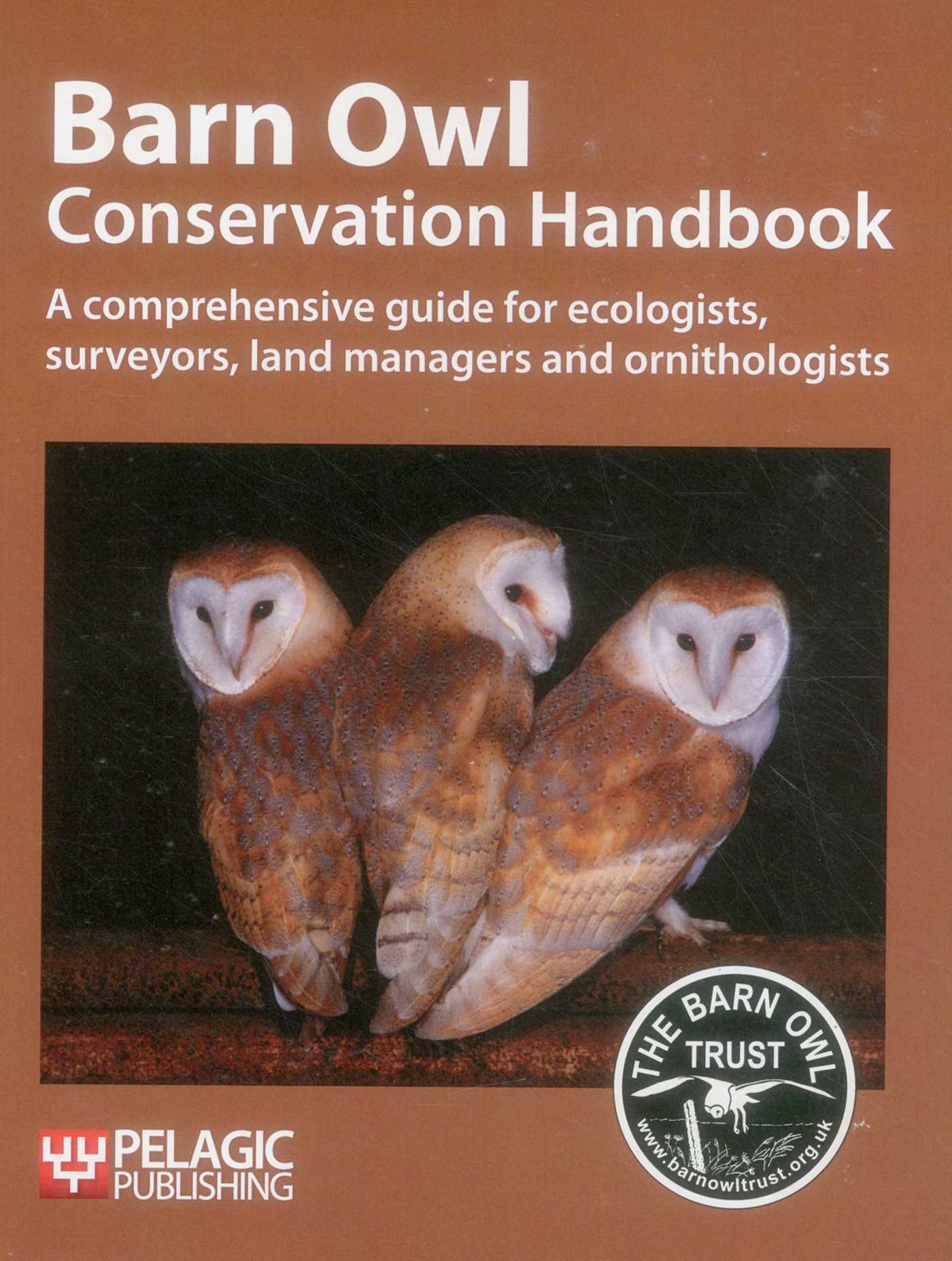
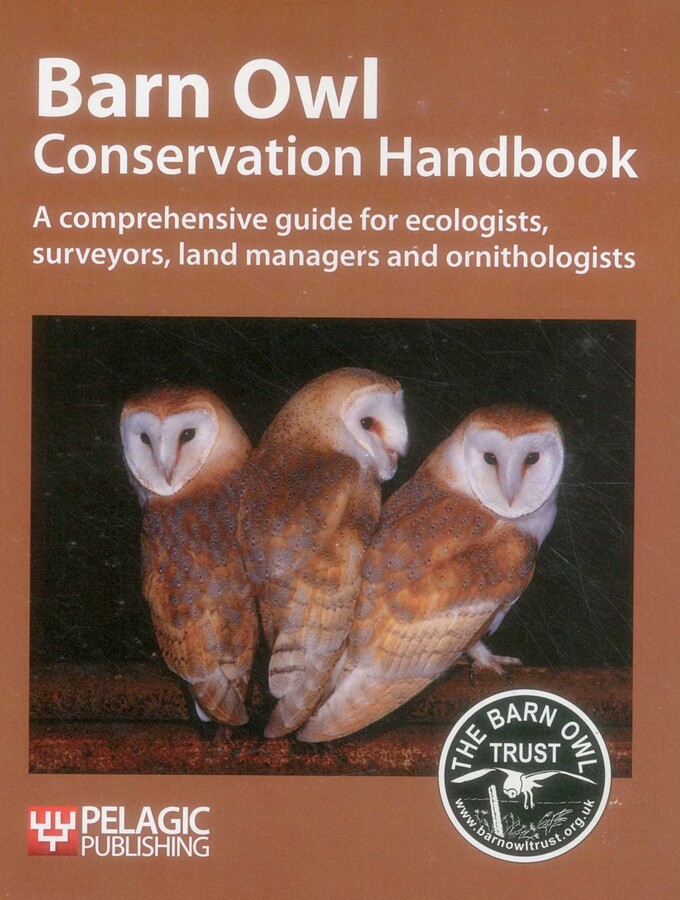
Barn Owl Conservation Handbook
A comprehensive guide for ecologists, surveyors, land managers and ornithologists
Part of Conservation Handbooks
Published by Pelagic
Distributed by Simon & Schuster
Table of Contents
About The Book
A comprehensive handbook covering all aspects of the conservation of Barn Owls. Written by the Barn Owl Trust, this book includes in-depth information on Barn Owl survey techniques, relevant ecology, Barn Owls and the law, mortality, habitat management, use of nest boxes and barn Owl rehabilitation. Essential reading for ecologists, planners, land managers and ornithologists.
Founded in 1988, the Barn Owl Trust is a small national charity working very hard to conserve one of the most beautiful birds on Earth. Anyone who has ever watched a wild Barn Owl hunting at dusk has surely been touched by the experience. Sadly, these magical birds have become increasingly rare – and the reasons are all man-made. Lack of food due to intensive farming, the loss of roost and nest sites, road mortality and rat poison, are the main factors to blame. The BOT is a small team of professional staff and volunteers, a grass-roots, non-profit organisation, based on the edge of Dartmoor in Devon. With nearly 30 years' experience in the field, they aim to be the experts on all aspects of UK Barn Owl conservation.
Founded in 1988, the Barn Owl Trust is a small national charity working very hard to conserve one of the most beautiful birds on Earth. Anyone who has ever watched a wild Barn Owl hunting at dusk has surely been touched by the experience. Sadly, these magical birds have become increasingly rare – and the reasons are all man-made. Lack of food due to intensive farming, the loss of roost and nest sites, road mortality and rat poison, are the main factors to blame. The BOT is a small team of professional staff and volunteers, a grass-roots, non-profit organisation, based on the edge of Dartmoor in Devon. With nearly 30 years' experience in the field, they aim to be the experts on all aspects of UK Barn Owl conservation.
Product Details
- Publisher: Pelagic (June 25, 2012)
- Length: 395 pages
- ISBN13: 9781907807145
Browse Related Books
Raves and Reviews
The most complete and concise catalogue of techniques, methods and practices used to protect the Barn Owl, both in captivity and in the wild ... Anyone who has any interest and any capacity to assist in Barn Owl conservation should own this important book.
– Chris Packham, broadcaster and author of Back to Nature
Overall, the Barn Owl Conservation Handbook provides an accessible, well-illustrated guide to the practicalities of Barn Owl fieldwork that will doubtless be of interest and use to the key target audience, namely those professionals and volunteers involved in surveying, developing and managing sites for the species.
– David Leech, IBIS
This substantial book aims to be comprehensive, an indispensable guide for ecologists, surveyors, land managers and ornithologists. At almost 400 detailed pages, it is remarkably thorough. Its nine chapters cover ecology, legal aspects, surveys, habitat creation and management, accommodation for barn owls, mortality, planning issues and injury and rehabilitation. It is full of case studies and practical examples of barn owl conservation in action. For me this is one of the most winning aspects of this book: it keeps the practicalities of barn owl conservation in view at all times.
– James Robertson, Natur Cymru
How I wish this book had been on my shelves when I first began my study of Barn Owls 47 years ago. If it had been, countless hours of lost sleep and many millions of midge bites could have been avoided, for it answers virtually every question a Barn Owl researcher needs to ask. It is a magnificent work and must have taken a herculean effort to put together and verify the mass of data held within its 395 pages.
– Tony Warburton
Packed with well-researched information and drawing on over two decades of first-hand experience, the Barn Owl Trust’s book looks set to become the definitive reference for those with an interest in Barn Owls, their ecology and conservation. Like the Trust, this book is upbeat and practical, delivering an optimistic approach to Barn Owl conservation that is accessible to readers from a wealth of backgrounds.
– Mike Toms, BTO, coordinator of the national Barn Owl survey: Project Barn Owl
Here you will find guidance on all aspects of Barn Owl conservation, from the care of injured birds, the creation and conservation of suitable habitat for their maintenance and successful breeding, to thorny questions about the impact of major roads and secondary poisoning by rodenticides. It would be easy to write a book about Barn Owls that would be a classic in the genre of conservation gloom and doom. Barn Owls are under pressure from multiple sources which are well analysed and described here. But rather than throwing up our hands, we are invited by this guide to take a very positive approach.
– Graham Martin, Emeritus Professor Centre for Ornithology, School of Biosciences, University of Birmingham
The Barn Owl Trust has produced an excellent guide for anyone involved in the conservation of barn owls. ... For me the most important chapter is 'Casualty assessment, short-term care and the principles of rehabilitation'. Its 30 pages show, step by step, the procedures for dealing with an injured barn owl, with very clear photographs of each step.
– Nigel Middleton, The Peregrine
Resources and Downloads
High Resolution Images
-
Book Cover Image (jpg): Barn Owl Conservation Handbook
1st Edition Trade Paperback 9781907807145