




Plus, receive recommendations and exclusive offers on all of your favorite books and authors from Simon & Schuster.
0:00 /
Table of Contents
About The Book
A #1 New York Times bestseller!
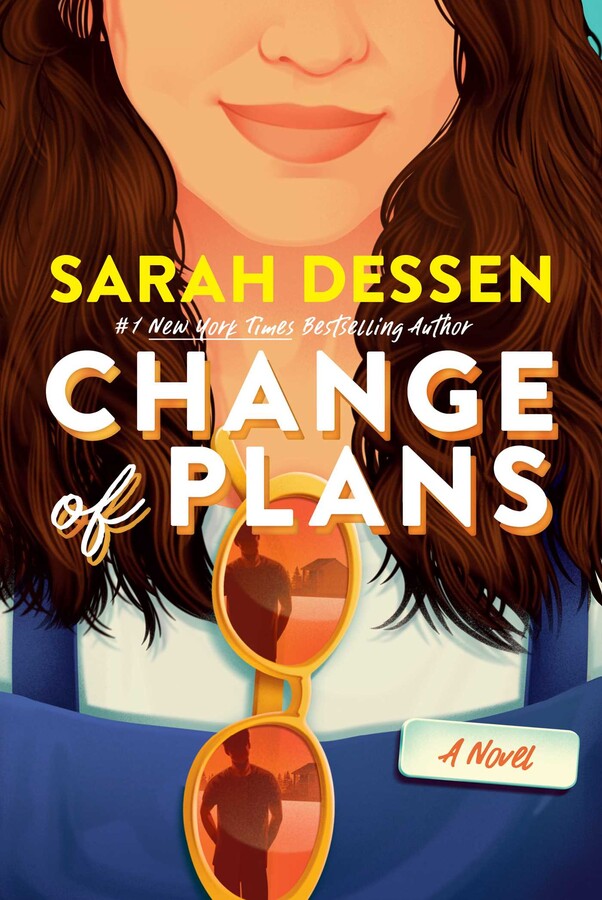
From acclaimed and #1 New York Times bestselling author Sarah Dessen comes a “sweet, nuanced, and reflective coming-of-age love story” (Kirkus Reviews, starred review) about an unassuming girl who learns to stand on her own while falling in love during a life-changing summer.
Finley has always felt most comfortable in someone else’s shadow. Fortunately, she’s got Colin, her magnetic boyfriend, who sweeps her along for activities, friendships, and future plans. Then she goes on a last-minute trip with her distant mom to a family vacation house that Finley didn’t know existed and is now about to be sold.
Her mom was estranged from her own parents and siblings since leaving home for college, and it’s a novelty for Finley to see her aunts and cousins. There’s also the handful of teens who work at the Egg, her aunt’s diner, and make up a found family of their own—including undeniably handsome guitarist Ben.
Then her relationship with Colin goes into freefall, and Finley’s roadmap for life after high school is gone. She has no choice but to live, for the first time, without plans. The longer Finley stays, the closer she gets to the truth about why her mother stayed away—and why she’s brought Finley here now.
And the closer she grows to new friends at the Egg, the more she starts to fall for charmingly awkward, soulful Ben and to realize how much of herself she’s been missing. By the end of the summer, nothing will be the same—for this community or for Finley herself.
From acclaimed and #1 New York Times bestselling author Sarah Dessen comes a “sweet, nuanced, and reflective coming-of-age love story” (Kirkus Reviews, starred review) about an unassuming girl who learns to stand on her own while falling in love during a life-changing summer.
Finley has always felt most comfortable in someone else’s shadow. Fortunately, she’s got Colin, her magnetic boyfriend, who sweeps her along for activities, friendships, and future plans. Then she goes on a last-minute trip with her distant mom to a family vacation house that Finley didn’t know existed and is now about to be sold.
Her mom was estranged from her own parents and siblings since leaving home for college, and it’s a novelty for Finley to see her aunts and cousins. There’s also the handful of teens who work at the Egg, her aunt’s diner, and make up a found family of their own—including undeniably handsome guitarist Ben.
Then her relationship with Colin goes into freefall, and Finley’s roadmap for life after high school is gone. She has no choice but to live, for the first time, without plans. The longer Finley stays, the closer she gets to the truth about why her mother stayed away—and why she’s brought Finley here now.
And the closer she grows to new friends at the Egg, the more she starts to fall for charmingly awkward, soulful Ben and to realize how much of herself she’s been missing. By the end of the summer, nothing will be the same—for this community or for Finley herself.
Reading Group Guide
Get a FREE ebook by joining our mailing list today! Plus, receive recommendations for your next Book Club read.
By clicking 'Sign me up', I consent to Simon & Schuster sending me email offers and updates, including offers for a free eBook. I understand I can unsubscribe at any time. Any offer for an eBook may be subject to exclusions, terms, conditions, and registration with our fulfillment partners. We collect and use your information in accordance with our Privacy Policy. Free ebook offer available to NEW CA subscribers only. Offer redeemable at Simon & Schuster's ebook fulfillment partner. Must redeem within 90 days. See the full terms and conditions.
Discussion Guide
Change of Plans
By Sarah Dessen
About the Book
Finley has always felt like an afterthought in her mother’s busy life, and she stands in the shadow of her charismatic high school boyfriend, Colin. But the summer after senior year is a time of change. A sudden unplanned trip with her mom takes Finley to a family lake house she didn’t know existed. Then Colin breaks up with her, and her world is upended. Preparing the house to sell, finding a job at the local diner, growing closer with aunts and cousins, learning family secrets, and a new romance with Ben, the shy cook at the diner, all combine to open up space for Finley to embrace vulnerability and become a more authentic version of herself.
Discussion Questions
1. The novel opens with a scene at Finley and Colin’s high school graduation. Their families couldn’t be more different, and there are more contrasts to come. Finley’s mom, Catherine Finley Hope, is at the center of Finley’s awareness. She is different from everyone, including Finley’s stepmom, her high school English teacher, and later, her aunts. Why do you think Dessen uses contrasts as a way to introduce readers to Finley?
2. As a new student in a new school on the first day of senior year, Finley is instantly drawn to Colin. On their first date, she feels a sense of security in his vision for their relationship: “The future, our future, as clear in his mind as if it was laid out right beside us like a game board itself.” (Chapter one) What does Finley gain by starting a relationship with Colin? What does she lose?
3. Finley’s mom was a new college graduate when she got pregnant with Finley. Instead of continuing her studies at law school, she stayed home while Finley’s dad got his master’s degree and a PhD. Then she left her husband and child, beginning a strained and distant relationship with them going forward. What do you think of Catherine’s choice? How did her leaving affect Finley?
4. Finley is completely disoriented when she and her mom arrive at the lake. She encounters a home she never knew existed and allusions to things that happened long ago. Soon Finley is hearing things about her mother’s “wild years” and a room called “Juvie.” (Chapter four) What comes to your mind as you read these details from the past? Why do you think Catherine refuses to explain them?
5. At the lake, Finley meets a lot of new people very quickly: family members, local residents, and future new friends. Each character is introduced through carefully chosen details that invite readers to notice hairstyles, clothing, ways of talking, body language, and other quirks. Which secondary character is your favorite and why? Which details helped you understand this character as a full and complex human?
6. Selling the family home requires Cat, Liz, and Kasey to sift through the artifacts of their childhood. Decisions about what to keep and what to let go are weighted with meaning and emotion. Liz goes so far as to say, “‘I made a list of what I would like. I know I can’t have it all.’” (Chapter five) How does a family decide what needs to be saved? How and why is the answer different for different people? What would be most important for you to save from your childhood home, if you could only choose a few things?
7. Like many people, Finley is attached to her cell phone. Then, in an emotional moment, she throws it in the lake. Ben chooses not to own a cell phone. Finley decides not to replace hers, even though that makes her “technologically stranded.” (Chapter eight) Without phones, Finley and Ben experience life differently as “the only ones not plugged in.” (Chapter fourteen) What changes for Finley as she moves through the summer without a cell phone? What do she and Ben gain? What do they lose?
8. Dessen periodically refers to recognizable brands of contemporary culture without using actual names: a video call for FaceTime, Home Office for Home Depot, UMe for Instagram. Why do you think the author made this choice? How does making up fake names for brands make the novel both timely and timeless? What does this book capture especially well about the time in which it was written?
9. Finley overhears her mom and aunts arguing about what it means to sell the family home. The meaning of the place is in its specific location but also in the history it contains. Cat grows angry as they discuss the past: “‘So keep it! Keep it all . . . Repeat those wonderful stories. That’s all they wanted anyway.’” “‘What’s wrong with having memories?’ Liz asked. ‘I don’t understand!’” (Chapter six) Why do the sisters remember the past differently? Why are stories and memories a problem between them?
10. Finley stumbles upon papers that expose her to a family secret, but she can’t keep the information to herself for long. “It felt good to get it out. A secret like that was so heavy.” (Chapter nine) Later she struggles with the burden of knowledge: “Another side of knowing a person, it turns out, can be knowing too much.” (Chapter twenty) Was it right for Cat to keep secrets from Finley? When is it okay to keep a secret within a family? How do you weigh the costs and benefits of telling the truth?
11. A third space is an in-between place where people can be free of their usual roles, routines, and relationships. Third spaces invite change, new ways of thinking, and new identities. The Egg is a third space for Finley. What does she discover about herself as she becomes more comfortable there? What other third spaces can you identify in the novel? Have you experienced a third space in your life? What possibilities did it offer?
12. Dessen includes a variety of motifs in this novel that work as symbols and metaphors—for example, hummingbirds, the moonakis plant, the dollhouse, and mastodons. What do these motifs mean to Finley? Why does Dessen keep coming back to them? What do they add to your understanding of the book’s characters and themes?
13. As Finley gets to know Ben, she begins to think differently about Colin. Things start to shift when she sees their relationship through Ben’s eyes: “‘It sounds more like a hurricane than a relationship. And around here we try to avoid those.’” (Chapter seventeen) What does Finley start to understand about Colin and his behaviors? How does Ben support her and challenge her?
14. Several times when Finley is at the Egg, she hears a song by Dolly Parton. Later we learn that playing Dolly at the Egg is the diner’s trademark. Why is Dolly and her song “The Light of a Clear Blue Morning” Dessen’s choice for the diner scenes? If you were to create a playlist for this book, what other songs would you include?
15. When Finley finally learns the backstory about her mom’s childhood at the lake, particularly her relationship with The Judge, she starts to see her mom in a new light. Finley also considers her mom in the context of other mothers in the story—especially Lana’s mom and Jonathan’s mom. How do these layers of backstory and context cause a shift in Finley’s thinking? What does she understand about her mother at the end of the novel that she didn’t understand at the beginning? Did you ever learn something new about a parent that caused you to shift your view of them?
16. Finley and Ben share their most honest conversations in the middle of the night on the loading dock at the Egg. But they keep their relationship a secret. Finley says she likes it this way, but Ben eventually suggests they stop hiding, stop drawing a line between Daytime Us and Nighttime Us. Why is Finley reluctant to bring their relationship into the light?
17. Finley makes herself small for Colin, until she doesn’t. Cousin Anne makes herself small for her future mother-in-law, until she doesn’t. Change is gradual, but it happens in moments. Finally, each girl gains the strength to change. What scenes or moments serve as turning points for Finley and Anne? What defines a turning point? What have been some turning point moments in your life?
18. Home is a physical place, but it’s also objects, belongings, memory, and history. Finley watches as her mom and aunts wrestle with their relationship to home, which includes reconciling themselves with the wounds of the past. When you think of your relationship to your home, what details make that place home to you? If you’ve left your childhood home, what parts of the past do you struggle with? What parts pull you back?
19. Novels help readers think about themselves and the world. What questions is this book posing to you as a reader—about girls, families, relationships, secrets, the pull of the past, the process of change, finding one’s voice, and/or becoming the author of one’s own story?
20. Sarah Dessen has been writing and publishing novels since 1996. If you’ve read other books she has written, what do you notice about the things she does particularly well as a novelist? What are the defining characteristics of her work? Where in this novel do you see her returning to her strengths? Where do you see her trying something new? Did you find any Easter eggs in the form of references to characters or moments from her earlier books?
Extension Activities
1. Read-alikes. Avid readers are often in search of books that can extend their experience with a topic or a particular kind of story. Reading this novel might make you think of other books featuring complex teenagers who are reckoning with the past, renegotiating their relationships with parents or romantic partners, seeking wisdom from elders, and finding their voice. A few examples include Pick the Lock by A. S. King, Break This House by Candace Iloh, Man o’ War by Cory McCarthy, and My Father, the Panda Killer by Jamie Jo Hoang. With these examples in mind, create your own list of read-alikes for Change of Plans. You might start with young adult novels, but be sure to go on to include TV shows, movies, songs, plays, poems, biographies, and/or memoirs. With each read-alike, write a few sentences about why you feel it’s relatable to Change of Plans.
2. Attachment Theory. Therapists understand that people carry formative events from childhood into our adult lives. Our early relationships affect the ones that come later. Finley struggles in her relationship with her mom, and this struggle spills over into her relationships with Colin and Ben. Attachment theory offers a way to understand these struggles. Take some time to read about attachment theory on the website The Attachment Project (https://www.attachmentproject.com/). How do you characterize your own attachment style? How does attachment theory help you understand patterns of relationships in the novel and in your own life?
3. Local History. The process of selling the Woods family home raises questions about environmental conservation, land preservation, gentrification, and local history. When we bulldoze structures, whether they are in cities, small towns, or lakeside resorts, the community changes. Sometimes the past is erased. Take some time to explore the history of a place you call home. You might visit a local history museum, look at local property deeds, or talk to a neighbor who has lived in your town for a long time. Who lived here before you? Where is that history preserved? You might also try entering the name of your town in a search engine along with words such as racism, gentrification, or urban renewal. Whose voices are missing in the mainstream historical record? How does your understanding of your home change once you start asking these questions?
4. Soundtrack to Summer. Dolly Parton is a staple at the Egg, and music often helps young people find identity and community. Create a playlist for your last or next summer break. For each song, write about why this song is important to you, and what it says about you and your time.
This guide was prepared by Jennifer Buehler, Associate Professor in the School of Education at Saint Louis University.
The websites referenced above are provided for informational purposes only and are not intended as an endorsement or promotion of any website. Simon & Schuster is not responsible for the functionality or content of any external website and expressly disclaims all responsibility and liability in connection therewith.
This guide has been provided by Simon & Schuster for classroom, library, and reading group use. It may be reproduced in its entirety or excerpted for these purposes. For more Simon & Schuster guides and classroom materials, please visit simonandschuster.net/m/prek12-teachers-librarians/teaching-resources
Change of Plans
By Sarah Dessen
About the Book
Finley has always felt like an afterthought in her mother’s busy life, and she stands in the shadow of her charismatic high school boyfriend, Colin. But the summer after senior year is a time of change. A sudden unplanned trip with her mom takes Finley to a family lake house she didn’t know existed. Then Colin breaks up with her, and her world is upended. Preparing the house to sell, finding a job at the local diner, growing closer with aunts and cousins, learning family secrets, and a new romance with Ben, the shy cook at the diner, all combine to open up space for Finley to embrace vulnerability and become a more authentic version of herself.
Discussion Questions
1. The novel opens with a scene at Finley and Colin’s high school graduation. Their families couldn’t be more different, and there are more contrasts to come. Finley’s mom, Catherine Finley Hope, is at the center of Finley’s awareness. She is different from everyone, including Finley’s stepmom, her high school English teacher, and later, her aunts. Why do you think Dessen uses contrasts as a way to introduce readers to Finley?
2. As a new student in a new school on the first day of senior year, Finley is instantly drawn to Colin. On their first date, she feels a sense of security in his vision for their relationship: “The future, our future, as clear in his mind as if it was laid out right beside us like a game board itself.” (Chapter one) What does Finley gain by starting a relationship with Colin? What does she lose?
3. Finley’s mom was a new college graduate when she got pregnant with Finley. Instead of continuing her studies at law school, she stayed home while Finley’s dad got his master’s degree and a PhD. Then she left her husband and child, beginning a strained and distant relationship with them going forward. What do you think of Catherine’s choice? How did her leaving affect Finley?
4. Finley is completely disoriented when she and her mom arrive at the lake. She encounters a home she never knew existed and allusions to things that happened long ago. Soon Finley is hearing things about her mother’s “wild years” and a room called “Juvie.” (Chapter four) What comes to your mind as you read these details from the past? Why do you think Catherine refuses to explain them?
5. At the lake, Finley meets a lot of new people very quickly: family members, local residents, and future new friends. Each character is introduced through carefully chosen details that invite readers to notice hairstyles, clothing, ways of talking, body language, and other quirks. Which secondary character is your favorite and why? Which details helped you understand this character as a full and complex human?
6. Selling the family home requires Cat, Liz, and Kasey to sift through the artifacts of their childhood. Decisions about what to keep and what to let go are weighted with meaning and emotion. Liz goes so far as to say, “‘I made a list of what I would like. I know I can’t have it all.’” (Chapter five) How does a family decide what needs to be saved? How and why is the answer different for different people? What would be most important for you to save from your childhood home, if you could only choose a few things?
7. Like many people, Finley is attached to her cell phone. Then, in an emotional moment, she throws it in the lake. Ben chooses not to own a cell phone. Finley decides not to replace hers, even though that makes her “technologically stranded.” (Chapter eight) Without phones, Finley and Ben experience life differently as “the only ones not plugged in.” (Chapter fourteen) What changes for Finley as she moves through the summer without a cell phone? What do she and Ben gain? What do they lose?
8. Dessen periodically refers to recognizable brands of contemporary culture without using actual names: a video call for FaceTime, Home Office for Home Depot, UMe for Instagram. Why do you think the author made this choice? How does making up fake names for brands make the novel both timely and timeless? What does this book capture especially well about the time in which it was written?
9. Finley overhears her mom and aunts arguing about what it means to sell the family home. The meaning of the place is in its specific location but also in the history it contains. Cat grows angry as they discuss the past: “‘So keep it! Keep it all . . . Repeat those wonderful stories. That’s all they wanted anyway.’” “‘What’s wrong with having memories?’ Liz asked. ‘I don’t understand!’” (Chapter six) Why do the sisters remember the past differently? Why are stories and memories a problem between them?
10. Finley stumbles upon papers that expose her to a family secret, but she can’t keep the information to herself for long. “It felt good to get it out. A secret like that was so heavy.” (Chapter nine) Later she struggles with the burden of knowledge: “Another side of knowing a person, it turns out, can be knowing too much.” (Chapter twenty) Was it right for Cat to keep secrets from Finley? When is it okay to keep a secret within a family? How do you weigh the costs and benefits of telling the truth?
11. A third space is an in-between place where people can be free of their usual roles, routines, and relationships. Third spaces invite change, new ways of thinking, and new identities. The Egg is a third space for Finley. What does she discover about herself as she becomes more comfortable there? What other third spaces can you identify in the novel? Have you experienced a third space in your life? What possibilities did it offer?
12. Dessen includes a variety of motifs in this novel that work as symbols and metaphors—for example, hummingbirds, the moonakis plant, the dollhouse, and mastodons. What do these motifs mean to Finley? Why does Dessen keep coming back to them? What do they add to your understanding of the book’s characters and themes?
13. As Finley gets to know Ben, she begins to think differently about Colin. Things start to shift when she sees their relationship through Ben’s eyes: “‘It sounds more like a hurricane than a relationship. And around here we try to avoid those.’” (Chapter seventeen) What does Finley start to understand about Colin and his behaviors? How does Ben support her and challenge her?
14. Several times when Finley is at the Egg, she hears a song by Dolly Parton. Later we learn that playing Dolly at the Egg is the diner’s trademark. Why is Dolly and her song “The Light of a Clear Blue Morning” Dessen’s choice for the diner scenes? If you were to create a playlist for this book, what other songs would you include?
15. When Finley finally learns the backstory about her mom’s childhood at the lake, particularly her relationship with The Judge, she starts to see her mom in a new light. Finley also considers her mom in the context of other mothers in the story—especially Lana’s mom and Jonathan’s mom. How do these layers of backstory and context cause a shift in Finley’s thinking? What does she understand about her mother at the end of the novel that she didn’t understand at the beginning? Did you ever learn something new about a parent that caused you to shift your view of them?
16. Finley and Ben share their most honest conversations in the middle of the night on the loading dock at the Egg. But they keep their relationship a secret. Finley says she likes it this way, but Ben eventually suggests they stop hiding, stop drawing a line between Daytime Us and Nighttime Us. Why is Finley reluctant to bring their relationship into the light?
17. Finley makes herself small for Colin, until she doesn’t. Cousin Anne makes herself small for her future mother-in-law, until she doesn’t. Change is gradual, but it happens in moments. Finally, each girl gains the strength to change. What scenes or moments serve as turning points for Finley and Anne? What defines a turning point? What have been some turning point moments in your life?
18. Home is a physical place, but it’s also objects, belongings, memory, and history. Finley watches as her mom and aunts wrestle with their relationship to home, which includes reconciling themselves with the wounds of the past. When you think of your relationship to your home, what details make that place home to you? If you’ve left your childhood home, what parts of the past do you struggle with? What parts pull you back?
19. Novels help readers think about themselves and the world. What questions is this book posing to you as a reader—about girls, families, relationships, secrets, the pull of the past, the process of change, finding one’s voice, and/or becoming the author of one’s own story?
20. Sarah Dessen has been writing and publishing novels since 1996. If you’ve read other books she has written, what do you notice about the things she does particularly well as a novelist? What are the defining characteristics of her work? Where in this novel do you see her returning to her strengths? Where do you see her trying something new? Did you find any Easter eggs in the form of references to characters or moments from her earlier books?
Extension Activities
1. Read-alikes. Avid readers are often in search of books that can extend their experience with a topic or a particular kind of story. Reading this novel might make you think of other books featuring complex teenagers who are reckoning with the past, renegotiating their relationships with parents or romantic partners, seeking wisdom from elders, and finding their voice. A few examples include Pick the Lock by A. S. King, Break This House by Candace Iloh, Man o’ War by Cory McCarthy, and My Father, the Panda Killer by Jamie Jo Hoang. With these examples in mind, create your own list of read-alikes for Change of Plans. You might start with young adult novels, but be sure to go on to include TV shows, movies, songs, plays, poems, biographies, and/or memoirs. With each read-alike, write a few sentences about why you feel it’s relatable to Change of Plans.
2. Attachment Theory. Therapists understand that people carry formative events from childhood into our adult lives. Our early relationships affect the ones that come later. Finley struggles in her relationship with her mom, and this struggle spills over into her relationships with Colin and Ben. Attachment theory offers a way to understand these struggles. Take some time to read about attachment theory on the website The Attachment Project (https://www.attachmentproject.com/). How do you characterize your own attachment style? How does attachment theory help you understand patterns of relationships in the novel and in your own life?
3. Local History. The process of selling the Woods family home raises questions about environmental conservation, land preservation, gentrification, and local history. When we bulldoze structures, whether they are in cities, small towns, or lakeside resorts, the community changes. Sometimes the past is erased. Take some time to explore the history of a place you call home. You might visit a local history museum, look at local property deeds, or talk to a neighbor who has lived in your town for a long time. Who lived here before you? Where is that history preserved? You might also try entering the name of your town in a search engine along with words such as racism, gentrification, or urban renewal. Whose voices are missing in the mainstream historical record? How does your understanding of your home change once you start asking these questions?
4. Soundtrack to Summer. Dolly Parton is a staple at the Egg, and music often helps young people find identity and community. Create a playlist for your last or next summer break. For each song, write about why this song is important to you, and what it says about you and your time.
This guide was prepared by Jennifer Buehler, Associate Professor in the School of Education at Saint Louis University.
The websites referenced above are provided for informational purposes only and are not intended as an endorsement or promotion of any website. Simon & Schuster is not responsible for the functionality or content of any external website and expressly disclaims all responsibility and liability in connection therewith.
This guide has been provided by Simon & Schuster for classroom, library, and reading group use. It may be reproduced in its entirety or excerpted for these purposes. For more Simon & Schuster guides and classroom materials, please visit simonandschuster.net/m/prek12-teachers-librarians/teaching-resources
About The Author
Photograph © Danell Beede
Sarah Dessen is the #1 New York Times bestselling author of over a dozen novels for teens, including The Truth About Forever, Just Listen, and This Lullaby. Her work has been published in over thirty countries and sold millions of copies worldwide. She is the recipient of the 2017 Margaret A. Edwards Award from the American Library Association for outstanding contribution to young adult literature.
Product Details
- Publisher: Simon & Schuster Books for Young Readers (May 5, 2026)
- Length: 368 pages
- ISBN13: 9798347108794
- Ages: 12 - 99
Browse Related Books
Raves and Reviews
"Longtime fans will welcome Dessen's return with this emotional story of reinvention, and new readers will appreciate her expert blend of emotional introspection and place-driven storytelling."
– Booklist
"Both devoted fans and new readers will be delighted that Dessen’s polished prose, playful dialogue, and sympathetic characters have also remained the same. Though YA romance trends have ebbed and flowed in the past decade, Dessen’s abiding brand of gentle, realistic love story retains its appeal."
– Horn Book
"Anyone transitioning into adulthood or who enjoys realistic coming-of-age stories will want to pick this one up. Highly recommended for school and public libraries."
– School Library Journal
“Is there anyone who can write about what matters most to teens as well as Dessen can? I sincerely doubt it.”
– Jodi Picoult
★ “A warm summer romance that’s a fortifying interpretation of self-transformation. . . . a delightfully layered, bighearted novel.”
– Publishers Weekly, STARRED REVIEW
★ “A sweet, nuanced, and reflective coming-of-age love story filled with moments of true beauty between family and friends.”
– Kirkus Reviews, STARRED REVIEW
“As with all Dessen’s books, [this] is a must-have.”
– VOYA (STARRED REVIEW) on Along for the Ride
“Unforgettable.”
– Publishers Weekly (STARRED REVIEW) on That Summer
“This is young adult fiction at its best.”
– SLJ on Just Listen
“Another pitch-perfect offering from Dessen.”
– Booklist (STARRED REVIEW) on Dreamland
Awards and Honors
- Junior Library Guild Gold Standard Selection
Resources and Downloads
High Resolution Images
-
Book Cover Image (jpg): Change of Plans
eBook 9798347108794
-
Author Photo (jpg): Sarah Dessen Photograph © Danell Beede(0.1 MB)
Any use of an author photo must include its respective photo credit