Plus, receive recommendations and exclusive offers on all of your favorite books and authors from Simon & Schuster.
Table of Contents
About The Book
INSTANT #1 NATIONAL BESTSELLER
A sweeping saga that begins with a shocking crime that echoes across continents and generations, from the New York Times and #1 Globe and Mail bestselling author of The Clockmaker’s Daughter.
Adelaide Hills, Christmas Eve, 1959
At the end of a scorching hot day, beside a creek in the grounds of a grand country house, a local man makes a terrible discovery. Police are called, and the small town of Tambilla becomes embroiled in one of the most baffling murder investigations in the history of South Australia.
Many years later and thousands of miles away, Jess is a journalist in search of a story. Having lived and worked in London for nearly two decades, she now finds herself unemployed and struggling to make ends meet. A phone call summons her back to Sydney, where her beloved grandmother, Nora, who raised Jess when her mother could not, has suffered a fall and is seriously ill in hospital.
At Nora’s house, Jess discovers a true crime book chronicling a long-buried police case: the Turner Family Tragedy of 1959. It is only when Jess skims through its pages that she finds a shocking connection between her own family and this notorious event—a murder mystery that has never been satisfactorily resolved.
An epic story that spans generations, Homecoming asks what we would do for those we love, how we protect the lies we tell, and what it means to come home. Above all, it is an intricate and spellbinding novel from one of the finest writers working today.
A sweeping saga that begins with a shocking crime that echoes across continents and generations, from the New York Times and #1 Globe and Mail bestselling author of The Clockmaker’s Daughter.
Adelaide Hills, Christmas Eve, 1959
At the end of a scorching hot day, beside a creek in the grounds of a grand country house, a local man makes a terrible discovery. Police are called, and the small town of Tambilla becomes embroiled in one of the most baffling murder investigations in the history of South Australia.
Many years later and thousands of miles away, Jess is a journalist in search of a story. Having lived and worked in London for nearly two decades, she now finds herself unemployed and struggling to make ends meet. A phone call summons her back to Sydney, where her beloved grandmother, Nora, who raised Jess when her mother could not, has suffered a fall and is seriously ill in hospital.
At Nora’s house, Jess discovers a true crime book chronicling a long-buried police case: the Turner Family Tragedy of 1959. It is only when Jess skims through its pages that she finds a shocking connection between her own family and this notorious event—a murder mystery that has never been satisfactorily resolved.
An epic story that spans generations, Homecoming asks what we would do for those we love, how we protect the lies we tell, and what it means to come home. Above all, it is an intricate and spellbinding novel from one of the finest writers working today.
Excerpt
Chapter 1
1
LONDON
December 7, 2018
Whenever Jess felt angry or sad or even just inexplicably unsettled, she paid a visit to the Charles Dickens Museum on Doughty Street. There was something enormously comforting about sitting down to a pot of English breakfast tea after a wander through the museum’s rooms. Sometimes she listened to the audio guide, even though she’d heard it enough times to have memorized the information, because she liked the narrator’s voice.
She had discovered the museum during her first months in London. She’d been twenty-one, living in the attic of her school friend’s mother’s aunt, working part-time in a run-down pub near King’s Cross station. One day, having arrived too early for her shift, she’d decided to take a roam around the area. It was her favorite thing to do, to walk and to look, to pinch herself in wonder at being here, in this place of cobblestones, pint glasses, and mews houses, of poets and painters and playwrights, of the great skulking, ageless River Thames.
In the spirit of exploration and discovery, she’d granted herself the freedom to turn in either direction at random when she reached the end of a road, which was how she happened to be walking along Doughty Street, past a row of neat brick houses, when she noticed a sandwich board on the pavement outside number forty-eight, announcing it as the Charles Dickens Museum. A thousand childhood hours spent lying in her grandmother’s garden in Sydney, book in hand, had come back in an instant, and she’d hurried up the concrete stairs and pushed open the shiny black door. Time had dissolved; the novelty of being in England, of finding that the names and places she’d come across in novels were real, was still fresh, and Jess had been utterly awed to think that Dickens himself had once walked through these halls, eaten at this table, stored his wine in the cellar downstairs.
She’d arrived late for work that day and earned herself a warning, followed shortly by a second, which had led in turn to her dismissal. In a stroke of good fortune, unemployment had begot opportunity, and the next job vacancy she answered had been for a small travel company in Victoria that required her to write, among other things, copy for their newsletter. And so, in an instance of rare, perfect synchronicity, she had always felt that she had Dickens to thank for giving her a professional start as a journalist.
Her preferred room at the museum changed frequently, depending on her mood and the circumstances of her life. Lately, she’d had a lot of time for the study. She liked to stand in the corner, where the edge of the desk met the window, and gaze upon Robert William Buss’s unfinished painting of Dickens asleep in his old wooden chair, the characters he’d conjured to life filling the air around him. She enjoyed picking them out, each one overlaid with the memories she carried from the first time she’d met them. It was an extraordinary proposition: that the imaginings of an English writer from a previous century had woven themselves into the lived experience of a little girl growing up in faraway Sydney.
Today, though, as she’d considered the painting, it had occurred to Jess that there was something almost menacing in the way the characters seemed to be haunting their author, surrounding him, entrapping him, refusing to grant him peace even in sleep. Jess knew that state of mind. It was precisely how she’d been feeling, ever since she’d had The Idea. In fact, she’d felt that way, to some degree or another, her whole life: once an idea announced itself, she thought about it obsessively, worried it this way and that, did not stop until she’d solved it, found it, finished it. She had it on good authority that the trait drove other people mad and had been told variously that she lacked discipline, that she was distracted company, that curiosity killed the cat. No one could ever deny, though, that the trait had served her well in her work.
This particular idea had come to her a week ago. Jess had caught the Tube home from the library, and when she hopped off at Hampstead she’d noticed that one of the disembarking passengers was a very old lady struggling under the weight of a pair of bulging Sainsbury’s bags. Jess had offered to help and ended up walking the woman home to one of the dark brick Georgian houses on Well Walk, between the pub and Gainsborough Gardens. It was during the walk, and afterward as they shared a pot of tea, that Jess came to hear her new friend’s life story, including that her house had once belonged to John Keats. Further, that as a newlywed she’d discovered a letter the poet had written to Fanny Brawne tucked deep inside a crack between the stair treads.
This marvelous fact had got Jess thinking about all of the other houses she walked past each day. The ever-present history, the tangible layers of time wherever one cared to look, was an aspect of London that she still found deeply stimulating, even after almost twenty years. Wouldn’t it be something, she’d thought, to pick a street at random and interview the current residents of each home, weaving their present-day situations together with whatever she could learn about the previous occupants and, indeed, the histories of the houses themselves? It would be a celebration of the ubiquity of stories and all those unseen parallels that threaded together to form the framework of our lives. How many points of interest there must be—some small and intimate, others more exceptional—hiding in the dusty stairwells of the city.
In the time it took Jess to traverse the short distance from Well Walk to her own small house in the shadow of New End Primary School, she had sketched out an entire series in her mind. She unlocked the door, kicked off her shoes, and went straight upstairs to her study. As darkness settled and the blue light from her monitor cast its glow on the floor around her, the number of research tabs open on her screen multiplied. By the time she stood up again, she’d produced a detailed outline, a snappy pitch, and a list of editors who might be interested in publishing it.
After the exhilaration of the idea, though, had come the excruciating wait. Jess was still getting used to it after so many years in full-time work. The last editor she’d contacted had been in touch the day before to say that the idea showed promise, but that he’d have to take it “further up the chain” and would “reach out” again before the weekend. Today was Friday, thus Jess was on tenterhooks. There was no chance she’d be able to focus on anything else, and so she’d walked all the way from Hampstead, through Primrose Hill, across Regent’s Park, to arrive at the museum in time for opening. It hadn’t taken long for her to find herself in the tearoom, where she was now finishing off a pot of Darjeeling and a slice of banana bread. She understood she’d committed the cardinal sin of the freelancer: becoming emotionally invested in an idea before she had the go-ahead from an editor willing to purchase and print the finished article; she couldn’t afford to write for her own edification.
Newsroom budgets were being slashed, small independent papers were closing, news was being syndicated rather than gathered locally. Scores of journalists had been let go and they were all trying to eke out a living now as freelancers. “It’ll be good to have the flexibility,” they’d insisted to one another in the beginning, with nervous optimism, but there’d been too many of them and too few publications to go around. Readers, they were told, were impatient with long-form stories now, so word counts and word rates were being cut in tandem. It had become almost impossible to make a living. A few of Jess’s friends had gone back to study, some were “taking a break,” while others were selling property or even mining bitcoin.
“What about a screenplay?” her friend Rachel had asked, trying to be helpful. “I read that everyone’s getting something made. Netflix, Amazon, you can’t go online without hearing how content-hungry they are. Who’s that journalist who wrote that movie—Bonfire something?”
“Tom Wolfe? Bonfire of the Vanities?”
“Yes! Him! Write something like that.”
“He didn’t write the screenplay; he wrote the book.”
“Then write a book. You’re a writer, aren’t you?”
Rachel was well-meaning and had almost certainly not deserved the withering glance Jess shot her. Jess did, in fact, know several ex-journos who were writing books, but only one had signed a book deal, and the least said about him and his new life the better. She did not mention that Bonfire of the Vanities (the defining novel of the eighties!) had in fact been a serialization first—twenty-seven parts in Rolling Stone magazine. (Twenty-seven!)
At her table in the back corner of the museum tearoom, Jess poured the last of the Darjeeling into her cup. She was setting the pot back when a flyer on the table with a small sketch of Dickens caught her eye. Now, he wouldn’t have let a global downturn get him down. The man’s industry had been legend: fifteen novels, five novellas, ten children, copious short stories, poetry and plays, international tours, and a not-insignificant amount of society-changing philanthropic work. Then again, he had also enjoyed the benefit of having a wife to pick up the slack—and, it would seem, his wife’s sister, too.
Jess twisted her napkin tightly and pressed it beneath her knife. The fact of the matter was, she missed being immersed in a long-form project, sinking deep into research and losing herself to an idea. She missed pursuing answers and sharing stories. She knew it sounded cringingly earnest, but at her best she had considered herself to be doing vital work: speaking truth to power, holding governments and leaders to account by shining a light on behalf of those who couldn’t. Surely, in this age of fake news and social media conspiracies, long-form journalism was more important than ever? It wasn’t that she was expecting to change the world, exactly; she just yearned to be doing something with meaning.
“Paying your mortgage has meaning,” said Rachel.
And what a mortgage it was. Rachel was right. It was the height of privilege to expect that her work should bring her purpose as well as the money to pay her bills. To work for spiritual fulfillment was a luxury not afforded most people on the planet. Nonetheless, it was difficult to see that the world needed yet another puff piece on fast fashion or urban coffee trends. Jess sometimes felt that she was polluting the earth with rubbish just as surely as if she were manufacturing plastic straws.
She picked up her phone again and frowned at the screen. Still nothing.
There was a chance that he would email, but he’d said that he would call.
Jess checked her email.
She checked her phone’s volume.
She set the phone down and glanced up as a family arrived noisily into the tearoom. The immediate effect was of hum and motion, and it took a moment to assess the situation: a crying baby in a carrier on the man’s front, a rain-bedraggled child of five or so dragging on the woman’s arm, an uncowed toddler with a clear list of demands and a mind to make them heard. They were casting about for an unoccupied table, brightly colored backpacks bumping chairs and walls as they maneuvered through the cozy space.
Jess met the mother’s eyes and recognized that here was a human at the end of her tether. “I was just leaving,” she offered, indicating her empty cup.
Jess decided not to go back upstairs into the museum. She would head to the library instead; perhaps even pull up a bit of research for the Well Walk piece. Not start it, she wouldn’t do any of the writing, she’d just make sure that she was ready when the call came through.
She was still digging about in the bottom of her bag as she pushed open the museum’s front door and stepped out into the street. With the first raindrops to hit her head came the image of her umbrella sitting on the kitchen bench at home. She glanced upward and the low gray sky glowered back; she would be drenched by the time she got to the tube. She was about to go back inside when she spotted the cab turning from Guildford Street. A cab was a luxury she could ill afford these days, with every spare penny going on her mortgage, but as thunder rumbled in the distance she stuck out her arm to wave it down. She would just have to limit herself to a single glass of wine when she met Rachel for their Friday evening drink. Her own fault for having let herself be charmed into buying in a part of London where a large glass of rosé could set you back twenty quid.
Her phone rang at the precise moment that she was clambering into the back of the taxi. She jammed it between her chin and ear. “Hello—would you hold for a minute?” she said, sliding onto the rain-spattered seat and setting down her bag. “British Library, please,” she told the driver. She reached to pull the door shut with a thud and, as the driver executed a neat turn and started heading west, gave her attention back to the caller. “I’m sorry,” she said. “I’m here.”
“Jess? Is this Jessica Turner-Bridges?”
Jess steeled herself, trying to keep her hopes contained. “Speaking.”
She would always remember the warm smell of the taxi’s heating and the efficient swiping of its windscreen wipers. The shock of the call’s content was compounded by the fact that she’d been expecting a very different conversation. Because it wasn’t the editor of the magazine supplement at all, but a voice from long ago and far away, a different life, bringing her the worst report possible; news she had dreaded receiving ever since she’d left Sydney for London.
1
LONDON
December 7, 2018
Whenever Jess felt angry or sad or even just inexplicably unsettled, she paid a visit to the Charles Dickens Museum on Doughty Street. There was something enormously comforting about sitting down to a pot of English breakfast tea after a wander through the museum’s rooms. Sometimes she listened to the audio guide, even though she’d heard it enough times to have memorized the information, because she liked the narrator’s voice.
She had discovered the museum during her first months in London. She’d been twenty-one, living in the attic of her school friend’s mother’s aunt, working part-time in a run-down pub near King’s Cross station. One day, having arrived too early for her shift, she’d decided to take a roam around the area. It was her favorite thing to do, to walk and to look, to pinch herself in wonder at being here, in this place of cobblestones, pint glasses, and mews houses, of poets and painters and playwrights, of the great skulking, ageless River Thames.
In the spirit of exploration and discovery, she’d granted herself the freedom to turn in either direction at random when she reached the end of a road, which was how she happened to be walking along Doughty Street, past a row of neat brick houses, when she noticed a sandwich board on the pavement outside number forty-eight, announcing it as the Charles Dickens Museum. A thousand childhood hours spent lying in her grandmother’s garden in Sydney, book in hand, had come back in an instant, and she’d hurried up the concrete stairs and pushed open the shiny black door. Time had dissolved; the novelty of being in England, of finding that the names and places she’d come across in novels were real, was still fresh, and Jess had been utterly awed to think that Dickens himself had once walked through these halls, eaten at this table, stored his wine in the cellar downstairs.
She’d arrived late for work that day and earned herself a warning, followed shortly by a second, which had led in turn to her dismissal. In a stroke of good fortune, unemployment had begot opportunity, and the next job vacancy she answered had been for a small travel company in Victoria that required her to write, among other things, copy for their newsletter. And so, in an instance of rare, perfect synchronicity, she had always felt that she had Dickens to thank for giving her a professional start as a journalist.
Her preferred room at the museum changed frequently, depending on her mood and the circumstances of her life. Lately, she’d had a lot of time for the study. She liked to stand in the corner, where the edge of the desk met the window, and gaze upon Robert William Buss’s unfinished painting of Dickens asleep in his old wooden chair, the characters he’d conjured to life filling the air around him. She enjoyed picking them out, each one overlaid with the memories she carried from the first time she’d met them. It was an extraordinary proposition: that the imaginings of an English writer from a previous century had woven themselves into the lived experience of a little girl growing up in faraway Sydney.
Today, though, as she’d considered the painting, it had occurred to Jess that there was something almost menacing in the way the characters seemed to be haunting their author, surrounding him, entrapping him, refusing to grant him peace even in sleep. Jess knew that state of mind. It was precisely how she’d been feeling, ever since she’d had The Idea. In fact, she’d felt that way, to some degree or another, her whole life: once an idea announced itself, she thought about it obsessively, worried it this way and that, did not stop until she’d solved it, found it, finished it. She had it on good authority that the trait drove other people mad and had been told variously that she lacked discipline, that she was distracted company, that curiosity killed the cat. No one could ever deny, though, that the trait had served her well in her work.
This particular idea had come to her a week ago. Jess had caught the Tube home from the library, and when she hopped off at Hampstead she’d noticed that one of the disembarking passengers was a very old lady struggling under the weight of a pair of bulging Sainsbury’s bags. Jess had offered to help and ended up walking the woman home to one of the dark brick Georgian houses on Well Walk, between the pub and Gainsborough Gardens. It was during the walk, and afterward as they shared a pot of tea, that Jess came to hear her new friend’s life story, including that her house had once belonged to John Keats. Further, that as a newlywed she’d discovered a letter the poet had written to Fanny Brawne tucked deep inside a crack between the stair treads.
This marvelous fact had got Jess thinking about all of the other houses she walked past each day. The ever-present history, the tangible layers of time wherever one cared to look, was an aspect of London that she still found deeply stimulating, even after almost twenty years. Wouldn’t it be something, she’d thought, to pick a street at random and interview the current residents of each home, weaving their present-day situations together with whatever she could learn about the previous occupants and, indeed, the histories of the houses themselves? It would be a celebration of the ubiquity of stories and all those unseen parallels that threaded together to form the framework of our lives. How many points of interest there must be—some small and intimate, others more exceptional—hiding in the dusty stairwells of the city.
In the time it took Jess to traverse the short distance from Well Walk to her own small house in the shadow of New End Primary School, she had sketched out an entire series in her mind. She unlocked the door, kicked off her shoes, and went straight upstairs to her study. As darkness settled and the blue light from her monitor cast its glow on the floor around her, the number of research tabs open on her screen multiplied. By the time she stood up again, she’d produced a detailed outline, a snappy pitch, and a list of editors who might be interested in publishing it.
After the exhilaration of the idea, though, had come the excruciating wait. Jess was still getting used to it after so many years in full-time work. The last editor she’d contacted had been in touch the day before to say that the idea showed promise, but that he’d have to take it “further up the chain” and would “reach out” again before the weekend. Today was Friday, thus Jess was on tenterhooks. There was no chance she’d be able to focus on anything else, and so she’d walked all the way from Hampstead, through Primrose Hill, across Regent’s Park, to arrive at the museum in time for opening. It hadn’t taken long for her to find herself in the tearoom, where she was now finishing off a pot of Darjeeling and a slice of banana bread. She understood she’d committed the cardinal sin of the freelancer: becoming emotionally invested in an idea before she had the go-ahead from an editor willing to purchase and print the finished article; she couldn’t afford to write for her own edification.
Newsroom budgets were being slashed, small independent papers were closing, news was being syndicated rather than gathered locally. Scores of journalists had been let go and they were all trying to eke out a living now as freelancers. “It’ll be good to have the flexibility,” they’d insisted to one another in the beginning, with nervous optimism, but there’d been too many of them and too few publications to go around. Readers, they were told, were impatient with long-form stories now, so word counts and word rates were being cut in tandem. It had become almost impossible to make a living. A few of Jess’s friends had gone back to study, some were “taking a break,” while others were selling property or even mining bitcoin.
“What about a screenplay?” her friend Rachel had asked, trying to be helpful. “I read that everyone’s getting something made. Netflix, Amazon, you can’t go online without hearing how content-hungry they are. Who’s that journalist who wrote that movie—Bonfire something?”
“Tom Wolfe? Bonfire of the Vanities?”
“Yes! Him! Write something like that.”
“He didn’t write the screenplay; he wrote the book.”
“Then write a book. You’re a writer, aren’t you?”
Rachel was well-meaning and had almost certainly not deserved the withering glance Jess shot her. Jess did, in fact, know several ex-journos who were writing books, but only one had signed a book deal, and the least said about him and his new life the better. She did not mention that Bonfire of the Vanities (the defining novel of the eighties!) had in fact been a serialization first—twenty-seven parts in Rolling Stone magazine. (Twenty-seven!)
At her table in the back corner of the museum tearoom, Jess poured the last of the Darjeeling into her cup. She was setting the pot back when a flyer on the table with a small sketch of Dickens caught her eye. Now, he wouldn’t have let a global downturn get him down. The man’s industry had been legend: fifteen novels, five novellas, ten children, copious short stories, poetry and plays, international tours, and a not-insignificant amount of society-changing philanthropic work. Then again, he had also enjoyed the benefit of having a wife to pick up the slack—and, it would seem, his wife’s sister, too.
Jess twisted her napkin tightly and pressed it beneath her knife. The fact of the matter was, she missed being immersed in a long-form project, sinking deep into research and losing herself to an idea. She missed pursuing answers and sharing stories. She knew it sounded cringingly earnest, but at her best she had considered herself to be doing vital work: speaking truth to power, holding governments and leaders to account by shining a light on behalf of those who couldn’t. Surely, in this age of fake news and social media conspiracies, long-form journalism was more important than ever? It wasn’t that she was expecting to change the world, exactly; she just yearned to be doing something with meaning.
“Paying your mortgage has meaning,” said Rachel.
And what a mortgage it was. Rachel was right. It was the height of privilege to expect that her work should bring her purpose as well as the money to pay her bills. To work for spiritual fulfillment was a luxury not afforded most people on the planet. Nonetheless, it was difficult to see that the world needed yet another puff piece on fast fashion or urban coffee trends. Jess sometimes felt that she was polluting the earth with rubbish just as surely as if she were manufacturing plastic straws.
She picked up her phone again and frowned at the screen. Still nothing.
There was a chance that he would email, but he’d said that he would call.
Jess checked her email.
She checked her phone’s volume.
She set the phone down and glanced up as a family arrived noisily into the tearoom. The immediate effect was of hum and motion, and it took a moment to assess the situation: a crying baby in a carrier on the man’s front, a rain-bedraggled child of five or so dragging on the woman’s arm, an uncowed toddler with a clear list of demands and a mind to make them heard. They were casting about for an unoccupied table, brightly colored backpacks bumping chairs and walls as they maneuvered through the cozy space.
Jess met the mother’s eyes and recognized that here was a human at the end of her tether. “I was just leaving,” she offered, indicating her empty cup.
Jess decided not to go back upstairs into the museum. She would head to the library instead; perhaps even pull up a bit of research for the Well Walk piece. Not start it, she wouldn’t do any of the writing, she’d just make sure that she was ready when the call came through.
She was still digging about in the bottom of her bag as she pushed open the museum’s front door and stepped out into the street. With the first raindrops to hit her head came the image of her umbrella sitting on the kitchen bench at home. She glanced upward and the low gray sky glowered back; she would be drenched by the time she got to the tube. She was about to go back inside when she spotted the cab turning from Guildford Street. A cab was a luxury she could ill afford these days, with every spare penny going on her mortgage, but as thunder rumbled in the distance she stuck out her arm to wave it down. She would just have to limit herself to a single glass of wine when she met Rachel for their Friday evening drink. Her own fault for having let herself be charmed into buying in a part of London where a large glass of rosé could set you back twenty quid.
Her phone rang at the precise moment that she was clambering into the back of the taxi. She jammed it between her chin and ear. “Hello—would you hold for a minute?” she said, sliding onto the rain-spattered seat and setting down her bag. “British Library, please,” she told the driver. She reached to pull the door shut with a thud and, as the driver executed a neat turn and started heading west, gave her attention back to the caller. “I’m sorry,” she said. “I’m here.”
“Jess? Is this Jessica Turner-Bridges?”
Jess steeled herself, trying to keep her hopes contained. “Speaking.”
She would always remember the warm smell of the taxi’s heating and the efficient swiping of its windscreen wipers. The shock of the call’s content was compounded by the fact that she’d been expecting a very different conversation. Because it wasn’t the editor of the magazine supplement at all, but a voice from long ago and far away, a different life, bringing her the worst report possible; news she had dreaded receiving ever since she’d left Sydney for London.
About The Author
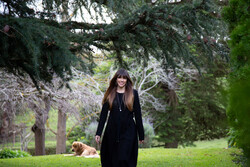
Photograph by Davin Patterson
Kate Morton is the award-winning, New York Times bestselling author of The House at Riverton, The Forgotten Garden, The Distant Hours, The Secret Keeper, The Lake House, The Clockmaker’s Daughter, and Homecoming. Her books are published in thirty-eight languages and have been #1 bestsellers worldwide. Born and raised in Australia, she holds degrees in dramatic art and English literature, and now lives with her family in London and Australia. Visit her online at KateMorton.com or on Facebook and Instagram at @KateMortonAuthor.
Product Details
- Publisher: Simon & Schuster (November 3, 2026)
- Length: 560 pages
- ISBN13: 9781982149383
Browse Related Books
Raves and Reviews
“[A]n eerie epic involving a wealthy family’s mysterious deaths in Adelaide Hills, South Australia. . . . This is Morton’s best yet.”
— Publishers Weekly (starred review)
“A new book from bestseller Morton is always a treat . . . Morton keeps the secrets coming, leading up to a powerful, emotional conclusion. This is storytelling at its finest.”
— Booklist (starred review)
“Morton’s layered writing leaves surprises for even the keenest of detectives.”
— Kirkus Reviews
“[A] mystery lover’s delight.”
— Winnipeg Free Press
“[T]he sixth novel from New York Times bestselling author Kate Morton examines family ties, secrets, the complexity of motherhood, and how the truth always finds a way out.”
— Reader’s Digest
“Gorgeous.”
— Elle
“Captivating.”
— BookPage
“[A] beautiful saga that reads like Gone with the Wind set in Australia.”
— BuzzFeed
Resources and Downloads
High Resolution Images
-
Book Cover Image (jpg): Homecoming
Trade Paperback 9781982149383
-
Author Photo (jpg): Kate Morton Photograph by Davin Patterson(0.1 MB)
Any use of an author photo must include its respective photo credit