Plus, receive recommendations and exclusive offers on all of your favorite books and authors from Simon & Schuster.
0:00 /
Table of Contents
About The Book
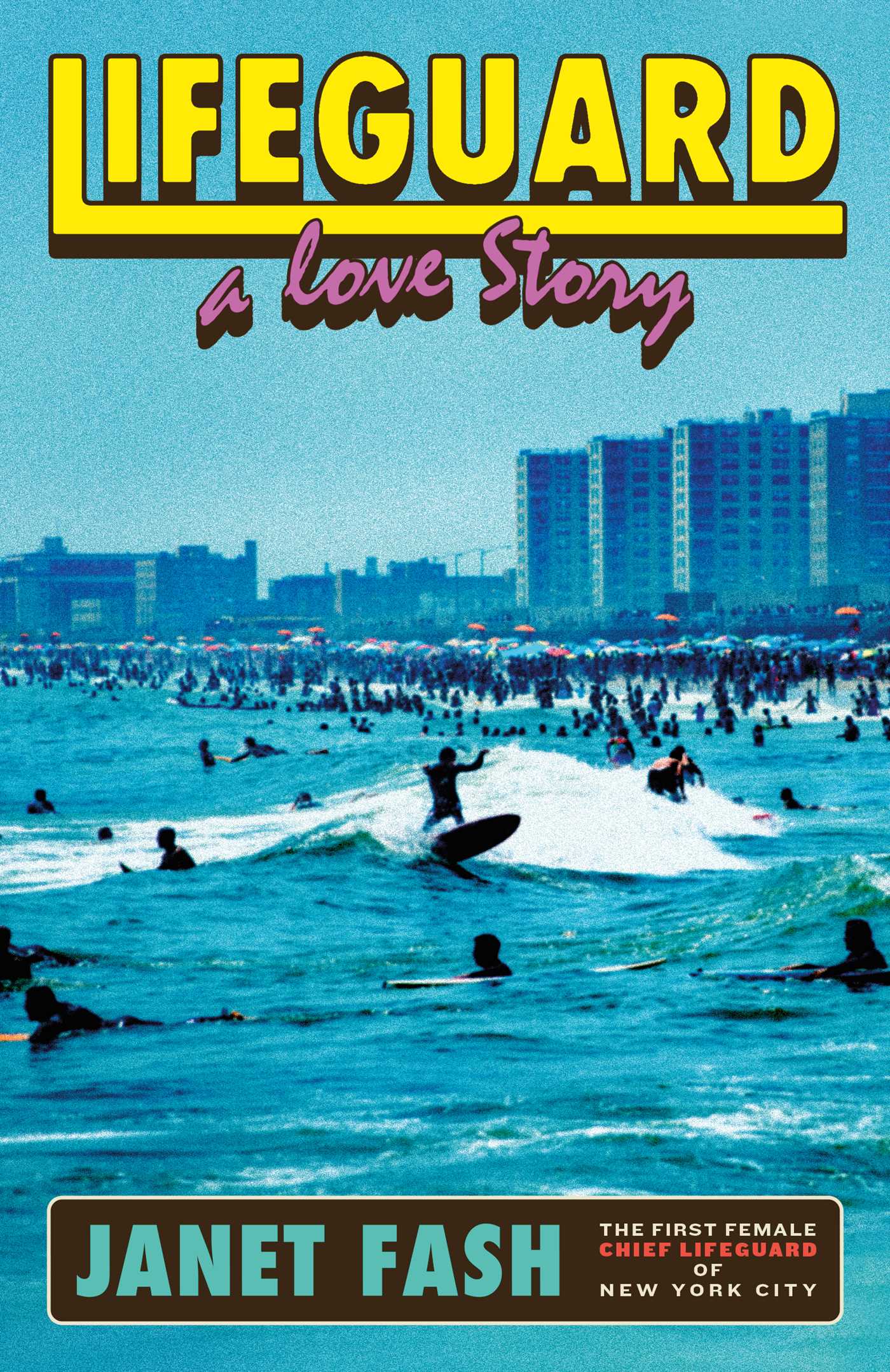
An unforgettable memoir from New York City’s first female lifeguard chief, this coming-of-age story plunges into the rough-and-tumble, sun-soaked world of Rockaway Beach in the 1970s and 1980s.
The first time I ever saw a lifeguard get horned was in the summer of 1974.
So begins the singular story of Janet Fash, the first female lifeguard chief at Rockaway Beach. Janet never expected to be a lifeguard, but when she got recruited by a friend to join the New York City lifeguarding corps, she never looked back. Rockaway Beach, her first post, had it all: sun, sand, and the imperative to be the best. After all, people’s lives are on the line.
Lifeguard: A Love Story is a singular memoir about Janet’s life on the beach. Rockaway is considered the most dangerous post in the city, with unpredictable rip currents and packed beaches. But it’s also the envy of lifeguards everywhere—a beach where all the action happens, where you’re as likely to save three lives before lunch as you are to stop the hot dog vendor from getting robbed. Janet started as a lifeguard there in 1979, making it through the customary hazing and binge drinking at Connolly’s, the local watering hole. She met and made friends with the surfers, who could always be counted on to help with a rescue. She met her husband on the beach and made sure her children, once they came along, were ocean-swimmers-in-training. Her fellow lifeguards showed up to her wedding and family funerals, and became her lifelong friends. Soon, forty years had passed and she’d spent almost every summer with a whistle around her neck. Lifeguard is an evocative picture of how a place as special as Rockaway Beach has changed over four decades. Yet at its most essential, it’s a coming-of-age tale, detailing what it was like to be a woman rising through the ranks in a male-dominated field, details of the legendary “Caveman Conventions” on the beach in the 80s, an inside look at the persistent union corruption that has plagued the corps, and a poignant through-line of grief, as the stakes of the job are life and death.
Lifeguard: A Love Story is about how a job can become something like a vocation, if you love it enough.
The first time I ever saw a lifeguard get horned was in the summer of 1974.
So begins the singular story of Janet Fash, the first female lifeguard chief at Rockaway Beach. Janet never expected to be a lifeguard, but when she got recruited by a friend to join the New York City lifeguarding corps, she never looked back. Rockaway Beach, her first post, had it all: sun, sand, and the imperative to be the best. After all, people’s lives are on the line.
Lifeguard: A Love Story is a singular memoir about Janet’s life on the beach. Rockaway is considered the most dangerous post in the city, with unpredictable rip currents and packed beaches. But it’s also the envy of lifeguards everywhere—a beach where all the action happens, where you’re as likely to save three lives before lunch as you are to stop the hot dog vendor from getting robbed. Janet started as a lifeguard there in 1979, making it through the customary hazing and binge drinking at Connolly’s, the local watering hole. She met and made friends with the surfers, who could always be counted on to help with a rescue. She met her husband on the beach and made sure her children, once they came along, were ocean-swimmers-in-training. Her fellow lifeguards showed up to her wedding and family funerals, and became her lifelong friends. Soon, forty years had passed and she’d spent almost every summer with a whistle around her neck. Lifeguard is an evocative picture of how a place as special as Rockaway Beach has changed over four decades. Yet at its most essential, it’s a coming-of-age tale, detailing what it was like to be a woman rising through the ranks in a male-dominated field, details of the legendary “Caveman Conventions” on the beach in the 80s, an inside look at the persistent union corruption that has plagued the corps, and a poignant through-line of grief, as the stakes of the job are life and death.
Lifeguard: A Love Story is about how a job can become something like a vocation, if you love it enough.
Excerpt
Chapter One: 1974 CHAPTER ONE 1974
The first time I ever saw a lifeguard get horned was in the summer of 1974. I was out at Rockaway, mostly against my will. My dad, who worked for Con Edison sweeping floors and eventually worked his way up into becoming a stationary engineer, always made sure to save up enough money to give us a beach vacation. That year, my parents had rented a bungalow in Rockaway Beach on Beach 93rd Street for the summer and hauled all seven of us kids down. Originally, I didn’t want to go. I was fifteen, had never met a rule I didn’t want to break, and I wanted to stay with my friends back in Park Slope. My dad gave me an ultimatum—to come with them or move out of their house altogether. He offered me a big plastic Con Edison bag to throw all my stuff in. I took the bag and put in my favorite faded jeans with the patches I had sewn on, my Frye boots, my winter coat, and my bathing suit. I imagined my independence would be permanent, and who knew what type of clothes I’d need?
But still, summer in New York meant hot tar and steaming subways, so the allure of the beach was strong. I was on the swim team at the Prospect Park YMCA and I loved being in the water, which always felt meditative for me. I hadn’t been back to Rockaway since I was ten, the last time my parents rented us a place there, so the strip of land on the southern tip of Queens was like another world. At the time it still had a classic wooden boardwalk where you could get splinters and protruding nails in your feet. It was, and still is, the only real ocean beach in New York City. So despite my mutiny, I decided to go down and join my family.
One day that summer, the whole family ended up at the beach on 106th Street for my swim coach’s birthday. He also worked as a lieutenant lifeguard, and Barbara, one of the top swimmers from the swim team, was a first-year lifeguard at his shack. I knew Barbara from growing up at the Prospect Park YMCA together, but only from afar—she was four years older than me and a faster swimmer. She was slim, with fluffy long brown hair she pulled back in a braid. Most important, she was tough. She could swim and run as fast as the guys; she could drink as much as them too. She would flirt with one guy one night, and another guy the next, and of course they didn’t like that. That was their standard, but they didn’t like it when she did it. She was friends with other strong women on the swim team, and I craved that kind of camaraderie. She was living the life I wanted.
We were sitting on the beach, the adults drinking gin and tonics, when suddenly one of the other lifeguards, Peter, started running after Barbara. She tried to escape from him by sprinting into the water, but he followed her and wrestled her in the ocean, forcibly stripping her of her bathing suit. He swam over to the wooden jetty, suit swinging in his hand, and hung it on the piling at the end. Barbara was standing in the water, completely naked. I sat there and watched it all happen with my mouth open.
Barbara endured ongoing hazing from some of the guys, and Peter was by far the cruelest. First-year lifeguards are called “horns,” which is short for “greenhorn.” The new lifeguards would all “get horned,” a ritual that usually happened at night at the end of the season. The senior lifeguards would line up the first-years and haze them in some way. Sometimes the horns would get painted and thrown in the water. Or they would be forced to drink a crazy amount of beer from the keg. Once, the horns all had ketchup and mustard thrown on them. This wasn’t Barbara’s official horning, which would happen at the end of the summer, but it was a form of it. This kind of hazing was unusual in the fact that she was singled out in front of all of us, in the middle of the day. My little sister Helen ran to her and gave her a towel to wrap around her body.
Later, it was clear that Barbara was embarrassed by the whole thing. “I don’t want to talk about it,” she’d say anytime we brought it up. But at the time she didn’t show it. She got her bathing suit, marched back up to the shack, and stuffed Peter’s clothes in the toilet. My mother, a strict Catholic woman who grew up in Ireland, was there on the beach with us and saw the whole thing. She immediately turned to me. “Jesus, Mary, and Joseph,” she said. “You’ll never be a lifeguard.” I took it as a rule.
I grew up the third oldest of seven children in Park Slope. There were three boys and three girls, and then my sister Maggie was born and the girls won, four against three. We weren’t rich, but we wanted for nothing. My parents had moved from Scotland in 1958 with my oldest brother in tow, and after a stint at my mom’s grand-uncle’s house on Prospect Park Southwest, they found an Irish landlord on 14th Street who rented an apartment to them. When my mom was pregnant with me, the landlord asked her to move out because she was having too many kids. The rent-stabilized apartment on 4th Street they moved into next was where we finally found our home. My dad got friendly drinking with the landlord there, and when he moved out of his apartment across the hall, we rented it. It was the biggest apartment in the building, with five bedrooms and two bathrooms. The younger boys bunked up in one bedroom, while the girls bunked in another. My oldest brother, Patrick, had his own room. Meanwhile Maggie slept in a room the size of a walk-in closet because she was the youngest. We would laugh because her little room barely fit her little bed. (When we older siblings grew up and moved out, it became a pantry.) But at least she had it all to herself.
My mother was a stay-at-home mom who picked up odd jobs. She became the super of the building, tending to the apartments and mopping the floors. She cooked three meals a day for us but also managed to look out for the other tenants in the building, who came from all over. There was a Korean family and a woman from Syria, and my mother sponsored all of their immigration visas. There was a woman across the way who was mentally unwell and whose husband was in jail, so my mother fed her. Taking care of all of us came naturally to her. The Syrian family gave us a small Persian rug and the Korean family gifted us Korean dolls with little wobbly heads to thank her, and my mother put them up on the shelf in our dining room.
My siblings and I played together. We ate every meal together. We abused one another, too, and made fun of each other. So it was only natural we learned to swim together. Not everyone grew up swimming—pool access was scarce in the city, but we were lucky we lived near the Prospect Park YMCA. One of my sister’s friends took us there when I was five years old, and I started taking swim lessons. It was twenty-five dollars per year for the whole family, and we would go on Saturdays and all line up.
Once, my cousin Patricia tagged along with us for a day of swimming and arts and crafts at the YMCA, where you had to be eight years old to join. She was underage, but my aunt and mother were going to lie and say she was eight. My mother prepped me specifically, because I was the loudmouth of the family. “Don’t say anything, Janet,” she told me. We waited in line, and when we got to the front, the people working there asked Patricia how old she was. She said she was eight, and then we heard a little voice coming from the back of the line. “No she’s not. She’s six.” It was my sister Mary piping up. They hadn’t warned her because she was the quiet one. Patricia had to sit on the side all day, eating doughnuts out of a paper bag.
I don’t actually remember my first swim lessons at the YMCA, which also means I don’t really remember a time when I didn’t know how to stay afloat. All I know is that I took to swimming so much, I joined the swim team along with my cousins and siblings. I would practice all week with my teammates and compete on the weekends. We would walk home together from the YMCA with wet hair, and in the winter we laughed when our hair froze.
But it was in the ocean where I really learned to love swimming. My parents would take us and our cousins every summer, thirteen kids in total, to Highlands, New Jersey. There were two beaches there: the bay, where it was calm and where we perfected our strokes; and Sandy Hook, just over the bridge, where the waves were. That was where we had our initiation into the ocean. We would climb over the rocks and run shrieking into the water. Swimming in the pool could be monotonous. But the ocean was different because it was constantly changing and unpredictable, which was thrilling. You had to learn to be adaptable.
Sandy Hook has a shore break, where the waves slam down on the shore, rather than peeling gracefully. It’s not an easy ride, and you have to go in on an angle. The older kids taught the younger ones how to bodysurf, and those lessons stuck with me. You can’t ride the wave all the way in or you’ll be on the sand. If you get stuck on the top of the wave, you could get hurt. It was there that I first learned what the ocean could do. My cousin Patricia rode a shore breaker in and I could tell she was on it wrong. She slammed into the sand under the water, and the force broke her shoulder. When she came up again, she was screaming. We helped get her out of the water and her older sister tried to shush her. “People are looking,” she said as we got her into the ambulance. That stuck with me—while Patricia was sitting there with a broken shoulder, her sister was worrying about what other people on the beach were thinking. It was the kind of thing my mother would have thought of, but I never did. As Catholics, my mother and cousin were taught to be humble and not draw attention to themselves.
The ocean was something we respected after that. The doctors put Patricia in a cast that wrapped around her entire chest. She had to wear it all summer. I would ride her around on my bicycle, and the boys from the family renting across the way were ruthless teasing us. They would call her “Titless” because of the cast, even though she was well-endowed underneath that thing. I had the big mouth and a loud laugh, so I got the name “Horsey.”
My big mouth came in handy sometimes. There was a lot more crime around Prospect Park during those years, and you had to keep your wits about you, especially as a teenage girl. It was no joke. One night, my younger sister Helen and I were walking home from our cousin’s house in Windsor Terrace and we weren’t paying attention. We were deep in conversation, arguing about something trivial, when a man in a long coat materialized on 4th Street and grabbed me by my neck. He had a knife and tried to drag me into the park. Helen froze. She saw it all happen, but nothing came out of her mouth.
I wasn’t quiet, though. When the man pushed me against the brownstone fence, I started screaming bloody murder. Suddenly I remembered we were outside our neighbor’s house and that their dad was a police officer. I got it in my head to yell, “Detective Sweeney! Detective Sweeney!” The guy thought Detective Sweeney really was there, so he turned and ran. Me and my sister booked it home. It was one of the most frightening moments of my life. I later learned that yelling out someone’s name in a situation like that was the right thing to do. And I learned right then, in that terrifying moment, that being a loudmouth could save someone’s life. It certainly saved my skin.
I was always the wild one of my siblings. My mother would say, “Come home at ten,” and I’d come home at eleven. I would make sure I was not there at ten. I was pushing the envelope all the time. When I was a teen, I started drinking with my swim team in the locker room after practice. I would lie to my parents and say I was sleeping at my cousins’ house, but they would hear me slurring my words and drive down to wherever I was to drag me home.
So that first summer in Rockaway, I was already bursting at the seams. I loved being there. The bungalow was on 93rd Street, one of the best spots because it only ran for one block—my younger siblings had a bunch of other kids to play with, and the neighbors were always sitting on their porches, chatting with us when we walked by. A lot of them were full-timers, but they welcomed the summer crowd and threw block parties that went on all night.
I spent a lot of that summer following Barbara around the beach. At the time, I never thought much of lifeguarding and what it entailed. To me, they were the people in the orange-and-green suits who sat on the chair and blew the whistle when we went out too far. I was the kid who would swim out too far just to test the limits and get blown in. But with Barbara, I saw a new side of the job. I remember being on the boardwalk and meeting the lifeguards she worked with. They were older than me and they were rambunctious. Barbara told me which guys to steer clear of and which ones were all right. Sometimes she had me sitting on the chair, watching all the beachgoers from above, which was a thrill.
There was a kind of intoxicating camaraderie among the lifeguards. They had this club they were a part of. They would spend the day out on the beach pulling people out of the water, then spend the night throwing the craziest parties. They even had a name for them: Caveman Conventions. Shacks would compete to outdo each other, lighting bonfires on the beach, supplying endless kegs, and inviting live bands. The lifeguards were listening to rock and roll—Tom Petty, the Allman Brothers, the Grateful Dead, the Band, Neil Young, Cat Stevens, and the Beach Boys. One of the lieutenant lifeguards was Arlo Guthrie’s roadie, and he invited him to come to Rockaway. Arlo partied for four days, slept in the lifeguard shack for a night, and wore an orange-and-green lifeguard uniform. He brought his guitar to the beach and would start jamming. At the end of his stay, his band played at a lifeguard shack dinner party. Back in the day, the lifeguards were pretty much able to do whatever they wanted. They ran the place. They would just give the police a hamburger or a beer and the cops would turn the other way. It was totally reckless. Barbara attended all the parties, and I would go with her and get so drunk I’d have to go home and sleep outside on the porch so I wouldn’t wake my parents up.
On Labor Day I met Barbara and another lifeguard, Patty, at Fitzgerald’s, one of the bars the lifeguards loved to frequent. (In those days, nobody carded us—I was drinking at the bars as young as fifteen.) It was right off the ocean at Beach 108th Street and it was packed—even Freddie Bomhoff, the borough coordinator who was in charge of all the lifeguards at Rockaway, was there. The three of us girls were drinking together when a bunch of the guys showed up. The male lifeguards were intimidating in a way that was hard to put my finger on. A lot of them were friendly, but for some of them you just had this feeling that something unpredictable could happen. With the loud music, heavy drinking, and pot smoking, it felt like they were always within reach of doing something crazy. They would do anything to get attention; at one of the parties, I watched as one guy ate a flytrap as a stunt. And some of them were mean as a persona.
That particular Labor Day, they were angry at Barbara and Patty and made a beeline to our spot at the bar. I had no idea that Barbara and Patty had apparently left early that afternoon, leaving the guys to man the lifeguard chair. “You screwed us!” the guys yelled as they approached. Patty jumped out of the bathroom window, leaving me and Barbara to deal with them. Before I knew it, one of them—Tom—had pulled my tube top down. I proceeded to take my Dr. Scholl’s sandal off and hit him over the head. I ran to the phone booth at the front of the bar and picked up the receiver. “I’m from Brooklyn,” I yelled at them. “I’m gonna drop a dime on you and call my brothers!” Tom backed off. He didn’t know it was an empty threat—I would have never called my brothers. They would have killed me, not him.
The guys retreated to the beach, and we kept on drinking. That’s how I learned to handle them—they would get heated at something, but if you stood your ground, they usually backed off quickly. I don’t think they were used to girls hitting them with their Dr. Scholl’s sandals. It wasn’t as if we were going to get help elsewhere. Freddie, the borough coordinator who was supposed to be managing everyone, was passed out with his head on the bar.
I became a lifeguard late in life. Most people start when they’re sixteen, but because of my mother’s consternation, I was the ripe old age of nineteen when I first signed up, and I fell into it accidentally. During my senior year of high school I had an internship at the Morgan Guaranty Trust Company on Wall Street. At noon I’d leave school and go to my job in the money transfer division. They had just started using these huge computers that looked like washing machines and would go down a lot in the afternoon, so we’d stop working and get beers at the bar downstairs. One of my co-workers, a Jamaican girl, brought down a spliff and when I came back to the office I had a new nickname: “Smiley.” It was incredibly fun. After I graduated, I stayed on Wall Street working at a brokerage firm recording the trades. The guys there were wealthier than anyone I knew in Brooklyn—they all had boats and drove Jaguars and would rent out clubs at night for all of us to party.
It was Barbara, again, who pulled me in. Four years after the summer we spent together, I ran into her at the Park Slope Seventh Heaven Street Fair. She was also working on Wall Street for a commodities trader but had decided she was going back to lifeguarding that summer, just on the weekends. She asked if I wanted to join. I wasn’t sure. I thought back to the wild parties and the easy authority the lifeguards had on the beach, and felt intimidated. There was this peer pressure to be crazy. All the heavy drinking meant lifeguards pushed one another to act recklessly. Plus, I was nervous about the idea of being perched in the lifeguard chair and having to spot a “case”—which is what the lifeguards called a drowning person—after a night of drinking. Even the idea of going out into the waves and carrying someone in by myself felt impossible.
“Janet, you can do it,” Barbara said. “You’ll never be alone, it’s all teamwork. You’re going to love it.” So I agreed. That summer we had hung out on the beach together, Barbara introduced me to Freddie, who told me to come back and lifeguard for him. Usually you have to take a swim test and go through training once a week for sixteen weeks, but somehow I ended up getting sent straight to the beach that year. I’m pretty sure Barbara just asked Freddie to sign us up, and he did. “When they ask you what beach you want, tell them Rockaway,” Barbara told me. “It’s the only surf beach.” I trusted Barbara because she was both older and cooler, and she was doing the things I wanted to do. So that’s what I did.
In New York City, there’s an unofficial lifeguard pecking order, at least in terms of skills and danger: there are the pool lifeguards, then the bay lifeguards at Coney Island and Orchard Beach, and then the surf lifeguards at Rockaway. Because Rockaway is the only place that requires open ocean abilities, it had a reputation for attracting lifeguards who swam hard but also partied hard. While most lifeguards try to work in the neighborhood they live in, if you were a teen who loved drinking and the ocean, Rockaway was where you wanted to be. Plus, the beaches opened a full month before the pools, which meant a month more pay. There was no question where Barbara and I were going to go. We went together to the former monkey house of the Central Park Zoo, which is where they processed the lifeguards, and on the slips our assignment was confirmed: Rockaway Beach.
We were sent to Belle Harbor, a stretch of the beach from 135th to 149th Streets, toward the western end of Rockaway. Belle Harbor is a middle-class neighborhood filled with firefighters and police officers living in single-family colonials and Tudors, a small beach town in the biggest city in the country. As opposed to the beaches on the eastern end of the peninsula, closer to the public housing complexes with the subways bringing in New Yorkers from other boroughs, most people in Belle Harbor know how to swim, which meant it was a slow summer for us.
We lined up at the beach on the first day to pick up our uniforms, which consisted of a parka, a raincoat, a T-shirt, and two bathing suits. Over the years there have been tweaks to the lifeguard uniform. Back then, instead of sweatpants we got orange chinos, which were stylish for photos but didn’t do anything to keep you warm on the colder days. That year, we also received a bucket hat, which we never got again. And before swim trunks, the guys got Speedos that had two layers for double protection. Some of the old-timers still wear them—what we called “Bay One-rs,” after the nude beach in Jacob Riis Park, because the guys up there wore them. But the women’s orange-and-green bathing suits have stayed basically the same. We girls always begged for two-pieces because the one-pieces were too hot, but we never got them.
I was nervous my first day on the job, but that weekend it was raining, and no one was on the beach. When the weather was crummy, the senior lifeguards would light up the barbecue and start drinking, since there wasn’t much else to do. A lot of weekends that summer were crummy, so I went to a lot of barbecues. I quickly learned there wasn’t much in the way of official training. I never once saw our chief lifeguard, who was supposed to manage our shack, so Barbara was the one who ended up teaching me how to do the job. She showed me the quickest way to swim out past the waves, a technique the lifeguards called “porpoising.” She taught me to watch how people entered the ocean. “The minute someone walks in the water, you already know if they can swim or not,” Barbara said. A swimmer looks at the ocean when they go into the water. They know how to guide themselves on the wave and watch for the rhythm of the lulls. But if someone turns their back to the water, you know they can’t swim. And then, like clockwork, they’ll start getting smashed by the waves.
We manned the chair three of us at a time, rotating shifts two hours on, two hours off, and did drills running into the ocean with our buoys. I learned that if someone is moving their body in the water and they’re not going anywhere, that’s when you have to go in. Some lifeguards will wait because they want to make sure the person actually needs rescuing. But if it’s busy on the beach, it’s best to just get in and get the person out. Then you can let them know where they should be and not let them go out too far. I also learned how to spot “bathtub cases,” which is what we called it when someone isn’t really in trouble, but you go in and do an easy rescue before things escalate.
When a lifeguard spots a case, they’ll blow one long blast on their whistle and run in. The lifeguards on the chairs to the left or right will then start “bumping the chairs,” which means they’ll run to help with the rescue, and their partners will swap in and sit on their chairs. If the running lifeguard spots an empty chair, they have to jump onto it. This ensures that none of the chairs are unmanned while the lifeguard who is making the rescue has all the help they need.
Some things I had to pick up myself on the job. Once, I saw a man with a mustache swimming by the wooden jetty. The wave pushed him into it, and I could see he was starting to panic. The water was chest-deep, so he was fine, but I went out to help him anyway. As I got close, he lunged for me out of fear, grabbed my neck, and started dragging me down. Luckily, we were standing, so I could just push him back and hand him the buoy instead. This was something every experienced lifeguard knew: present the buoy first. Drowning people want to grab something, and if you don’t give them something, it will be you. I had to learn it the hard way.
Barbara and I rented a bungalow on 122nd Street, where we stayed for the summer. It wasn’t actually a bungalow, it was someone’s garage, but it felt like a bungalow and it was ours. We would hang out on the beach all weekend, drink ourselves silly, and crash in our garage. Then on Monday morning we’d put on our blazers and skirts and take the A train into the Financial District as if we hadn’t just been at the beach all weekend.
By the end of the summer I was finally starting to get used to the social scene, but it was the kind of scene that took a lot of getting used to. It wasn’t just the drinking—the guys were out of control in all kinds of ways, and I still kept them at arm’s length. At one of the parties, I watched as one got naked and climbed to the top of the lifeguard shack to swing his penis in the air. I was the wildest person in my family, which was tame compared to some of these lifeguards. My mother had eventually come around to me taking the job, but most of what I saw was stuff I wasn’t reporting back to her.
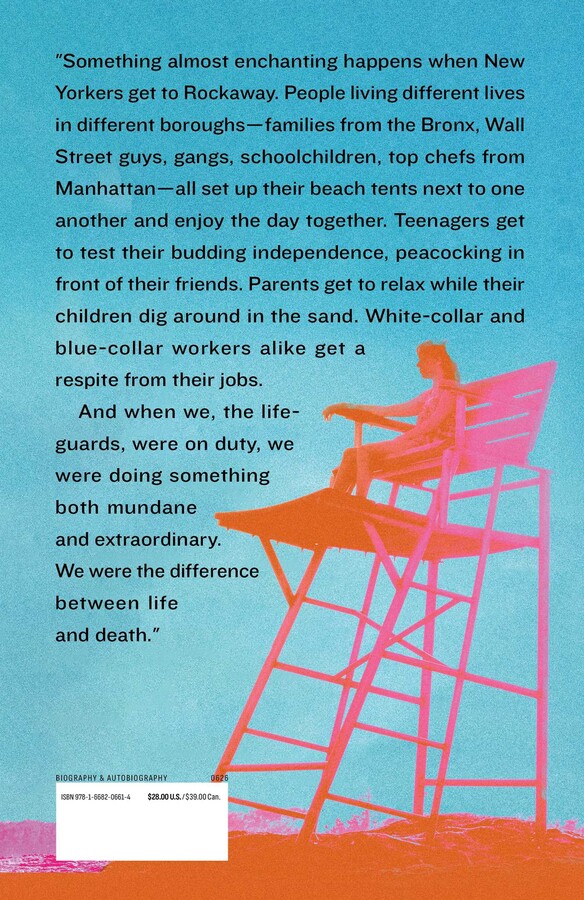
Still, I felt carefree on the beach in a way I didn’t feel elsewhere. It was different from my life on Wall Street, which I enjoyed, but at the end of the day was just endless work for somebody else. When you work for a company, you’re putting out a product for them. Even though we spent so much of our time partying and had so little supervision, as a lifeguard, it was clear who we served—the public. When we were on duty, we were doing something both mundane and extraordinary. We were the difference between life and death.
The first time I ever saw a lifeguard get horned was in the summer of 1974. I was out at Rockaway, mostly against my will. My dad, who worked for Con Edison sweeping floors and eventually worked his way up into becoming a stationary engineer, always made sure to save up enough money to give us a beach vacation. That year, my parents had rented a bungalow in Rockaway Beach on Beach 93rd Street for the summer and hauled all seven of us kids down. Originally, I didn’t want to go. I was fifteen, had never met a rule I didn’t want to break, and I wanted to stay with my friends back in Park Slope. My dad gave me an ultimatum—to come with them or move out of their house altogether. He offered me a big plastic Con Edison bag to throw all my stuff in. I took the bag and put in my favorite faded jeans with the patches I had sewn on, my Frye boots, my winter coat, and my bathing suit. I imagined my independence would be permanent, and who knew what type of clothes I’d need?
But still, summer in New York meant hot tar and steaming subways, so the allure of the beach was strong. I was on the swim team at the Prospect Park YMCA and I loved being in the water, which always felt meditative for me. I hadn’t been back to Rockaway since I was ten, the last time my parents rented us a place there, so the strip of land on the southern tip of Queens was like another world. At the time it still had a classic wooden boardwalk where you could get splinters and protruding nails in your feet. It was, and still is, the only real ocean beach in New York City. So despite my mutiny, I decided to go down and join my family.
One day that summer, the whole family ended up at the beach on 106th Street for my swim coach’s birthday. He also worked as a lieutenant lifeguard, and Barbara, one of the top swimmers from the swim team, was a first-year lifeguard at his shack. I knew Barbara from growing up at the Prospect Park YMCA together, but only from afar—she was four years older than me and a faster swimmer. She was slim, with fluffy long brown hair she pulled back in a braid. Most important, she was tough. She could swim and run as fast as the guys; she could drink as much as them too. She would flirt with one guy one night, and another guy the next, and of course they didn’t like that. That was their standard, but they didn’t like it when she did it. She was friends with other strong women on the swim team, and I craved that kind of camaraderie. She was living the life I wanted.
We were sitting on the beach, the adults drinking gin and tonics, when suddenly one of the other lifeguards, Peter, started running after Barbara. She tried to escape from him by sprinting into the water, but he followed her and wrestled her in the ocean, forcibly stripping her of her bathing suit. He swam over to the wooden jetty, suit swinging in his hand, and hung it on the piling at the end. Barbara was standing in the water, completely naked. I sat there and watched it all happen with my mouth open.
Barbara endured ongoing hazing from some of the guys, and Peter was by far the cruelest. First-year lifeguards are called “horns,” which is short for “greenhorn.” The new lifeguards would all “get horned,” a ritual that usually happened at night at the end of the season. The senior lifeguards would line up the first-years and haze them in some way. Sometimes the horns would get painted and thrown in the water. Or they would be forced to drink a crazy amount of beer from the keg. Once, the horns all had ketchup and mustard thrown on them. This wasn’t Barbara’s official horning, which would happen at the end of the summer, but it was a form of it. This kind of hazing was unusual in the fact that she was singled out in front of all of us, in the middle of the day. My little sister Helen ran to her and gave her a towel to wrap around her body.
Later, it was clear that Barbara was embarrassed by the whole thing. “I don’t want to talk about it,” she’d say anytime we brought it up. But at the time she didn’t show it. She got her bathing suit, marched back up to the shack, and stuffed Peter’s clothes in the toilet. My mother, a strict Catholic woman who grew up in Ireland, was there on the beach with us and saw the whole thing. She immediately turned to me. “Jesus, Mary, and Joseph,” she said. “You’ll never be a lifeguard.” I took it as a rule.
I grew up the third oldest of seven children in Park Slope. There were three boys and three girls, and then my sister Maggie was born and the girls won, four against three. We weren’t rich, but we wanted for nothing. My parents had moved from Scotland in 1958 with my oldest brother in tow, and after a stint at my mom’s grand-uncle’s house on Prospect Park Southwest, they found an Irish landlord on 14th Street who rented an apartment to them. When my mom was pregnant with me, the landlord asked her to move out because she was having too many kids. The rent-stabilized apartment on 4th Street they moved into next was where we finally found our home. My dad got friendly drinking with the landlord there, and when he moved out of his apartment across the hall, we rented it. It was the biggest apartment in the building, with five bedrooms and two bathrooms. The younger boys bunked up in one bedroom, while the girls bunked in another. My oldest brother, Patrick, had his own room. Meanwhile Maggie slept in a room the size of a walk-in closet because she was the youngest. We would laugh because her little room barely fit her little bed. (When we older siblings grew up and moved out, it became a pantry.) But at least she had it all to herself.
My mother was a stay-at-home mom who picked up odd jobs. She became the super of the building, tending to the apartments and mopping the floors. She cooked three meals a day for us but also managed to look out for the other tenants in the building, who came from all over. There was a Korean family and a woman from Syria, and my mother sponsored all of their immigration visas. There was a woman across the way who was mentally unwell and whose husband was in jail, so my mother fed her. Taking care of all of us came naturally to her. The Syrian family gave us a small Persian rug and the Korean family gifted us Korean dolls with little wobbly heads to thank her, and my mother put them up on the shelf in our dining room.
My siblings and I played together. We ate every meal together. We abused one another, too, and made fun of each other. So it was only natural we learned to swim together. Not everyone grew up swimming—pool access was scarce in the city, but we were lucky we lived near the Prospect Park YMCA. One of my sister’s friends took us there when I was five years old, and I started taking swim lessons. It was twenty-five dollars per year for the whole family, and we would go on Saturdays and all line up.
Once, my cousin Patricia tagged along with us for a day of swimming and arts and crafts at the YMCA, where you had to be eight years old to join. She was underage, but my aunt and mother were going to lie and say she was eight. My mother prepped me specifically, because I was the loudmouth of the family. “Don’t say anything, Janet,” she told me. We waited in line, and when we got to the front, the people working there asked Patricia how old she was. She said she was eight, and then we heard a little voice coming from the back of the line. “No she’s not. She’s six.” It was my sister Mary piping up. They hadn’t warned her because she was the quiet one. Patricia had to sit on the side all day, eating doughnuts out of a paper bag.
I don’t actually remember my first swim lessons at the YMCA, which also means I don’t really remember a time when I didn’t know how to stay afloat. All I know is that I took to swimming so much, I joined the swim team along with my cousins and siblings. I would practice all week with my teammates and compete on the weekends. We would walk home together from the YMCA with wet hair, and in the winter we laughed when our hair froze.
But it was in the ocean where I really learned to love swimming. My parents would take us and our cousins every summer, thirteen kids in total, to Highlands, New Jersey. There were two beaches there: the bay, where it was calm and where we perfected our strokes; and Sandy Hook, just over the bridge, where the waves were. That was where we had our initiation into the ocean. We would climb over the rocks and run shrieking into the water. Swimming in the pool could be monotonous. But the ocean was different because it was constantly changing and unpredictable, which was thrilling. You had to learn to be adaptable.
Sandy Hook has a shore break, where the waves slam down on the shore, rather than peeling gracefully. It’s not an easy ride, and you have to go in on an angle. The older kids taught the younger ones how to bodysurf, and those lessons stuck with me. You can’t ride the wave all the way in or you’ll be on the sand. If you get stuck on the top of the wave, you could get hurt. It was there that I first learned what the ocean could do. My cousin Patricia rode a shore breaker in and I could tell she was on it wrong. She slammed into the sand under the water, and the force broke her shoulder. When she came up again, she was screaming. We helped get her out of the water and her older sister tried to shush her. “People are looking,” she said as we got her into the ambulance. That stuck with me—while Patricia was sitting there with a broken shoulder, her sister was worrying about what other people on the beach were thinking. It was the kind of thing my mother would have thought of, but I never did. As Catholics, my mother and cousin were taught to be humble and not draw attention to themselves.
The ocean was something we respected after that. The doctors put Patricia in a cast that wrapped around her entire chest. She had to wear it all summer. I would ride her around on my bicycle, and the boys from the family renting across the way were ruthless teasing us. They would call her “Titless” because of the cast, even though she was well-endowed underneath that thing. I had the big mouth and a loud laugh, so I got the name “Horsey.”
My big mouth came in handy sometimes. There was a lot more crime around Prospect Park during those years, and you had to keep your wits about you, especially as a teenage girl. It was no joke. One night, my younger sister Helen and I were walking home from our cousin’s house in Windsor Terrace and we weren’t paying attention. We were deep in conversation, arguing about something trivial, when a man in a long coat materialized on 4th Street and grabbed me by my neck. He had a knife and tried to drag me into the park. Helen froze. She saw it all happen, but nothing came out of her mouth.
I wasn’t quiet, though. When the man pushed me against the brownstone fence, I started screaming bloody murder. Suddenly I remembered we were outside our neighbor’s house and that their dad was a police officer. I got it in my head to yell, “Detective Sweeney! Detective Sweeney!” The guy thought Detective Sweeney really was there, so he turned and ran. Me and my sister booked it home. It was one of the most frightening moments of my life. I later learned that yelling out someone’s name in a situation like that was the right thing to do. And I learned right then, in that terrifying moment, that being a loudmouth could save someone’s life. It certainly saved my skin.
I was always the wild one of my siblings. My mother would say, “Come home at ten,” and I’d come home at eleven. I would make sure I was not there at ten. I was pushing the envelope all the time. When I was a teen, I started drinking with my swim team in the locker room after practice. I would lie to my parents and say I was sleeping at my cousins’ house, but they would hear me slurring my words and drive down to wherever I was to drag me home.
So that first summer in Rockaway, I was already bursting at the seams. I loved being there. The bungalow was on 93rd Street, one of the best spots because it only ran for one block—my younger siblings had a bunch of other kids to play with, and the neighbors were always sitting on their porches, chatting with us when we walked by. A lot of them were full-timers, but they welcomed the summer crowd and threw block parties that went on all night.
I spent a lot of that summer following Barbara around the beach. At the time, I never thought much of lifeguarding and what it entailed. To me, they were the people in the orange-and-green suits who sat on the chair and blew the whistle when we went out too far. I was the kid who would swim out too far just to test the limits and get blown in. But with Barbara, I saw a new side of the job. I remember being on the boardwalk and meeting the lifeguards she worked with. They were older than me and they were rambunctious. Barbara told me which guys to steer clear of and which ones were all right. Sometimes she had me sitting on the chair, watching all the beachgoers from above, which was a thrill.
There was a kind of intoxicating camaraderie among the lifeguards. They had this club they were a part of. They would spend the day out on the beach pulling people out of the water, then spend the night throwing the craziest parties. They even had a name for them: Caveman Conventions. Shacks would compete to outdo each other, lighting bonfires on the beach, supplying endless kegs, and inviting live bands. The lifeguards were listening to rock and roll—Tom Petty, the Allman Brothers, the Grateful Dead, the Band, Neil Young, Cat Stevens, and the Beach Boys. One of the lieutenant lifeguards was Arlo Guthrie’s roadie, and he invited him to come to Rockaway. Arlo partied for four days, slept in the lifeguard shack for a night, and wore an orange-and-green lifeguard uniform. He brought his guitar to the beach and would start jamming. At the end of his stay, his band played at a lifeguard shack dinner party. Back in the day, the lifeguards were pretty much able to do whatever they wanted. They ran the place. They would just give the police a hamburger or a beer and the cops would turn the other way. It was totally reckless. Barbara attended all the parties, and I would go with her and get so drunk I’d have to go home and sleep outside on the porch so I wouldn’t wake my parents up.
On Labor Day I met Barbara and another lifeguard, Patty, at Fitzgerald’s, one of the bars the lifeguards loved to frequent. (In those days, nobody carded us—I was drinking at the bars as young as fifteen.) It was right off the ocean at Beach 108th Street and it was packed—even Freddie Bomhoff, the borough coordinator who was in charge of all the lifeguards at Rockaway, was there. The three of us girls were drinking together when a bunch of the guys showed up. The male lifeguards were intimidating in a way that was hard to put my finger on. A lot of them were friendly, but for some of them you just had this feeling that something unpredictable could happen. With the loud music, heavy drinking, and pot smoking, it felt like they were always within reach of doing something crazy. They would do anything to get attention; at one of the parties, I watched as one guy ate a flytrap as a stunt. And some of them were mean as a persona.
That particular Labor Day, they were angry at Barbara and Patty and made a beeline to our spot at the bar. I had no idea that Barbara and Patty had apparently left early that afternoon, leaving the guys to man the lifeguard chair. “You screwed us!” the guys yelled as they approached. Patty jumped out of the bathroom window, leaving me and Barbara to deal with them. Before I knew it, one of them—Tom—had pulled my tube top down. I proceeded to take my Dr. Scholl’s sandal off and hit him over the head. I ran to the phone booth at the front of the bar and picked up the receiver. “I’m from Brooklyn,” I yelled at them. “I’m gonna drop a dime on you and call my brothers!” Tom backed off. He didn’t know it was an empty threat—I would have never called my brothers. They would have killed me, not him.
The guys retreated to the beach, and we kept on drinking. That’s how I learned to handle them—they would get heated at something, but if you stood your ground, they usually backed off quickly. I don’t think they were used to girls hitting them with their Dr. Scholl’s sandals. It wasn’t as if we were going to get help elsewhere. Freddie, the borough coordinator who was supposed to be managing everyone, was passed out with his head on the bar.
I became a lifeguard late in life. Most people start when they’re sixteen, but because of my mother’s consternation, I was the ripe old age of nineteen when I first signed up, and I fell into it accidentally. During my senior year of high school I had an internship at the Morgan Guaranty Trust Company on Wall Street. At noon I’d leave school and go to my job in the money transfer division. They had just started using these huge computers that looked like washing machines and would go down a lot in the afternoon, so we’d stop working and get beers at the bar downstairs. One of my co-workers, a Jamaican girl, brought down a spliff and when I came back to the office I had a new nickname: “Smiley.” It was incredibly fun. After I graduated, I stayed on Wall Street working at a brokerage firm recording the trades. The guys there were wealthier than anyone I knew in Brooklyn—they all had boats and drove Jaguars and would rent out clubs at night for all of us to party.
It was Barbara, again, who pulled me in. Four years after the summer we spent together, I ran into her at the Park Slope Seventh Heaven Street Fair. She was also working on Wall Street for a commodities trader but had decided she was going back to lifeguarding that summer, just on the weekends. She asked if I wanted to join. I wasn’t sure. I thought back to the wild parties and the easy authority the lifeguards had on the beach, and felt intimidated. There was this peer pressure to be crazy. All the heavy drinking meant lifeguards pushed one another to act recklessly. Plus, I was nervous about the idea of being perched in the lifeguard chair and having to spot a “case”—which is what the lifeguards called a drowning person—after a night of drinking. Even the idea of going out into the waves and carrying someone in by myself felt impossible.
“Janet, you can do it,” Barbara said. “You’ll never be alone, it’s all teamwork. You’re going to love it.” So I agreed. That summer we had hung out on the beach together, Barbara introduced me to Freddie, who told me to come back and lifeguard for him. Usually you have to take a swim test and go through training once a week for sixteen weeks, but somehow I ended up getting sent straight to the beach that year. I’m pretty sure Barbara just asked Freddie to sign us up, and he did. “When they ask you what beach you want, tell them Rockaway,” Barbara told me. “It’s the only surf beach.” I trusted Barbara because she was both older and cooler, and she was doing the things I wanted to do. So that’s what I did.
In New York City, there’s an unofficial lifeguard pecking order, at least in terms of skills and danger: there are the pool lifeguards, then the bay lifeguards at Coney Island and Orchard Beach, and then the surf lifeguards at Rockaway. Because Rockaway is the only place that requires open ocean abilities, it had a reputation for attracting lifeguards who swam hard but also partied hard. While most lifeguards try to work in the neighborhood they live in, if you were a teen who loved drinking and the ocean, Rockaway was where you wanted to be. Plus, the beaches opened a full month before the pools, which meant a month more pay. There was no question where Barbara and I were going to go. We went together to the former monkey house of the Central Park Zoo, which is where they processed the lifeguards, and on the slips our assignment was confirmed: Rockaway Beach.
We were sent to Belle Harbor, a stretch of the beach from 135th to 149th Streets, toward the western end of Rockaway. Belle Harbor is a middle-class neighborhood filled with firefighters and police officers living in single-family colonials and Tudors, a small beach town in the biggest city in the country. As opposed to the beaches on the eastern end of the peninsula, closer to the public housing complexes with the subways bringing in New Yorkers from other boroughs, most people in Belle Harbor know how to swim, which meant it was a slow summer for us.
We lined up at the beach on the first day to pick up our uniforms, which consisted of a parka, a raincoat, a T-shirt, and two bathing suits. Over the years there have been tweaks to the lifeguard uniform. Back then, instead of sweatpants we got orange chinos, which were stylish for photos but didn’t do anything to keep you warm on the colder days. That year, we also received a bucket hat, which we never got again. And before swim trunks, the guys got Speedos that had two layers for double protection. Some of the old-timers still wear them—what we called “Bay One-rs,” after the nude beach in Jacob Riis Park, because the guys up there wore them. But the women’s orange-and-green bathing suits have stayed basically the same. We girls always begged for two-pieces because the one-pieces were too hot, but we never got them.
I was nervous my first day on the job, but that weekend it was raining, and no one was on the beach. When the weather was crummy, the senior lifeguards would light up the barbecue and start drinking, since there wasn’t much else to do. A lot of weekends that summer were crummy, so I went to a lot of barbecues. I quickly learned there wasn’t much in the way of official training. I never once saw our chief lifeguard, who was supposed to manage our shack, so Barbara was the one who ended up teaching me how to do the job. She showed me the quickest way to swim out past the waves, a technique the lifeguards called “porpoising.” She taught me to watch how people entered the ocean. “The minute someone walks in the water, you already know if they can swim or not,” Barbara said. A swimmer looks at the ocean when they go into the water. They know how to guide themselves on the wave and watch for the rhythm of the lulls. But if someone turns their back to the water, you know they can’t swim. And then, like clockwork, they’ll start getting smashed by the waves.
We manned the chair three of us at a time, rotating shifts two hours on, two hours off, and did drills running into the ocean with our buoys. I learned that if someone is moving their body in the water and they’re not going anywhere, that’s when you have to go in. Some lifeguards will wait because they want to make sure the person actually needs rescuing. But if it’s busy on the beach, it’s best to just get in and get the person out. Then you can let them know where they should be and not let them go out too far. I also learned how to spot “bathtub cases,” which is what we called it when someone isn’t really in trouble, but you go in and do an easy rescue before things escalate.
When a lifeguard spots a case, they’ll blow one long blast on their whistle and run in. The lifeguards on the chairs to the left or right will then start “bumping the chairs,” which means they’ll run to help with the rescue, and their partners will swap in and sit on their chairs. If the running lifeguard spots an empty chair, they have to jump onto it. This ensures that none of the chairs are unmanned while the lifeguard who is making the rescue has all the help they need.
Some things I had to pick up myself on the job. Once, I saw a man with a mustache swimming by the wooden jetty. The wave pushed him into it, and I could see he was starting to panic. The water was chest-deep, so he was fine, but I went out to help him anyway. As I got close, he lunged for me out of fear, grabbed my neck, and started dragging me down. Luckily, we were standing, so I could just push him back and hand him the buoy instead. This was something every experienced lifeguard knew: present the buoy first. Drowning people want to grab something, and if you don’t give them something, it will be you. I had to learn it the hard way.
Barbara and I rented a bungalow on 122nd Street, where we stayed for the summer. It wasn’t actually a bungalow, it was someone’s garage, but it felt like a bungalow and it was ours. We would hang out on the beach all weekend, drink ourselves silly, and crash in our garage. Then on Monday morning we’d put on our blazers and skirts and take the A train into the Financial District as if we hadn’t just been at the beach all weekend.
By the end of the summer I was finally starting to get used to the social scene, but it was the kind of scene that took a lot of getting used to. It wasn’t just the drinking—the guys were out of control in all kinds of ways, and I still kept them at arm’s length. At one of the parties, I watched as one got naked and climbed to the top of the lifeguard shack to swing his penis in the air. I was the wildest person in my family, which was tame compared to some of these lifeguards. My mother had eventually come around to me taking the job, but most of what I saw was stuff I wasn’t reporting back to her.
Still, I felt carefree on the beach in a way I didn’t feel elsewhere. It was different from my life on Wall Street, which I enjoyed, but at the end of the day was just endless work for somebody else. When you work for a company, you’re putting out a product for them. Even though we spent so much of our time partying and had so little supervision, as a lifeguard, it was clear who we served—the public. When we were on duty, we were doing something both mundane and extraordinary. We were the difference between life and death.
About The Authors
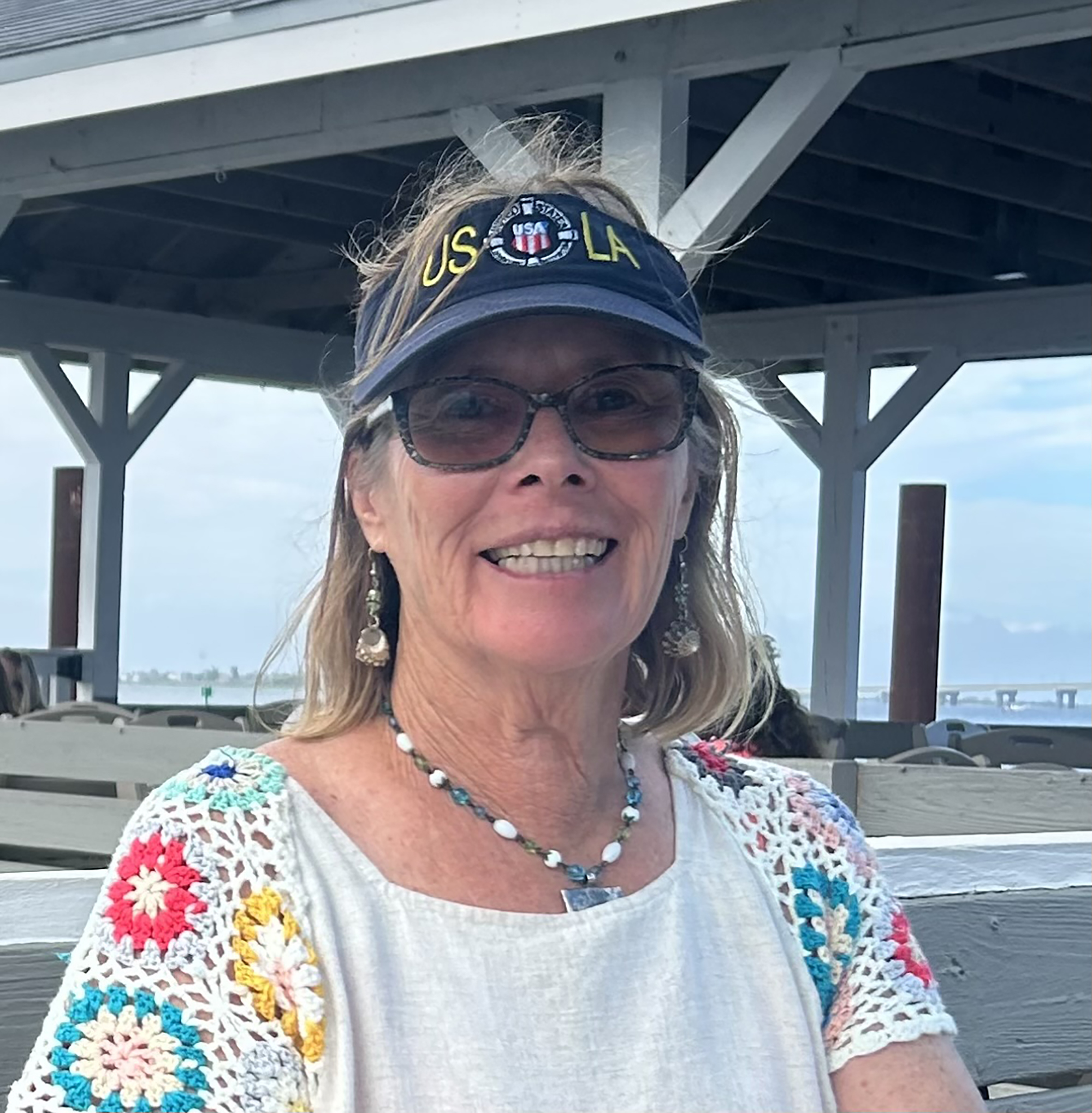
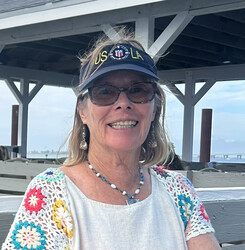
Photograph by Caitlin Fash
Janet Fash has been a New York City lifeguard for almost forty years.
Product Details
- Publisher: Simon & Schuster (June 23, 2026)
- Length: 240 pages
- ISBN13: 9781668206614
Browse Related Books
Raves and Reviews
"This heartfelt memoir moves along like a strong current, balancing tender life milestones with eye-opening experiences in a profession responsible for ensuring public safety. . . . Fash should be celebrated as a champion and advocate for the ocean lifeguarding profession. Highly recommended, especially before heading to the beach."
– Booklist
"A distinctly unglamorous but realistic portrait of both the obvious and hidden stresses faced by those attempting to keep life safe for beachgoers. A peek behind the scenes of a challenging career."
– Kirkus Reviews
Resources and Downloads
High Resolution Images
-
Book Cover Image (jpg): Lifeguard
Hardcover 9781668206614
-
Author Photo (jpg): Janet Fash Photograph by Caitlin Fash(0.1 MB)
Any use of an author photo must include its respective photo credit