Plus, receive recommendations and exclusive offers on all of your favorite books and authors from Simon & Schuster.
0:00 /
Table of Contents
About The Book
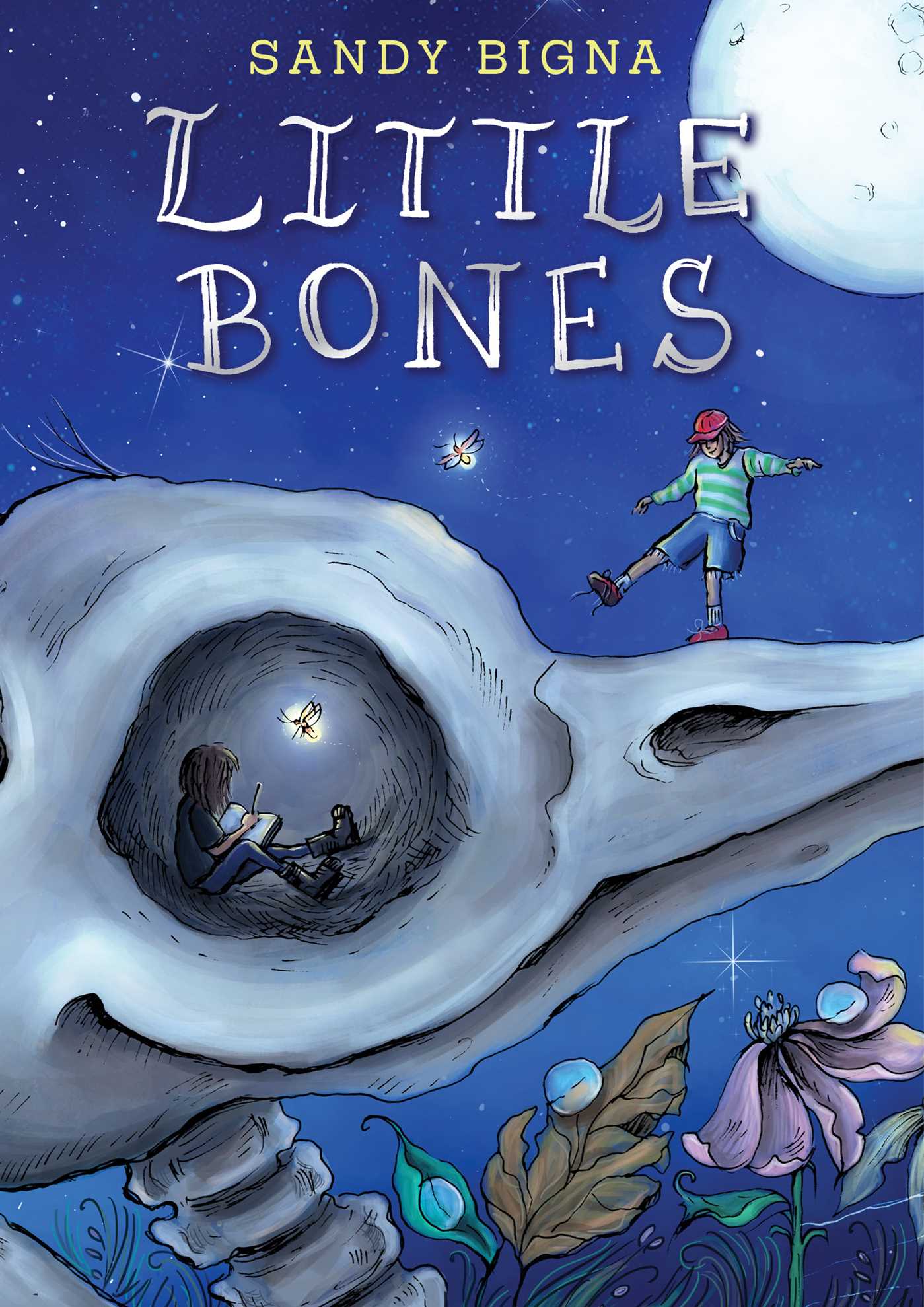
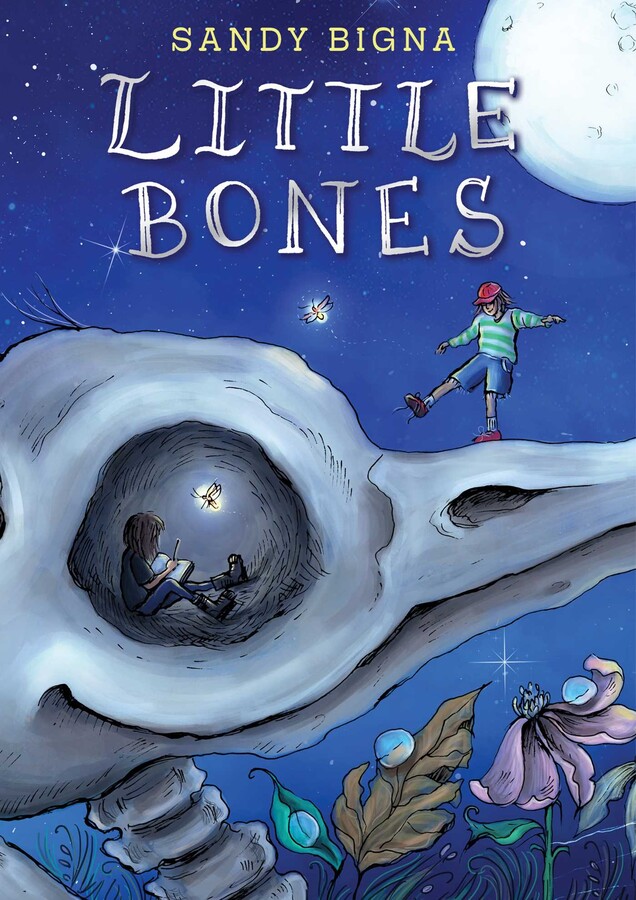
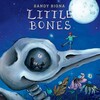
A grieving girl stumbles into a magical dilemma that may just set her on the path to healing in this debut novel in verse that’s a “a must-read work filled with life” (School Library Journal, starred review) about loss, friendship, and the power of imagination to help us find our way.
Since the death of her younger brother, eleven-year-old Bones has spent most of her time drawing animal skeletons and foraging for dead things to add to her collection. She’s drifted away from her friends and doesn’t want to make new ones—not even with the sociable non-binary kid, Tenny, who’s moved in next door.
One night, under the light and magic of the full moon, Bones inadvertently brings a baby bird skeleton back to life. The creature doesn’t like its new state of being, so Bones must work out how to reverse her accidental curse.
But over time, Bones grows attached to her skeleton friend and has to decide whether she can let the baby bird go even though she doesn’t want to say goodbye.
Since the death of her younger brother, eleven-year-old Bones has spent most of her time drawing animal skeletons and foraging for dead things to add to her collection. She’s drifted away from her friends and doesn’t want to make new ones—not even with the sociable non-binary kid, Tenny, who’s moved in next door.
One night, under the light and magic of the full moon, Bones inadvertently brings a baby bird skeleton back to life. The creature doesn’t like its new state of being, so Bones must work out how to reverse her accidental curse.
But over time, Bones grows attached to her skeleton friend and has to decide whether she can let the baby bird go even though she doesn’t want to say goodbye.
Excerpt
1. Exoskeleton EXOSKELETON
An exoskeleton is a hard protective covering on the outside of an animal’s body.
Did you know
that seahorses
have two skeletons:
one on the inside
and one on the outside?
Imagine being able to
wear your skeleton on the outside
like armor,
making sure that predators know
not to come
too close.
Cicadas scream in the trees
and the playground rings with laughter
and tears and promises
to be friends forever
as everyone signs each other’s yearbooks
and school shirts.
But me? I’m hiding behind a gum tree,
face pressed against the
scratchy bark.
Edie’s voice drifts toward me.
“Anyone seen Bones?
I’m going to sign her shirt.”
Her sly giggle
makes my heart fish-flop.
“What are you going to write?”
someone asks.
Edie’s voice
rings out
across the playground clamor.
“I’m going to draw a
picture of a witch,
seeing as she loves playing with bones
so much.”
More laughter
clatters toward me.
I dig my fingers into the bark.
It was Edie who gave me my nickname:
Bones.
She thinks it’s an insult
but I’ve claimed it as my own.
Bones are strong like armor.
Bones can crack but they mend.
Bones remain
when no other part of you does.
I stay silent behind the tree,
my shadow long and still beside me.
And then a familiar voice,
softer than Edie’s,
says,
“Don’t be mean,
remember her brother…
and then her mum left a few months ago…”
The voices drop to whispers,
which curl into the air.
My mum hasn’t left! I want to yell.
She’s just gone up north to the mines
to work as a cleaner
for a little while.
But I don’t want them to know I’m here.
I want to stay invisible.
I watch a line of ants
trickle steadily
down the tree trunk,
one following the other:
intent,
industrious.
They each have a purpose.
They belong.
Sun burns fierce
on the back of my neck
as I stop outside the school gates,
watching a lizard skitter-scatter
into a clump of yellow-dry grass.
My face always
tilts down toward the earth,
watching for the secret scurrying
of tiny creatures.
My younger brother Nico’s face was always skyward,
his eyes reflecting the radiance of sunlight,
the softness of clouds,
the endless freedom of space.
He imagined himself as
a bird a superhero a plane a shooting star.
Every night,
under our blanket fort,
he made me read
books about outer space and the sky.
His favorite was
the story of Icarus
(the boy who flew so close to the sun
that his wings melted
and he fell
to his watery death).
Nico was all head-in-the-clouds
and blue-sky dreaming.
But me:
I’m shadows and dirt and autumn leaves.
I crave the cool, earthy
smell of soil,
imagining myself scuttering
along secret passages with the ants,
tunneling deliciously deep with the worms.
I’ve come to know that
if you’re always looking up,
you’ll miss stuff—
a whole other bustling world
right
beneath your feet.
My fingers are burrowing in
the dirt,
looking for
buried treasures
for my collection,
when I hear a giggle
that scrapes at my skin.
“Still playing in the dirt, Bones?”
I sit back on my heels
and squint up at Edie, who’s nudging Aiko.
They have matching
sneakers and side braids.
But their faces don’t match.
Edie’s lip is curled.
Aiko is looking at the ground,
a crease in her forehead.
“Found any new bones lately?”
Edie sneers.
“Gonna cast some witchy spells
with them?”
She waggles her fingers at me.
“Maybe I will,” I say.
“Maybe I’ll resurrect some ghosts
and tell them to come
and HAUNT you.”
I open my eyes wide.
Is that the shadow of a smile on Aiko’s face?
It quickly slips off when Edie glares at her.
“You’re such a weirdo.”
Edie rolls her eyes,
but there’s less certainty
in her voice now.
“When you get to middle school, you’ll have to stop
all this…”
Edie waves her hand at the patch of dirt
in front of me.
“… It’s for kids.”
I wrinkle my dirt-smudged nose at her as
a familiar feathery fluttering
starts up in my chest.
Tell her we are kids, Nico whispers,
his breath brushing my cheek.
But I shrug and look at the ground again,
waiting
until their footsteps fall away
toward Aiko’s mum’s car.
I glance up as Aiko’s mum lifts her
hand at the car window.
Bright sparks of memory
photo-flick through me:
Aiko’s mum
flipping pancakes for me and Aiko after school
and walking us to the park.
Brushing my knotty hair
or slipping lunch money into my pocket
when Mum forgot.
I give a small wave back.
Aiko lives
a few suburbs away from school,
where the houses have
fresh paint,
green-trimmed hedges
and soldier-straight mailboxes.
Aiko’s house sparkles
with light.
I know this because once
it was
me
who went to her house after school
and played with her dog
and ate her cookies and rice paper rolls.
But then…
I guess
we stopped matching.
Maybe we never really matched
the way Edie and Aiko match.
Edie and Aiko like:
lip gloss, making friendship bracelets, talking about boys.
I like:
spiders, sketching, collecting bones.
Edie and Aiko wear:
bright clothes and sparkly shoes.
I wear:
black T-shirts with skulls on them and combat boots.
They draw:
unicorns and anime characters.
I draw:
dead things and skeletons.
I brush dirt off my knees
and shuffle home.
I live in the opposite direction of Aiko and Edie,
where the fence palings are broken teeth
and the summer breeze
carries the smell of rubbish in the evenings.
“We’ll get outta here one day, baby girl,”
Mum said before she went up north.
“Just wait until I’ve saved up enough—
we can live in a nice house
with a garden and flowers
and all that.”
She stood in the dirty light
filtering through the kitchen window
of Nonna Frankie’s apartment,
with that faraway look in her eye.
But I’d just shrugged.
’Cause I don’t care, not really.
I like Nonna Frankie’s apartment.
I like the way
neighbors say g’day
as they walk past.
The way you can hear
doors slamming
music swirling
kids squealing.
I like the cooking smells drifting from under doors.
There’s not all that much space, but
you are part of a network
in this run-down building,
part of the muscle and bone and arteries
that keep its creaky old heart
thudding along.
I’m halfway home when
I find a treasure to add
to my collection—
the husk of a cicada
clinging to the scribbly bark
of a tree.
I know that Edie and Aiko
would screw up their noses and say,
“Eww, gross!”
(Which somehow makes me like it more.)
I place it carefully on the palm of my hand,
knowing that the adult cicada
who left this shell behind
will die within a few weeks.
I close my eyes and
listen for its shrill, urgent song.
Before it left its shell behind,
it lived underground
as a nymph
in the cool, soundless dark,
drinking sap from tree roots snaking into the soil.
It was safe and cozy,
dreaming cicada dreams,
curled with its cicada siblings.
But then
it couldn’t fight that urge,
that instinct,
to tunnel its way out
of the safety of its burrow—
up
up
up
into the light above ground.
“Better to stay underground,”
I whisper to the husk,
but
it’s too late now.
The scratched-paint door of our apartment
bangs behind me
as I burst into the kitchen.
“Look what I found!”
I hold my hand out to Nonna Frankie,
who’s kneading dough at the kitchen counter.
Nonna Frankie inspects my find
in her slow, considering way.
She’s straight as an arrow,
keen eyed and battle-scarred.
Once she rode a motorbike
and worked in a tattoo parlor.
Now she works at the corner store
but only during school hours.
“Huh,” Nonna Frankie says,
and goes back to kneading,
lean brown arms pushing into the soft dough.
A serpent tattoo slithers down her forearm.
I hold my palm up to the light.
“It’s going in the collection.”
“That collection better not start smelling bad
or it’s all going out to the bin.”
Nonna Frankie says that every time,
but I know she’d never throw my stuff away.
“How was your last day of school?”
Nonna Frankie starts rolling out the dough,
but I know by the angle of her head
that she’s listening.
I shrug. “Nothing special.
Everyone signed each other’s shirts
and cried
and all that stuff.
Dunno what for,
since most of us will be at middle school together
next year.”
Nonna Frankie looks like she’s thinking
about saying something.
But then
she doesn’t.
I look back at my cicada husk,
its hopeful glisten under the light.
“Dinner soon,” Nonna Frankie says
before I swing out of the room.
She always used to add,
“We’ll leave some in the fridge
for Mum.”
Before Mum went up north,
she worked late
cleaning offices
after everyone had gone home for the night.
At bedtime
I’d lie awake and imagine her:
a busy worker bee buzzing through
the empty neon-lit offices.
But now
she’s a busy worker bee up north,
preparing meals and cleaning
at a mine site in the outback
where there’s red dust,
white-scorched skies,
and very bad phone reception.
“At least the pay is good,” she’d said.
Mum emails
almost every day.
When we get our own place,
we’ll grow daisies and sunflowers and herbs,
so that our garden is always full
of bees and butterflies.
I imagine us
lying on our backs
with the sky above,
blue as the eye
of a bowerbird.
We moved in with Nonna Frankie two years ago,
when Mum couldn’t afford rent
on our apartment anymore.
Nico and I shared the bed
in the spare room,
while Mum slept on the pull-out couch.
But Mum was a trapped bird in
Nonna Frankie’s apartment,
fluttering from window
to window.
I knew her heart dreamed
of wide sunlit spaces,
stretching out
to the horizon,
and glittering nighttime skies.
A place where she could fly.
I pull my suitcase
from the dusty dark
beneath my bed.
It snaps open
with a secret click.
Inside is my collection of dead stuff:
And, finally, my most valuable treasures:
I suppose you’re wondering why I have
a bunch of dead stuff
in a suitcase under my bed.
You probably think
I’m a weirdo.
(Like Edie does.)
And maybe I am.
Did you know there are heaps of synonyms for weirdo?
Our fifth-grade teacher, Mr. Hawker,
told us about synonyms.
He said it’s when a word has the same meaning
as another word.
Some synonyms for weirdo are:
Wacky
Eccentric
mIsfit
fReaky
oDd
Offbeat
I guess I’m all those things.
I collect and draw dead stuff.
I know how to sterilize and clean animal bones
to get the germs off them
(so you don’t get sick after touching them).
Pretty weird,
right?
The last time Aiko came to my house,
I was laying my animal bones out on the floorboards,
nudging the bones
into the shapes they had once been,
imagining the lives they once had.
I didn’t hear her come into my room—
I only knew she was there
when I heard the sharp intake of breath:
“What are you doing?
Are they… like… actual bones?”
A sick feeling blossomed in my stomach
as I saw Aiko near my bed,
holding her bracelet-making kit.
Her eyes skittered over to
my open suitcase
full of dead stuff,
and then across to my sketchbook—
its pages filled with labeled sketches of
animal skeletons.
“It’s just…
I’m just…”
I wanted to tell her that
dead things still matter,
that they show us
what the animal had once been,
that by looking at their bones we can imagine
where they had lived,
and the things they would be doing
if they were still alive.
It was my way of
honoring
them.
But my mouth didn’t say any of these things.
And I knew by the way Aiko
stepped backward,
her eyebrows drawn down,
that she was now as far away from me
as Neptune is
from Earth.
After that day,
I curled away from Aiko
like a moon snail sheltering in its shell,
drifting along the currents
far out in the ocean.
Things between us had already started to change
after Edie came to our school,
the pieces of our friendship
shifting and rearranging.
Edie didn’t want to share Aiko with me.
I didn’t want to share Aiko with Edie.
So mostly
I just walked away.
I gently place the cicada husk
in the suitcase,
which is lined with
sky-blue paper.
It looks cozy in there,
Nico says
over my shoulder.
Lying on my stomach,
dirty feet in the air,
I carefully draw the husk
in my sketchbook.
Sun and shadows
flicker in through the window.
I’m tidying up my pencils
when I hear movement outside:
car doors closing,
voices sliding across the
still-hot late-afternoon air.
I peer through my window.
There’s a moving truck parked on the street,
people carrying boxes
back and forth back and forth,
a straggly haired kid in bright clothes
jumping on and off the back of the truck,
someone (the kid’s mum?)
with spiky red hair
cheerfully yelling out orders and directions.
The apartment across from ours
on the ground floor
has been empty for weeks.
I guess we have new neighbors.
Maybe they like birds? Nico whispers,
and his breath is stardust and birds’ feathers.
And planes? And stars? And rockets?
I shrug,
nose pressed against the glass,
until the kid spins around—
like they can feel me watching—
and stares straight at me.
I duck down fast,
leaning against the wall,
pretending
I was never there at all.
I help Nonna Frankie
put pizza toppings on rolled-out dough.
Olives and mushrooms on mine.
Salami and peppers and mushrooms
for Nonna Frankie.
Nico always picked ham and pineapple.
He said it tasted like holidays and sunshine.
“Huh,” Nonna Frankie would say.
“Pineapple doesn’t belong on pizza.”
Because that’s what her dad used to say to her.
(Nonna Frankie wasn’t born in Italy,
but she says there’s some stuff
that’s just in your blood.)
Mum would laugh her sudden husky laugh and say,
“Don’t knock it till you try it!”
“It smells so good.”
I peer through the oven door,
watching the cheese melt and bubble
on the pizzas.
Nonna Frankie wipes her hands on a paper towel.
“They’ll be ready soon.”
She hasn’t said it,
but I know this is a special dinner
because it’s my last day of elementary school.
(And also because Mum can’t be here,
even though she rang this morning
to wish me luck.
But the phone cut out
before she could
say goodbye.)
Next year I’ll be at the local middle school:
a school with sun-warmed bricks
and sloping green lawns.
Aiko and I used to walk past it with her dog,
talking about all the stuff we’d do
when we got there.
“I’m going to study dance and drama,”
Aiko would say, staring longingly through
the fence,
like middle school was the place
where her real life would begin.
I was excited about the science labs:
white coats and goggles,
scalpels and microscopes.
Drawing carefully labeled diagrams
with sharp pencils.
But now Aiko’s going with Edie
to the posh school for girls
on the other side of town.
They’ll ride the bus in their blazers and hats,
polished as river stones,
glossy as magazine covers,
and as far away as the moon.
“We have new neighbors,”
I tell Nonna Frankie
while we eat at the kitchen table,
surrounded by paper and pencil shavings.
Nonna Frankie nods, chews.
“Yep, heard ’em. Just across the hallway.”
I nibble my crust.
“There was a kid.”
Nonna Frankie sips her water.
“Go say hi.
Could be good to hang with someone
over summer.”
I keep chewing.
“Nah. I’m just gonna draw and
go down to the wetlands and stuff.”
I pick up my pencil and
start scribbling on the paper next to my plate.
Nonna Frankie clears her throat.
“Maybe you could take your bike down
to the dirt hills too.
Ride with the other kids.”
That dark fluttering stirs in my chest.
Nonna Frankie knows I’m never
going back there.
Not ever.
After dinner,
I shuffle outside to the dumpster,
which smells like old socks and overripe bananas.
I lift my arm to chuck the bag of trash in
when…
“Watch it!”
a voice echoes from the dumpster.
I stumble backward.
“Holy humerus!”
A head pops out of the dumpster.
It’s the kid who’s just moved in.
Wide mouth and freckles,
baseball cap pulled down low over straggly hair.
“Holy humerus?”
My bony armor tightens across my chest.
“A humerus is an upper-arm bone.”
The kid loudly chews some gum.
“I know.
I’ve just never heard anyone say that before.
And you almost dumped that on my head!”
I push back my bangs
with one arm.
“What are you doing in there anyway?
Dumpsters are for garbage, not people.”
My voice jolts out of me,
sandpaper rough.
The kid shrugs,
blows a strawberry-colored bubble.
“Dumpster diving.
You’d be amazed what people throw away
that can be reused.
So wasteful.
Watcha got in that bag?”
The kid reaches for the bag and
I step back.
“Just some kitchen scraps,” I mutter.
The kid pulls themself onto the dumpster edge,
legs dangling
in denim cutoffs.
“Well, go on. Chuck it in then.”
I throw the bag into the dumpster.
It lands with a squelchy thud.
The kid stares at me, blowing another gum bubble.
“What’s your name?”
I lift my chin and meet the kid’s eyes.
“Bones.”
The kid smiles. “Cool. I’m Tenny.”
“Oh.” My shoulders loosen a bit.
Tenny kicks their legs against the dumpster,
just staring and chewing gum.
I don’t know what else to say,
so I turn to go.
But Tenny says to my back,
“I found some awesome stuff
in the dumpster across the road.
Stuff I can fix up. Wanna come see?”
I turn around.
A magpie warbles.
A truck rumbles by.
A dog goes arf arf.
I shake my head.
“Nah. Got stuff to do.”
I shove my hands in my pockets
and shuffle away.
After washing up, I take Nico’s old BMX bike,
with its broken bell
and scratched paintwork,
down to the wetlands.
Riding Nico’s bike
makes me remember
his whoops of joy
when he landed a tricky jump,
and the way he’d whoosh past me yelling,
“Look, no hands!”
My own bike sits neglected
in Nonna Frankie’s storage cage.
Nonna Frankie says I need to be back before dark,
joking that otherwise
she’ll send Raze after me.
Raze lives in the apartment above us.
He has scars on his face
and washes car windows on the main street.
“He looks like someone
you wouldn’t want to meet
in a dark alleyway,” Mum said
when she first saw him.
But then we realized
he’s the type of person
who wouldn’t even step on a spider
in his own home.
“He’s a good guy,”
Nonna Frankie often says.
“He’s made mistakes in his past,
like we all have.
It’s what you learn from them
that matters in the end.”
When she says that,
I don’t say what I’m really thinking,
which is that we don’t always get a chance
to learn from our mistakes.
Nico didn’t.
My toes squelch in slippery mud
and slender gums gleam like exposed bone
in the last gold threads of sunlight.
The wetlands
are the best place to be
in summer.
The water is too dirty to swim in,
but the air hums with insect buzzing
and birdsong,
and, best of all,
sometimes I find hidden treasures
in the damp dirt.
For a moment everything inside
feels still and calm
like the surface of the water.
I skim a flat stone,
watch it skitter skip scatter.
The sun is starting to slip below the horizon,
staining the clouds
cotton candy pink.
I guess I’d better get back home
before Nonna Frankie sends out a search party.
As I reach down to pick up
Nico’s bike,
something catches my eye:
It’s sharp and white,
just poking out from the dirt.
Using a stick,
I dig around the exposed tip of
a curved claw.
My heart hops
with anticipation.
I carefully pull the claw out.
But it’s not just a claw:
The claw is attached to a bony foot,
which is attached to a spindly leg.
There is also a frail backbone with ribs,
and the gentle slope
of a tiny skull.
They’re the bones
of a small bird.
My breath catches in my throat.
This is special—
it’s rare to find animal bones already cleaned
by the water.
I can’t wait to add them
to my collection.
I carefully tuck the bird skeleton into my pocket
and wipe my hands on my shorts.
A sharp snapping of twigs
behind a clump of trees
makes me stop still.
Then there’s a softer, stealthy sound,
like someone is there
but trying not to be seen.
My pulse races.
“Who’s there?” I yell,
clenching both fists.
A ganggang calls out
like a rusty gate hinge
and then
someone steps out
from behind the trees.
My eyes widen.
The someone is in a baseball cap
and cutoff shorts.
“It’s you!
Did you follow me?”
Tenny shrugs
like it’s no big deal.
“What did you find?”
They eye me curiously,
hands in pockets.
I think about showing them
my new treasure.
But then straightaway
I also think
about Aiko—
the way she looked at me
when she saw my collection
of dead stuff.
My hand drops down
to cover my pocket.
“Nothing.”
My voice comes out
as spiky as a snake’s ribs.
“Gotta go,” I add,
picking Nico’s bike up.
“Oh,” Tenny says.
“I thought we could take our bikes
down there …” They point
toward the track that leads
to the dirt hills
and the dark fluttery thing
bangs about like a grenade against my chest.
“My nonna said I’ve gotta be home
before dark.”
I jump on the bike and start pedaling
before Tenny can say
another word.
Nonna Frankie comes in as always
to say good night.
She sits heavily on the side of my bed,
puts a hand on my hair.
She smells like flour and oranges.
Moonlight slopes in through
the window.
There’s a twitch at the edges of the thin curtains,
like Nico’s there,
looking up at the basketball-hoop moon.
Nico used to spend ages
peering at the sky through his wonky telescope
(which Mum found at Vinnies).
“Did you know that Neptune is the farthest planet
from the sun?” he once said.
“I want to go there.”
I’d frowned at him
from where I lay reading in bed.
“Why?”
Nico had shrugged, still squinting
through his telescope.
“?’Cause it’s probably lonely,
so far from the sun.”
I’d rolled my eyes.
Only Nico would care about a planet being lonely.
I know he’s standing by the window now,
imagining himself
free floating in space
in his bulky astronaut helmet.
Weightless
serene
bathed in moonlight.
Nonna Frankie looks at the window too,
and I want to ask her if she
knows that Nico is there.
But we both stay quiet.
Nico’s free-falling downward,
arms and legs out straight
like he’s a bird or a plane
down down down
the air rushing past him
down down down
toward the hard, flat ground
and then
I’m sitting bolt upright in bed,
tangled in sweaty sheets.
Mum used to crawl into bed with me
when I woke from one of my dreams.
I had so many of them after Nico died:
Nico falling through space and time;
Nico standing in the blue shadows of my room,
wearing his cardboard bird’s wings,
saying with his gap-toothed smile,
“It was all a dream, silly. I’m still alive!”
Mum would stroke my back while
my breath came out in big rolling waves,
and then she’d curl beside me,
smelling faintly of disinfectant,
still in her work shirt
with the stiff collar.
“I’m here now, baby, go back to sleep.”
In the light of the moon, I’d notice
the square line of her jaw,
her long dark hair on the pillow,
and the way her mouth drooped downward
even as she slept.
Now Mum’s up north,
sleeping in shared rooms
with other workers,
the air shifting and sighing
with their mingled breath,
while they dream separate dreams.
Wide awake now,
I sit on the floor,
holding
the hollow bones of my little bird.
My heart bursts
at the tender curl of its toes.
I wonder what would happen
if I could imagine the bones back into
a living, breathing bird.
If I could cover the bones in skin and downy feathers.
If I could softly breathe life back into the tiny lungs.
If I could gently hold the bird in my cupped hand,
and feel the kick start of its heart
as its eyes blinked open.
I’d feed it with a tiny liquid dropper
and watch it grow stronger
and stronger.
Then finally the day would come
when my
bird would push off my hand
and flutter up
toward the sun
without ever looking back.
I kneel and carefully place the
bird bones on my desk.
The air feels electric
with some sort of longing
I can’t even name.
It’s that crackly, pent-up feeling
that comes
before a storm hits.
My gaze lingers on the bones of my bird
like just wishing could make it
real.
No longer dead.
A silver wash of moonlight
softens its hollow spaces.
I close my eyes for a moment,
then whisper
with all the longing in my heart,
“I wish I could talk to you.
I wish you were alive.”
I wake again
and something feels
… different.
I sit up, hold my breath, listen.
All I can hear is the clumsy bumping of moths
against the outside light.
But I feel like something—
or someone—
is shifting in the shadows.
My skin prickles.
I turn the lamp on.
Soft yellow light
washes over my room.
And that’s when I see it:
the skeleton
of my little bird
perched on the windowsill.
A scream
starts to rush out of me.
I quickly press my hand to my mouth.
The bird tilts its bony skull
to look at me
with empty eye sockets.
“Oh,” it says, in a teeny voice,
sweet as a young child.
“You’re awake.”
My pulse races.
The skeleton bird is talking.
What on Earth…?
I grip my bedsheets,
drawing my knees up
to my chest.
“I didn’t mean to wake you.
I just needed to stretch my wings.”
The bird spreads out
its bony limbs.
I stare and stare.
This.
Cannot.
Be.
Happening.
I must be dreaming again.
If I turn out the light
and snuggle back down,
I’ll fall asleep.
And then in the morning
the bones will be back on my desk.
I’ll get up
and Nonna Frankie will pour me a large glass of milk
(because calcium is good for your bones)
and I’ll do some drawing.
I flick the light off,
lie back down,
and close my eyes.
“Take a few big breaths, baby,”
Mum would whisper
if she were here now.
I breathe in.
Out.
In.
Out.
The air in my room
settles into silence.
Until…
There’s a bone-on-bone
crunch and clatter.
“Ouch!” a small voice chirps.
“Wooden desks and bony heads
do not mix.”
Holy humerus.
This definitely
does NOT
feel like a dream.
I fumble for the lamp switch.
Light falls over
the bird skeleton
now clawing its way
onto the end of my bed.
My heartbeat thrums,
loud as a million drums.
“Umm… wha… how…?”
The bird regards me
with a tilted head.
“Have you forgotten
how to speak?”
“No!” I whisper-yell.
Across the hallway
Nonna Frankie coughs.
I breathe in.
Out.
In.
Out.
“I just need to know
what is happening! I mean…
you’re… you’re…
a talking skeleton!”
“So it seems.
I’m sorry to give you a fright.”
The bird hops toward me.
“Let’s start over.
Hi. I’m Bird.
And I am here
because
you summoned me.”
Did you know
that if you wish aloud for something
in the stealthy shadows of your bedroom,
if you whisper the words
soft as the brush of a moth’s wing,
if you feel the words rush through your blood,
your wish might come true?
No?
I didn’t know that either.
But this is what
must have happened.
“When you said you wished
I was still alive,
it seems
that you wished me into being,”
Bird explains.
“Oh…
umm… I guess I meant
I wished you were alive
the way you once were,
with feathers and skin and…”
Bird stares at me
with his hollow eye sockets.
“Well, you could have specified that.”
And then I feel bad
for not being more careful.
“Sorry.”
“It’s okay,” Bird replies kindly.
“I suppose it was
just a misunderstanding.
All you need to do is help me go back
to what I was.
Before you wished me into
a speaking skeleton.”
I frown.
“Umm… how exactly do I do that?”
Bird clicks his beak.
“Your guess
is as good as mine.”
Silence falls across the room
as we realize
we may have
a teeny
tiny
problem here.
This is how I find myself
sitting cross-legged on my bedroom floor
in the middle of the night
with a talking skeleton,
trying to work out
how to undo my wish.
Bird suggests,
“Maybe you need to say
the opposite
of what you wished for?”
So I close my eyes and whisper,
“I wish you were NOT alive.
I wish you were just bones again.”
I hold my breath,
then open one eye.
Bird is still there,
looking at me.
“You could try saying the wish
backward?”
So I close my eyes and say,
“Alive were you wish I.”
Silence.
Silence.
More silence.
And then…
“Still here,” Bird whispers.
“Oh.”
I open my eyes
and press my lips together.
“Well… how about I light a candle?” I suggest.
“I’ve seen that in movies
when people want to do magic.”
Bird bobs his head up and down.
“Yes! Good idea.”
I creep out to the kitchen
to find matches
and a tea light candle.
Back in my room,
the yellow flame
makes shadows dance
on the walls.
“Okay,” Bird tweets,
and he hops up on my chair
and from there onto my desk.
“I’m ready.”
I pause, hands hovering
over the candle.
“We should both close our eyes this time.”
Bird looks back at me
with his vacant orbs.
“Right.” I clear my throat.
Bird nods.
I close my eyes and say,
in my most proper voice,
“I wish to reverse this accidental wish
and return these bird bones
to their previous lifeless form.”
I’m not sure
how I knew to say that
(but it sounded good).
Then
there’s a clacking of
claws on wood.
I open my eyes.
Bird is flapping his wing bones
and hopping
up and down.
“Sorry… you were sitting with your eyes closed
for so long…”
I sigh
and blow out the candle.
“Nothing seems to be working.”
We sit there,
wondering how
we’re going to find a way
to unwish
a wish
that I never intended to make.
I walk over to my bedroom window
and lean out to breathe in
warm currents of air.
Crickets scrape sharply in the grass.
Hey, it’s a full moon,
Nico whispers in my ear.
“Magic happens on the night
of a full moon,” I say aloud.
This is what Nico said
on the night of every full moon
as he looked at the moon phases chart
taped to our bedroom wall.
“What did you say?” Bird tweets
from behind me.
I turn from the window.
“Oh, it’s just… it’s a full moon, and
the moonlight was shining in
when I wished
you were alive.
I wonder if it was some kind of…”
“Moon magic?” Bird prompts.
“Maybe. But I don’t know how to
use the magic again
to unwish my wish.”
Bird inclines his head toward
the open window.
“I think you mean
curse.”
“Curse?” I repeat
in a small voice.
Bird nods.
There’s a pulse in the air,
which could be
the river-rush of my heartbeat.
“The light of the full moon
must have streamed in on me through your window
when you made your wish…
I mean,
curse.”
I clench my hands together,
remembering the way
the moonlight fell bright
across the bird bones
on my desk.
“But I wished you were alive!
How is that a curse?”
Bird sighs.
“Wishing for a once-living thing
to be alive again,
the way it was,
goes against the laws of nature.
I cannot be as I was,
so the moon’s power has transformed me into
something
no creature should be.”
Heat blooms in my face
as I realize that
I have indeed
cursed this poor creature.
“I know you didn’t mean to,”
Bird says gently,
but somehow his sweet voice
makes me feel even worse.
“There must be some way
to change you back.”
I look around the room.
My eyes fall on the bookshelf,
with Nico’s
books about space
lining the bottom shelves.
Remember
the Encyclopedia of Moon Magic?
Nico’s whisper leaves a silver trail.
We used to read it
under the blankets.
“Yes!” I say aloud.
With a fresh flicker of hope,
I reach over
and shuffle through the books.
A heavy hardback
thuds onto the wooden floor.
Bird and I jump
like startled jackrabbits.
There’s a pause in Nonna Frankie’s snoring
and then
my bedroom door starts to open.
Nonna Frankie steps into my room.
Out of the corner of my eye
I see Bird flop
onto the floor
and lie
still.
I try not to look at Bird
as Nonna Frankie asks,
“What are you doing?”
I twist my hands together.
“Oh… we were just…”
Nonna Frankie has a crease
in her forehead.
“We?”
“I mean… I… I was just…
playing with my animal bones.
And I accidentally dropped one.”
And that’s when Nonna Frankie spots Bird,
gleaming in the lamplight.
She sniffs.
“Did you sterilize that thing?”
I shake my head.
“Huh. First thing tomorrow then.”
“First thing,” I echo,
my hands still twisting.
Nonna Frankie nods toward my bed.
“Sleep. This can wait.”
She stands still
as I slide back into bed,
pulling the sheets up to my chin.
Nonna Frankie switches my lamp off
with a click
then reaches to pat my arm.
“Want me to stay?”
Now that Mum’s not here
it’s Nonna Frankie who often sits
on the edge of my bed
until I fall asleep again,
immoveable as a mountain.
But this time I shake my head.
“Nah. I’m okay.”
I close my eyes,
waiting for Nonna Frankie’s footsteps
to shuffle
back across the hallway.
As soon as Nonna Frankie’s snoring starts up again,
I slip out of bed,
fumbling for my flashlight
in the bottom drawer of my bedside table.
Nico and I had used this flashlight
for nighttime reading under our blanket fort.
But now
the light sputters weakly
when I switch it on.
“Needs new batteries,” I mutter
as the light finds Bird.
The glow shines straight through
his hollow eye sockets
(which looks kind of weird
so I lower the beam).
“What were you looking for
on the shelf?” Bird whispers.
“I’m searching for
the Encyclopedia of Moon Magic,”
I whisper back,
edging over to the heavy book
on the floor.
“I think this could be it!”
I flip the book
to show the cover
and shine the flashlight over it.
“Oh,” I sigh.
It’s a book about how
black holes are formed.
Not moon magic.
Bird hops down to me.
“Keep looking,” he urges.
I shine my flashlight over the spines
of the books lining the shelves.
There are books about
birds
and planes
and the planets
and our universe.
But no Encyclopedia of Moon Magic.
I lower the flashlight beam.
Flap flap flutter flutter
go the dark-edged feathers
against my rib cage.
“Maybe we should take a break.”
Bird’s voice shimmers
like moonlight on water.
“We can continue tomorrow.”
I nod and yawn,
suddenly aware of how
bone-achingly tired
I feel.
Bird shuffles away
to the dark space
under my desk.
Eyes heavy,
I lie back on my pillow
Soft birdsong falls
into the blue dawn.
An exoskeleton is a hard protective covering on the outside of an animal’s body.
outside
Did you know
that seahorses
have two skeletons:
one on the inside
and one on the outside?
Imagine being able to
wear your skeleton on the outside
like armor,
making sure that predators know
not to come
too close.
bones
Cicadas scream in the trees
and the playground rings with laughter
and tears and promises
to be friends forever
as everyone signs each other’s yearbooks
and school shirts.
But me? I’m hiding behind a gum tree,
face pressed against the
scratchy bark.
Edie’s voice drifts toward me.
“Anyone seen Bones?
I’m going to sign her shirt.”
Her sly giggle
makes my heart fish-flop.
“What are you going to write?”
someone asks.
Edie’s voice
rings out
across the playground clamor.
“I’m going to draw a
picture of a witch,
seeing as she loves playing with bones
so much.”
More laughter
clatters toward me.
I dig my fingers into the bark.
It was Edie who gave me my nickname:
Bones.
She thinks it’s an insult
but I’ve claimed it as my own.
Bones are strong like armor.
Bones can crack but they mend.
Bones remain
when no other part of you does.
purpose
I stay silent behind the tree,
my shadow long and still beside me.
And then a familiar voice,
softer than Edie’s,
says,
“Don’t be mean,
remember her brother…
and then her mum left a few months ago…”
The voices drop to whispers,
which curl into the air.
My mum hasn’t left! I want to yell.
She’s just gone up north to the mines
to work as a cleaner
for a little while.
But I don’t want them to know I’m here.
I want to stay invisible.
I watch a line of ants
trickle steadily
down the tree trunk,
one following the other:
intent,
industrious.
They each have a purpose.
They belong.
blue-sky dreaming
Sun burns fierce
on the back of my neck
as I stop outside the school gates,
watching a lizard skitter-scatter
into a clump of yellow-dry grass.
My face always
tilts down toward the earth,
watching for the secret scurrying
of tiny creatures.
My younger brother Nico’s face was always skyward,
his eyes reflecting the radiance of sunlight,
the softness of clouds,
the endless freedom of space.
He imagined himself as
a bird a superhero a plane a shooting star.
Every night,
under our blanket fort,
he made me read
books about outer space and the sky.
His favorite was
the story of Icarus
(the boy who flew so close to the sun
that his wings melted
and he fell
to his watery death).
Nico was all head-in-the-clouds
and blue-sky dreaming.
But me:
I’m shadows and dirt and autumn leaves.
I crave the cool, earthy
smell of soil,
imagining myself scuttering
along secret passages with the ants,
tunneling deliciously deep with the worms.
I’ve come to know that
if you’re always looking up,
you’ll miss stuff—
a whole other bustling world
right
beneath your feet.
dirt
My fingers are burrowing in
the dirt,
looking for
buried treasures
for my collection,
when I hear a giggle
that scrapes at my skin.
“Still playing in the dirt, Bones?”
I sit back on my heels
and squint up at Edie, who’s nudging Aiko.
They have matching
sneakers and side braids.
But their faces don’t match.
Edie’s lip is curled.
Aiko is looking at the ground,
a crease in her forehead.
“Found any new bones lately?”
Edie sneers.
“Gonna cast some witchy spells
with them?”
She waggles her fingers at me.
“Maybe I will,” I say.
“Maybe I’ll resurrect some ghosts
and tell them to come
and HAUNT you.”
I open my eyes wide.
Is that the shadow of a smile on Aiko’s face?
It quickly slips off when Edie glares at her.
“You’re such a weirdo.”
Edie rolls her eyes,
but there’s less certainty
in her voice now.
“When you get to middle school, you’ll have to stop
all this…”
Edie waves her hand at the patch of dirt
in front of me.
“… It’s for kids.”
I wrinkle my dirt-smudged nose at her as
a familiar feathery fluttering
starts up in my chest.
Tell her we are kids, Nico whispers,
his breath brushing my cheek.
But I shrug and look at the ground again,
waiting
until their footsteps fall away
toward Aiko’s mum’s car.
photo-flick
I glance up as Aiko’s mum lifts her
hand at the car window.
Bright sparks of memory
photo-flick through me:
Aiko’s mum
flipping pancakes for me and Aiko after school
and walking us to the park.
Brushing my knotty hair
or slipping lunch money into my pocket
when Mum forgot.
I give a small wave back.
matching
Aiko lives
a few suburbs away from school,
where the houses have
fresh paint,
green-trimmed hedges
and soldier-straight mailboxes.
Aiko’s house sparkles
with light.
I know this because once
it was
me
who went to her house after school
and played with her dog
and ate her cookies and rice paper rolls.
But then…
I guess
we stopped matching.
Maybe we never really matched
the way Edie and Aiko match.
opposites
Edie and Aiko like:
lip gloss, making friendship bracelets, talking about boys.
I like:
spiders, sketching, collecting bones.
Edie and Aiko wear:
bright clothes and sparkly shoes.
I wear:
black T-shirts with skulls on them and combat boots.
They draw:
unicorns and anime characters.
I draw:
dead things and skeletons.
network
I brush dirt off my knees
and shuffle home.
I live in the opposite direction of Aiko and Edie,
where the fence palings are broken teeth
and the summer breeze
carries the smell of rubbish in the evenings.
“We’ll get outta here one day, baby girl,”
Mum said before she went up north.
“Just wait until I’ve saved up enough—
we can live in a nice house
with a garden and flowers
and all that.”
She stood in the dirty light
filtering through the kitchen window
of Nonna Frankie’s apartment,
with that faraway look in her eye.
But I’d just shrugged.
’Cause I don’t care, not really.
I like Nonna Frankie’s apartment.
I like the way
neighbors say g’day
as they walk past.
The way you can hear
doors slamming
music swirling
kids squealing.
I like the cooking smells drifting from under doors.
There’s not all that much space, but
you are part of a network
in this run-down building,
part of the muscle and bone and arteries
that keep its creaky old heart
thudding along.
too late
I’m halfway home when
I find a treasure to add
to my collection—
the husk of a cicada
clinging to the scribbly bark
of a tree.
I know that Edie and Aiko
would screw up their noses and say,
“Eww, gross!”
(Which somehow makes me like it more.)
I place it carefully on the palm of my hand,
knowing that the adult cicada
who left this shell behind
will die within a few weeks.
I close my eyes and
listen for its shrill, urgent song.
Before it left its shell behind,
it lived underground
as a nymph
in the cool, soundless dark,
drinking sap from tree roots snaking into the soil.
It was safe and cozy,
dreaming cicada dreams,
curled with its cicada siblings.
But then
it couldn’t fight that urge,
that instinct,
to tunnel its way out
of the safety of its burrow—
up
up
up
into the light above ground.
“Better to stay underground,”
I whisper to the husk,
but
it’s too late now.
nothing special
The scratched-paint door of our apartment
bangs behind me
as I burst into the kitchen.
“Look what I found!”
I hold my hand out to Nonna Frankie,
who’s kneading dough at the kitchen counter.
Nonna Frankie inspects my find
in her slow, considering way.
She’s straight as an arrow,
keen eyed and battle-scarred.
Once she rode a motorbike
and worked in a tattoo parlor.
Now she works at the corner store
but only during school hours.
“Huh,” Nonna Frankie says,
and goes back to kneading,
lean brown arms pushing into the soft dough.
A serpent tattoo slithers down her forearm.
I hold my palm up to the light.
“It’s going in the collection.”
“That collection better not start smelling bad
or it’s all going out to the bin.”
Nonna Frankie says that every time,
but I know she’d never throw my stuff away.
“How was your last day of school?”
Nonna Frankie starts rolling out the dough,
but I know by the angle of her head
that she’s listening.
I shrug. “Nothing special.
Everyone signed each other’s shirts
and cried
and all that stuff.
Dunno what for,
since most of us will be at middle school together
next year.”
Nonna Frankie looks like she’s thinking
about saying something.
But then
she doesn’t.
I look back at my cicada husk,
its hopeful glisten under the light.
worker bee
“Dinner soon,” Nonna Frankie says
before I swing out of the room.
She always used to add,
“We’ll leave some in the fridge
for Mum.”
Before Mum went up north,
she worked late
cleaning offices
after everyone had gone home for the night.
At bedtime
I’d lie awake and imagine her:
a busy worker bee buzzing through
the empty neon-lit offices.
But now
she’s a busy worker bee up north,
preparing meals and cleaning
at a mine site in the outback
where there’s red dust,
white-scorched skies,
and very bad phone reception.
“At least the pay is good,” she’d said.
Mum emails
almost every day.
When we get our own place,
we’ll grow daisies and sunflowers and herbs,
so that our garden is always full
of bees and butterflies.
I imagine us
lying on our backs
with the sky above,
blue as the eye
of a bowerbird.
trapped
We moved in with Nonna Frankie two years ago,
when Mum couldn’t afford rent
on our apartment anymore.
Nico and I shared the bed
in the spare room,
while Mum slept on the pull-out couch.
But Mum was a trapped bird in
Nonna Frankie’s apartment,
fluttering from window
to window.
I knew her heart dreamed
of wide sunlit spaces,
stretching out
to the horizon,
and glittering nighttime skies.
A place where she could fly.
collection
I pull my suitcase
from the dusty dark
beneath my bed.
It snaps open
with a secret click.
Inside is my collection of dead stuff:
- a crab claw Nonna Frankie and I found on a beach trip
- some smooth, swirly moon snail shells
- a few dried leaves and flowers (autumn brown and crispy crinkly)
- a handful of birds’ feathers (the startling red from a rosella, the glistening blue black from a crow)
- a mouse spider, found in the community garden (dead but perfectly preserved).
And, finally, my most valuable treasures:
- my animal bones (a tooth, a claw, a rib—dug up from the mud down at the wetlands)
- the spiky ribs of a snake (still attached to the head and backbone, which I found on a mountain walk)
- a pile of rat bones (bleached clean after Nonna Frankie found a dead rat under the stairwell).
weirdo
I suppose you’re wondering why I have
a bunch of dead stuff
in a suitcase under my bed.
You probably think
I’m a weirdo.
(Like Edie does.)
And maybe I am.
Did you know there are heaps of synonyms for weirdo?
Our fifth-grade teacher, Mr. Hawker,
told us about synonyms.
He said it’s when a word has the same meaning
as another word.
Some synonyms for weirdo are:
Wacky
Eccentric
mIsfit
fReaky
oDd
Offbeat
I guess I’m all those things.
I collect and draw dead stuff.
I know how to sterilize and clean animal bones
to get the germs off them
(so you don’t get sick after touching them).
Pretty weird,
right?
still matter
The last time Aiko came to my house,
I was laying my animal bones out on the floorboards,
nudging the bones
into the shapes they had once been,
imagining the lives they once had.
I didn’t hear her come into my room—
I only knew she was there
when I heard the sharp intake of breath:
“What are you doing?
Are they… like… actual bones?”
A sick feeling blossomed in my stomach
as I saw Aiko near my bed,
holding her bracelet-making kit.
Her eyes skittered over to
my open suitcase
full of dead stuff,
and then across to my sketchbook—
its pages filled with labeled sketches of
animal skeletons.
“It’s just…
I’m just…”
I wanted to tell her that
dead things still matter,
that they show us
what the animal had once been,
that by looking at their bones we can imagine
where they had lived,
and the things they would be doing
if they were still alive.
It was my way of
honoring
them.
But my mouth didn’t say any of these things.
And I knew by the way Aiko
stepped backward,
her eyebrows drawn down,
that she was now as far away from me
as Neptune is
from Earth.
moon snail
After that day,
I curled away from Aiko
like a moon snail sheltering in its shell,
drifting along the currents
far out in the ocean.
Things between us had already started to change
after Edie came to our school,
the pieces of our friendship
shifting and rearranging.
Edie didn’t want to share Aiko with me.
I didn’t want to share Aiko with Edie.
So mostly
I just walked away.
husk
I gently place the cicada husk
in the suitcase,
which is lined with
sky-blue paper.
It looks cozy in there,
Nico says
over my shoulder.
Lying on my stomach,
dirty feet in the air,
I carefully draw the husk
in my sketchbook.
Sun and shadows
flicker in through the window.
movement
I’m tidying up my pencils
when I hear movement outside:
car doors closing,
voices sliding across the
still-hot late-afternoon air.
I peer through my window.
There’s a moving truck parked on the street,
people carrying boxes
back and forth back and forth,
a straggly haired kid in bright clothes
jumping on and off the back of the truck,
someone (the kid’s mum?)
with spiky red hair
cheerfully yelling out orders and directions.
The apartment across from ours
on the ground floor
has been empty for weeks.
I guess we have new neighbors.
Maybe they like birds? Nico whispers,
and his breath is stardust and birds’ feathers.
And planes? And stars? And rockets?
I shrug,
nose pressed against the glass,
until the kid spins around—
like they can feel me watching—
and stares straight at me.
I duck down fast,
leaning against the wall,
pretending
I was never there at all.
pineapple
I help Nonna Frankie
put pizza toppings on rolled-out dough.
Olives and mushrooms on mine.
Salami and peppers and mushrooms
for Nonna Frankie.
Nico always picked ham and pineapple.
He said it tasted like holidays and sunshine.
“Huh,” Nonna Frankie would say.
“Pineapple doesn’t belong on pizza.”
Because that’s what her dad used to say to her.
(Nonna Frankie wasn’t born in Italy,
but she says there’s some stuff
that’s just in your blood.)
Mum would laugh her sudden husky laugh and say,
“Don’t knock it till you try it!”
other side
“It smells so good.”
I peer through the oven door,
watching the cheese melt and bubble
on the pizzas.
Nonna Frankie wipes her hands on a paper towel.
“They’ll be ready soon.”
She hasn’t said it,
but I know this is a special dinner
because it’s my last day of elementary school.
(And also because Mum can’t be here,
even though she rang this morning
to wish me luck.
But the phone cut out
before she could
say goodbye.)
Next year I’ll be at the local middle school:
a school with sun-warmed bricks
and sloping green lawns.
Aiko and I used to walk past it with her dog,
talking about all the stuff we’d do
when we got there.
“I’m going to study dance and drama,”
Aiko would say, staring longingly through
the fence,
like middle school was the place
where her real life would begin.
I was excited about the science labs:
white coats and goggles,
scalpels and microscopes.
Drawing carefully labeled diagrams
with sharp pencils.
But now Aiko’s going with Edie
to the posh school for girls
on the other side of town.
They’ll ride the bus in their blazers and hats,
polished as river stones,
glossy as magazine covers,
and as far away as the moon.
not ever
“We have new neighbors,”
I tell Nonna Frankie
while we eat at the kitchen table,
surrounded by paper and pencil shavings.
Nonna Frankie nods, chews.
“Yep, heard ’em. Just across the hallway.”
I nibble my crust.
“There was a kid.”
Nonna Frankie sips her water.
“Go say hi.
Could be good to hang with someone
over summer.”
I keep chewing.
“Nah. I’m just gonna draw and
go down to the wetlands and stuff.”
I pick up my pencil and
start scribbling on the paper next to my plate.
Nonna Frankie clears her throat.
“Maybe you could take your bike down
to the dirt hills too.
Ride with the other kids.”
That dark fluttering stirs in my chest.
Nonna Frankie knows I’m never
going back there.
Not ever.
dumpster diving
After dinner,
I shuffle outside to the dumpster,
which smells like old socks and overripe bananas.
I lift my arm to chuck the bag of trash in
when…
“Watch it!”
a voice echoes from the dumpster.
I stumble backward.
“Holy humerus!”
A head pops out of the dumpster.
It’s the kid who’s just moved in.
Wide mouth and freckles,
baseball cap pulled down low over straggly hair.
“Holy humerus?”
My bony armor tightens across my chest.
“A humerus is an upper-arm bone.”
The kid loudly chews some gum.
“I know.
I’ve just never heard anyone say that before.
And you almost dumped that on my head!”
I push back my bangs
with one arm.
“What are you doing in there anyway?
Dumpsters are for garbage, not people.”
My voice jolts out of me,
sandpaper rough.
The kid shrugs,
blows a strawberry-colored bubble.
“Dumpster diving.
You’d be amazed what people throw away
that can be reused.
So wasteful.
Watcha got in that bag?”
The kid reaches for the bag and
I step back.
“Just some kitchen scraps,” I mutter.
The kid pulls themself onto the dumpster edge,
legs dangling
in denim cutoffs.
“Well, go on. Chuck it in then.”
I throw the bag into the dumpster.
It lands with a squelchy thud.
The kid stares at me, blowing another gum bubble.
“What’s your name?”
I lift my chin and meet the kid’s eyes.
“Bones.”
The kid smiles. “Cool. I’m Tenny.”
“Oh.” My shoulders loosen a bit.
Tenny kicks their legs against the dumpster,
just staring and chewing gum.
I don’t know what else to say,
so I turn to go.
But Tenny says to my back,
“I found some awesome stuff
in the dumpster across the road.
Stuff I can fix up. Wanna come see?”
I turn around.
A magpie warbles.
A truck rumbles by.
A dog goes arf arf.
I shake my head.
“Nah. Got stuff to do.”
I shove my hands in my pockets
and shuffle away.
chance
After washing up, I take Nico’s old BMX bike,
with its broken bell
and scratched paintwork,
down to the wetlands.
Riding Nico’s bike
makes me remember
his whoops of joy
when he landed a tricky jump,
and the way he’d whoosh past me yelling,
“Look, no hands!”
My own bike sits neglected
in Nonna Frankie’s storage cage.
Nonna Frankie says I need to be back before dark,
joking that otherwise
she’ll send Raze after me.
Raze lives in the apartment above us.
He has scars on his face
and washes car windows on the main street.
“He looks like someone
you wouldn’t want to meet
in a dark alleyway,” Mum said
when she first saw him.
But then we realized
he’s the type of person
who wouldn’t even step on a spider
in his own home.
“He’s a good guy,”
Nonna Frankie often says.
“He’s made mistakes in his past,
like we all have.
It’s what you learn from them
that matters in the end.”
When she says that,
I don’t say what I’m really thinking,
which is that we don’t always get a chance
to learn from our mistakes.
Nico didn’t.
surface
My toes squelch in slippery mud
and slender gums gleam like exposed bone
in the last gold threads of sunlight.
The wetlands
are the best place to be
in summer.
The water is too dirty to swim in,
but the air hums with insect buzzing
and birdsong,
and, best of all,
sometimes I find hidden treasures
in the damp dirt.
For a moment everything inside
feels still and calm
like the surface of the water.
I skim a flat stone,
watch it skitter skip scatter.
The sun is starting to slip below the horizon,
staining the clouds
cotton candy pink.
I guess I’d better get back home
before Nonna Frankie sends out a search party.
As I reach down to pick up
Nico’s bike,
something catches my eye:
It’s sharp and white,
just poking out from the dirt.
Using a stick,
I dig around the exposed tip of
a curved claw.
My heart hops
with anticipation.
I carefully pull the claw out.
But it’s not just a claw:
The claw is attached to a bony foot,
which is attached to a spindly leg.
There is also a frail backbone with ribs,
and the gentle slope
of a tiny skull.
They’re the bones
of a small bird.
My breath catches in my throat.
This is special—
it’s rare to find animal bones already cleaned
by the water.
I can’t wait to add them
to my collection.
I carefully tuck the bird skeleton into my pocket
and wipe my hands on my shorts.
A sharp snapping of twigs
behind a clump of trees
makes me stop still.
Then there’s a softer, stealthy sound,
like someone is there
but trying not to be seen.
My pulse races.
“Who’s there?” I yell,
clenching both fists.
A ganggang calls out
like a rusty gate hinge
and then
someone steps out
from behind the trees.
exposed
My eyes widen.
The someone is in a baseball cap
and cutoff shorts.
“It’s you!
Did you follow me?”
Tenny shrugs
like it’s no big deal.
“What did you find?”
They eye me curiously,
hands in pockets.
I think about showing them
my new treasure.
But then straightaway
I also think
about Aiko—
the way she looked at me
when she saw my collection
of dead stuff.
My hand drops down
to cover my pocket.
“Nothing.”
My voice comes out
as spiky as a snake’s ribs.
“Gotta go,” I add,
picking Nico’s bike up.
“Oh,” Tenny says.
“I thought we could take our bikes
down there …” They point
toward the track that leads
to the dirt hills
and the dark fluttery thing
bangs about like a grenade against my chest.
“My nonna said I’ve gotta be home
before dark.”
I jump on the bike and start pedaling
before Tenny can say
another word.
lonely planet
Nonna Frankie comes in as always
to say good night.
She sits heavily on the side of my bed,
puts a hand on my hair.
She smells like flour and oranges.
Moonlight slopes in through
the window.
There’s a twitch at the edges of the thin curtains,
like Nico’s there,
looking up at the basketball-hoop moon.
Nico used to spend ages
peering at the sky through his wonky telescope
(which Mum found at Vinnies).
“Did you know that Neptune is the farthest planet
from the sun?” he once said.
“I want to go there.”
I’d frowned at him
from where I lay reading in bed.
“Why?”
Nico had shrugged, still squinting
through his telescope.
“?’Cause it’s probably lonely,
so far from the sun.”
I’d rolled my eyes.
Only Nico would care about a planet being lonely.
I know he’s standing by the window now,
imagining himself
free floating in space
in his bulky astronaut helmet.
Weightless
serene
bathed in moonlight.
Nonna Frankie looks at the window too,
and I want to ask her if she
knows that Nico is there.
But we both stay quiet.
superman
Nico’s free-falling downward,
arms and legs out straight
like he’s a bird or a plane
down down down
the air rushing past him
down down down
toward the hard, flat ground
and then
I’m sitting bolt upright in bed,
tangled in sweaty sheets.
Mum used to crawl into bed with me
when I woke from one of my dreams.
I had so many of them after Nico died:
Nico falling through space and time;
Nico standing in the blue shadows of my room,
wearing his cardboard bird’s wings,
saying with his gap-toothed smile,
“It was all a dream, silly. I’m still alive!”
Mum would stroke my back while
my breath came out in big rolling waves,
and then she’d curl beside me,
smelling faintly of disinfectant,
still in her work shirt
with the stiff collar.
“I’m here now, baby, go back to sleep.”
In the light of the moon, I’d notice
the square line of her jaw,
her long dark hair on the pillow,
and the way her mouth drooped downward
even as she slept.
breathe life
Now Mum’s up north,
sleeping in shared rooms
with other workers,
the air shifting and sighing
with their mingled breath,
while they dream separate dreams.
Wide awake now,
I sit on the floor,
holding
the hollow bones of my little bird.
My heart bursts
at the tender curl of its toes.
I wonder what would happen
if I could imagine the bones back into
a living, breathing bird.
If I could cover the bones in skin and downy feathers.
If I could softly breathe life back into the tiny lungs.
If I could gently hold the bird in my cupped hand,
and feel the kick start of its heart
as its eyes blinked open.
I’d feed it with a tiny liquid dropper
and watch it grow stronger
and stronger.
Then finally the day would come
when my
bird would push off my hand
and flutter up
toward the sun
without ever looking back.
wish
I kneel and carefully place the
bird bones on my desk.
The air feels electric
with some sort of longing
I can’t even name.
It’s that crackly, pent-up feeling
that comes
before a storm hits.
My gaze lingers on the bones of my bird
like just wishing could make it
real.
No longer dead.
A silver wash of moonlight
softens its hollow spaces.
I close my eyes for a moment,
then whisper
with all the longing in my heart,
“I wish I could talk to you.
I wish you were alive.”
not alone
I wake again
and something feels
… different.
I sit up, hold my breath, listen.
All I can hear is the clumsy bumping of moths
against the outside light.
But I feel like something—
or someone—
is shifting in the shadows.
My skin prickles.
I turn the lamp on.
Soft yellow light
washes over my room.
And that’s when I see it:
the skeleton
of my little bird
perched on the windowsill.
dreaming
A scream
starts to rush out of me.
I quickly press my hand to my mouth.
The bird tilts its bony skull
to look at me
with empty eye sockets.
“Oh,” it says, in a teeny voice,
sweet as a young child.
“You’re awake.”
My pulse races.
The skeleton bird is talking.
What on Earth…?
I grip my bedsheets,
drawing my knees up
to my chest.
“I didn’t mean to wake you.
I just needed to stretch my wings.”
The bird spreads out
its bony limbs.
I stare and stare.
This.
Cannot.
Be.
Happening.
I must be dreaming again.
If I turn out the light
and snuggle back down,
I’ll fall asleep.
And then in the morning
the bones will be back on my desk.
I’ll get up
and Nonna Frankie will pour me a large glass of milk
(because calcium is good for your bones)
and I’ll do some drawing.
I flick the light off,
lie back down,
and close my eyes.
“Take a few big breaths, baby,”
Mum would whisper
if she were here now.
I breathe in.
Out.
In.
Out.
The air in my room
settles into silence.
Until…
There’s a bone-on-bone
crunch and clatter.
“Ouch!” a small voice chirps.
“Wooden desks and bony heads
do not mix.”
Holy humerus.
This definitely
does NOT
feel like a dream.
I fumble for the lamp switch.
Light falls over
the bird skeleton
now clawing its way
onto the end of my bed.
summoned
My heartbeat thrums,
loud as a million drums.
“Umm… wha… how…?”
The bird regards me
with a tilted head.
“Have you forgotten
how to speak?”
“No!” I whisper-yell.
Across the hallway
Nonna Frankie coughs.
I breathe in.
Out.
In.
Out.
“I just need to know
what is happening! I mean…
you’re… you’re…
a talking skeleton!”
“So it seems.
I’m sorry to give you a fright.”
The bird hops toward me.
“Let’s start over.
Hi. I’m Bird.
And I am here
because
you summoned me.”
misunderstanding
Did you know
that if you wish aloud for something
in the stealthy shadows of your bedroom,
if you whisper the words
soft as the brush of a moth’s wing,
if you feel the words rush through your blood,
your wish might come true?
No?
I didn’t know that either.
But this is what
must have happened.
“When you said you wished
I was still alive,
it seems
that you wished me into being,”
Bird explains.
“Oh…
umm… I guess I meant
I wished you were alive
the way you once were,
with feathers and skin and…”
Bird stares at me
with his hollow eye sockets.
“Well, you could have specified that.”
And then I feel bad
for not being more careful.
“Sorry.”
“It’s okay,” Bird replies kindly.
“I suppose it was
just a misunderstanding.
All you need to do is help me go back
to what I was.
Before you wished me into
a speaking skeleton.”
I frown.
“Umm… how exactly do I do that?”
Bird clicks his beak.
“Your guess
is as good as mine.”
Silence falls across the room
as we realize
we may have
a teeny
tiny
problem here.
unwish
This is how I find myself
sitting cross-legged on my bedroom floor
in the middle of the night
with a talking skeleton,
trying to work out
how to undo my wish.
Bird suggests,
“Maybe you need to say
the opposite
of what you wished for?”
So I close my eyes and whisper,
“I wish you were NOT alive.
I wish you were just bones again.”
I hold my breath,
then open one eye.
Bird is still there,
looking at me.
“You could try saying the wish
backward?”
So I close my eyes and say,
“Alive were you wish I.”
Silence.
Silence.
More silence.
And then…
“Still here,” Bird whispers.
“Oh.”
I open my eyes
and press my lips together.
“Well… how about I light a candle?” I suggest.
“I’ve seen that in movies
when people want to do magic.”
Bird bobs his head up and down.
“Yes! Good idea.”
I creep out to the kitchen
to find matches
and a tea light candle.
Back in my room,
the yellow flame
makes shadows dance
on the walls.
“Okay,” Bird tweets,
and he hops up on my chair
and from there onto my desk.
“I’m ready.”
I pause, hands hovering
over the candle.
“We should both close our eyes this time.”
Bird looks back at me
with his vacant orbs.
“Right.” I clear my throat.
Bird nods.
I close my eyes and say,
in my most proper voice,
“I wish to reverse this accidental wish
and return these bird bones
to their previous lifeless form.”
I’m not sure
how I knew to say that
(but it sounded good).
Then
there’s a clacking of
claws on wood.
I open my eyes.
Bird is flapping his wing bones
and hopping
up and down.
“Sorry… you were sitting with your eyes closed
for so long…”
I sigh
and blow out the candle.
“Nothing seems to be working.”
We sit there,
wondering how
we’re going to find a way
to unwish
a wish
that I never intended to make.
full moon
I walk over to my bedroom window
and lean out to breathe in
warm currents of air.
Crickets scrape sharply in the grass.
Hey, it’s a full moon,
Nico whispers in my ear.
“Magic happens on the night
of a full moon,” I say aloud.
This is what Nico said
on the night of every full moon
as he looked at the moon phases chart
taped to our bedroom wall.
“What did you say?” Bird tweets
from behind me.
I turn from the window.
“Oh, it’s just… it’s a full moon, and
the moonlight was shining in
when I wished
you were alive.
I wonder if it was some kind of…”
“Moon magic?” Bird prompts.
“Maybe. But I don’t know how to
use the magic again
to unwish my wish.”
Bird inclines his head toward
the open window.
“I think you mean
curse.”
curse
“Curse?” I repeat
in a small voice.
Bird nods.
There’s a pulse in the air,
which could be
the river-rush of my heartbeat.
“The light of the full moon
must have streamed in on me through your window
when you made your wish…
I mean,
curse.”
I clench my hands together,
remembering the way
the moonlight fell bright
across the bird bones
on my desk.
“But I wished you were alive!
How is that a curse?”
Bird sighs.
“Wishing for a once-living thing
to be alive again,
the way it was,
goes against the laws of nature.
I cannot be as I was,
so the moon’s power has transformed me into
something
no creature should be.”
Heat blooms in my face
as I realize that
I have indeed
cursed this poor creature.
“I know you didn’t mean to,”
Bird says gently,
but somehow his sweet voice
makes me feel even worse.
“There must be some way
to change you back.”
I look around the room.
My eyes fall on the bookshelf,
with Nico’s
books about space
lining the bottom shelves.
Remember
the Encyclopedia of Moon Magic?
Nico’s whisper leaves a silver trail.
We used to read it
under the blankets.
“Yes!” I say aloud.
With a fresh flicker of hope,
I reach over
and shuffle through the books.
A heavy hardback
thuds onto the wooden floor.
Bird and I jump
like startled jackrabbits.
There’s a pause in Nonna Frankie’s snoring
and then
my bedroom door starts to open.
sterilize
Nonna Frankie steps into my room.
Out of the corner of my eye
I see Bird flop
onto the floor
and lie
still.
I try not to look at Bird
as Nonna Frankie asks,
“What are you doing?”
I twist my hands together.
“Oh… we were just…”
Nonna Frankie has a crease
in her forehead.
“We?”
“I mean… I… I was just…
playing with my animal bones.
And I accidentally dropped one.”
And that’s when Nonna Frankie spots Bird,
gleaming in the lamplight.
She sniffs.
“Did you sterilize that thing?”
I shake my head.
“Huh. First thing tomorrow then.”
“First thing,” I echo,
my hands still twisting.
Nonna Frankie nods toward my bed.
“Sleep. This can wait.”
She stands still
as I slide back into bed,
pulling the sheets up to my chin.
Nonna Frankie switches my lamp off
with a click
then reaches to pat my arm.
“Want me to stay?”
Now that Mum’s not here
it’s Nonna Frankie who often sits
on the edge of my bed
until I fall asleep again,
immoveable as a mountain.
But this time I shake my head.
“Nah. I’m okay.”
I close my eyes,
waiting for Nonna Frankie’s footsteps
to shuffle
back across the hallway.
moon magic
As soon as Nonna Frankie’s snoring starts up again,
I slip out of bed,
fumbling for my flashlight
in the bottom drawer of my bedside table.
Nico and I had used this flashlight
for nighttime reading under our blanket fort.
But now
the light sputters weakly
when I switch it on.
“Needs new batteries,” I mutter
as the light finds Bird.
The glow shines straight through
his hollow eye sockets
(which looks kind of weird
so I lower the beam).
“What were you looking for
on the shelf?” Bird whispers.
“I’m searching for
the Encyclopedia of Moon Magic,”
I whisper back,
edging over to the heavy book
on the floor.
“I think this could be it!”
I flip the book
to show the cover
and shine the flashlight over it.
“Oh,” I sigh.
It’s a book about how
black holes are formed.
Not moon magic.
Bird hops down to me.
“Keep looking,” he urges.
I shine my flashlight over the spines
of the books lining the shelves.
There are books about
birds
and planes
and the planets
and our universe.
But no Encyclopedia of Moon Magic.
I lower the flashlight beam.
Flap flap flutter flutter
go the dark-edged feathers
against my rib cage.
“Maybe we should take a break.”
Bird’s voice shimmers
like moonlight on water.
“We can continue tomorrow.”
I nod and yawn,
suddenly aware of how
bone-achingly tired
I feel.
Bird shuffles away
to the dark space
under my desk.
Eyes heavy,
I lie back on my pillow
Soft birdsong falls
into the blue dawn.
Reading Group Guide
Get a FREE ebook by joining our mailing list today! Plus, receive recommendations for your next Book Club read.
By clicking 'Sign me up', I consent to Simon & Schuster sending me email offers and updates, including offers for a free eBook. I understand I can unsubscribe at any time. Any offer for an eBook may be subject to exclusions, terms, conditions, and registration with our fulfillment partners. We collect and use your information in accordance with our Privacy Policy. Free ebook offer available to NEW CA subscribers only. Offer redeemable at Simon & Schuster's ebook fulfillment partner. Must redeem within 90 days. See the full terms and conditions.
Reading Group Guide
Little Bones
By Sandy Bigna
About the Book
Grieving after the loss of her younger brother, eleven-year-old Bones finds solace collecting animal bones. When the skeleton of a bird magically comes alive, she has to confront her fear and grief, eventually learning how to live with her loss and move on without forgetting her brother. Sandy Bigna’s Little Bones is a novel in verse that explores the theme of grief and the way that memories can either haunt us or help us heal.
Discussion Questions
1. Little Bones is divided into three sections: Exoskeleton, Hydrostatic Skeleton, and Endoskeleton. Define each of these terms in your own words (Note: the definitions are listed next to the name of each section in the book). How does the content reflect the name of each section?
2. How did Bones get her nickname? Why does she like the name?
3. Bones compares her brother to the Greek character of Icarus. Research the myth of Icarus and Daedalus. What do Nico and Icarus have in common?
4. What details in the text reveal that Edie and Aiko come from families with more money than Bones’s and Tenny’s families have? What does Bones like about her neighborhood?
5. Why did Bones’s mother leave Bones with her grandmother, Nonna Frankie? What does Bones eventually realize about why her mother needed to go away for a little bit.
6. What caused Bones’s friendship with Aiko to change? Who do you relate to the most in the situation, Aiko, Edie, or Bones? Have you ever grown apart from a friend? How did it make you feel? How is Bones’s new friendship with Tenny different from her old friendship?
7. Bones’s mom says their neighbor Raze “‘looks like someone / you wouldn’t want to meet / in a dark alley’” even as Bones thinks, “he’s the type of person / who wouldn’t step on a spider / in his own home.” (p. 33) What lesson does Little Bones have about judging people based on how they look?
8. Throughout the book, Bones hears her brother’s voice. Do you think Nico is actually speaking to her, or is this voice just in her mind? Explain your answer.
9. The author does not reveal how Nico died until the end of the book but uses foreshadowing to leave clues throughout the story. Find examples of foreshadowing and explain what they suggest about Nico’s accident.
10. What is the difference between a wish and a curse? Why do you think Bird says that Bones’s wish to bring him to life was a curse? (pp. 55–57)
11. Describe Bones’s friendship with Tenny. What characteristics make Tenny a good friend? What do Tenny and Bones have in common?
12. Why is Bones initially hesitant about completing the spell to reverse the Resurrection Curse? How does Tenny respond when she explains her fear to them?
13. When Bones has second thoughts about reversing the curse, she and Tenny argue (pp. 187–190). Summarize each person’s argument. Who do you agree with, Bones or Tenny? Explain your answer.
14. Bones says, “The inside of us / is way more beautiful / than the outside.” (p. 175) Do you agree with her? Explain your answer.
15. Throughout the book, Bones describes feeling like a feathered thing is beating inside her chest. After she reverses the curse, she says, “that dark feathery thing that beat and battered and / strained for so long / to be released / rushes out of me.” (p. 214) What do you think this “dark feathery thing” is or represents? Why do you think it finally goes away?
16. What did this book teach you about grief? How will it change the way you respond to someone who is grieving?
Extension Activities
1. Bones learns about animals by observing them. For example, she notices that ants are “intent, / industrious. / They each have a purpose.” (p. 4) Spend time observing an animal or insect, documenting your observations with notes and drawings. What did you notice that surprised you? What did you learn about the creature you observed?
2. Bones details her collection of dead things on pages 18–19. Do you have any collections, and if so, what do they contain? Create a celebration of collections by curating (selecting) examples from your collection and bringing them in to share with your classmates. Create a display for your collection, including a description of each item.
3. Research a career that involves examining bones (paleontologist, archaeologist, osteologist, orthopedist, zooarchaeologist, bioarchaeologist, etc.), and write a report about that career. What type of education is needed? Where do they work? What kind of jobs are available? What problems or questions do they help solve?
4. Choose an animal and research its behavior and biology. Create a model or drawing of the skeleton (for example, cut out the bones using white construction paper, and glue them to a dark piece of paper). What did studying and assembling the skeleton teach you about the animal? (Note: Since the author is Australian, you may want to select an animal from Australia to research!)
5. When Edie is mean to Tenny and Bones, Bones notices that “Aiko’s eyes meet mine / for just one second, / but it’s enough to see a flash / of an apology.” (p 120) Think about a time when you felt pressured to go along with something that you did not want to do, and write a narrative reflection about your experience. What did you end up doing? What did you learn or realize afterward? What advice would you give someone faced with a similar situation?
6. Little Bones is an example of a fiction genre called magical realism. In this genre, magical elements are incorporated into an otherwise realistic story and are accepted by characters as being a normal part of reality. In these stories, the magical elements are used to explore a theme. Analyze how the author uses the magical presence of Bird to explore the theme of grief. To do this, think about how Bird is connected to Nico and how he helps Bones process her brother’s death.
7. When Bones discovers Nico’s secret hiding place, she finds it contains five things: “a printed map of constellations / a drawn diagram of a rocket ship / handwritten notes about space launch systems / pencil-sketches of space-suit designs” and “The Encyclopedia of Moon Magic.” (p. 141) What do these items reveal about who Nico was? If you were to choose five things that you own that would represent who you are and what you care about, what would you choose? Write a reflective essay describing each item that you would choose and explain what it reveals about you.
8. Bones describes her brother Nico this way: “bird-charmer star-gazer tree-climber / lover of / planes and planets / clouds and constellations / rockets and rainbows.” (p. 237) Interview a classmate about their hobbies, interests, and the things that they love and then write a poem about them.
9. At the end of the book, Bones observes: “Everything comes and goes / but along the way there is magic and / you have to hold on to the brightness of those memories. / It’s these memories that can create / light / in the dark.” (p. 219) Think of a memory that creates light in the dark for you, and write a narrative essay that describes that memory using descriptive language and specific details.
Additional Poetry Prompts
1. Bones compares herself to “shadows and dirt and autumn leaves.” (p. 5) Write a poem comparing yourself to things in the natural world.
2. On pages 19–20 Bones lists synonyms for weirdo. Synonyms are words with a similar definition, but many words also have a connotative meaning, which are all the thoughts, ideas, and feelings associated with a word. Explain the connotative meanings of weirdo and Bones’s synonyms for the word. Write a poem that gives a list of synonyms for a word, and define each of the synonyms by writing the thoughts, ideas, and feelings you associate with each word.
3. One of the tools that a poet uses is syntax, which means the way that words are arranged. The poem “Not Alone” on page 44 uses punctuation (ellipses, em dashes, commas, periods, and a colon) to help create a meaning or effect. Write a poem that uses word order and different types of punctuation to help create a meaning or effect.
4. An acrostic poem is one where the first letter of each line spells out a word or phrase. Bones writes acrostic poems on pages 75, 167, and 230. Write an acrostic poem using the title of the book or the title of one of the chapter poems.
5. On page 92, the author writes: “Night slides in with its warm-scented breath, / swallowing up the shrinking sun / and gently flicking its star lights on.” These verses use figurative language in the form of personification, imagery, and alliteration. Using Sandy Bigna’s poem as a model, write your own short poem using these devices to describe a specific time of day, day of the week, or month of the year.
Note: Page numbers refer to the hardcover edition of this title.
Guide prepared by Amy Jurskis, English Department Chair at Oxbridge Academy.
This guide has been provided by Simon & Schuster for classroom, library, and reading group use. It may be reproduced in its entirety or excerpted for these purposes. For more Simon & Schuster guides and classroom materials, please visit https://www.simonandschuster.net/m/prek12-teachers-librarians/teaching-resources
Little Bones
By Sandy Bigna
About the Book
Grieving after the loss of her younger brother, eleven-year-old Bones finds solace collecting animal bones. When the skeleton of a bird magically comes alive, she has to confront her fear and grief, eventually learning how to live with her loss and move on without forgetting her brother. Sandy Bigna’s Little Bones is a novel in verse that explores the theme of grief and the way that memories can either haunt us or help us heal.
Discussion Questions
1. Little Bones is divided into three sections: Exoskeleton, Hydrostatic Skeleton, and Endoskeleton. Define each of these terms in your own words (Note: the definitions are listed next to the name of each section in the book). How does the content reflect the name of each section?
2. How did Bones get her nickname? Why does she like the name?
3. Bones compares her brother to the Greek character of Icarus. Research the myth of Icarus and Daedalus. What do Nico and Icarus have in common?
4. What details in the text reveal that Edie and Aiko come from families with more money than Bones’s and Tenny’s families have? What does Bones like about her neighborhood?
5. Why did Bones’s mother leave Bones with her grandmother, Nonna Frankie? What does Bones eventually realize about why her mother needed to go away for a little bit.
6. What caused Bones’s friendship with Aiko to change? Who do you relate to the most in the situation, Aiko, Edie, or Bones? Have you ever grown apart from a friend? How did it make you feel? How is Bones’s new friendship with Tenny different from her old friendship?
7. Bones’s mom says their neighbor Raze “‘looks like someone / you wouldn’t want to meet / in a dark alley’” even as Bones thinks, “he’s the type of person / who wouldn’t step on a spider / in his own home.” (p. 33) What lesson does Little Bones have about judging people based on how they look?
8. Throughout the book, Bones hears her brother’s voice. Do you think Nico is actually speaking to her, or is this voice just in her mind? Explain your answer.
9. The author does not reveal how Nico died until the end of the book but uses foreshadowing to leave clues throughout the story. Find examples of foreshadowing and explain what they suggest about Nico’s accident.
10. What is the difference between a wish and a curse? Why do you think Bird says that Bones’s wish to bring him to life was a curse? (pp. 55–57)
11. Describe Bones’s friendship with Tenny. What characteristics make Tenny a good friend? What do Tenny and Bones have in common?
12. Why is Bones initially hesitant about completing the spell to reverse the Resurrection Curse? How does Tenny respond when she explains her fear to them?
13. When Bones has second thoughts about reversing the curse, she and Tenny argue (pp. 187–190). Summarize each person’s argument. Who do you agree with, Bones or Tenny? Explain your answer.
14. Bones says, “The inside of us / is way more beautiful / than the outside.” (p. 175) Do you agree with her? Explain your answer.
15. Throughout the book, Bones describes feeling like a feathered thing is beating inside her chest. After she reverses the curse, she says, “that dark feathery thing that beat and battered and / strained for so long / to be released / rushes out of me.” (p. 214) What do you think this “dark feathery thing” is or represents? Why do you think it finally goes away?
16. What did this book teach you about grief? How will it change the way you respond to someone who is grieving?
Extension Activities
1. Bones learns about animals by observing them. For example, she notices that ants are “intent, / industrious. / They each have a purpose.” (p. 4) Spend time observing an animal or insect, documenting your observations with notes and drawings. What did you notice that surprised you? What did you learn about the creature you observed?
2. Bones details her collection of dead things on pages 18–19. Do you have any collections, and if so, what do they contain? Create a celebration of collections by curating (selecting) examples from your collection and bringing them in to share with your classmates. Create a display for your collection, including a description of each item.
3. Research a career that involves examining bones (paleontologist, archaeologist, osteologist, orthopedist, zooarchaeologist, bioarchaeologist, etc.), and write a report about that career. What type of education is needed? Where do they work? What kind of jobs are available? What problems or questions do they help solve?
4. Choose an animal and research its behavior and biology. Create a model or drawing of the skeleton (for example, cut out the bones using white construction paper, and glue them to a dark piece of paper). What did studying and assembling the skeleton teach you about the animal? (Note: Since the author is Australian, you may want to select an animal from Australia to research!)
5. When Edie is mean to Tenny and Bones, Bones notices that “Aiko’s eyes meet mine / for just one second, / but it’s enough to see a flash / of an apology.” (p 120) Think about a time when you felt pressured to go along with something that you did not want to do, and write a narrative reflection about your experience. What did you end up doing? What did you learn or realize afterward? What advice would you give someone faced with a similar situation?
6. Little Bones is an example of a fiction genre called magical realism. In this genre, magical elements are incorporated into an otherwise realistic story and are accepted by characters as being a normal part of reality. In these stories, the magical elements are used to explore a theme. Analyze how the author uses the magical presence of Bird to explore the theme of grief. To do this, think about how Bird is connected to Nico and how he helps Bones process her brother’s death.
7. When Bones discovers Nico’s secret hiding place, she finds it contains five things: “a printed map of constellations / a drawn diagram of a rocket ship / handwritten notes about space launch systems / pencil-sketches of space-suit designs” and “The Encyclopedia of Moon Magic.” (p. 141) What do these items reveal about who Nico was? If you were to choose five things that you own that would represent who you are and what you care about, what would you choose? Write a reflective essay describing each item that you would choose and explain what it reveals about you.
8. Bones describes her brother Nico this way: “bird-charmer star-gazer tree-climber / lover of / planes and planets / clouds and constellations / rockets and rainbows.” (p. 237) Interview a classmate about their hobbies, interests, and the things that they love and then write a poem about them.
9. At the end of the book, Bones observes: “Everything comes and goes / but along the way there is magic and / you have to hold on to the brightness of those memories. / It’s these memories that can create / light / in the dark.” (p. 219) Think of a memory that creates light in the dark for you, and write a narrative essay that describes that memory using descriptive language and specific details.
Additional Poetry Prompts
1. Bones compares herself to “shadows and dirt and autumn leaves.” (p. 5) Write a poem comparing yourself to things in the natural world.
2. On pages 19–20 Bones lists synonyms for weirdo. Synonyms are words with a similar definition, but many words also have a connotative meaning, which are all the thoughts, ideas, and feelings associated with a word. Explain the connotative meanings of weirdo and Bones’s synonyms for the word. Write a poem that gives a list of synonyms for a word, and define each of the synonyms by writing the thoughts, ideas, and feelings you associate with each word.
3. One of the tools that a poet uses is syntax, which means the way that words are arranged. The poem “Not Alone” on page 44 uses punctuation (ellipses, em dashes, commas, periods, and a colon) to help create a meaning or effect. Write a poem that uses word order and different types of punctuation to help create a meaning or effect.
4. An acrostic poem is one where the first letter of each line spells out a word or phrase. Bones writes acrostic poems on pages 75, 167, and 230. Write an acrostic poem using the title of the book or the title of one of the chapter poems.
5. On page 92, the author writes: “Night slides in with its warm-scented breath, / swallowing up the shrinking sun / and gently flicking its star lights on.” These verses use figurative language in the form of personification, imagery, and alliteration. Using Sandy Bigna’s poem as a model, write your own short poem using these devices to describe a specific time of day, day of the week, or month of the year.
Note: Page numbers refer to the hardcover edition of this title.
Guide prepared by Amy Jurskis, English Department Chair at Oxbridge Academy.
This guide has been provided by Simon & Schuster for classroom, library, and reading group use. It may be reproduced in its entirety or excerpted for these purposes. For more Simon & Schuster guides and classroom materials, please visit https://www.simonandschuster.net/m/prek12-teachers-librarians/teaching-resources
About The Author
Photograph by Kannika Afonso
Sandy Bigna is a writer of children’s stories, a former children’s librarian, and a mum of three from Canberra, Australia. She is also a passionate advocate for children’s books and literacy and reviews kid’s books on her social media accounts (most frequently on Instagram @Aussie_Kids_Books). Her writing has been shortlisted for awards and published in anthologies. Her debut book is Little Bones, a novel in verse for middle grade readers.
Product Details
- Publisher: Simon & Schuster Books for Young Readers (April 7, 2026)
- Length: 256 pages
- ISBN13: 9781665985086
- Ages: 8 - 12
Browse Related Books
Raves and Reviews
Fifth-grader Bones is mourning her little brother Nico, who died nearly a year ago. When she finds a bird skeleton, she wishes it were still alive under the light of the full moon, which, much to her astonishment, makes the wish come true. The little bird can talk (sounding an awful lot like her brother, whose voice she also hears in her head), but the wish is really a curse since the poor animal is living a half-life it didn’t ask for. With the help of a new neighbor pal, Bones learns that the only way to undo the curse is to return the bird to the place where it died and reverse the wish at the next full moon, a task that feels impossible, both because she’ll have to revisit where her brother died and because it means she’ll have to say another permanent goodbye to a beloved friend. The poems in this verse novel delicately balance a prose-like storytelling with imagistic language. While the fantastical conjuring in this story is presented as real, the true magic lies in Bones’ acceptance of the need to close the Bird/Nico conduit, fighting through her grief (“Dark branches / shifting shadows / Nico laughing / Nico falling”) and realizing that the bird she sends back to the afterlife is the same bird Nico died trying to return to its nest. The human relationships are beautiful, with the multi-generational neighbors in Bones’ public housing complex taking care of each other in myriad ways with no judgment or pretense. This is a tender reminder that the painful memories of a passed loved one can still bring deep joy, and that despite their absence, those we lose can still remain an important character in our stories. CBR
– BCCB, March 2026 Issue
Since the death of her younger brother, Bones has withdrawn. To compound this self-isolation, her mother is working far away from home, and her once-close friend has replaced her. Now living with her grandmother, the 11-year-old spends most of her time scouring the ground for dead treasures and drawing the small animal bones, insect shells, and feathers kept in her collection. Then, under a full moon, Bones accidentally wishes a bird skeleton back to life. This secret is immediately discovered by the new nonbinary neighbor, Tenny, who is determined to bring Bones out of her shell. The trio become hesitant friends, but Bird is unhappy in his new state of being, so the tweens try to discover how to reverse his curse—which means Bones must navigate letting go once again. Told in verse, the magic of this story translates easily to the page. Bones is struggling with complex emotions—loss, guilt, loneliness—but her feelings are clearly articulated in the expressive language forming the short chapters. Her new relationships force her to confront her feelings and, in the process, lower her defenses, taking readers along on her journey. In addition to themes of grief, friendship, and hope, the work touches on the healing power of community, nature, and recycling. Small grayscale illustrations of Bones’s collection, reminiscent of her own drawings, can be found throughout. Bones is described as having brown skin. VERDICT Though the main character has surrounded herself with death, this is a must-read work filled with life.
– School Library Journal, STARRED REVIEW, 1/30/26
Sometimes magic happens in the most unexpected ways.
The Italian Australian tween protagonist, nicknamed “Bones” by class mean girl Edie because of her collection of found skeletal remains, narrates her tale: It’s the end of term, and she and her classmates will be transitioning to middle school in the autumn. Bones will be going to the local middle school, but Edie, along with Bones’ former friend, Aiko, who’s fallen in with Edie, will be going to “the posh school for girls / on the other side of town.” Bones has lived in an apartment with Nonna Frankie since Mum went north to a mining town to find better employment. Her departure may also have been partially fueled by grief; Bones’ younger brother, Nico, died tragically less than a year ago, and each family member feels his loss keenly. While exploring one day, Bones comes across a bird skeleton, and her wish to bring it back to life has unexpected results. The skeleton reanimates—and can talk—and it’s up to Bones and new neighbor Tenny, who’s nonbinary, to discover how. This novel in verse explores themes of isolation, friendship, and grief. Striving and reluctant readers will find it particularly accessible; the economical poems written in conversational language offer an ideal introduction to deeper topics and ideas. Teow’s delicate spot art illustrations adorn the text, showcasing Bones’ collection of nature finds.
A poignant exploration of healing and growth.
– Kirkus, March 1, 2026
Resources and Downloads
High Resolution Images
-
Book Cover Image (jpg): Little Bones
Hardcover 9781665985086
-
Author Photo (jpg): Sandy Bigna Photograph by Kannika Afonso(0.1 MB)
Any use of an author photo must include its respective photo credit