Plus, receive recommendations and exclusive offers on all of your favorite books and authors from Simon & Schuster.
Published by UNM Press
Distributed by Simon & Schuster
Table of Contents
About The Book
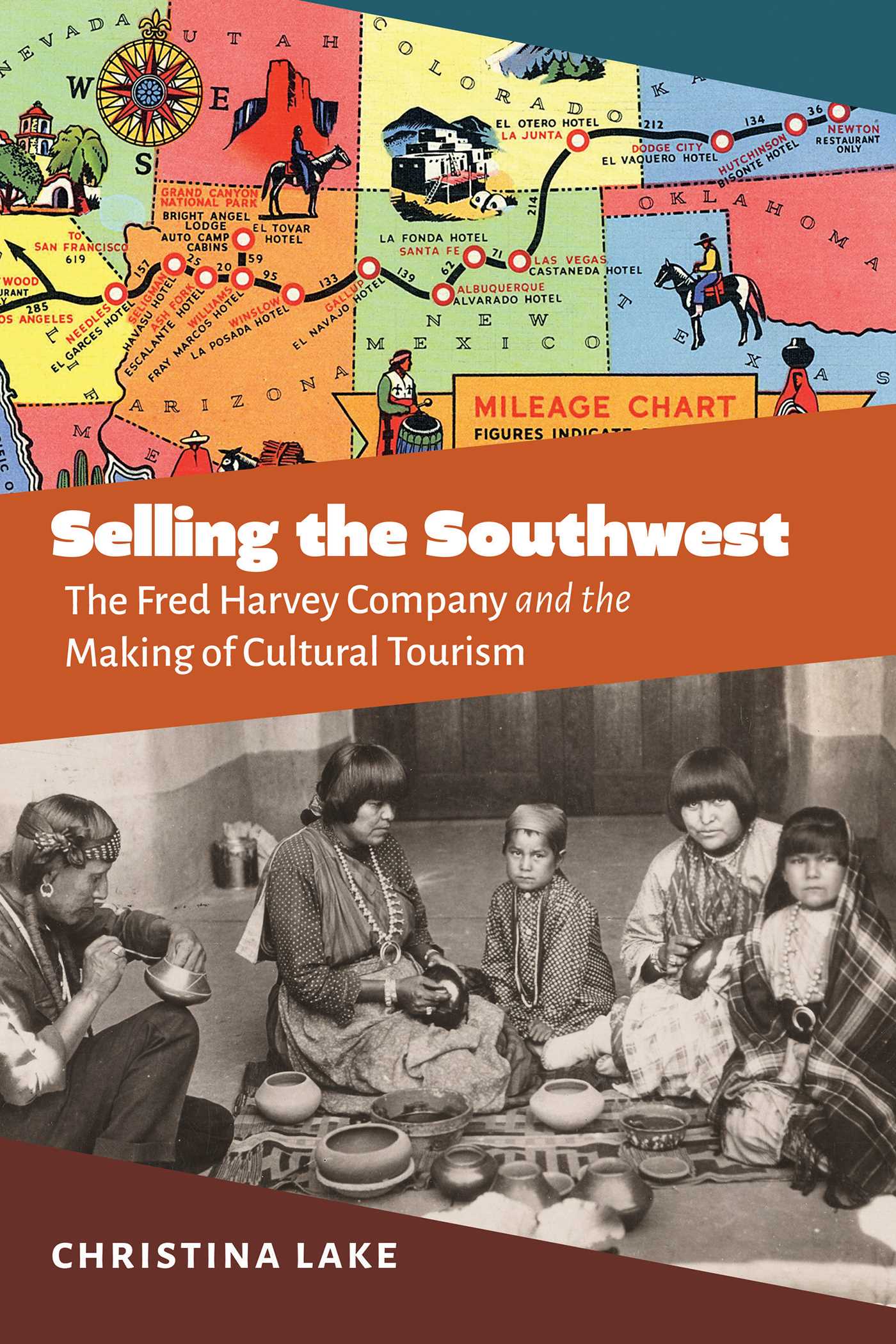
A new interpretation of the Fred Harvey Company in almost all its aspects related to cultural tourism in the Southwest from the late-nineteenth century to post–World War II.
In the late nineteenth and early twentieth centuries, the Fred Harvey Company played a pivotal role in crafting the mythology of the “Indigenous Southwest” through its expansive network of railroad hotels, tourist enterprises, and cultural excursions across Native homelands. In this deeply researched narrative, historian Christina Lake examines how tourism, commerce, preservation efforts, and Indigenous creativity converged to shape—and challenge—the enduring romantic vision of the American Southwest.
Central to Lake’s story are the diverse groups that influenced the region’s transformation: the Atchison, Topeka & Santa Fe Railway, the National Park Service, the Harvey Girls, and the Native artists and communities themselves.
Although these groups frequently shared a commitment to cultural preservation, they often disagreed about what authentic preservation truly meant. Their conflicting perspectives unfolded within shifting commercial and artistic markets that generated both economic possibilities and new strains.
Lake uncovers the complex balance between exploitation and economic renewal in Native arts communities throughout the Rio Grande Valley and the Colorado Plateau, exploring the emergence of Fred Harvey tourism as well as its continuing legacy.
While the Harvey Girls have become celebrated cultural icons, the Indian Detours couriers who introduced travelers to Indigenous landscapes and traditions have too often been overlooked or excluded from public memory. By interrogating what is remembered, honored, and erased, Lake offers a compelling reexamination of heritage tourism, cultural representation, and the creation of Southwestern identity.
In the late nineteenth and early twentieth centuries, the Fred Harvey Company played a pivotal role in crafting the mythology of the “Indigenous Southwest” through its expansive network of railroad hotels, tourist enterprises, and cultural excursions across Native homelands. In this deeply researched narrative, historian Christina Lake examines how tourism, commerce, preservation efforts, and Indigenous creativity converged to shape—and challenge—the enduring romantic vision of the American Southwest.
Central to Lake’s story are the diverse groups that influenced the region’s transformation: the Atchison, Topeka & Santa Fe Railway, the National Park Service, the Harvey Girls, and the Native artists and communities themselves.
Although these groups frequently shared a commitment to cultural preservation, they often disagreed about what authentic preservation truly meant. Their conflicting perspectives unfolded within shifting commercial and artistic markets that generated both economic possibilities and new strains.
Lake uncovers the complex balance between exploitation and economic renewal in Native arts communities throughout the Rio Grande Valley and the Colorado Plateau, exploring the emergence of Fred Harvey tourism as well as its continuing legacy.
While the Harvey Girls have become celebrated cultural icons, the Indian Detours couriers who introduced travelers to Indigenous landscapes and traditions have too often been overlooked or excluded from public memory. By interrogating what is remembered, honored, and erased, Lake offers a compelling reexamination of heritage tourism, cultural representation, and the creation of Southwestern identity.
Product Details
- Publisher: UNM Press (March 23, 2027)
- Length: 272 pages
- ISBN13: 9780826370297
Browse Related Books
Raves and Reviews
“Christina Lake deftly examines the tension between tourism, commerce, preservation efforts, and Indigenous artistry and the roles they have played in the economic revitalization of Native individuals as well as Indigenous communities living in the Rio Grande valley and on the Colorado Plateau.”
– James F. Brooks, author of Captives and Cousins: Slavery, Kinship, and Community in the Southwest Borderlands
“Christina Lake’s Selling the Southwest takes its place as one of the best books in heritage and tourism studies of the Southwest.”
– Matthew F. Bokovoy, author of The San Diego World’s Fairs and Southwestern Memory, 1880–1940
Resources and Downloads
High Resolution Images
-
Book Cover Image (jpg): Selling the Southwest
eBook 9780826370297