
Plus, receive recommendations and exclusive offers on all of your favorite books and authors from Simon & Schuster.
Published by Inner Traditions
Distributed by Simon & Schuster
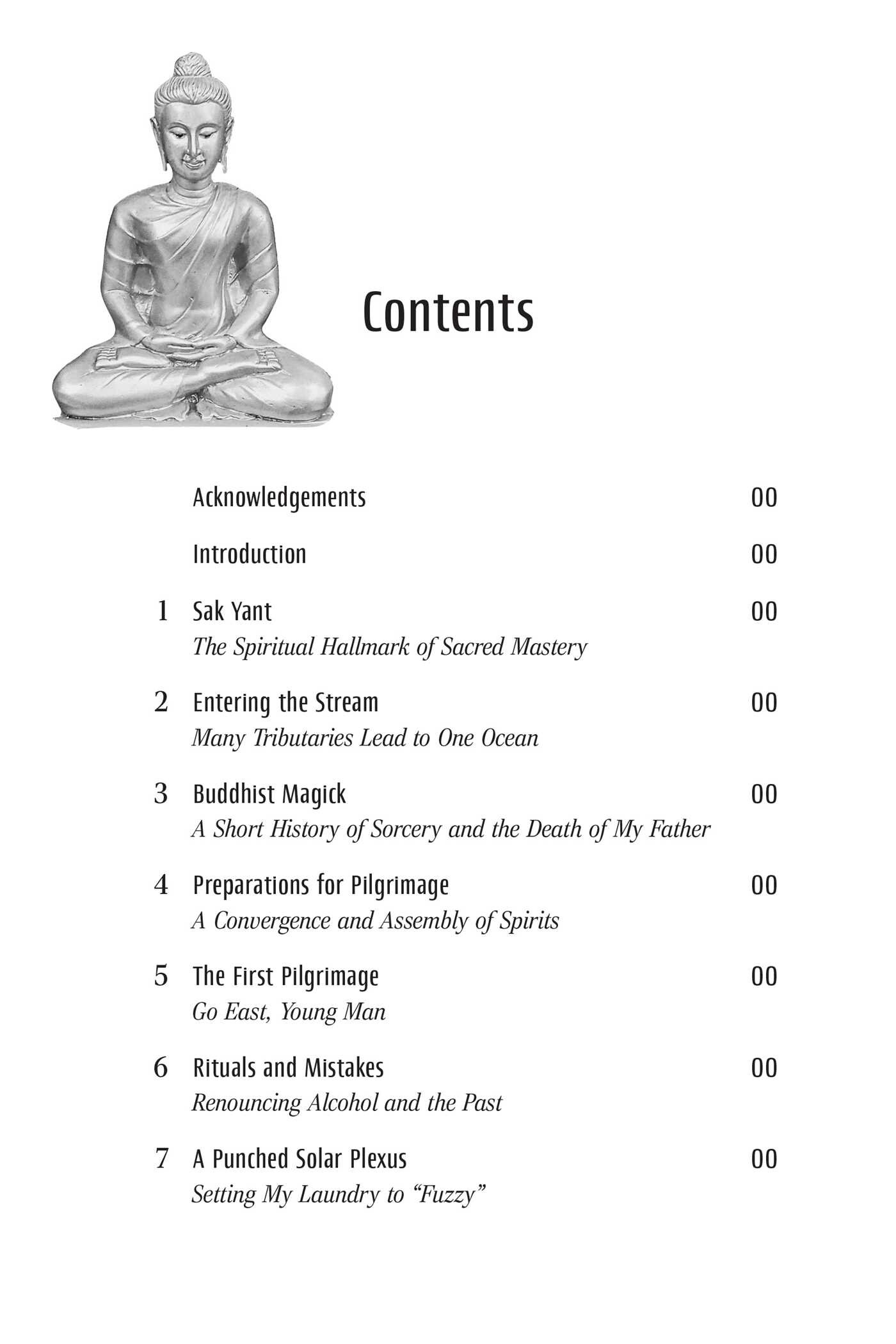
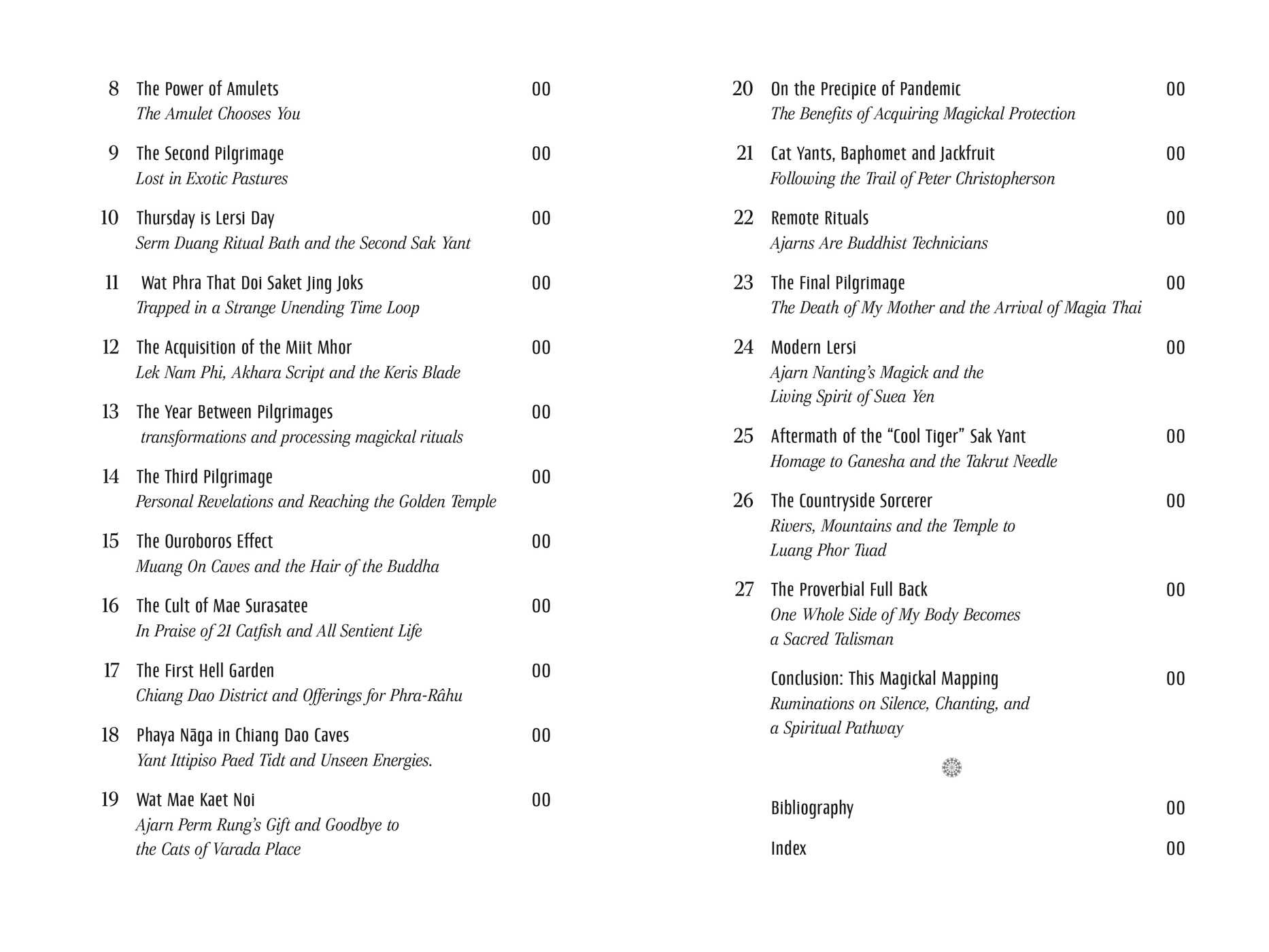
Table of Contents
About The Book
• Details the author’s profound encounters with Thai magick during 4 separate pilgrimages to Thailand
• Explains the ritual process of the author’s multiple Sak Yant tattoos as well as other powerful magickal rituals and initiations he experienced
• Shares how his initiatory experiences with Thai Buddhist magicians helped him destroy his destructive former selves and discover profound healing for his mind and soul
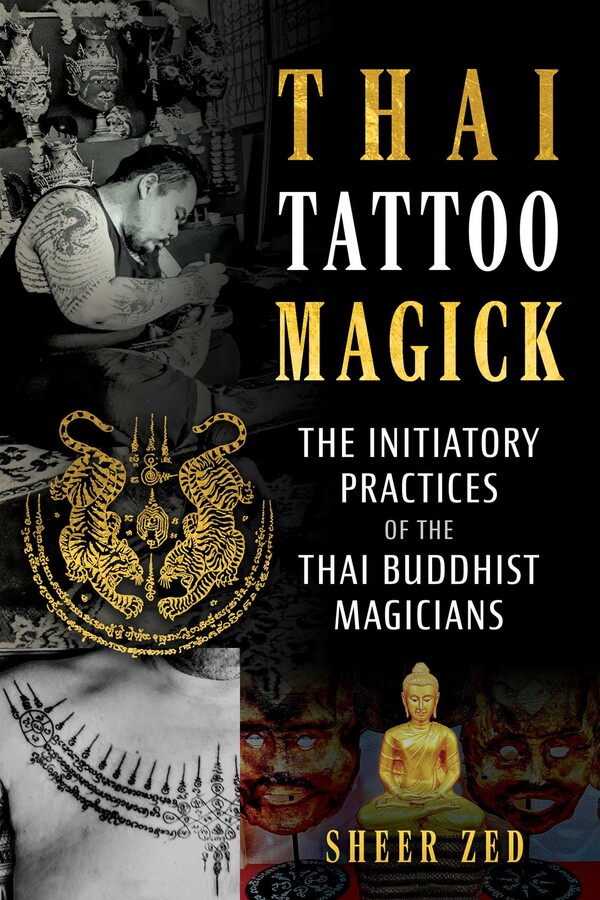
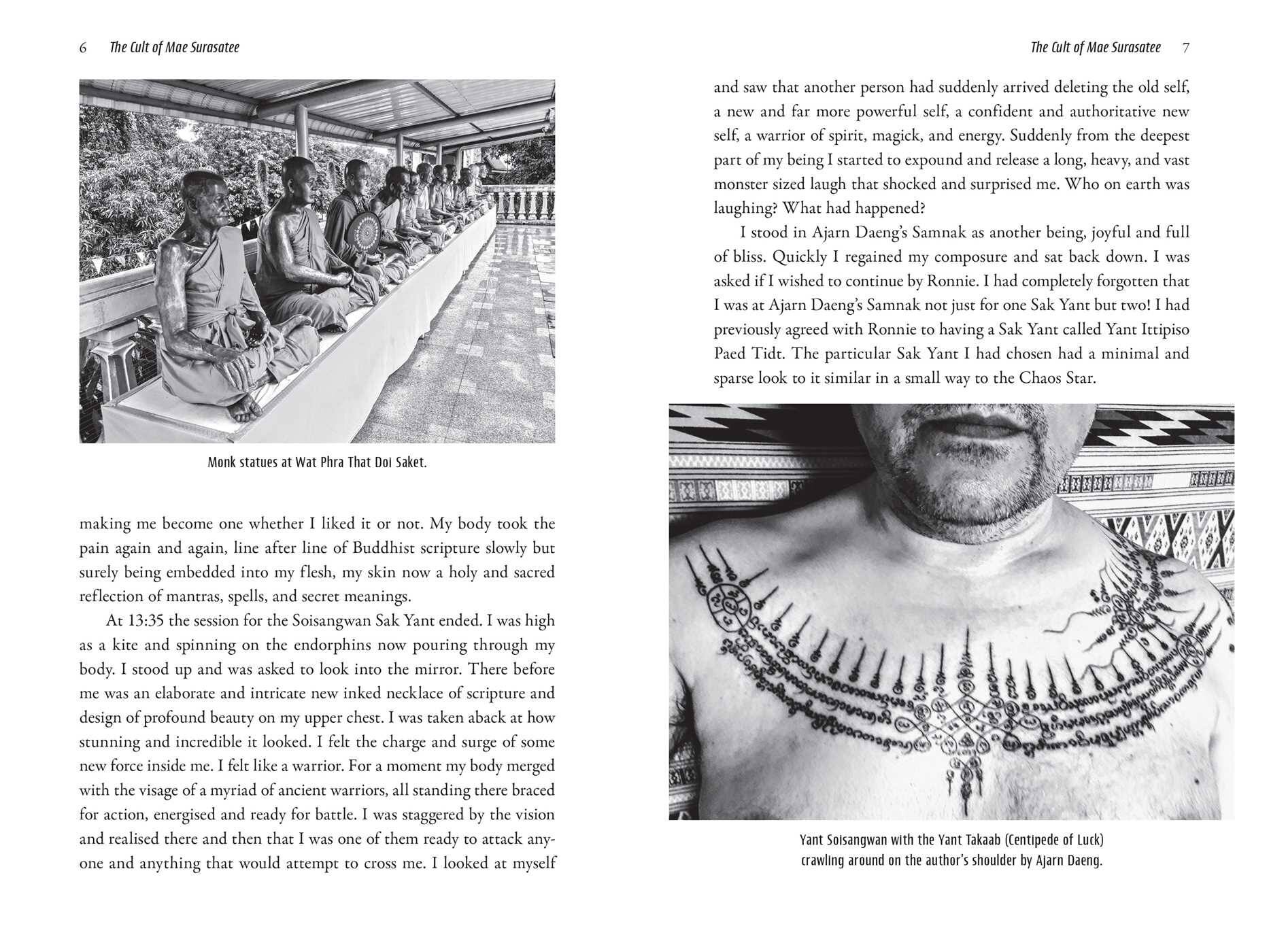
Sharing his profound encounters with Thai magick during four separate pilgrimages to Thailand, writer and musician Sheer Zed details the intense personal initiations and rituals he experienced with the sect of Thai Buddhist magicians known as Ajarns.
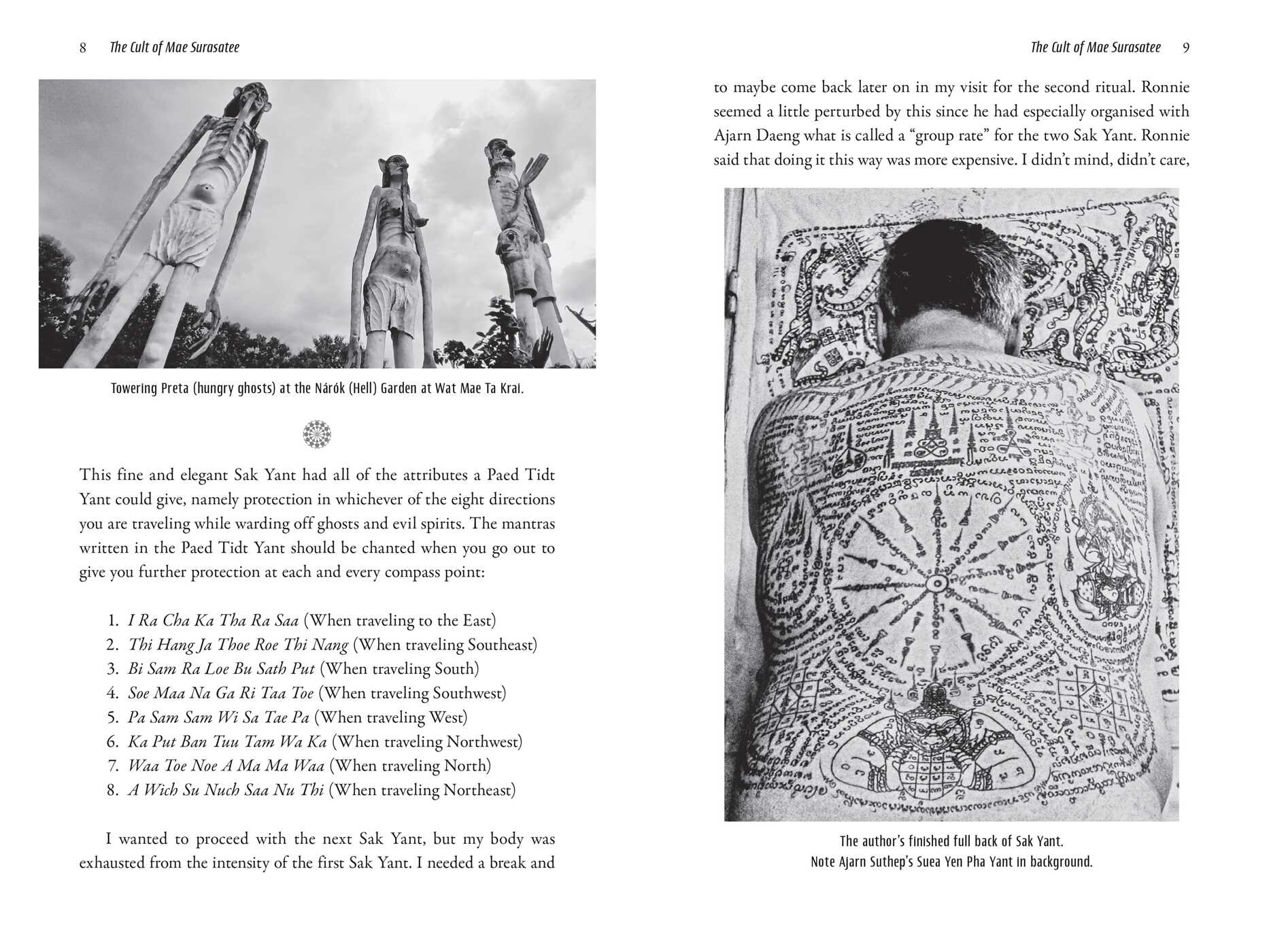
Traveling all over Thailand to meet with holy monks in sacred places, the author undergoes powerful Thai magickal rituals. Among these are the Gold Face Blessing, where gold leaf was hammered onto his face to form a mask, and a Satuang ritual, traditionally performed for returning soldiers, that crescendos with the release of 21 unruly catfish into the Ping River during a Wolf Moon. As Zed explores the cultural context of Thai Buddhist necromancy, he details firsthand the pain and transformation of his multiple talismanic Sak Yant tattoos, ritually done by hand by Ajarns in magickal inks, including one that spiritually transformed him into a tiger. He shares his experiences of intense Serm Duang ritual baths, the insertion of a gold Takrut needle into his arm, and a rare initiation to connect him directly with spirits.
Revealing the extreme personal losses and traumas that led to his spiritual transformation, Zed shares how his initiatory experiences with Thai Buddhist sorcerers helped him destroy his destructive former selves and discover profound healing for his mind and soul. Exploring chaos magick, pop culture, and esoteric Buddhism, he also examines the artistic and occult influences that shaped him into a magickal practitioner—from the underground electronic music scene and the work of the Beat Poets to the writings of Aleister Crowley and the Buddhist Anarchism of Gary Snyder.
• Explains the ritual process of the author’s multiple Sak Yant tattoos as well as other powerful magickal rituals and initiations he experienced
• Shares how his initiatory experiences with Thai Buddhist magicians helped him destroy his destructive former selves and discover profound healing for his mind and soul
Sharing his profound encounters with Thai magick during four separate pilgrimages to Thailand, writer and musician Sheer Zed details the intense personal initiations and rituals he experienced with the sect of Thai Buddhist magicians known as Ajarns.
Traveling all over Thailand to meet with holy monks in sacred places, the author undergoes powerful Thai magickal rituals. Among these are the Gold Face Blessing, where gold leaf was hammered onto his face to form a mask, and a Satuang ritual, traditionally performed for returning soldiers, that crescendos with the release of 21 unruly catfish into the Ping River during a Wolf Moon. As Zed explores the cultural context of Thai Buddhist necromancy, he details firsthand the pain and transformation of his multiple talismanic Sak Yant tattoos, ritually done by hand by Ajarns in magickal inks, including one that spiritually transformed him into a tiger. He shares his experiences of intense Serm Duang ritual baths, the insertion of a gold Takrut needle into his arm, and a rare initiation to connect him directly with spirits.
Revealing the extreme personal losses and traumas that led to his spiritual transformation, Zed shares how his initiatory experiences with Thai Buddhist sorcerers helped him destroy his destructive former selves and discover profound healing for his mind and soul. Exploring chaos magick, pop culture, and esoteric Buddhism, he also examines the artistic and occult influences that shaped him into a magickal practitioner—from the underground electronic music scene and the work of the Beat Poets to the writings of Aleister Crowley and the Buddhist Anarchism of Gary Snyder.
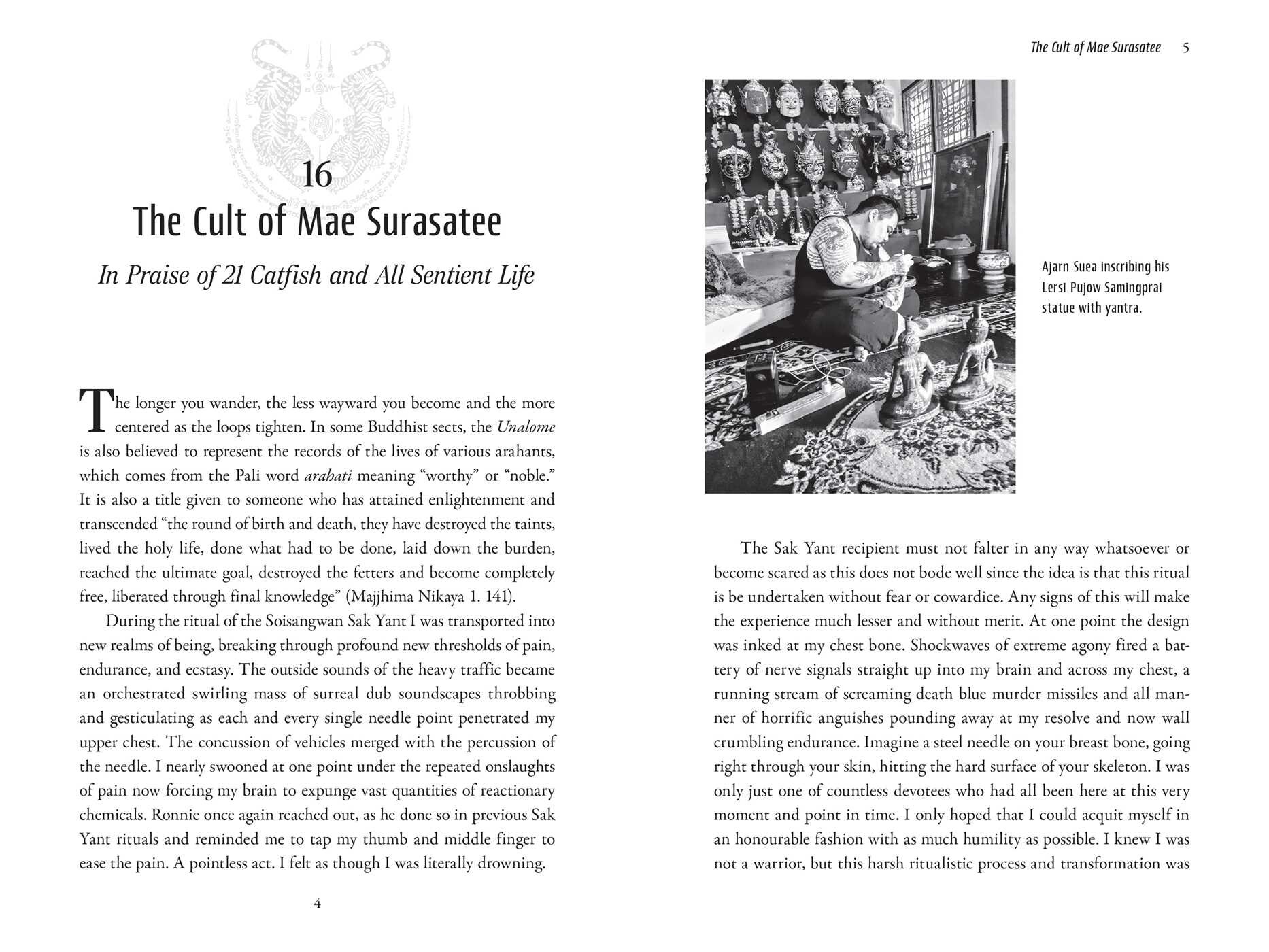
Excerpt
Chapter One
Sak Yant
The Spiritual Hallmark of Sacred Mastery
Spirituality founded on materialism is ultimately devoid of meaning. Likewise, there is a huge difference between “spiritual tourism” and meaningful pilgrimage. Preparation, contemplation, and meditation are essential prerequisites for any successful pilgrimage abroad. When entering a new, alien, and unknown environment, one must do their best to be sincere, flexible, and undemanding rather than stubborn. For me, Sak Yant is not just a “spiritual tattoo” and—despite the undeniable esoteric charm, gravity and magnetism they exude—is not just a “souvenir” or ordinary road-side tattoo. The sublime living spirits inherent to Buddhist magick actively inhabit the countless myriad forms of Sak Yant. My encounter, engagement, and full immersion into Thai Theravāda Buddhism is characterized by what can only be described as a predestined affinity, a journey over a long and serpentine pathway in which I explored many other variants of this profound philosophy.
To place undue limitations and definitions upon the forms that are known as Sak Yant would be of course to reduce its exquisite and pristine essence. Sak Yant is definitely a commitment to living in a very specific manner. The fine print requires one to uphold certain values that reflect the magickal components of this deliberately constructed tattooed spell. Irrespective of whether the monk or Ajarn is more than happy to accommodate Westerners in its application, it is extremely important to understand that Sak Yant is an ancient animist, faith-based, shamanic, cosmic, and ultimately Buddhist magickal spell that will profoundly alter one’s mind and psyche. Equipping oneself with a basic working understanding and knowledge of Thai Buddhism and animism (which have evolved alongside each other and in tandem with many other esoteric practices) before plowing headlong into acquiring a Sak Yant tattoo, is to demonstrate the basic respect required in order to properly receive such a powerful form of magick. Unthinkingly scouring the internet or books for designs to match one’s personal, ego-driven urges, much in the way one might shop for new clothes, is not a good idea. However, meditating upon messages and signs that arise while in meditative absorption or contemplation is heartily encouraged. If your own deep intuitive impulses lead you to a very specific design this means that this particular design is calling you. I encourage seekers to find an Ajarn to assist them.
An Ajarn is a Thai language term, which translates as “professor” or “teacher.” It is derived from the Pali word acariya, and is a term of respect, similar in meaning to the Japanese sensei. Personally, I liken the term Ajarn to “magician.” This is because Ajarns can perform Sak Yant rituals, magickal rituals, blocking spells; create amulets and Pha Yants (magickal hanging cloth); and bless all manner of situations and occasions. The experienced Sak Yant practitioner has absorbed and memorized whole sets of scripts and yantra in ancient languages such as Khom, Pali, Lanna, Tai Yai, Old Mon, and Burmese.
Abstract, mystical designs resembling yantra initially birthed themselves during early Indian history in the Harappan Culture Civilization, an Indus Valley Bronze Age civilization in the northwestern regions of South Asia (3300 BCE to 1300 BCE). Then, through subsequent cosmic symbolistic evolutions in Vedic (c. 2000 BCE) and later tantric renaissance (700 CE to 1200 CE), they eventually migrated from India into Southeast Asia. The yantra of the ancient sacred geometry of the Vedic Brahman tradition, considerably older than Thai Buddhist yantra, encountered numerous influences, and, while still being an integral and essential part of the spiritual landscape for centuries, yantra underwent its own very unique evolutionary reinterpretation in Southeast Asia. References to sacred tattoos date back to second-century Chinese records of the Cambodian Funan Kingdom located around the Mekong Delta from the first to seventh centuries. It is widely accepted however that the Cambodian tattoo tradition can be traced back to northern Thailand. In the fourth century CE, Chinese records refer to the tattooed P’u people on their southern borders as wearing “skin garments.” I was blessed to have spiritual guidance via the visions of Ajarn Suea, who, on two occasions—and much like a doctor prescribing medicine to a patient—saw (or “diagnosed”) specific Sak Yant designs for my body.
One would not be remiss to view Sak Yant design as a piece of magickal software written onto the hardware of the human body. After all, they rewrite the mind, body, and spirit of the person that wears them. Sak Yant should not however be viewed as a security patch. These are extremely potent, active talismans, each one a rock-solid and powerful piece of yantra firmware that fundamentally changes those that have it implemented onto their body. Certain Sak Yant designs such as tiger (Suea Yen) and Hanuman cannot be worn by just anyone. The devotee must be able to control these Sak Yant. Much like driving a fast, high-powered vehicle that one does not know how to properly control, Sak Yants can prove fatal if not managed and handled correctly by those that hold them upon their body. Yes, it is possible for anyone to get a Sak Yant; as of the writing of this book, there is no bar whatsoever as to who can obtain one. And yet, the consequences of allowing these designed yantra spells to take residence upon your body without proper understanding or knowledge range far and wide. Being unaware of the religious and cultural sensitivities of the unknown places you visit for the first time is not advisable and can even ultimately end in your arrest and deportation. For example, activating the Sak Yant in the proper manner, requires one to understand and adhere to the basic Buddhist precepts* that surround Sak Yant, which—while I will go into these in more depth later—I will lay them out here as follows:
1. Do not kill
2. Do not steal
3. Do not indulge in sexual misconduct
4. Do not make false speech
5. Do not take intoxicants
The Eight Precepts—of which I hold the eighth—are the first Five Precepts plus three more, which are listed below. The Eight Precepts are observed by nuns, lay Buddhists, and are observed on special days of observance as forms of purification, cleansing, and aiding meditation. In Thailand, if one of the eight is broken, they are all broken.
6. Abstaining from taking food at the wrong time (before noon only)
7. Abstaining from dancing, music, visiting shows, flowers, make-up, the wearing of ornaments and decorations (extremely difficult for me being an amulet-and flower-loving musician!)
8. Abstaining from sleeping in a tall, high sleeping place (I sleep on a ground level futon)
It is important to note that there are invisible karmic wires attached to receiving Sak Yant. Blessings chanted by an Ajarn or monk can incorporate taking refuge in the three jewels of Buddhism namely the Buddha (Siddhartha Gautama, most commonly referred to as the Buddha), the Dharma (The Buddhist path to liberation, referred to as awakening), and the Sangha (a Sanskrit word used in Indian languages, including Pali, meaning “association,” “assembly,” ”company,” or “community”). The initiatory chanting of the three jewels of Buddhism is viewed by some as a ritual facilitating one’s formal conversion to Buddhism. Do the countless waves of tattoo-hungry Westerners flooding into Thailand to acquire Sak Yant understand that they are converting to Buddhism when they receive a Sak Yant? Maybe. Maybe not. Either way, don’t assume that leading the life of a dissolute Westerner (of which I counted myself as one before encountering the Ajarns of northern Thailand in 2017) in any way excuses you from a duty to uphold the Five basic Precepts necessary to maintain the efficacy of your Sak Yant.
If you do not uphold the precepts, your Sak Yant will fail to work as it should. However, on the other hand—in my personal experience—upholding the precepts guarantees results that are nothing less than magick. Some say that upholding the Buddhist precepts makes Sak Yant “superstitiously effective.” I find use of the word superstitious here to be dismissive and therefore urge caution in its use. In Thailand, what many Westerners would label “superstition” is in fact a deeply embedded part of Thai tradition, heritage, and cultural landscape. The earliest known use of the word superstition in the West as a noun can be found in the work of early Romans such as playwright Plautus, poet and writer Ennius, and lastly, the author Pliny, who refers to it as the art of divination, namely “divinatory practice.” From the first century CE we are given another meaning, which is to “practice outside official religion.”
Sak Yant
The Spiritual Hallmark of Sacred Mastery
Spirituality founded on materialism is ultimately devoid of meaning. Likewise, there is a huge difference between “spiritual tourism” and meaningful pilgrimage. Preparation, contemplation, and meditation are essential prerequisites for any successful pilgrimage abroad. When entering a new, alien, and unknown environment, one must do their best to be sincere, flexible, and undemanding rather than stubborn. For me, Sak Yant is not just a “spiritual tattoo” and—despite the undeniable esoteric charm, gravity and magnetism they exude—is not just a “souvenir” or ordinary road-side tattoo. The sublime living spirits inherent to Buddhist magick actively inhabit the countless myriad forms of Sak Yant. My encounter, engagement, and full immersion into Thai Theravāda Buddhism is characterized by what can only be described as a predestined affinity, a journey over a long and serpentine pathway in which I explored many other variants of this profound philosophy.
To place undue limitations and definitions upon the forms that are known as Sak Yant would be of course to reduce its exquisite and pristine essence. Sak Yant is definitely a commitment to living in a very specific manner. The fine print requires one to uphold certain values that reflect the magickal components of this deliberately constructed tattooed spell. Irrespective of whether the monk or Ajarn is more than happy to accommodate Westerners in its application, it is extremely important to understand that Sak Yant is an ancient animist, faith-based, shamanic, cosmic, and ultimately Buddhist magickal spell that will profoundly alter one’s mind and psyche. Equipping oneself with a basic working understanding and knowledge of Thai Buddhism and animism (which have evolved alongside each other and in tandem with many other esoteric practices) before plowing headlong into acquiring a Sak Yant tattoo, is to demonstrate the basic respect required in order to properly receive such a powerful form of magick. Unthinkingly scouring the internet or books for designs to match one’s personal, ego-driven urges, much in the way one might shop for new clothes, is not a good idea. However, meditating upon messages and signs that arise while in meditative absorption or contemplation is heartily encouraged. If your own deep intuitive impulses lead you to a very specific design this means that this particular design is calling you. I encourage seekers to find an Ajarn to assist them.
An Ajarn is a Thai language term, which translates as “professor” or “teacher.” It is derived from the Pali word acariya, and is a term of respect, similar in meaning to the Japanese sensei. Personally, I liken the term Ajarn to “magician.” This is because Ajarns can perform Sak Yant rituals, magickal rituals, blocking spells; create amulets and Pha Yants (magickal hanging cloth); and bless all manner of situations and occasions. The experienced Sak Yant practitioner has absorbed and memorized whole sets of scripts and yantra in ancient languages such as Khom, Pali, Lanna, Tai Yai, Old Mon, and Burmese.
Abstract, mystical designs resembling yantra initially birthed themselves during early Indian history in the Harappan Culture Civilization, an Indus Valley Bronze Age civilization in the northwestern regions of South Asia (3300 BCE to 1300 BCE). Then, through subsequent cosmic symbolistic evolutions in Vedic (c. 2000 BCE) and later tantric renaissance (700 CE to 1200 CE), they eventually migrated from India into Southeast Asia. The yantra of the ancient sacred geometry of the Vedic Brahman tradition, considerably older than Thai Buddhist yantra, encountered numerous influences, and, while still being an integral and essential part of the spiritual landscape for centuries, yantra underwent its own very unique evolutionary reinterpretation in Southeast Asia. References to sacred tattoos date back to second-century Chinese records of the Cambodian Funan Kingdom located around the Mekong Delta from the first to seventh centuries. It is widely accepted however that the Cambodian tattoo tradition can be traced back to northern Thailand. In the fourth century CE, Chinese records refer to the tattooed P’u people on their southern borders as wearing “skin garments.” I was blessed to have spiritual guidance via the visions of Ajarn Suea, who, on two occasions—and much like a doctor prescribing medicine to a patient—saw (or “diagnosed”) specific Sak Yant designs for my body.
One would not be remiss to view Sak Yant design as a piece of magickal software written onto the hardware of the human body. After all, they rewrite the mind, body, and spirit of the person that wears them. Sak Yant should not however be viewed as a security patch. These are extremely potent, active talismans, each one a rock-solid and powerful piece of yantra firmware that fundamentally changes those that have it implemented onto their body. Certain Sak Yant designs such as tiger (Suea Yen) and Hanuman cannot be worn by just anyone. The devotee must be able to control these Sak Yant. Much like driving a fast, high-powered vehicle that one does not know how to properly control, Sak Yants can prove fatal if not managed and handled correctly by those that hold them upon their body. Yes, it is possible for anyone to get a Sak Yant; as of the writing of this book, there is no bar whatsoever as to who can obtain one. And yet, the consequences of allowing these designed yantra spells to take residence upon your body without proper understanding or knowledge range far and wide. Being unaware of the religious and cultural sensitivities of the unknown places you visit for the first time is not advisable and can even ultimately end in your arrest and deportation. For example, activating the Sak Yant in the proper manner, requires one to understand and adhere to the basic Buddhist precepts* that surround Sak Yant, which—while I will go into these in more depth later—I will lay them out here as follows:
1. Do not kill
2. Do not steal
3. Do not indulge in sexual misconduct
4. Do not make false speech
5. Do not take intoxicants
The Eight Precepts—of which I hold the eighth—are the first Five Precepts plus three more, which are listed below. The Eight Precepts are observed by nuns, lay Buddhists, and are observed on special days of observance as forms of purification, cleansing, and aiding meditation. In Thailand, if one of the eight is broken, they are all broken.
6. Abstaining from taking food at the wrong time (before noon only)
7. Abstaining from dancing, music, visiting shows, flowers, make-up, the wearing of ornaments and decorations (extremely difficult for me being an amulet-and flower-loving musician!)
8. Abstaining from sleeping in a tall, high sleeping place (I sleep on a ground level futon)
It is important to note that there are invisible karmic wires attached to receiving Sak Yant. Blessings chanted by an Ajarn or monk can incorporate taking refuge in the three jewels of Buddhism namely the Buddha (Siddhartha Gautama, most commonly referred to as the Buddha), the Dharma (The Buddhist path to liberation, referred to as awakening), and the Sangha (a Sanskrit word used in Indian languages, including Pali, meaning “association,” “assembly,” ”company,” or “community”). The initiatory chanting of the three jewels of Buddhism is viewed by some as a ritual facilitating one’s formal conversion to Buddhism. Do the countless waves of tattoo-hungry Westerners flooding into Thailand to acquire Sak Yant understand that they are converting to Buddhism when they receive a Sak Yant? Maybe. Maybe not. Either way, don’t assume that leading the life of a dissolute Westerner (of which I counted myself as one before encountering the Ajarns of northern Thailand in 2017) in any way excuses you from a duty to uphold the Five basic Precepts necessary to maintain the efficacy of your Sak Yant.
If you do not uphold the precepts, your Sak Yant will fail to work as it should. However, on the other hand—in my personal experience—upholding the precepts guarantees results that are nothing less than magick. Some say that upholding the Buddhist precepts makes Sak Yant “superstitiously effective.” I find use of the word superstitious here to be dismissive and therefore urge caution in its use. In Thailand, what many Westerners would label “superstition” is in fact a deeply embedded part of Thai tradition, heritage, and cultural landscape. The earliest known use of the word superstition in the West as a noun can be found in the work of early Romans such as playwright Plautus, poet and writer Ennius, and lastly, the author Pliny, who refers to it as the art of divination, namely “divinatory practice.” From the first century CE we are given another meaning, which is to “practice outside official religion.”
Product Details
- Publisher: Inner Traditions (August 12, 2025)
- Length: 400 pages
- ISBN13: 9798888501726
Browse Related Books
Raves and Reviews
“A powerful account of traditional Thai magick written into the skin of a dedicated spiritual seeker. Sheer Zed approaches his pilgrimage and healing journey with great sensitivity and bravery and is transformed in partnership with the Ajarn and living spirits who now share his body. An important resource for those drawn to the transformative magic of tattoo and the traditional magical arts that the Thai people have gifted to the world.”
– Peter Grey, author of The Red Goddess and cofounder of Scarlet Imprint
“An authentic initiate, Sheer Zed has written an intriguing, indepth exploration of Sak Yant and the complex initiation practices of Thai Buddhism, sharing his own moving story of loss, discovery, and transformation during four separate pilgrimages. Essential reading for anyone interested in Thai tattoo magick.”
– June Kent, editor of Indie Shaman
“A fascinating glimpse into the invisibilia of Thai culture, and one that invites—even needs—participation in order to be fully understood. Herein, the reader will find luck-bringing Jing Jok spirits, a ‘redneck ghost doctor,’ and a person seeking—and perhaps finding—something clear and real while still sitting with human(e)-ness with its foibles, its messiness, and its often-unseen beauty. Sheer Zed takes us along for the trip through an autobiography en spiritu traced upon skin and etched in the heart-mind.”
– John Anderson, DAOM, author of The Way of the Living Ghost and Opening the Vermillion Spirit
“Sheer Zed offers this fascinating account of the forgotten sacred art of body inscription. Vivid, visceral, and valiant. Stories of integrity and adventure abound. As readers, we travel on the author’s words to a world rarely seen and reverently understood.”
– Sara McCarthy, musician and professional tarot reader
“The book is part spiritual memoir, part cultural ethnography, and part occult travelogue. Zed’s writing is bold, poetic, and deeply personal, moving between his own inner transformations and the outer rituals of the Thai Buddhist magicians.”
– Kellie Schorr, The Tattooed Buddha
“I definitely highly recommend Sheer's book. It's a personal, autobiographical, and touching book about growth and transformation. It's an educational book which really helps us understand the essence of Thai Buddhism.”
– Miguel Connor, author of The Occult Elvis: The Mystical and Magical Life of the King
“Original, seminal, groundbreaking, exceptionally well-written, and organized, Thai Tattoo Magick is a unique volume that will be of special and particular interest to readers concerned with Buddhist rituals, practices, tattoo art, and metaphysical magic. Especially recommended as a unique addition to...professional and college/university library Buddhist Studies....”
– Midwest Book Review
“I really want you to check out Sheer Zed's book. It's riveting, It's incredible. It gets my highest recommendation.”
– Jake Weaver, Midnight, On Earth Podcast, episode 268, September 20, 2025
“An underground icon of lived magick.”
– Jim Perry, NITE DRIFT on Euphomet
Resources and Downloads
High Resolution Images
-
Book Cover Image (jpg): Thai Tattoo Magick
eBook 9798888501726



