Plus, receive recommendations and exclusive offers on all of your favorite books and authors from Simon & Schuster.
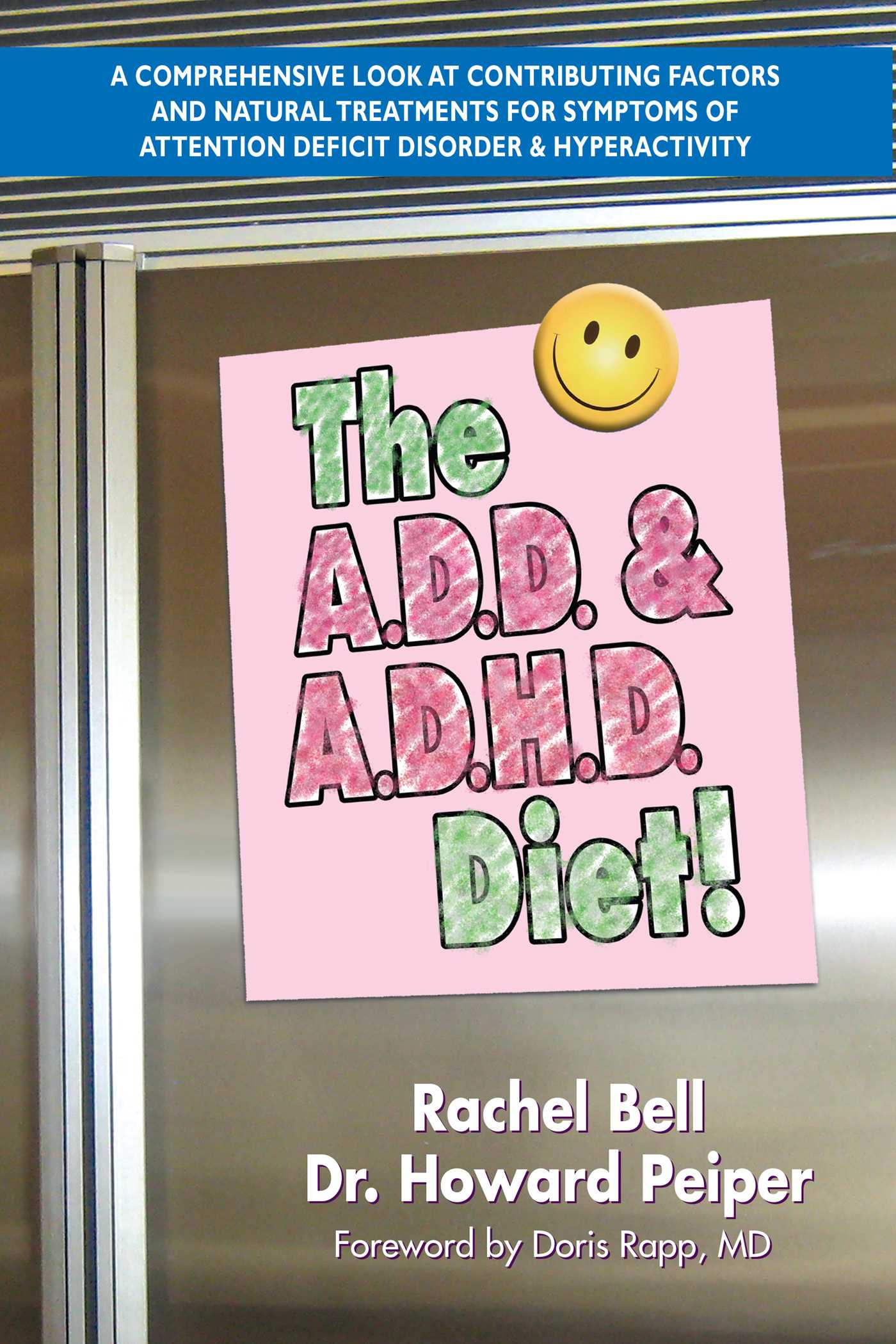
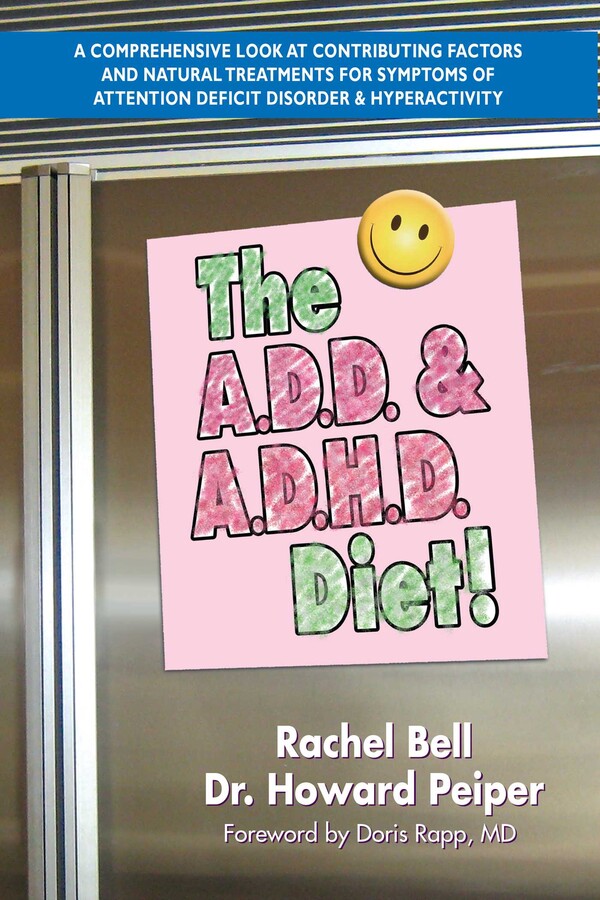
The A.D.D. & A.D.H.D. Diet!
By Howard Peiper and Rachel Bell
Published by Square One
Distributed by Simon & Schuster
Table of Contents
About The Book
Every day, children are diagnosed with attention deficit disorder (ADD) or attention deficit hyperactivity disorder (ADHD). They are given powerful drugs like Ritalin in order to cope with their ADD, but many parents don’t realize the dangerous side effects associated with these drugs, particularly the possibility of dependency. Addressing the causes of ADD and ADHD should be the first step in any treatment, but unfortunately, conventional drug therapies treat only the symptoms, not the causes.
In their new book, The A.D.D. & A.D.H.D. Diet!, authors Rachel Bell and Dr. Howard Peiper take a uniquely nutritional approach to treating ADD and ADHD. The authors first address the root causes of the disorders, from poor nutrition and food allergies to environmental contaminants. They discuss which foods your child can eat and which foods he should avoid. To make changing your child’s diet easier, the authors also offer you their very own healthy and delicious recipes. Final chapters examine the importance of detoxifying the body, supplementing diet with vitamins and nutrients, and exercising regularly in order to achieve good health.
Managing your child’s ADD doesn’t have to be a chore. With The A.D.D. & A.D.H.D. Diet!, you can learn how a simple change in diet may be the most effective treatment for your child.
In their new book, The A.D.D. & A.D.H.D. Diet!, authors Rachel Bell and Dr. Howard Peiper take a uniquely nutritional approach to treating ADD and ADHD. The authors first address the root causes of the disorders, from poor nutrition and food allergies to environmental contaminants. They discuss which foods your child can eat and which foods he should avoid. To make changing your child’s diet easier, the authors also offer you their very own healthy and delicious recipes. Final chapters examine the importance of detoxifying the body, supplementing diet with vitamins and nutrients, and exercising regularly in order to achieve good health.
Managing your child’s ADD doesn’t have to be a chore. With The A.D.D. & A.D.H.D. Diet!, you can learn how a simple change in diet may be the most effective treatment for your child.
Excerpt
Preface
Attention Deficit Disorder (ADD) and Attention Deficit Hyperactivity Disorder (ADHD) are diagnosed more often now than ever before. Increased awareness about these conditions may contribute, in part, to the rise in documented cases. Other reasons may include changes in our diets, lack of essential nutrients, greater exposure to biologically active agents in our food, and water supplies. Unfortunately, solutions aren’t happening fast enough, as witnessed by the gross numbers of people still suffering, of which several million of these are children.
The symptoms of ADD/ADHD are manifestations of a dysfunction of the central nervous system. The patterns of imbalance observed in these disorders vary from person to person in an individualized, person-specific, constellation of symptoms, as follows.
Behavioral short attention span
inability to focus or concentrate
inability to sit still
uncontrollable limbs
shifting from one uncompleted activity to another
tendency to be easily distracted
difficulty following instructions
difficulty sustaining attention to tasks
difficulty playing quietly
appearing not to listen
forgetfulness
irritability and anxiousness
compulsive, aggressive, destructive behavior
head knocking
temper tantrums
passivity
withdrawn demeanor
difficulty communicating feelings
Cognitive
slow learning and reasoning ability
lessened perceptual and conceptual ability
impairment of language and memory skills
dyslexia
Social
difficulty getting along with other people
avoided by other people
tendency to interrupt
tendency to talk too much, too loud, too fast
tendency to blurt out whatever comes to mind
difficulty awaiting turn
Muscular
poor motor control
tendency to be accident prone
People with ADD/ADHD may be fine one minute and “off the wall” the next. This apparent random type of behavior may not be random at all. It may be caused by food or environmental allergens. It could be due to a blood sugar disturbance, mineral imbalance, or the presence of toxic metals at the cellular level. It could be caused by any number of things. Most certainly it is not coincidence.
Attention Deficit Disorder (ADD) and Attention Deficit Hyperactivity Disorder (ADHD) are diagnosed more often now than ever before. Increased awareness about these conditions may contribute, in part, to the rise in documented cases. Other reasons may include changes in our diets, lack of essential nutrients, greater exposure to biologically active agents in our food, and water supplies. Unfortunately, solutions aren’t happening fast enough, as witnessed by the gross numbers of people still suffering, of which several million of these are children.
The symptoms of ADD/ADHD are manifestations of a dysfunction of the central nervous system. The patterns of imbalance observed in these disorders vary from person to person in an individualized, person-specific, constellation of symptoms, as follows.
Behavioral short attention span
inability to focus or concentrate
inability to sit still
uncontrollable limbs
shifting from one uncompleted activity to another
tendency to be easily distracted
difficulty following instructions
difficulty sustaining attention to tasks
difficulty playing quietly
appearing not to listen
forgetfulness
irritability and anxiousness
compulsive, aggressive, destructive behavior
head knocking
temper tantrums
passivity
withdrawn demeanor
difficulty communicating feelings
Cognitive
slow learning and reasoning ability
lessened perceptual and conceptual ability
impairment of language and memory skills
dyslexia
Social
difficulty getting along with other people
avoided by other people
tendency to interrupt
tendency to talk too much, too loud, too fast
tendency to blurt out whatever comes to mind
difficulty awaiting turn
Muscular
poor motor control
tendency to be accident prone
People with ADD/ADHD may be fine one minute and “off the wall” the next. This apparent random type of behavior may not be random at all. It may be caused by food or environmental allergens. It could be due to a blood sugar disturbance, mineral imbalance, or the presence of toxic metals at the cellular level. It could be caused by any number of things. Most certainly it is not coincidence.
Product Details
- Publisher: Square One (August 17, 2010)
- Length: 112 pages
- ISBN13: 9781884820298
Browse Related Books
Raves and Reviews
The A.D. D. & A.D.H.D. Diet!--"Will provide the type of answers that are needed to make an informed choice for safer, better, easier and less expensive treatments for ADD and ADHD."
– Doris J. Rapp, MD
Resources and Downloads
High Resolution Images
-
Book Cover Image (jpg): The A.D.D. & A.D.H.D. Diet!
Trade Paperback 9781884820298