
Plus, receive recommendations and exclusive offers on all of your favorite books and authors from Simon & Schuster.
0:00 /
Table of Contents
Listen To An Excerpt
0:00 /
About The Book
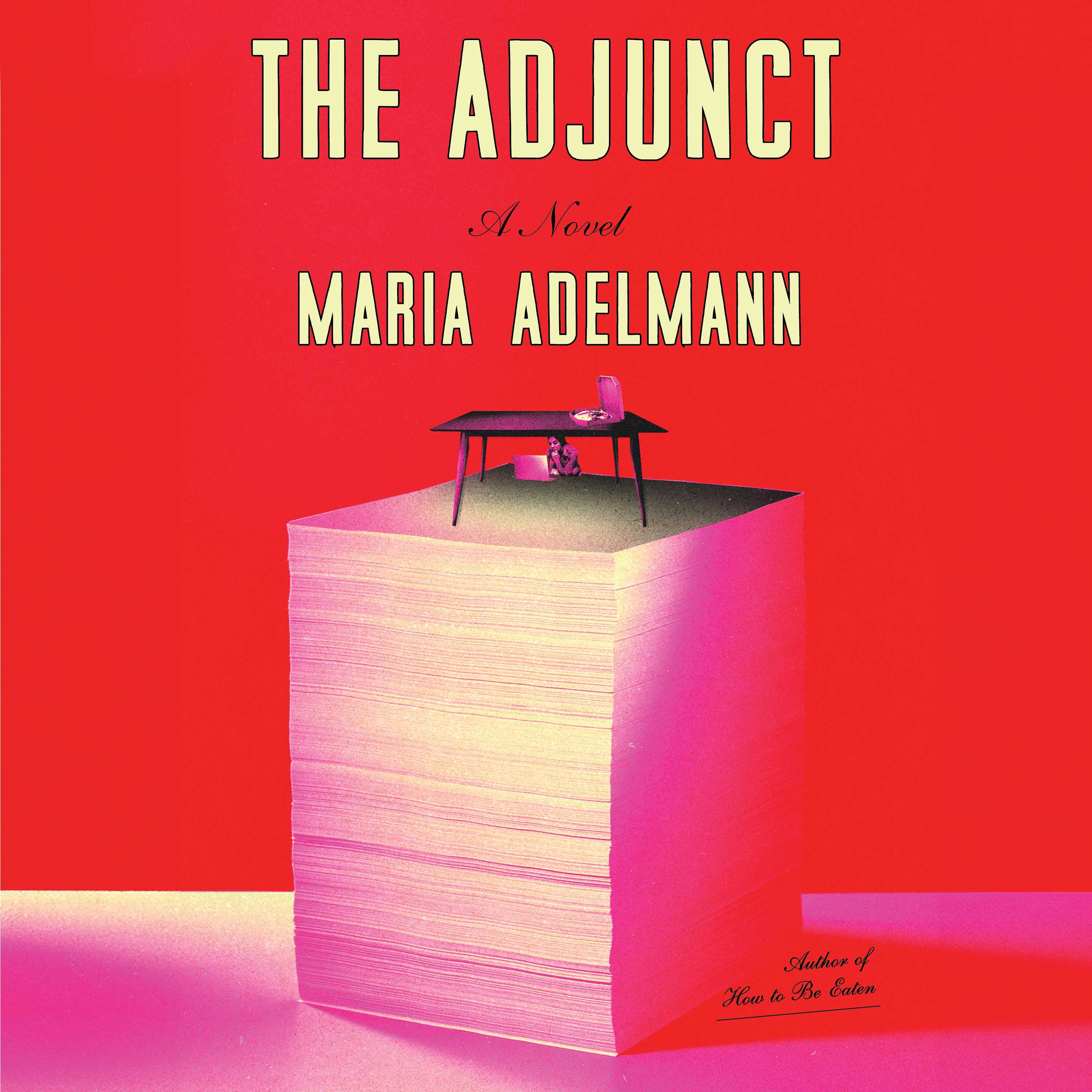
From the author of How to Be Eaten, a “darkly funny, deeply incisive” (Booklist) take on the campus novel that follows a woman on the edge gigging her way through academia’s poor job market when she crosses paths with her old PhD adviser, whose new novel might be about her.
A LitHub Most Anticipated Book of 2026 * “Tense...Witty...Impeccably written.” —Glamour, Best Books for Book Clubs 2026 * “A unicorn...Truly thought-provoking.” —Bustle, Best New Books of March
Sam, an adjunct professor at a public university in Baltimore, takes a last-minute position at the private liberal arts college down the road. Overworked and underpaid, she lives in a blur of back-to-back classes, side hustles, and job applications for an ever-dwindling number of tenure-track jobs. Her already precarious existence is thrown into disarray when she runs into her former grad school adviser, Dr. Tom Sternberg, on campus.
Tom and Sam have a complicated history, and it’s the last thing she wants to think about as she navigates academic politics, institutional hurdles, and romantic entanglements with men and women that further complicate a sexuality not even she can define. Then she learns that Tom left his old job for undisclosed reasons—and his long-awaited second novel is about a professor reckoning with his checkered past. As rumors spread that Sam is the inspiration behind a central character, she fights to regain control of the story.
An “entertaining, provocative” (Brooklyn Rail) look at how hustle culture has come to define modern academia, The Adjunct offers a bold twist on a tangled MeToo story and turns Sam’s downward spiral into a searing critique of class and the hollow promises of the American dream.
A LitHub Most Anticipated Book of 2026 * “Tense...Witty...Impeccably written.” —Glamour, Best Books for Book Clubs 2026 * “A unicorn...Truly thought-provoking.” —Bustle, Best New Books of March
Sam, an adjunct professor at a public university in Baltimore, takes a last-minute position at the private liberal arts college down the road. Overworked and underpaid, she lives in a blur of back-to-back classes, side hustles, and job applications for an ever-dwindling number of tenure-track jobs. Her already precarious existence is thrown into disarray when she runs into her former grad school adviser, Dr. Tom Sternberg, on campus.
Tom and Sam have a complicated history, and it’s the last thing she wants to think about as she navigates academic politics, institutional hurdles, and romantic entanglements with men and women that further complicate a sexuality not even she can define. Then she learns that Tom left his old job for undisclosed reasons—and his long-awaited second novel is about a professor reckoning with his checkered past. As rumors spread that Sam is the inspiration behind a central character, she fights to regain control of the story.
An “entertaining, provocative” (Brooklyn Rail) look at how hustle culture has come to define modern academia, The Adjunct offers a bold twist on a tangled MeToo story and turns Sam’s downward spiral into a searing critique of class and the hollow promises of the American dream.
Reading Group Guide
Get a FREE audiobook by joining our mailing list today! Plus, receive recommendations for your next Book Club read.
By clicking 'Sign me up', I consent to Simon & Schuster sending me email offers and updates, including offers for a free eBook. I understand I can unsubscribe at any time. Any offer for an eBook may be subject to exclusions, terms, conditions, and registration with our fulfillment partners. We collect and use your information in accordance with our Privacy Policy. Free ebook offer available to NEW CA subscribers only. Offer redeemable at Simon & Schuster's ebook fulfillment partner. Must redeem within 90 days. See the full terms and conditions.
This reading group guide for The Adjunct includes discussion questions and ideas for enhancing your book club. The suggested questions are intended to help your reading group find new and interesting angles and topics for your discussion. We hope that these ideas will enrich your conversation and increase your enjoyment of the book.
QUESTIONS
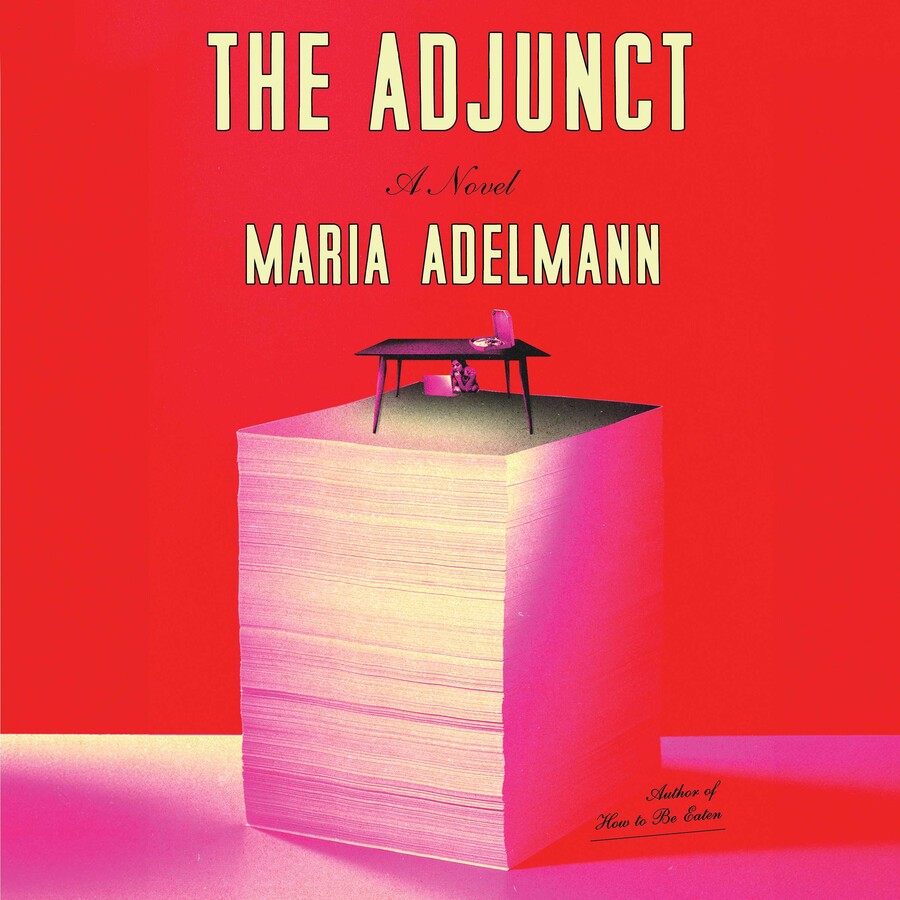
The novel’s first chapter finds Sam “writing from under a desk” (page 1), drafting cover letters “that attempt to cheerfully frame a career shift from academic to custodian, to cashier” (page 2). How does this opening scene set the stage for the novel’s exploration of the precarious academic job market? What does this reveal about the desperation Sam feels at the outset at the story, and how does that desperation manifest throughout the rest of the novel?
Dr. Brighton disregards Sam’s spiel about her academic research and qualifications, telling Sam that she “just needs a live body” (page 8) to teach the class. Sam later jokes that she is a live body, equipped with a beating heart and everything. How does the novel use humor to critique the dehumanization of adjunct faculty?
Sam’s friend Isaac, a private school kid who admits that those of his ilk have “a leg up” (page 122), helps her revise her application materials, which he describes as “almost self-sabotaging [in their] lack of pretension” (page 121). What does Isaac’s guidance reveal about the culture of job hunting and the role of privilege? How does the contrast between Isaac’s agility in navigating institutional norms and Sam’s discomfort with self-promotion illuminate broader class divisions within academia and professional life?
Discuss the novel’s depiction of student–teacher dynamics. How are the relationships between students and teachers blurred, and what are the consequences? What role does power play in these relationships?
Tom Sternberg seems to have a carefully cultivated image: the youthful genius, the once-brilliant novelist, the charming mentor. How do Tom’s ambitions, insecurities, and self-mythologizing influence his relationships with Sam and his students? Do you read him as pathetic, powerful, sympathetic, predatory, or something else?
How does The Adjunct portray the differences between private and public educational institutions? What disparities exist between Sam’s students at Rosedale and those at Lewis? How does her own background complicate her role on both campuses?
Aliana writes what Sam calls “‘autofiction’—that is, a memoir with fewer potential legal issues and more clout” (page 30). Many of Sam’s peers believe Tom’s novel Casualty is autofiction as well. What is your take on the genre? How does The Adjunct critique the readerly tendency to wonder whether a piece of fiction is based on the author’s real life?
Discuss the way that identity functions throughout the novel. Sam’s roommate, “a cis, heterosexual, hetero-romantic, neurotypical, Gen Z, Black woman from New York City. . .” (page 116) readily names and claims her various identity categories, while Sam seems to resist it, believing that we are “societally, acquiring an unhealthy attachment to [identities], drilling our identities down to strange minutiae . . . trying to make ourselves static and definable when really we moved” (page 117). How can claiming identities be freeing, restrictive, or something more complicated?
How do sexual desire and attraction complicate, intensify, or deepen the relationships between characters in this novel? What consequences do they face as a result of acting on these desires, and what do their choices reveal to them about themselves and their identities?
“We were like rats fighting for scraps, then comparing the scraps to see who had it worse” (page 299), Sam says of a fight she has with Sophie. How are Sam’s relationships with Gabe, Sophie, and other contingent faculty complicated by the harsh realities of the academic job search and the existence (or lack thereof) of a familial safety net?
Discuss the theme of embodiment—a central piece of Sam’s dissertation—as it appears throughout the novel. “It’s what I wanted most,” Sam says; “to feel my body, to understand it effortlessly” (page 111). How do you relate to this feeling or desire for embodiment?
How does the novel portray the difficulty of sustaining intellectual or creative work under precarious positions? What does Sam’s writing—her unfinished scholarship, her fiction, and her desperate scrawling in “cheap spiral notebooks” (page 310)—suggest about ambition, survival, and the possibility of pursuing art in the contemporary age?
Discuss the novel’s final chapter and how Sam comes to “under[stand]—suddenly, completely—[her] mother” (page 330). What do you think happens after the final line?
ENHANCE YOUR BOOK CLUB
Select a campus novel—such as Elif Batuman’s The Idiot, John Williams’s Stoner, or Mary McCarthy’s The Groves of Academe—for your next book club pick, and compare its portrayal of campus life and labor with The Adjunct.
Who would you cast in a film or television adaption of the book? Fan-cast The Adjunct!
QUESTIONS
The novel’s first chapter finds Sam “writing from under a desk” (page 1), drafting cover letters “that attempt to cheerfully frame a career shift from academic to custodian, to cashier” (page 2). How does this opening scene set the stage for the novel’s exploration of the precarious academic job market? What does this reveal about the desperation Sam feels at the outset at the story, and how does that desperation manifest throughout the rest of the novel?
Dr. Brighton disregards Sam’s spiel about her academic research and qualifications, telling Sam that she “just needs a live body” (page 8) to teach the class. Sam later jokes that she is a live body, equipped with a beating heart and everything. How does the novel use humor to critique the dehumanization of adjunct faculty?
Sam’s friend Isaac, a private school kid who admits that those of his ilk have “a leg up” (page 122), helps her revise her application materials, which he describes as “almost self-sabotaging [in their] lack of pretension” (page 121). What does Isaac’s guidance reveal about the culture of job hunting and the role of privilege? How does the contrast between Isaac’s agility in navigating institutional norms and Sam’s discomfort with self-promotion illuminate broader class divisions within academia and professional life?
Discuss the novel’s depiction of student–teacher dynamics. How are the relationships between students and teachers blurred, and what are the consequences? What role does power play in these relationships?
Tom Sternberg seems to have a carefully cultivated image: the youthful genius, the once-brilliant novelist, the charming mentor. How do Tom’s ambitions, insecurities, and self-mythologizing influence his relationships with Sam and his students? Do you read him as pathetic, powerful, sympathetic, predatory, or something else?
How does The Adjunct portray the differences between private and public educational institutions? What disparities exist between Sam’s students at Rosedale and those at Lewis? How does her own background complicate her role on both campuses?
Aliana writes what Sam calls “‘autofiction’—that is, a memoir with fewer potential legal issues and more clout” (page 30). Many of Sam’s peers believe Tom’s novel Casualty is autofiction as well. What is your take on the genre? How does The Adjunct critique the readerly tendency to wonder whether a piece of fiction is based on the author’s real life?
Discuss the way that identity functions throughout the novel. Sam’s roommate, “a cis, heterosexual, hetero-romantic, neurotypical, Gen Z, Black woman from New York City. . .” (page 116) readily names and claims her various identity categories, while Sam seems to resist it, believing that we are “societally, acquiring an unhealthy attachment to [identities], drilling our identities down to strange minutiae . . . trying to make ourselves static and definable when really we moved” (page 117). How can claiming identities be freeing, restrictive, or something more complicated?
How do sexual desire and attraction complicate, intensify, or deepen the relationships between characters in this novel? What consequences do they face as a result of acting on these desires, and what do their choices reveal to them about themselves and their identities?
“We were like rats fighting for scraps, then comparing the scraps to see who had it worse” (page 299), Sam says of a fight she has with Sophie. How are Sam’s relationships with Gabe, Sophie, and other contingent faculty complicated by the harsh realities of the academic job search and the existence (or lack thereof) of a familial safety net?
Discuss the theme of embodiment—a central piece of Sam’s dissertation—as it appears throughout the novel. “It’s what I wanted most,” Sam says; “to feel my body, to understand it effortlessly” (page 111). How do you relate to this feeling or desire for embodiment?
How does the novel portray the difficulty of sustaining intellectual or creative work under precarious positions? What does Sam’s writing—her unfinished scholarship, her fiction, and her desperate scrawling in “cheap spiral notebooks” (page 310)—suggest about ambition, survival, and the possibility of pursuing art in the contemporary age?
Discuss the novel’s final chapter and how Sam comes to “under[stand]—suddenly, completely—[her] mother” (page 330). What do you think happens after the final line?
ENHANCE YOUR BOOK CLUB
Select a campus novel—such as Elif Batuman’s The Idiot, John Williams’s Stoner, or Mary McCarthy’s The Groves of Academe—for your next book club pick, and compare its portrayal of campus life and labor with The Adjunct.
Who would you cast in a film or television adaption of the book? Fan-cast The Adjunct!
About The Author
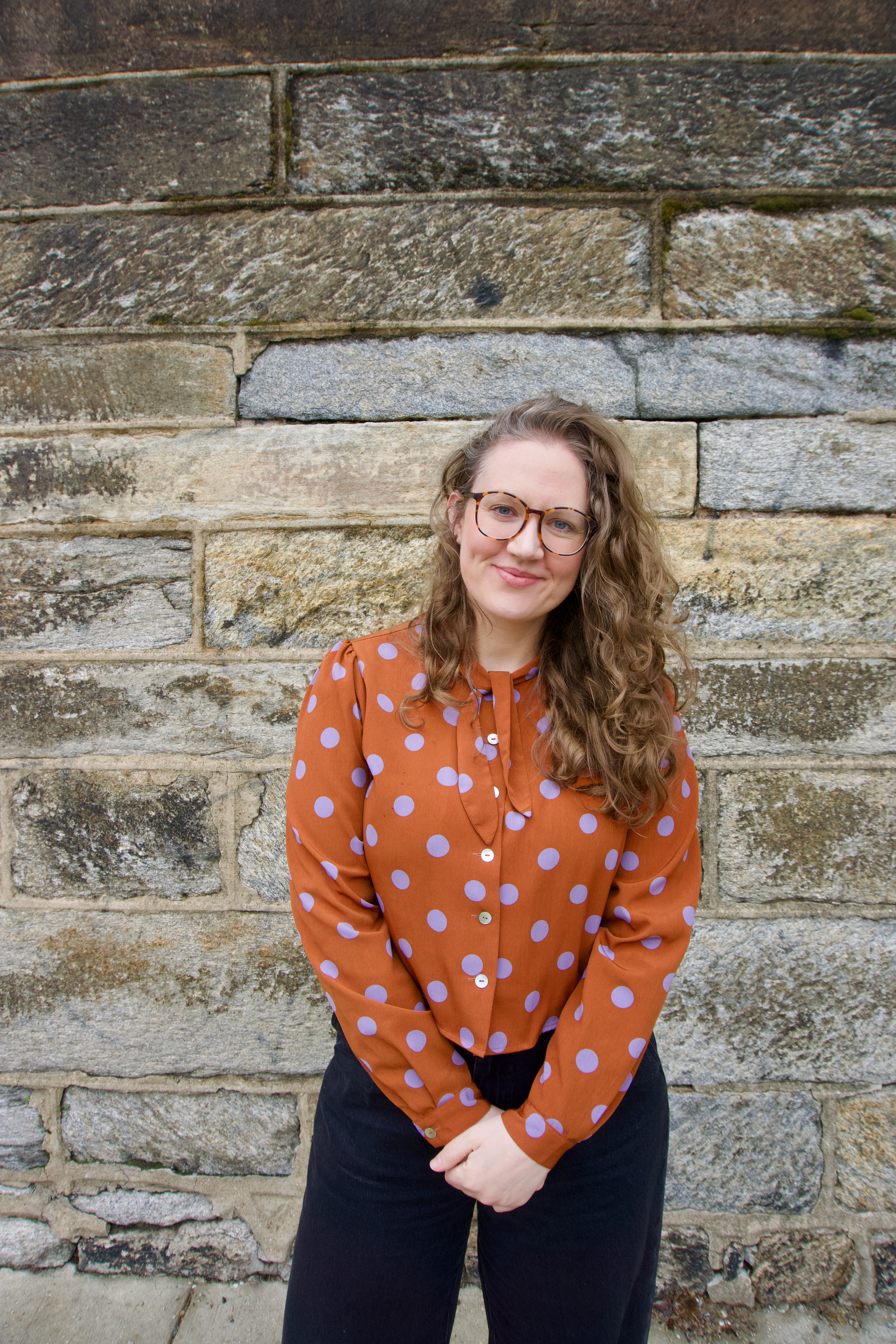
Photograph © Derek Denman
Maria Adelmann is the award-winning author of the story collection Girls of a Certain Age and the novel How to Be Eaten, an NPR book of the year and Belletrist book club pick. She has written for The New York Times, Tin House, n+1, Electric Literature, McSweeney’s, and many other publications, and her work has been distinguished by The Best American Short Stories. Adelmann has lived in Baltimore and Copenhagen and now resides in Philadelphia.
About The Reader
Product Details
- Publisher: Simon & Schuster Audio (March 31, 2026)
- Runtime: 10 hours and 27 minutes
- ISBN13: 9781668129821
Browse Related Books
Resources and Downloads
High Resolution Images
-
Book Cover Image (jpg): The Adjunct
Unabridged Audio Download 9781668129821
-
Author Photo (jpg): Maria Adelmann Photograph © Derek Denman(0.1 MB)
Any use of an author photo must include its respective photo credit