

Plus, receive recommendations and exclusive offers on all of your favorite books and authors from Simon & Schuster.
0:00 /
Table of Contents
About The Book
Three starred reviews!
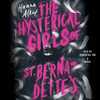
An all-girls school is struck with mysterious cases of screaming hysteria in this “gripping, perceptive” (Booklist, starred review) dark academia young adult thriller haunted by a deeply buried history clawing to the light.
For over a hundred years, girls have fought to attend St. Bernadette’s, with its reputation for shaping only the best and brightest young women.
Unfortunately, there is also the screaming.
When a student begins to scream in the middle of class, a chain reaction starts that impacts the entire school. By the end of the day, seventeen girls are affected—along with St. Bernadette’s stellar reputation.
Khadijah’s got her own scars to tend to, and watching her friends succumb to hysteria only rips apart wounds she’d rather keep closed. But when her sister falls to the screams, Khad knows she’s the only one who can save her.
Rachel has always been far too occupied trying to reconcile her overbearing mother’s expectations with her own secret ambitions to pay attention to school antics. But just as Rachel finds her voice, it turns into screams.
Together, the two girls find themselves digging deeper into the school’s dark history, hunting for the truth. Little do they know that a specter lurks in the darkness, watching, waiting, and hungry for its next victim…
An all-girls school is struck with mysterious cases of screaming hysteria in this “gripping, perceptive” (Booklist, starred review) dark academia young adult thriller haunted by a deeply buried history clawing to the light.
For over a hundred years, girls have fought to attend St. Bernadette’s, with its reputation for shaping only the best and brightest young women.
Unfortunately, there is also the screaming.
When a student begins to scream in the middle of class, a chain reaction starts that impacts the entire school. By the end of the day, seventeen girls are affected—along with St. Bernadette’s stellar reputation.
Khadijah’s got her own scars to tend to, and watching her friends succumb to hysteria only rips apart wounds she’d rather keep closed. But when her sister falls to the screams, Khad knows she’s the only one who can save her.
Rachel has always been far too occupied trying to reconcile her overbearing mother’s expectations with her own secret ambitions to pay attention to school antics. But just as Rachel finds her voice, it turns into screams.
Together, the two girls find themselves digging deeper into the school’s dark history, hunting for the truth. Little do they know that a specter lurks in the darkness, watching, waiting, and hungry for its next victim…
Excerpt
1. The Beginning
THURSDAY
The Beginning
It is 12:32 p.m., a little more than half an hour before the school day ends, and the classroom is swampier than a sinner’s armpit in the depths of hell.
St. Bernadette’s, with its grand arched doorways and windows, its gables, its ornate tiles and stone staircases, stands imposingly on a hilltop in the middle of Kuala Lumpur, as it has done for the past one hundred years—all the better to look down on everyone else, so the haters say, and St. Bernadette’s has more than its fair share of those. That’s just part of what it means to be the best. But even with the massive wooden double doors of each classroom flung wide open, there is simply no breeze to catch. Overhead, the ceiling fan spins in lazy circles, doing little to provide any kind of relief, and one by one, like the flowers for which each of the school’s classes is named, the students of 3 Kenanga begin to wilt in the relentless heat. Heads droop closer and closer to desks, eyes glaze over, and though the teacher does her best, coordinate geometry simply has no power over a room full of post-recess fourteen- and fifteen-year-olds as torpid as cobras after a feeding, and who are unwilling—or unable—to pay attention.
It is 12:47 p.m., and Mrs. Lee is trying to explain something about “calculating the perpendicular” when the first scream makes the students all nearly jump out of their sweat-soaked skins.
The scream is not a pretty, perfectly pitched horror-movie scream. It is hoarse and low, and it shakes and skips, as if whatever is causing it is forcibly strangling it out of the screamer, shaking it out of them in fits and starts. And the source of it is a girl sitting in the third row, two desks from the left; a thin, pale girl with a mop of unruly hair that she wears hanging over her face as if she’s trying to hide from the world; a girl so new and so quiet that the others sometimes have trouble remembering her name, or that she is there at all.
They will remember her now, though.
“Fatihah!” Mrs. Lee shakes off her surprise and strides over to the girl’s desk. This is not a normal Thursday occurrence, but Mrs. Lee has been teaching for more than twelve years now, and the range of “normal” is so wide in a school full of teenage girls that little fazes her at this point. “Fatihah! What is happening? What’s wrong? Aiyo, this girl!” She has to shout to make herself heard, because the girl known as Fatihah will not stop screaming. And the other girls, usually so eager for something, anything, to break up the monotony of the school day, begin to grow restless and fearful and uncertain. Because Fatihah’s eyes are wide and staring, gazing up toward a specific spot in the corner of the ceiling as if fixed on something only she can see, something she desperately wishes she couldn’t.
“Mrs. Lee, what do we do?”
“Should I call someone?”
“Teacher, maybe we can throw some water on her face.”
“Teacher, please make her stop!”
The classroom erupts in confused commotion. Girls are covering their ears, girls are trying to offer solutions, girls are trying their best not to panic, girls are panicking without reservation.
Lily, who sits next to Fatihah, grabs Fatihah by the shoulders and shakes her hard so that her head bobs back and forth, back and forth. “Wake up, Fatihah!” she yells. “Stop it!”
“Don’t do that!” Mrs. Lee snaps, frantic in her own helplessness, hands flapping uselessly in the air. “You might hurt her!”
Fatihah’s eyes roll back so that only the whites show; her hands clench at the edge of her desk, so tight that the knuckles are white and it seems as if she may crush the wood into splinters; her body shudders, and blue-green veins bulge in her pale temples. And the girls of 3 Kenanga have no idea what to do. Some stare, transfixed, unable to tear their eyes away; some cannot bear to look at all, closing their eyes as if they can will the nightmare away; some cry, and some babble, and many just stand, silent and bewildered and helpless.
And then Lavanya, who sits by the wide open doors, pauses, frowns, and yells something over the chaos, something that silences all but Fatihah, who just keeps screaming.
“There’s more.”
And as 3 Kenanga listens, they begin to hear it: screams piercing the afternoon heat; screams of every pitch and timbre; screams so raw and so terribly, profoundly afraid that they turn everyone’s blood to ice.
It is now 1:05 p.m. The bell rings to signal the end of school, and nobody hears it.
They hear only the screams.
THURSDAY
The Beginning
It is 12:32 p.m., a little more than half an hour before the school day ends, and the classroom is swampier than a sinner’s armpit in the depths of hell.
St. Bernadette’s, with its grand arched doorways and windows, its gables, its ornate tiles and stone staircases, stands imposingly on a hilltop in the middle of Kuala Lumpur, as it has done for the past one hundred years—all the better to look down on everyone else, so the haters say, and St. Bernadette’s has more than its fair share of those. That’s just part of what it means to be the best. But even with the massive wooden double doors of each classroom flung wide open, there is simply no breeze to catch. Overhead, the ceiling fan spins in lazy circles, doing little to provide any kind of relief, and one by one, like the flowers for which each of the school’s classes is named, the students of 3 Kenanga begin to wilt in the relentless heat. Heads droop closer and closer to desks, eyes glaze over, and though the teacher does her best, coordinate geometry simply has no power over a room full of post-recess fourteen- and fifteen-year-olds as torpid as cobras after a feeding, and who are unwilling—or unable—to pay attention.
It is 12:47 p.m., and Mrs. Lee is trying to explain something about “calculating the perpendicular” when the first scream makes the students all nearly jump out of their sweat-soaked skins.
The scream is not a pretty, perfectly pitched horror-movie scream. It is hoarse and low, and it shakes and skips, as if whatever is causing it is forcibly strangling it out of the screamer, shaking it out of them in fits and starts. And the source of it is a girl sitting in the third row, two desks from the left; a thin, pale girl with a mop of unruly hair that she wears hanging over her face as if she’s trying to hide from the world; a girl so new and so quiet that the others sometimes have trouble remembering her name, or that she is there at all.
They will remember her now, though.
“Fatihah!” Mrs. Lee shakes off her surprise and strides over to the girl’s desk. This is not a normal Thursday occurrence, but Mrs. Lee has been teaching for more than twelve years now, and the range of “normal” is so wide in a school full of teenage girls that little fazes her at this point. “Fatihah! What is happening? What’s wrong? Aiyo, this girl!” She has to shout to make herself heard, because the girl known as Fatihah will not stop screaming. And the other girls, usually so eager for something, anything, to break up the monotony of the school day, begin to grow restless and fearful and uncertain. Because Fatihah’s eyes are wide and staring, gazing up toward a specific spot in the corner of the ceiling as if fixed on something only she can see, something she desperately wishes she couldn’t.
“Mrs. Lee, what do we do?”
“Should I call someone?”
“Teacher, maybe we can throw some water on her face.”
“Teacher, please make her stop!”
The classroom erupts in confused commotion. Girls are covering their ears, girls are trying to offer solutions, girls are trying their best not to panic, girls are panicking without reservation.
Lily, who sits next to Fatihah, grabs Fatihah by the shoulders and shakes her hard so that her head bobs back and forth, back and forth. “Wake up, Fatihah!” she yells. “Stop it!”
“Don’t do that!” Mrs. Lee snaps, frantic in her own helplessness, hands flapping uselessly in the air. “You might hurt her!”
Fatihah’s eyes roll back so that only the whites show; her hands clench at the edge of her desk, so tight that the knuckles are white and it seems as if she may crush the wood into splinters; her body shudders, and blue-green veins bulge in her pale temples. And the girls of 3 Kenanga have no idea what to do. Some stare, transfixed, unable to tear their eyes away; some cannot bear to look at all, closing their eyes as if they can will the nightmare away; some cry, and some babble, and many just stand, silent and bewildered and helpless.
And then Lavanya, who sits by the wide open doors, pauses, frowns, and yells something over the chaos, something that silences all but Fatihah, who just keeps screaming.
“There’s more.”
And as 3 Kenanga listens, they begin to hear it: screams piercing the afternoon heat; screams of every pitch and timbre; screams so raw and so terribly, profoundly afraid that they turn everyone’s blood to ice.
It is now 1:05 p.m. The bell rings to signal the end of school, and nobody hears it.
They hear only the screams.
About The Author
Photograph (c) Azalia Suhaimi
Hanna Alkaf is the author of The Weight of Our Sky, Queen of the Tiles, The Girl and the Ghost, Hamra and the Jungle of Memories, and The Hysterical Girls of St. Bernadette’s, as well as coeditor of the young adult anthology The Grimoire of Grave Fates. She graduated with a degree in journalism from Northwestern University and has spent most of her life working with words, both in fiction and nonfiction. She lives in Kuala Lumpur with her family.
Why We Love It
“Hanna Alkaf is so adept at juggling genre conventions, like the high tension of creeping horror or the blood-pounding elements of a mystery, along with grounded, deeply thoughtful conversations about mental health, trauma, and healing. With her pitch-perfect teen voice, it’s impossible not to fall in love with Khadija, even as her story is sending a shiver up your spine.”
—Deeba Z., Senior Editor, on The Hysterical Girls of St. Bernadette’s
Product Details
- Publisher: Salaam Reads/Simon & Schuster Books for Young Readers (September 23, 2025)
- Length: 368 pages
- ISBN13: 9781534494596
- Ages: 14 - 99
Browse Related Books
Raves and Reviews
A Children's Book Council Favorite
“Alkaf uses Malaysian supernatural elements to good atmospheric effect; even better is the sensitive, riveting portrayal of the girls’ inner lives. United, their voices become a blunt instrument…but one wielded with great skill and efficacy.” —Bulletin of the Center for Children’s Books (starred review)
Praise for The Hysterical Girls of St. Bernadette’s
* “Alkaf successfully uses the oppressive mood and ominous hauntings to convey real-life terrors, from sexual violence to societal expectations, that keep young women from being heard. A gripping, perceptive read.”—Booklist (starred review)
* “Piercing observations into the teens’ struggles gaining autonomy are explored alongside sensitively wrought instances of trauma and sexual violence via immersive prose.”—Publishers Weekly (starred review)
“A perceptive examination of trauma and its manifestation on women’s bodies, minds, and voices.”—Kirkus Reviews
Awards and Honors
- CBC Favorites
- ALA Rise: A Feminist Book Project List Selectio
Resources and Downloads
High Resolution Images
-
Book Cover Image (jpg): The Hysterical Girls of St. Bernadette's
Trade Paperback 9781534494596
-
Author Photo (jpg): Hanna Alkaf Photograph (c) Azalia Suhaimi(0.1 MB)
Any use of an author photo must include its respective photo credit