
Plus, receive recommendations and exclusive offers on all of your favorite books and authors from Simon & Schuster.
0:00 /
Table of Contents
About The Book
A 2025 MOST ANTICIPATED BOOK: Town & Country • LGBTQReads • Kirkus Reviews
“Refreshingly thoughtful...Town & Country is never short of engaging.” —The Washington Post
A “big-hearted and true” (Andrew Sean Greer, Pulitzer Prize winner) debut novel set in a small rural town amid a congressional race that forces the candidates, their families, and a clique of gay second homeowners to confront lies, betrayals and shifting allegiances.
The trendy rural town of Griffin has become a popular destination for weekenders and the city’s second homeowners, but now a congressional race in this swing district is highlighting tensions between life-long residents and new arrivals. The campaign pits local pub owner and town supervisor Chip Riley against the wealthy young carpetbagger Paul Banks, challenging the social and political loyalties of their families and friends with lasting repercussions.
Diane Riley, Chip’s wife, is a religiously devout real estate agent who feels conflicted about selling second homes—including to Paul and his much older husband, Stan. Their elder son, Joe, is grieving the recent overdose death of his best friend and spiraling into drugs himself, while their younger son, Will, is a newly out college student seduced by the decadent lifestyle of Paul’s circle.
Meanwhile, Stan Banks uses the race to give purpose to the pain of losing a loved one to AIDS, even as he begins to doubt Paul’s readiness for office. And within their growing fraternity of city transplants, Eric Larimer finds unexpected connection with a local farmer that opens his eyes to the region’s complexity as Leon Rogers, still reeling from a divorce, becomes increasingly desperate to infiltrate the Banks’s exclusive crew.
Spanning six months from Memorial Day to Election Day, Town & Country paints a kaleidoscopic portrait of a community in flux. For readers of Fredrick Backman and Jen Beagin, this “powerful and extremely well-written book” (Colum McCann, National Book Award winner) asks the essential and timeless questions: What makes a home, and what do we owe our neighbors?
“Refreshingly thoughtful...Town & Country is never short of engaging.” —The Washington Post
A “big-hearted and true” (Andrew Sean Greer, Pulitzer Prize winner) debut novel set in a small rural town amid a congressional race that forces the candidates, their families, and a clique of gay second homeowners to confront lies, betrayals and shifting allegiances.
The trendy rural town of Griffin has become a popular destination for weekenders and the city’s second homeowners, but now a congressional race in this swing district is highlighting tensions between life-long residents and new arrivals. The campaign pits local pub owner and town supervisor Chip Riley against the wealthy young carpetbagger Paul Banks, challenging the social and political loyalties of their families and friends with lasting repercussions.
Diane Riley, Chip’s wife, is a religiously devout real estate agent who feels conflicted about selling second homes—including to Paul and his much older husband, Stan. Their elder son, Joe, is grieving the recent overdose death of his best friend and spiraling into drugs himself, while their younger son, Will, is a newly out college student seduced by the decadent lifestyle of Paul’s circle.
Meanwhile, Stan Banks uses the race to give purpose to the pain of losing a loved one to AIDS, even as he begins to doubt Paul’s readiness for office. And within their growing fraternity of city transplants, Eric Larimer finds unexpected connection with a local farmer that opens his eyes to the region’s complexity as Leon Rogers, still reeling from a divorce, becomes increasingly desperate to infiltrate the Banks’s exclusive crew.
Spanning six months from Memorial Day to Election Day, Town & Country paints a kaleidoscopic portrait of a community in flux. For readers of Fredrick Backman and Jen Beagin, this “powerful and extremely well-written book” (Colum McCann, National Book Award winner) asks the essential and timeless questions: What makes a home, and what do we owe our neighbors?
Reading Group Guide
Get a FREE ebook by joining our mailing list today! Plus, receive recommendations for your next Book Club read.
By clicking 'Sign me up', I consent to Simon & Schuster sending me email offers and updates, including offers for a free eBook. I understand I can unsubscribe at any time. Any offer for an eBook may be subject to exclusions, terms, conditions, and registration with our fulfillment partners. We collect and use your information in accordance with our Privacy Policy. Free ebook offer available to NEW CA subscribers only. Offer redeemable at Simon & Schuster's ebook fulfillment partner. Must redeem within 90 days. See the full terms and conditions.
Reading Group Guide for Town & Country
This reading group guide for Town & Country offers discussion questions that are intended to help your group identify new and interesting angles to engage deeply with the book and its themes. We hope this guide will enrich your conversation and increase your enjoyment and appreciation of Town & Country’s many layers.
INTRODUCTION
The rural town of Griffin is the kind of place where residents still gather for the annual Memorial Day Parade, meet for milkshakes at the old-time diner, and always find a familiar face at the hardware store. But Griffin is also a community in transition. It has become a hot spot for weekenders—among them, a clique of affluent gay newcomers—seeking refuge from city life and bringing with them an expensive appetite for leisure and design that is ruffling longtime locals.
Spanning six months from Memorial Day to Election Day, Town & Country paints a kaleidoscopic portrait of a community in flux. For readers of Fredrick Backman and Jen Beagin, this “powerful and extremely well-written book” (Colum McCann, National Book Award winner) asks the essential and timeless questions: What makes a home, and what do we owe our neighbors?
TOPICS & QUESTIONS FOR DISCUSSION
Class Divide in Griffin
From the beginning of the novel, at the Memorial Day parade, it’s clear that Griffin has become a town with a strong economic divide between locals and affluent second-home owners, or “Duffels.” How does this divide illustrate the obstacles faced by its inhabitants and inform the story’s central tensions? What towns, cities, or regions near you does this fictional place remind you of?
Shared Disillusionment
Seemingly all the characters in Town & Country grapple with dissatisfaction or disconnection from their lives in some way. For example: Will’s feelings of alienation after returning home after a year away at college, and lonely Leon’s struggle to start fresh in this town where he knows no one after the end of his marriage. How does this through line reflect the needs and challenges of finding community, regardless of where one lives?
Marital Strain and Breakdown
As the congressional race heats up, Diane and Chip’s marriage is strained by political ambitions and their shifting roles within their own family. Simultaneously, the pressure of the campaign takes its toll on Stan and Paul’s marriage as well. What most intrigued you about the changing dynamics of these relationships, and did you find them reflective of broader societal issues?
The Role of Politics
Chip is far from perfect as a father, a friend, a congressional candidate, and more. Yet, in certain ways, he emerges as the moral center of the book. How did you weigh his conflicting motivations against one another, and what did you make of the novel’s portrayal of the intersection of personal ambition and public service? What role does public service play in your life?
Character Motivations and Growth
Diane’s internal struggle between her faith, changing familial dynamics, and desire for personal gain is a central theme in Town & Country, as is Eric Larimer’s growing discomfort and questioning of his lifestyle and the priorities of his and his husband Alex’s social circle. How did you initially judge their respective values, and did your perception of these characters change as the story unfolded?
Identity and Belonging
As Will explores his identity and struggles with his sense of loyalty, fueling much of the rising action of the novel, the election forces him to pick a side. What does his struggle reveal about the competing influences that shape a person? Must they always be in conflict? What are some opposing forces in your own life?
Community Versus Individualism
The narrative explores tension between communal values and personal desires, a frequent topic in discussions of American ideals and individualism. How do the various characters balance those opposing forces, and how does that balance express itself differently for Duffels and for full-time residents of Griffin?
Unexpected Evolutions
At the beginning of the book, characters seem almost stereotypically defined by where they primarily reside: Duffels live lavishly with little concern for their rural neighbors, while townsfolk resist change and outsiders. How did these perceptions morph as the story unfolded? Which character or characters surprised or moved you most in their journey?
The Ending
The author leaves the ending of the novel up in the air. Did you find the ambiguity satisfying or disappointing? Who do you think wins the congressional race, and who did you want to win? What does the ending reveal about the nuances of local politics compared to national politics?
Bonus Topic
Imagine Griffin a decade from now. How do you think the town will continue to evolve? Which characters do you think will remain residents, and which will find homes elsewhere? What do you hope for Griffin and its inhabitants?
This reading group guide for Town & Country offers discussion questions that are intended to help your group identify new and interesting angles to engage deeply with the book and its themes. We hope this guide will enrich your conversation and increase your enjoyment and appreciation of Town & Country’s many layers.
INTRODUCTION
The rural town of Griffin is the kind of place where residents still gather for the annual Memorial Day Parade, meet for milkshakes at the old-time diner, and always find a familiar face at the hardware store. But Griffin is also a community in transition. It has become a hot spot for weekenders—among them, a clique of affluent gay newcomers—seeking refuge from city life and bringing with them an expensive appetite for leisure and design that is ruffling longtime locals.
Spanning six months from Memorial Day to Election Day, Town & Country paints a kaleidoscopic portrait of a community in flux. For readers of Fredrick Backman and Jen Beagin, this “powerful and extremely well-written book” (Colum McCann, National Book Award winner) asks the essential and timeless questions: What makes a home, and what do we owe our neighbors?
TOPICS & QUESTIONS FOR DISCUSSION
Class Divide in Griffin
From the beginning of the novel, at the Memorial Day parade, it’s clear that Griffin has become a town with a strong economic divide between locals and affluent second-home owners, or “Duffels.” How does this divide illustrate the obstacles faced by its inhabitants and inform the story’s central tensions? What towns, cities, or regions near you does this fictional place remind you of?
Shared Disillusionment
Seemingly all the characters in Town & Country grapple with dissatisfaction or disconnection from their lives in some way. For example: Will’s feelings of alienation after returning home after a year away at college, and lonely Leon’s struggle to start fresh in this town where he knows no one after the end of his marriage. How does this through line reflect the needs and challenges of finding community, regardless of where one lives?
Marital Strain and Breakdown
As the congressional race heats up, Diane and Chip’s marriage is strained by political ambitions and their shifting roles within their own family. Simultaneously, the pressure of the campaign takes its toll on Stan and Paul’s marriage as well. What most intrigued you about the changing dynamics of these relationships, and did you find them reflective of broader societal issues?
The Role of Politics
Chip is far from perfect as a father, a friend, a congressional candidate, and more. Yet, in certain ways, he emerges as the moral center of the book. How did you weigh his conflicting motivations against one another, and what did you make of the novel’s portrayal of the intersection of personal ambition and public service? What role does public service play in your life?
Character Motivations and Growth
Diane’s internal struggle between her faith, changing familial dynamics, and desire for personal gain is a central theme in Town & Country, as is Eric Larimer’s growing discomfort and questioning of his lifestyle and the priorities of his and his husband Alex’s social circle. How did you initially judge their respective values, and did your perception of these characters change as the story unfolded?
Identity and Belonging
As Will explores his identity and struggles with his sense of loyalty, fueling much of the rising action of the novel, the election forces him to pick a side. What does his struggle reveal about the competing influences that shape a person? Must they always be in conflict? What are some opposing forces in your own life?
Community Versus Individualism
The narrative explores tension between communal values and personal desires, a frequent topic in discussions of American ideals and individualism. How do the various characters balance those opposing forces, and how does that balance express itself differently for Duffels and for full-time residents of Griffin?
Unexpected Evolutions
At the beginning of the book, characters seem almost stereotypically defined by where they primarily reside: Duffels live lavishly with little concern for their rural neighbors, while townsfolk resist change and outsiders. How did these perceptions morph as the story unfolded? Which character or characters surprised or moved you most in their journey?
The Ending
The author leaves the ending of the novel up in the air. Did you find the ambiguity satisfying or disappointing? Who do you think wins the congressional race, and who did you want to win? What does the ending reveal about the nuances of local politics compared to national politics?
Bonus Topic
Imagine Griffin a decade from now. How do you think the town will continue to evolve? Which characters do you think will remain residents, and which will find homes elsewhere? What do you hope for Griffin and its inhabitants?
About The Author
Stephen K. Mack
Brian Schaefer contributes regularly to The New York Times and has written for The New Yorker, New York magazine, and more. He is a recipient of a National Endowment for the Arts Fellowship in Arts Journalism and was a finalist for the Livingston Award for International Reporting. He earned his master’s degree in creative writing from Bar-Ilan University in Tel Aviv. He and his husband live in New York City and the Hudson Valley. Town & Country is his first novel.
Product Details
- Publisher: Atria Books (July 28, 2026)
- Length: 304 pages
- ISBN13: 9781668086902
Browse Related Books
Resources and Downloads
High Resolution Images
-
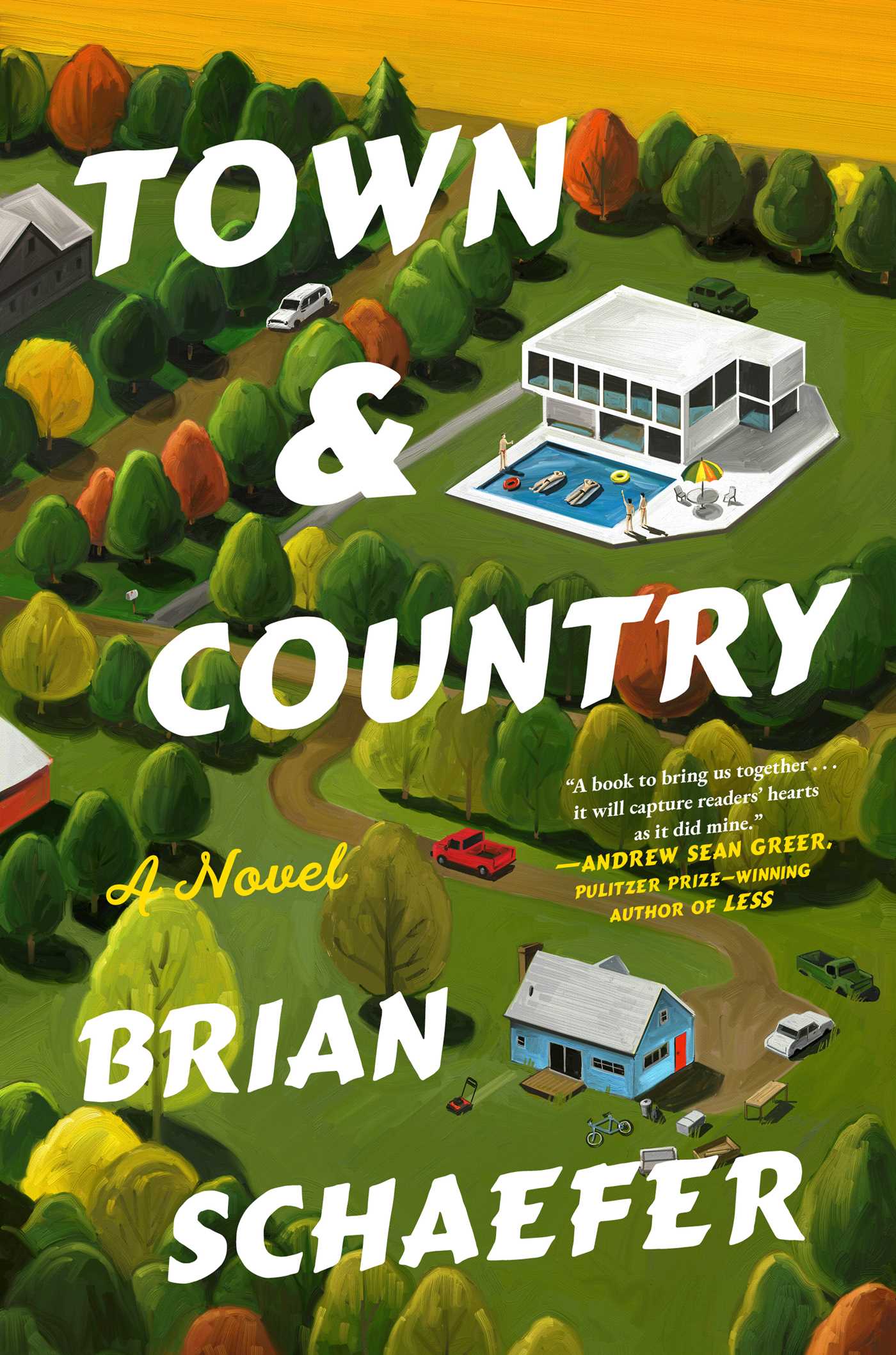
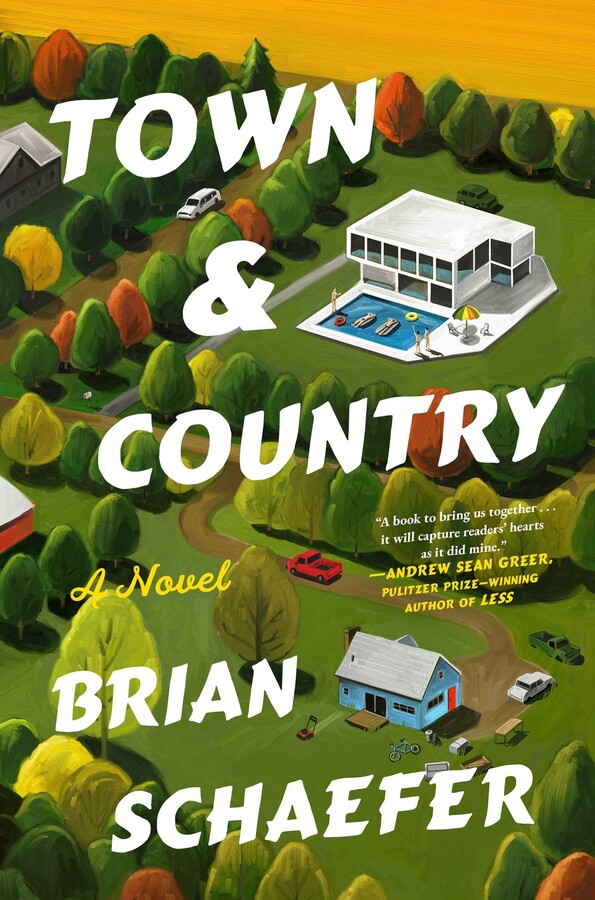
Book Cover Image (jpg): Town & Country
Trade Paperback 9781668086902
-
Author Photo (jpg): Brian Schaefer Stephen K. Mack(0.1 MB)
Any use of an author photo must include its respective photo credit