Plus, receive recommendations and exclusive offers on all of your favorite books and authors from Simon & Schuster.
Published by Gibbs Smith
Distributed by Simon & Schuster
Table of Contents
About The Book
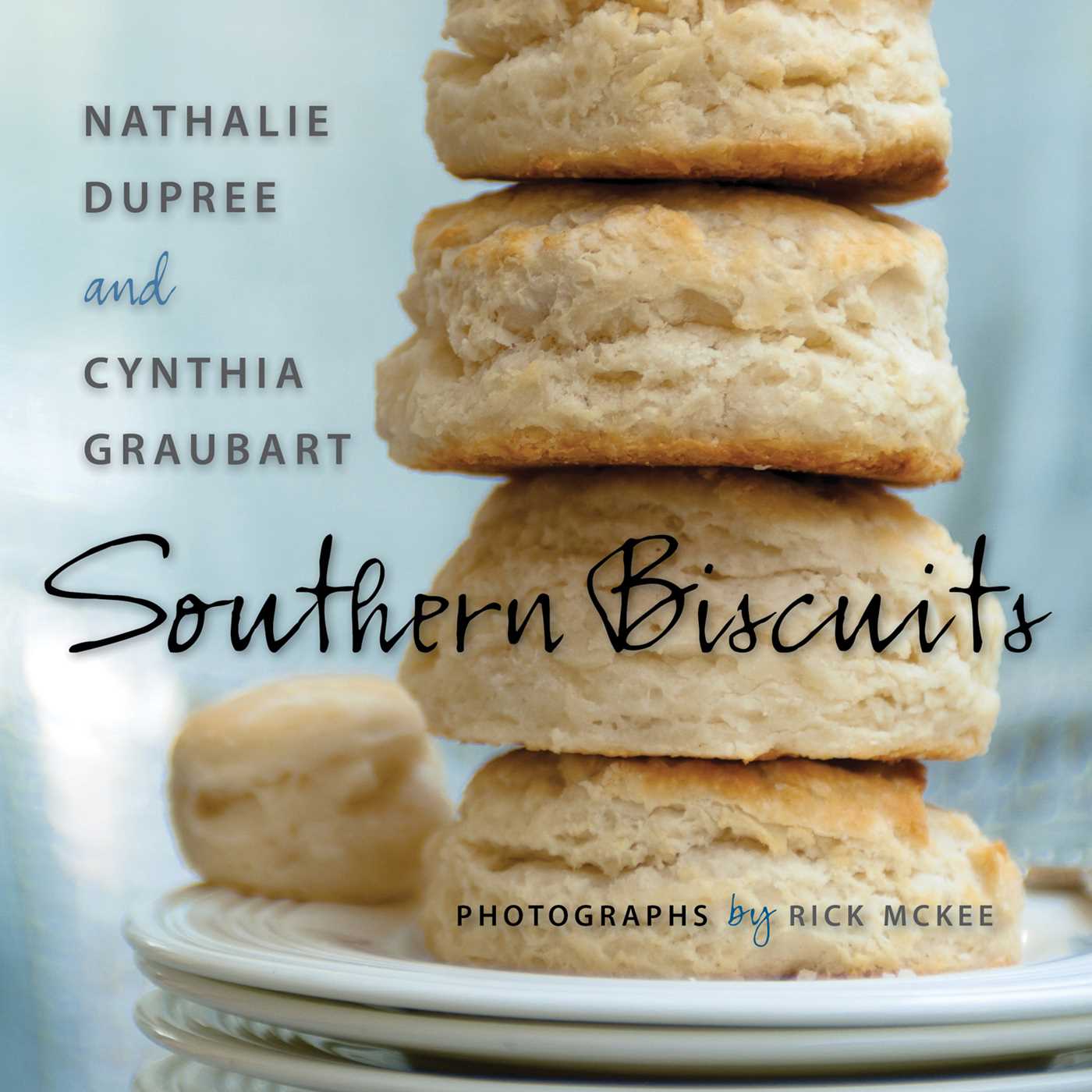
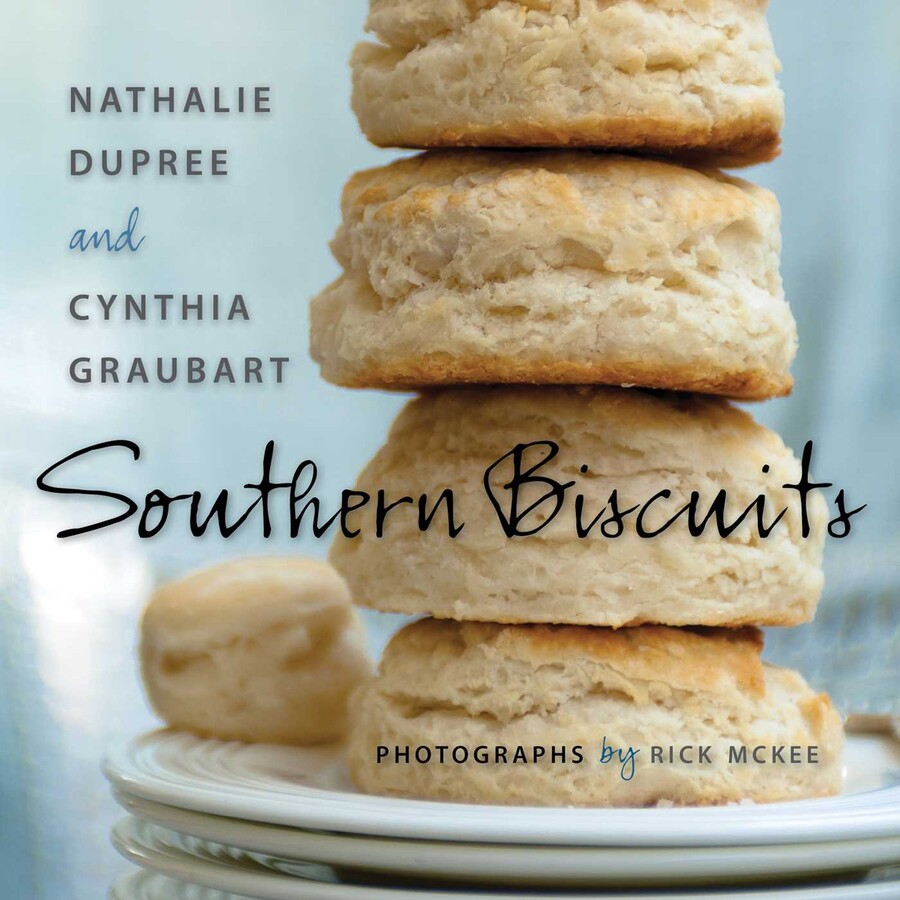
Master every type of Southern biscuit with this definitive cookbook featuring easy-to-follow recipes from traditional to gourmet variations, complete with stunning photography and step-by-step instructions.
Southern Biscuits features recipes and baking secrets for every biscuit imaginable, including hassle-free easy biscuits to embellished biscuits laced with silky goat butter, crunchy pecans, or tangy pimento cheese.
The traditional biscuits in this book encompass a number of types, from beaten biscuits of the Old South and England, to Angel Biscuits:a yeast biscuit sturdy enough to split and fill but light enough to melt in your mouth. Filled with beautiful photography, including dozens of how-to photos showing how to mix, stir, fold, roll, and knead, Southern Biscuits is the definitive biscuit baking book.
Homemade Refrigerator Biscuit Mix
Makes 10 cups
If making several batches of biscuits a month, or one biscuit at a time, make a flour-and-fat base mixture to add the milk to at a later time. It will keep several months in a tightly covered container in the refrigerator. Combine one part milk or buttermilk with two parts mix for any quantity of biscuits from 4 to 40! Once again, more salt and baking powder are added. This dough can also be used in making coffee cakes, pancakes, waffles, and the like.
Ingredients:
Directions:
Fork-sift or whisk the flour, salt, cream of tartar, and baking powder in a very large bowl. Scatter the shortening over the flour and work in by rubbing fingers with the shortening and flour as if snapping thumb and fingers together (or use two forks or knives, or a pastry cutter) until the mixture looks like well-crumbled feta cheese, with no piece larger than a pea.
Shake the bowl occasionally to allow the larger pieces of fat to bounce to the top of the flour, revealing the largest lumps that still need rubbing.
Store the mix in the refrigerator in an airtight container until ready to use.
Southern Biscuits features recipes and baking secrets for every biscuit imaginable, including hassle-free easy biscuits to embellished biscuits laced with silky goat butter, crunchy pecans, or tangy pimento cheese.
The traditional biscuits in this book encompass a number of types, from beaten biscuits of the Old South and England, to Angel Biscuits:a yeast biscuit sturdy enough to split and fill but light enough to melt in your mouth. Filled with beautiful photography, including dozens of how-to photos showing how to mix, stir, fold, roll, and knead, Southern Biscuits is the definitive biscuit baking book.
Homemade Refrigerator Biscuit Mix
Makes 10 cups
If making several batches of biscuits a month, or one biscuit at a time, make a flour-and-fat base mixture to add the milk to at a later time. It will keep several months in a tightly covered container in the refrigerator. Combine one part milk or buttermilk with two parts mix for any quantity of biscuits from 4 to 40! Once again, more salt and baking powder are added. This dough can also be used in making coffee cakes, pancakes, waffles, and the like.
Ingredients:
- 10 cups self-rising flour
- 3 teaspoons salt
- 5 teaspoons cream of tartar
- 4 teaspoons baking powder
- 2 cups chilled shortening, lard, or butter,
- roughly cut into 1/2-inch pieces
Directions:
Fork-sift or whisk the flour, salt, cream of tartar, and baking powder in a very large bowl. Scatter the shortening over the flour and work in by rubbing fingers with the shortening and flour as if snapping thumb and fingers together (or use two forks or knives, or a pastry cutter) until the mixture looks like well-crumbled feta cheese, with no piece larger than a pea.
Shake the bowl occasionally to allow the larger pieces of fat to bounce to the top of the flour, revealing the largest lumps that still need rubbing.
Store the mix in the refrigerator in an airtight container until ready to use.
Excerpt
WHAT I S A BISCUIT?
A biscuit was originally made out of flour and water, the basis of hardtack carried by early travelers. Ultimately, a little lard was added, the dough was beaten hours before shaping and baking, the final product holding a little slivered country ham, becoming a gourmet’s delight called a Beaten Biscuit. (We now make it with a food processor in five minutes.)
Once baking powder was developed in the 1800s—replacing the potash that had been used as a leavening—it was added to the same flour and water and, mixed together and shaped into a round, it became a biscuit. (These are still eaten today as Dorm Biscuits.) Any other addition is an extension of the cook’s imagination, whether whole milk, buttermilk, sour cream, yogurt, whipping cream, shortening, lard, or butter are used. Each adds a different capacity for leavening or flavoring.
The lightest biscuits are made out of delicate white winter-wheat flour, also called “soft wheat” due to its low gluten content. With the addition of a fat and a liquid, usually milk or buttermilk, they are a close cousin to scones, containing sugar and possibly an egg, which the English fill with clotted cream and raspberries and serve for tea, not for breakfast or another meal. The English biscuit, which is a cookie, bears no relation to a scone. The French have a cake-type called “biscuit,” which neither cookie, bread, nor scone. There was no agreement over the years about how to spell, define, or pronounce the name of our bread. It just was.
A biscuit was originally made out of flour and water, the basis of hardtack carried by early travelers. Ultimately, a little lard was added, the dough was beaten hours before shaping and baking, the final product holding a little slivered country ham, becoming a gourmet’s delight called a Beaten Biscuit. (We now make it with a food processor in five minutes.)
Once baking powder was developed in the 1800s—replacing the potash that had been used as a leavening—it was added to the same flour and water and, mixed together and shaped into a round, it became a biscuit. (These are still eaten today as Dorm Biscuits.) Any other addition is an extension of the cook’s imagination, whether whole milk, buttermilk, sour cream, yogurt, whipping cream, shortening, lard, or butter are used. Each adds a different capacity for leavening or flavoring.
The lightest biscuits are made out of delicate white winter-wheat flour, also called “soft wheat” due to its low gluten content. With the addition of a fat and a liquid, usually milk or buttermilk, they are a close cousin to scones, containing sugar and possibly an egg, which the English fill with clotted cream and raspberries and serve for tea, not for breakfast or another meal. The English biscuit, which is a cookie, bears no relation to a scone. The French have a cake-type called “biscuit,” which neither cookie, bread, nor scone. There was no agreement over the years about how to spell, define, or pronounce the name of our bread. It just was.
Product Details
- Publisher: Gibbs Smith (May 1, 2011)
- Length: 216 pages
- ISBN13: 9781423621768
Browse Related Books
Raves and Reviews
by Nathalie Dupree and Cynthia Graubart (Gibbs-Smith, $21.99). We can’t think of a better or more definitive source for such a worthy undertaking.
– Bonnie S Benwick, Washington Post.com
by Nathalie Dupree and Cynthia Graubart (Gibbs-Smith, $21.99). We can’t think of a better or more definitive source for such a worthy undertaking.
– Bonnie S Benwick, Washington Post.com
by Nathalie Dupree and Cynthia Graubart (Gibbs-Smith, $21.99). We can’t think of a better or more definitive source for such a worthy undertaking.
Resources and Downloads
High Resolution Images
-
Book Cover Image (jpg): Southern Biscuits
Hardcover 9781423621768