

Plus, receive recommendations and exclusive offers on all of your favorite books and authors from Simon & Schuster.
0:00 /
Table of Contents
About The Book
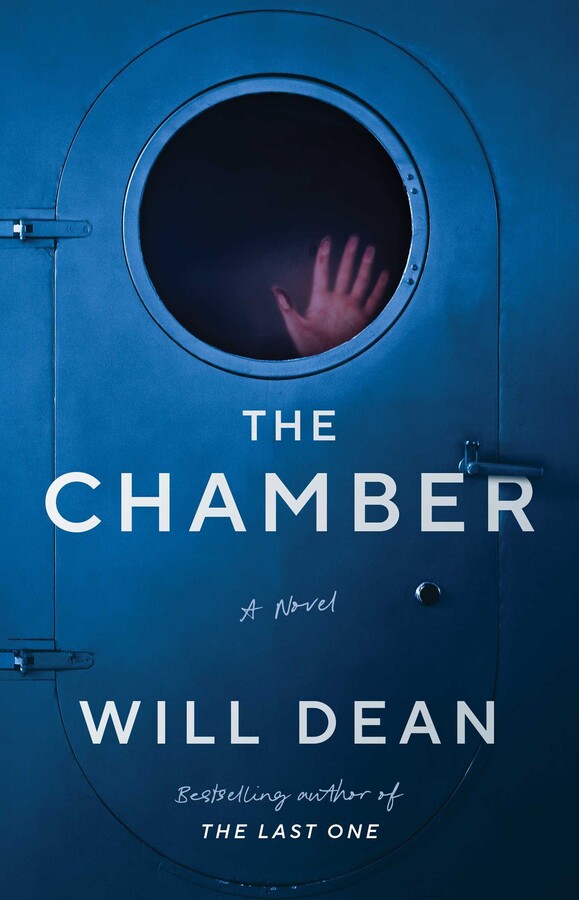
And Then There Were None meets The Last Breath in this tense and suspenseful locked-room thriller that takes place inside a hyperbaric chamber from the author of the “brilliant, twisted, and oh so clever” (Chris Whitaker, New York Times bestselling author) novel The Last Thing to Burn.
Six experienced saturation divers are locked inside a hyperbaric chamber. Calm and professional, they know that rapid decompression would be fatal and so they work in shifts, breathing helium, and surviving in hot, close quarters.
Then one of them is found dead in his bunk.
With four days of decompression to go before the locked hatch to the chamber can be safely opened, the group must watch one another’s backs at all times. And when another diver is discovered unresponsive, everyone is on edge. What…or who…is taking them out one by one? And will any of them still be alive by the time the four days is up or will paranoia, exhaustion, suspicion, and pressure destroy them all?
Six experienced saturation divers are locked inside a hyperbaric chamber. Calm and professional, they know that rapid decompression would be fatal and so they work in shifts, breathing helium, and surviving in hot, close quarters.
Then one of them is found dead in his bunk.
With four days of decompression to go before the locked hatch to the chamber can be safely opened, the group must watch one another’s backs at all times. And when another diver is discovered unresponsive, everyone is on edge. What…or who…is taking them out one by one? And will any of them still be alive by the time the four days is up or will paranoia, exhaustion, suspicion, and pressure destroy them all?
Excerpt
Chapter 1 1
THE SEA DOES not care for your lost loves or your heartache. It is ambivalent to your fears, your trauma, your mortal desires. The sea knows only itself; sprawled across the world, smothering the depths, concealing both truths and horrors. The sea does not know love from hate.
The sea merely is.
I leave Aberdeen behind and step up onto the gangplank of the Deep Topaz, our DSV or Diving Support Vessel. I have already said my goodbyes. Salt breeze in my eyes, wind stinging, I climb on board with my bag. Mike Elliot is waiting for me, sun illuminating his weathered face and green eyes, picking out the silver in his eyebrows.
“So foul and fair a day I have not seen.” His San Diego accent has been softened by a decade of North Sea life.
“Dickens?”
“The other guy. How’s life?”
“Same ship, different day.”
He smiles and I catch sight of the military tattoos on his forearms, some of them undisturbed, others camouflaged by fresh ink. Regrets and mistakes. Reinvention. I pull out my camcorder and he makes his excuses and leaves me alone.
I aim it awkwardly at myself, the flip-out screen displaying my pale, pointy face. No makeup or hairstyling. Home-dyed hair almost too short for a ponytail. My mother used to call me pretty, if you make a real big effort, and she was being generous. “This is our home for the next month,” I say self-consciously. “Twenty-eight of those days will be at pressure, or at depth, as we say, at least it will for Mike and me and the other four saturation divers. We will live on board this ship, in a small pressurized chamber, and then we will descend in pairs via a Diving Bell to work shifts on the seabed. The pay is five or ten times what we might earn onshore doing construction work. We are well compensated for the risk.”
I end the recording. The footage, which will be edited into a short film by one of the largest diving firms in Scotland, might help bring more women into the industry. I feel it’s my duty to at least try.
Deep inside the vessel I discover Jumbo, a veteran Sat diver from Liverpool. Some might call him my Sat Daddy—an experienced diver who once took me under his wing—although he and I have never used that term. Jumbo is short and dark and muscular, and he has the eyes of a much older man. His mother is Irish and his father is St. Lucian, and he is one of the most respected divers working British waters.
“Ears,” he says, his accent still strong despite living in Cawdor, east of Inverness, for decades. “Have your ears ready, Brooke.”
I greet the medic, Gonzales.
“Ellen Brooke?”
I nod and she asks me to take a seat in a chair. We are most likely the only two women on this ship. Long curly black hair and a serious, uneasy expression. She uses an otoscope to check my ears because they are particularly vulnerable to changes in pressure. One thing Jumbo told me years ago: Sat divers need guts and good ears.
Gonzales measures my blood pressure and checks my breathing, her frown intensifying.
“All good?” I ask.
She clears me and we exchange a glance and I am not sure what to make of it. She seems ill at ease. When Jumbo is looked over he pulls off his shirt. Evidence of a life of work: scars, inside and out. Removing his shirt isn’t flirtation and it isn’t bragging; it is Jumbo proving he isn’t too old yet for the job. I have never doubted him in this respect, but I fear he may be starting to doubt himself.
Medics wield a surprising amount of power over us saturation divers. They decide if we work or if we go home. They have access to extremely potent drugs. They have authority with little oversight, at least on board the ship.
I have known one or two to relish that power.
A gull squawks.
The Deep Topaz is steaming out into the North Sea past Buchan Deep, east of Aberdeen. A desolate horizon devoid of landmarks or reassurance. The world out here appears blank and untouched, but crisscrossed along the seabed beneath us is an extensive labyrinth of wellheads and pipelines, manifolds and connectors. This is an unseen universe, and only saturation divers have access to it.
I am not permitted to film the briefing from the captain, Lennox. He instructs us, in serious, gruff tones, to stay safe. He says anyone can call an “all stop” at any time. That is technically true, but you had better have a darn good reason considering how the ship costs over a hundred thousand pounds each day to run, and the only reason it is running—and the ninety or so crew are being paid—is to keep us six divers alive. The captain reiterates that safety is paramount. He instructs us all to take our time and avoid injuries.
The other divers are on either side of me. Mike and Jumbo—rugged, long-limbed American and compact Brit—are the oldest and most experienced. Both military men, they are followed in age by me and André and Spock. Then there is Tea-Bag, our resident rookie.
“I’m Ellen Brooke,” I say, holding out my hand, although I doubt he needs the introduction. “What’s with the nickname?”
Tea-Bag shrugs.
André, named after the vertiginous wrestler of the 1970s and’80s, says, “Lad keeps his bag in his mug, don’t you, Tea-Bag, mate? You leave it right in there.”
I would guess Tea-Bag is about a decade younger than me. Thirty or so. Olive skin, big brown eyes, square jaw. I overheard him talking to his mother in a different language from the docks before we stepped aboard. You can tell when someone is talking to a parent, reassuring them, no matter what language they are speaking. He says, “I like stronger tea than you, André. I won’t tolerate a weak brew.”
André smiles a big toothy grin—he has a significant gap between his front teeth—and with a broad Nottinghamshire accent, looks down at the rookie and says, “Third time in the bin, is it?”
Tea-Bag swallows, pulls back his shoulders. “Second.”
André’s smile flattens somewhat. He looks more circumspect. “You’ll be all right, lad.”
We don dive company overalls and hard hats and head out on deck. Gusts of squally wind; the sound of waves crashing. The deckhands are checking valves and cables, and the crane operator is running through his checklist. A tall, upright man with a tidy white beard and piercing blue eyes steps over to us. I smile as soon as I recognize him.
“Should be straightforward,” says Halvor Magnussen, soft-spoken in spite of his build. He is a man devoid of small talk, and a legendary Sat diver himself back in the days when life expectancy in this profession was far shorter than it is now. “One-and-a-half-ton lift bag.”
Halvor talks us through the work, his Norwegian accent stronger on certain words than others, and we listen. The sea isn’t calm but it isn’t stormy either, and the last of the gulls from land up and leave as we head out into deeper waters. All, that is, except one. Behind my colleagues I catch sight of a large black gull spread-eagled on the timber boards, its wings extended. The bird’s neck is broken, its head loose and set at some ungodly angle. Its beak is slightly ajar. I should be paying attention to Halvor’s technical directions, but I watch on as a young deckhand in a hard hat picks the gull up gently in his gloved hand, primary feathers splaying in the breeze, gemstone eyes shining, and throws it unceremoniously over the starboard side of the ship.
“I said, any questions?”
“No,” I say, snapping back to the brief, to Halvor. “All clear.”
“Like I am saying, it should be straightforward. First dive at zero five hundred hours. Weather might be a problem. We will take it one day at a time.”
The six of us set off to the gear room and Halvor returns to his base for the next month: Dive Control. On most ships the Bridge is the nerve center and the captain enjoys unrivaled authority. Not so on a DSV. When the divers are in the water, Dive Control is the nerve center and Halvor is, effectively, God. The Bridge’s job, and it is an extremely important one, is to keep the ship motionless, regardless of conditions, using GPS and a dynamic positioning system via thrusters. If the ship moves, then the Diving Bell moves with it and any diver working on the bottom will have their umbilical snapped. They will be left utterly alone, with no comms or hot water or flowing air, in the unlit depths.
I ask the lads if I can film us doing gear checks.
“No, not me,” says Spock, offering no apology or explanation, which comes as little surprise. A superb diver and ultra-marathon runner, Spock, real name Leo, prefers to keep himself to himself. He has the most pronounced cowlick in his hairline I have ever seen: a quiff to rival any boy band star. Smooth-skinned and always calm, he takes his diving as seriously as he does his parental responsibilities as a father of four young girls. Whereas many Sat divers work too hard, he makes sure he has enough time onshore each year to share the responsibilities and key moments with his wife. If there is an enigma on this ship, it is Spock.
“No problem,” I say.
After I check my own helmet, something we call a hat, a yellow object that weighs over forty pounds and keeps us alive at working depth, I film André and Jumbo running through their comms checks.
André ducks as he moves into Dive Control, ten or so yards from the saturation chamber system, the locked environment soon to be our home. He says, “Test camera” and Jumbo moves his helmet.
“Testing camera.”
“Camera clear.”
Jumbo says, “Test hat light, mate.”
André presses a button, one of hundreds arranged into panels in Dive Control, and the helmet’s powerful light switches on and off.
“Lights working,” says Jumbo, upbeat.
“Going off comms,” says André.
These two are close. Not only because they have dived together for years, but because they drink together when back on dry land. André is a foot taller than Jumbo, and his skin is ten shades paler, but apart from that they could almost be brothers.
I sit my camera down on a shelf and film myself checking my own hat. I tighten the bolts and check the seals. We do this ourselves, like paratroopers packing their own chutes. There are no shortcuts when you work at over three hundred feet below sea level. You rely on your training, your buddies, your gear, and your nerves. If you panic, you perish. The key is to think, not to react. When things go wrong, you must fight your primal instinct to surge up to the surface. The surface is no escape. We assist ourselves and each other. Six of us. If one of us loses a hand or a digit on a hyperbaric welding job, which happens more often than I care to think about, the other lads sew that diver up and provide opiates.
I look up at the camera. “I’m happy with my hat.”
We select our boots and hot water suits. Most of us have favorites. André selects the largest size, Jumbo the smallest. I am not sure Spock cares which he uses. He doesn’t seem the type to let nostalgia or superstition affect his thinking. I am the opposite. When I used to work in the Gulf of Mexico we often used hot water suits like these, but it wasn’t a matter of life and death out there if they failed. It is here, have no doubt. At the bottom of the North Sea we work six-hour dives at about three degrees above freezing. If the hot water stops running through my umbilical I will succumb to hypothermia in minutes.
“You gonna film us in the Wet Pot taking a shower, Brooke?” asks Jumbo, pointing at my camcorder.
“Not worth the battery,” I say.
He smiles, dimples forming on either side of his lips, and pulls off his overalls.
The chamber is almost ready to swallow us whole. I point the camcorder at the system. Pipes, valves, steel rivets. My voice doesn’t sound as confident as it should. “This is our new home. We will live at approximately the same pressure as the seabed, about 330 feet on this dive. The chamber is cramped; imagine the size of the back section of a bus, the rear seats, and the six of us locked inside for an entire month. Six beds in bunks, a table with benches, and a Wet Pot chamber attached that serves as a bathroom, gear room, and transfer capsule. Food, medicine, and clean laundry will be sent in via a small hatch after the pressure has adapted. We’re not too far from the kitchens on this ship, so meals should still be hot when they reach us. We won’t breathe air, we will breathe a mixture of helium and oxygen, so this might be the last time you can understand me without subtitles.”
“I can’t understand you now,” says Mike. “Too much Cajun in you, Brooke. Too much Louisiana.”
I ignore him. Mike can look menacing at times, but he’s a sweetheart. “The six of us will live, eat, and sleep here in this cramped pod on the ship. There are small face-size windows in the living chamber allowing our Life Support Technicians and their assistants to look in, and for us to look back out. In the States we call assistants Bettys. They stay on the vessel while the six of us go up and down each day to work on the seabed. We’ll work in two-man shifts, each shift lasting eight hours with six hours bottom time. We eat and sleep in the chamber on the ship and we reach the seabed each day via the Bell.”
I stop recording. The Deep Topaz bucks with each wave, but as we are in the center of the vessel the movement here is less violent. Outside the thick steel chamber hatch is a disorderly pile of soft bags. They are all named. Jumbo, or, to give him his real name, Gary Pritchard, ex–navy clearance diver, is the oldest of our team, and, along with Tea-Bag, is one of the only non-white divers currently working in the North Sea. Fell-runner and decent cook, Jumbo is our seasoned elder, and his dark green duffel bag has seen better days. Mike Elliot, retired US Navy, our resident petrol-head and calisthenics fanatic, is a Corvette enthusiast and motorcyclist. He has a gym bag. I’ve met his long-term girlfriend, Emily, a well-spoken British architect, and liked her a lot. The pair don’t look like they’d make a good fit but somehow it works. Not unusual in this line of work, Mike is missing most of his left thumb. Spock, the quiet family man with an unintentional hairstyle, is entirely emotionless, hence the name. Even his holdall is forgettable: a soft, gray Puma bag. Spock has the build of an NFL quarterback but, despite this, he doesn’t show an ounce of bravado. He once canceled a lucrative dive in the Mediterranean because his daughter needed to have her tonsils removed. I don’t know many other divers who would have made that decision. André, wiry expert welder, ex–rugby player, and inveterate gambler, is almost as old as Jumbo, but less wise. His bag is expensive tan leather, and because of his height he gets teased that it looks like a purse when he carries it. And then Tea-Bag, or, according to his bag’s name tag, Javad Assar, is a relative mystery. Here on his second-ever saturation dive, he’s brought a brand-new rucksack which, as often happens with rookies, is far larger than the others it sits with.
He hasn’t yet adjusted to just how cramped and austere our living conditions will be.
The Diving Bell is a smaller pod operating at the same pressure as the chamber and the seabed. It connects via a short tunnel above the Wet Pot and is raised, moved, and dropped through the ship’s moon pool on steel cables. We run Bell checks, inspecting our umbilicals and backup gas tanks. Standing in a circle, we then draw straws to ascertain who will win the lower bunks. Nervous energy: anticipation and dread. I, naturally, draw a short straw. Upper bunk for me, meaning less space and less privacy. The lads go off and do whatever they each do in the five minutes before we lock ourselves inside. André will smoke one last cigarette. Jumbo will likely call his girlfriend to say goodbye. Mike will stand on deck to take a final breath of fresh air, or any type of air, for four weeks, and do some basic stretches. I have no idea what Spock does. I check my diving helmet one last time and text Gilly, my sister-in-law in Harrogate.
“Look after them for me, sis. The big one as well x.”
Gilly replies instantly, because even after all these years she is nervous every time I do this.
“I’ll look after them. You just focus on staying safe. Sunday roast in the new pub when you get back home. Don’t do anything too dangerous. Love you xx.”
Tea-Bag climbs into the chamber first and we each pass through our bags, netted Bell hammocks, and Dopp kits. I am wearing a sweatshirt, jogging bottoms, and flip-flops because I know exactly what is to come. The last one in, I slide through the hatch into the confined chamber holding two pillowcases: a Spider-Man one from Henry’s bed, and a blue-and-white-striped Laura Ashley one from Lisa’s.
A Life Support Technician asks, “Everything inside?”
“Everything’s in,” I say.
“See you in a month.”
A metallic clang.
The hatch closes.
THE SEA DOES not care for your lost loves or your heartache. It is ambivalent to your fears, your trauma, your mortal desires. The sea knows only itself; sprawled across the world, smothering the depths, concealing both truths and horrors. The sea does not know love from hate.
The sea merely is.
I leave Aberdeen behind and step up onto the gangplank of the Deep Topaz, our DSV or Diving Support Vessel. I have already said my goodbyes. Salt breeze in my eyes, wind stinging, I climb on board with my bag. Mike Elliot is waiting for me, sun illuminating his weathered face and green eyes, picking out the silver in his eyebrows.
“So foul and fair a day I have not seen.” His San Diego accent has been softened by a decade of North Sea life.
“Dickens?”
“The other guy. How’s life?”
“Same ship, different day.”
He smiles and I catch sight of the military tattoos on his forearms, some of them undisturbed, others camouflaged by fresh ink. Regrets and mistakes. Reinvention. I pull out my camcorder and he makes his excuses and leaves me alone.
I aim it awkwardly at myself, the flip-out screen displaying my pale, pointy face. No makeup or hairstyling. Home-dyed hair almost too short for a ponytail. My mother used to call me pretty, if you make a real big effort, and she was being generous. “This is our home for the next month,” I say self-consciously. “Twenty-eight of those days will be at pressure, or at depth, as we say, at least it will for Mike and me and the other four saturation divers. We will live on board this ship, in a small pressurized chamber, and then we will descend in pairs via a Diving Bell to work shifts on the seabed. The pay is five or ten times what we might earn onshore doing construction work. We are well compensated for the risk.”
I end the recording. The footage, which will be edited into a short film by one of the largest diving firms in Scotland, might help bring more women into the industry. I feel it’s my duty to at least try.
Deep inside the vessel I discover Jumbo, a veteran Sat diver from Liverpool. Some might call him my Sat Daddy—an experienced diver who once took me under his wing—although he and I have never used that term. Jumbo is short and dark and muscular, and he has the eyes of a much older man. His mother is Irish and his father is St. Lucian, and he is one of the most respected divers working British waters.
“Ears,” he says, his accent still strong despite living in Cawdor, east of Inverness, for decades. “Have your ears ready, Brooke.”
I greet the medic, Gonzales.
“Ellen Brooke?”
I nod and she asks me to take a seat in a chair. We are most likely the only two women on this ship. Long curly black hair and a serious, uneasy expression. She uses an otoscope to check my ears because they are particularly vulnerable to changes in pressure. One thing Jumbo told me years ago: Sat divers need guts and good ears.
Gonzales measures my blood pressure and checks my breathing, her frown intensifying.
“All good?” I ask.
She clears me and we exchange a glance and I am not sure what to make of it. She seems ill at ease. When Jumbo is looked over he pulls off his shirt. Evidence of a life of work: scars, inside and out. Removing his shirt isn’t flirtation and it isn’t bragging; it is Jumbo proving he isn’t too old yet for the job. I have never doubted him in this respect, but I fear he may be starting to doubt himself.
Medics wield a surprising amount of power over us saturation divers. They decide if we work or if we go home. They have access to extremely potent drugs. They have authority with little oversight, at least on board the ship.
I have known one or two to relish that power.
A gull squawks.
The Deep Topaz is steaming out into the North Sea past Buchan Deep, east of Aberdeen. A desolate horizon devoid of landmarks or reassurance. The world out here appears blank and untouched, but crisscrossed along the seabed beneath us is an extensive labyrinth of wellheads and pipelines, manifolds and connectors. This is an unseen universe, and only saturation divers have access to it.
I am not permitted to film the briefing from the captain, Lennox. He instructs us, in serious, gruff tones, to stay safe. He says anyone can call an “all stop” at any time. That is technically true, but you had better have a darn good reason considering how the ship costs over a hundred thousand pounds each day to run, and the only reason it is running—and the ninety or so crew are being paid—is to keep us six divers alive. The captain reiterates that safety is paramount. He instructs us all to take our time and avoid injuries.
The other divers are on either side of me. Mike and Jumbo—rugged, long-limbed American and compact Brit—are the oldest and most experienced. Both military men, they are followed in age by me and André and Spock. Then there is Tea-Bag, our resident rookie.
“I’m Ellen Brooke,” I say, holding out my hand, although I doubt he needs the introduction. “What’s with the nickname?”
Tea-Bag shrugs.
André, named after the vertiginous wrestler of the 1970s and’80s, says, “Lad keeps his bag in his mug, don’t you, Tea-Bag, mate? You leave it right in there.”
I would guess Tea-Bag is about a decade younger than me. Thirty or so. Olive skin, big brown eyes, square jaw. I overheard him talking to his mother in a different language from the docks before we stepped aboard. You can tell when someone is talking to a parent, reassuring them, no matter what language they are speaking. He says, “I like stronger tea than you, André. I won’t tolerate a weak brew.”
André smiles a big toothy grin—he has a significant gap between his front teeth—and with a broad Nottinghamshire accent, looks down at the rookie and says, “Third time in the bin, is it?”
Tea-Bag swallows, pulls back his shoulders. “Second.”
André’s smile flattens somewhat. He looks more circumspect. “You’ll be all right, lad.”
We don dive company overalls and hard hats and head out on deck. Gusts of squally wind; the sound of waves crashing. The deckhands are checking valves and cables, and the crane operator is running through his checklist. A tall, upright man with a tidy white beard and piercing blue eyes steps over to us. I smile as soon as I recognize him.
“Should be straightforward,” says Halvor Magnussen, soft-spoken in spite of his build. He is a man devoid of small talk, and a legendary Sat diver himself back in the days when life expectancy in this profession was far shorter than it is now. “One-and-a-half-ton lift bag.”
Halvor talks us through the work, his Norwegian accent stronger on certain words than others, and we listen. The sea isn’t calm but it isn’t stormy either, and the last of the gulls from land up and leave as we head out into deeper waters. All, that is, except one. Behind my colleagues I catch sight of a large black gull spread-eagled on the timber boards, its wings extended. The bird’s neck is broken, its head loose and set at some ungodly angle. Its beak is slightly ajar. I should be paying attention to Halvor’s technical directions, but I watch on as a young deckhand in a hard hat picks the gull up gently in his gloved hand, primary feathers splaying in the breeze, gemstone eyes shining, and throws it unceremoniously over the starboard side of the ship.
“I said, any questions?”
“No,” I say, snapping back to the brief, to Halvor. “All clear.”
“Like I am saying, it should be straightforward. First dive at zero five hundred hours. Weather might be a problem. We will take it one day at a time.”
The six of us set off to the gear room and Halvor returns to his base for the next month: Dive Control. On most ships the Bridge is the nerve center and the captain enjoys unrivaled authority. Not so on a DSV. When the divers are in the water, Dive Control is the nerve center and Halvor is, effectively, God. The Bridge’s job, and it is an extremely important one, is to keep the ship motionless, regardless of conditions, using GPS and a dynamic positioning system via thrusters. If the ship moves, then the Diving Bell moves with it and any diver working on the bottom will have their umbilical snapped. They will be left utterly alone, with no comms or hot water or flowing air, in the unlit depths.
I ask the lads if I can film us doing gear checks.
“No, not me,” says Spock, offering no apology or explanation, which comes as little surprise. A superb diver and ultra-marathon runner, Spock, real name Leo, prefers to keep himself to himself. He has the most pronounced cowlick in his hairline I have ever seen: a quiff to rival any boy band star. Smooth-skinned and always calm, he takes his diving as seriously as he does his parental responsibilities as a father of four young girls. Whereas many Sat divers work too hard, he makes sure he has enough time onshore each year to share the responsibilities and key moments with his wife. If there is an enigma on this ship, it is Spock.
“No problem,” I say.
After I check my own helmet, something we call a hat, a yellow object that weighs over forty pounds and keeps us alive at working depth, I film André and Jumbo running through their comms checks.
André ducks as he moves into Dive Control, ten or so yards from the saturation chamber system, the locked environment soon to be our home. He says, “Test camera” and Jumbo moves his helmet.
“Testing camera.”
“Camera clear.”
Jumbo says, “Test hat light, mate.”
André presses a button, one of hundreds arranged into panels in Dive Control, and the helmet’s powerful light switches on and off.
“Lights working,” says Jumbo, upbeat.
“Going off comms,” says André.
These two are close. Not only because they have dived together for years, but because they drink together when back on dry land. André is a foot taller than Jumbo, and his skin is ten shades paler, but apart from that they could almost be brothers.
I sit my camera down on a shelf and film myself checking my own hat. I tighten the bolts and check the seals. We do this ourselves, like paratroopers packing their own chutes. There are no shortcuts when you work at over three hundred feet below sea level. You rely on your training, your buddies, your gear, and your nerves. If you panic, you perish. The key is to think, not to react. When things go wrong, you must fight your primal instinct to surge up to the surface. The surface is no escape. We assist ourselves and each other. Six of us. If one of us loses a hand or a digit on a hyperbaric welding job, which happens more often than I care to think about, the other lads sew that diver up and provide opiates.
I look up at the camera. “I’m happy with my hat.”
We select our boots and hot water suits. Most of us have favorites. André selects the largest size, Jumbo the smallest. I am not sure Spock cares which he uses. He doesn’t seem the type to let nostalgia or superstition affect his thinking. I am the opposite. When I used to work in the Gulf of Mexico we often used hot water suits like these, but it wasn’t a matter of life and death out there if they failed. It is here, have no doubt. At the bottom of the North Sea we work six-hour dives at about three degrees above freezing. If the hot water stops running through my umbilical I will succumb to hypothermia in minutes.
“You gonna film us in the Wet Pot taking a shower, Brooke?” asks Jumbo, pointing at my camcorder.
“Not worth the battery,” I say.
He smiles, dimples forming on either side of his lips, and pulls off his overalls.
The chamber is almost ready to swallow us whole. I point the camcorder at the system. Pipes, valves, steel rivets. My voice doesn’t sound as confident as it should. “This is our new home. We will live at approximately the same pressure as the seabed, about 330 feet on this dive. The chamber is cramped; imagine the size of the back section of a bus, the rear seats, and the six of us locked inside for an entire month. Six beds in bunks, a table with benches, and a Wet Pot chamber attached that serves as a bathroom, gear room, and transfer capsule. Food, medicine, and clean laundry will be sent in via a small hatch after the pressure has adapted. We’re not too far from the kitchens on this ship, so meals should still be hot when they reach us. We won’t breathe air, we will breathe a mixture of helium and oxygen, so this might be the last time you can understand me without subtitles.”
“I can’t understand you now,” says Mike. “Too much Cajun in you, Brooke. Too much Louisiana.”
I ignore him. Mike can look menacing at times, but he’s a sweetheart. “The six of us will live, eat, and sleep here in this cramped pod on the ship. There are small face-size windows in the living chamber allowing our Life Support Technicians and their assistants to look in, and for us to look back out. In the States we call assistants Bettys. They stay on the vessel while the six of us go up and down each day to work on the seabed. We’ll work in two-man shifts, each shift lasting eight hours with six hours bottom time. We eat and sleep in the chamber on the ship and we reach the seabed each day via the Bell.”
I stop recording. The Deep Topaz bucks with each wave, but as we are in the center of the vessel the movement here is less violent. Outside the thick steel chamber hatch is a disorderly pile of soft bags. They are all named. Jumbo, or, to give him his real name, Gary Pritchard, ex–navy clearance diver, is the oldest of our team, and, along with Tea-Bag, is one of the only non-white divers currently working in the North Sea. Fell-runner and decent cook, Jumbo is our seasoned elder, and his dark green duffel bag has seen better days. Mike Elliot, retired US Navy, our resident petrol-head and calisthenics fanatic, is a Corvette enthusiast and motorcyclist. He has a gym bag. I’ve met his long-term girlfriend, Emily, a well-spoken British architect, and liked her a lot. The pair don’t look like they’d make a good fit but somehow it works. Not unusual in this line of work, Mike is missing most of his left thumb. Spock, the quiet family man with an unintentional hairstyle, is entirely emotionless, hence the name. Even his holdall is forgettable: a soft, gray Puma bag. Spock has the build of an NFL quarterback but, despite this, he doesn’t show an ounce of bravado. He once canceled a lucrative dive in the Mediterranean because his daughter needed to have her tonsils removed. I don’t know many other divers who would have made that decision. André, wiry expert welder, ex–rugby player, and inveterate gambler, is almost as old as Jumbo, but less wise. His bag is expensive tan leather, and because of his height he gets teased that it looks like a purse when he carries it. And then Tea-Bag, or, according to his bag’s name tag, Javad Assar, is a relative mystery. Here on his second-ever saturation dive, he’s brought a brand-new rucksack which, as often happens with rookies, is far larger than the others it sits with.
He hasn’t yet adjusted to just how cramped and austere our living conditions will be.
The Diving Bell is a smaller pod operating at the same pressure as the chamber and the seabed. It connects via a short tunnel above the Wet Pot and is raised, moved, and dropped through the ship’s moon pool on steel cables. We run Bell checks, inspecting our umbilicals and backup gas tanks. Standing in a circle, we then draw straws to ascertain who will win the lower bunks. Nervous energy: anticipation and dread. I, naturally, draw a short straw. Upper bunk for me, meaning less space and less privacy. The lads go off and do whatever they each do in the five minutes before we lock ourselves inside. André will smoke one last cigarette. Jumbo will likely call his girlfriend to say goodbye. Mike will stand on deck to take a final breath of fresh air, or any type of air, for four weeks, and do some basic stretches. I have no idea what Spock does. I check my diving helmet one last time and text Gilly, my sister-in-law in Harrogate.
“Look after them for me, sis. The big one as well x.”
Gilly replies instantly, because even after all these years she is nervous every time I do this.
“I’ll look after them. You just focus on staying safe. Sunday roast in the new pub when you get back home. Don’t do anything too dangerous. Love you xx.”
Tea-Bag climbs into the chamber first and we each pass through our bags, netted Bell hammocks, and Dopp kits. I am wearing a sweatshirt, jogging bottoms, and flip-flops because I know exactly what is to come. The last one in, I slide through the hatch into the confined chamber holding two pillowcases: a Spider-Man one from Henry’s bed, and a blue-and-white-striped Laura Ashley one from Lisa’s.
A Life Support Technician asks, “Everything inside?”
“Everything’s in,” I say.
“See you in a month.”
A metallic clang.
The hatch closes.
About The Author
Photograph by Will Dean
Will Dean grew up in the East Midlands of the United Kingdom. After studying law at the London School of Economics and working in London, he settled in rural Sweden where he built a wooden house in a vast forest, and it’s from this base that he compulsively reads and writes. His debut novel, Dark Pines, was selected for Zoe Ball’s book club on ITV, shortlisted for the National Book Award (UK), The Guardian’s Not the Booker prize, and was named a Telegraph book of the year. He is also the author of Adrift, The Last One, First Born, The Last Thing to Burn, which was shortlisted for the Theakston Old Peculier Crime Novel of the Year, and The Chamber.
Product Details
- Publisher: Atria/Emily Bestler Books (August 6, 2024)
- Length: 352 pages
- ISBN13: 9781668021170
Browse Related Books
Raves and Reviews
“The Chamber is that rare book that defies genre and is so exquisitely written as to create a class of its own. Will Dean has outdone himself with a work that will stay with you long after you turn the final page. A triumph!”
– Jack Carr, #1 New York Times bestselling author of Red Sky Mourning
“Dean (THE LAST ONE) shrewdly reimagines the closed-circle murder mystery in this tense and claustrophobic nail-biter set in an underwater hyperbaric chamber… Dean maintains unyielding strain on his characters, brilliantly riffing on a classic setup while flexing his gifts for style and characterization. The results are gripping.”
– Publishers Weekly
"THE CHAMBER is a masterful claustrophobic thriller, crafted with the precision of a fine watch and the reveals executed with more depth than a North Sea oil rig. Just brilliant!"
– Janice Hallett, internationally bestselling author of THE EXAMINER
"I was utterly gripped by THE CHAMBER. This unbearably tense thriller conjured a claustrophobic atmosphere that had me reaching for the escape hatch even in the open spaces of Devon. Well-drawn characters and excellent prose. A superb summer read."
– Sarah Pearse, New York Times bestselling author of THE SANATORIUM
“THE CHAMBER by Will Dean is the ultimate locked room page-turner. Six saturation divers trapped in a hyperbaric are dying one by one under mysterious circumstances and don’t know who to trust. The isolation and fear are palpable, and the impending dread thrums along with a steady, heart-hammering intensity. Dean’s meticulous research into the day-to-day duties of saturation divers lays the groundwork, but it’s his ability to thrust readers into the metal chamber and slam the door behind them that makes THE CHAMBER a haunting, unforgettable thriller.”
– Heather Gudenkauf, New York Times bestselling author of THE OVERNIGHT GUEST and EVERYONE IS WATCHING
“If you look up the definition of locked-room mystery, don’t be surprised to see the cover of THE CHAMBER by Will Dean. Saturation divers dying inside a locked hyperbaric chamber with no way out for four days is one of the most unique and compelling premises I’ve read in a long time. It was claustrophobic, intense, and as the pressure built and the countdown to the surviving divers’ freedom was on, I couldn’t put the book down for a single second. THE CHAMBER is perfection, Dean’s writing and research are flawless, and I can’t wait for whatever new mind-blowing gem he comes up with next.”
– Hannah Mary McKinnon, internationally bestselling author of ONLY ONE SURVIVES.
“Breathtaking. Terrifying. Unforgettable. So tense you’ll want to put it down, so thrilling you won’t be able to. The Chamber is simply brilliant.”
– Chris Whitaker, New York Times bestselling author of WE BEGIN AT THE END
“A highly original thriller set in the claustrophobic, high-risk world of saturation diving. The tension is almost unbearable. A masterclass in suspense—I absolutely loved it!” Shari Lapena, New York Times bestselling author of THE COUPLE NEXT DOOR
“It takes locked-room mysteries to new depths like never before. If someone had told me to read a book set in a decompression chamber, I would have passed but I went in blind and found all of the meticulously researched facts absolutely fascinating. Once you start to read the book, the pressure is on to finish it which I did in two days." Liz Nugent, #1 Internationally bestselling author of STRANGE SALLY DIAMOND
*Praise for THE LAST ONE*
“I really enjoyed this high concept mystery from Will Dean. No spoilers from me, suffice to say…a contemporary twist on the case of the Mary Celeste.” Adrian McKinty, author of the instant New York Times bestseller THE ISLAND
“Brilliant, twisted and oh so clever. The Last One is Will Dean at the top of his game. And just wait for that killer last line.” Chris Whitaker, New York Times bestselling author of WE BEGIN AT THE END
“Thrilling and terrifying in equal measures with a brilliantly heart-stopping ending. So good!” B.A. Paris, New York Times bestselling author of THE PRISONER
“Astonishing.” Ian Rankin, New York Times bestselling author of The Inspector Rebus series
*Praise for FIRST BORN*
“This taut, twisted novel kept me guessing until the very last page. Clever, compelling and utterly thrilling.” Lisa Jewell, #1 New York Times bestselling author of THE NIGHT SHE DISAPPEARED
“Equal parts murder mystery and psychological thriller, Will Dean dazzles with his latest, FIRST BORN. A tense, taut plot that blows through unexpected twists and turns, you won’t be able to look away until the final, shattering page.” Julie Clark, New York Times bestselling author of THE LAST FLIGHT
“FIRST BORN is taut, suspenseful, chilling, and surprising. Hold onto your hats for the twists and turns in this deftly plotted page-turner that explores the power of family dynamics, sibling rivalry and broken ties.” Gilly Macmillan, New York Times bestselling author of THE LONG WEEKEND
Resources and Downloads
High Resolution Images
-
Book Cover Image (jpg): The Chamber
Trade Paperback 9781668021170
-
Author Photo (jpg): Will Dean Photograph by Will Dean(0.1 MB)
Any use of an author photo must include its respective photo credit